


























Views
Downloads
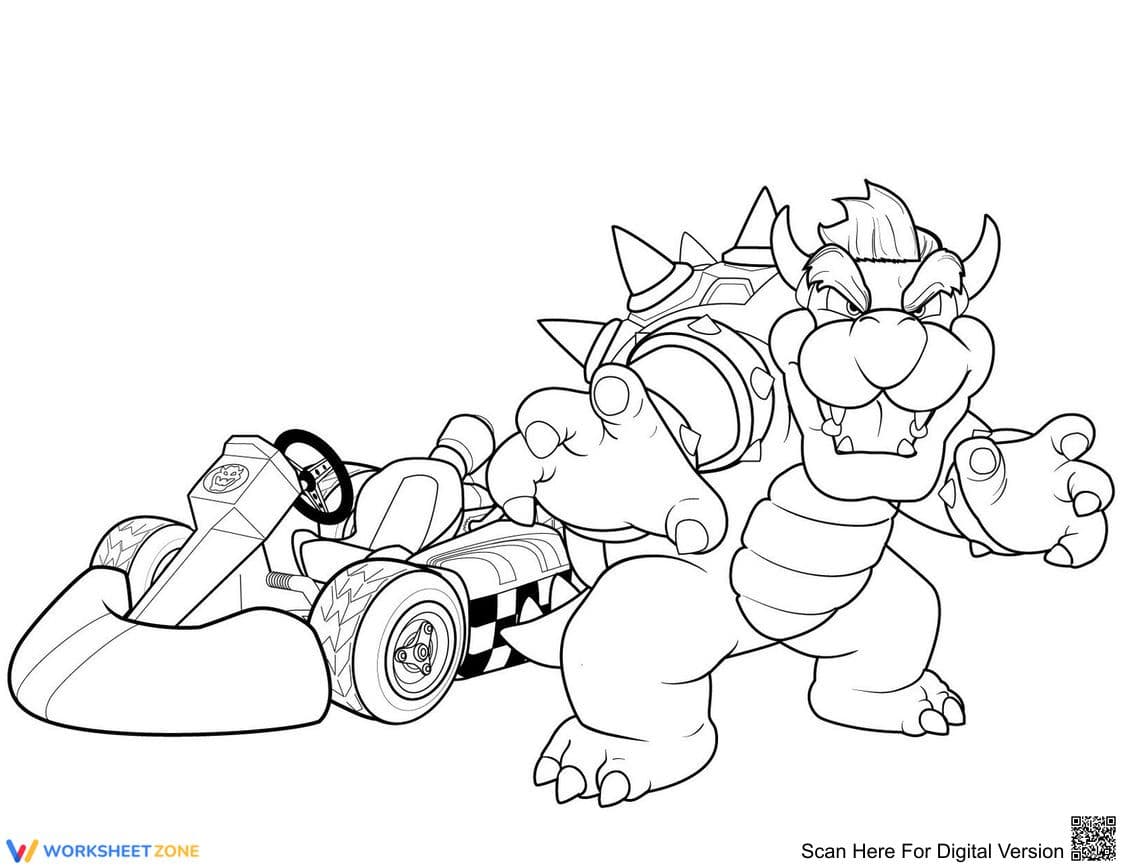

Bowser and a Car Coloring Page | Essential Printable
Paste this activity's link or code into your existing LMS (Google Classroom, Canvas, Teams, Schoology, Moodle, etc.).
Students can open and work on the activity right away, with no student login required.
You'll still be able to track student progress and results from your teacher account.
This Bowser and a car coloring page provides a high-interest creative activity for students to develop fine motor control and artistic expression. By engaging with familiar characters from the Mario universe, learners stay motivated while practicing precision and color selection. It serves as an ideal transition activity or a rewarding creative break in any classroom setting.
At a Glance
- Grade: K-5 · Subject: Arts & Crafts
- Standard:
VA:Cr1.1.Ka— Engage in exploration and imaginative play with various art materials- Skill Focus: Fine motor development
- Format: 1 page · 1 task · Answer key N/A · PDF
- Best For: Early finishers and creative brain breaks
- Time: 15–20 minutes
What's Inside
Inside this resource, you will find a single-page, high-resolution line art illustration featuring the iconic character Bowser alongside a racing kart. The clean outlines are designed to accommodate various coloring mediums, including crayons, colored pencils, or markers. The layout provides ample space for students to experiment with shading and color theory without overwhelming younger learners.
Zero-Prep Workflow
The zero-prep workflow for this resource is designed for maximum efficiency. First, print the single-page PDF (30 seconds). Second, distribute the sheets to students along with their preferred coloring tools (1 minute). Third, review the completed artwork or display it on a classroom gallery wall (30 seconds). Total teacher preparation time is under 2 minutes, making it an excellent sub-plan addition.
Standards Alignment
This worksheet aligns with `VA:Cr1.1.Ka`, which focuses on imaginative play and exploration with art materials. While primarily an artistic tool, it also supports fine motor skills necessary for early writing. This standard code can be copied directly into lesson plans, IEP goals, or district curriculum mapping tools.
How to Use It
Use this page during a Friday Fun block or as a quiet-time activity after a high-energy lesson. It is also effective as a formative assessment tool for observing pencil grip and hand-eye coordination in younger students. Expect students to spend between 15 and 20 minutes completing the detailed sections of the character and vehicle.
Who It's For
This resource is for elementary students, particularly those in Kindergarten through Grade 3 who are fans of gaming culture. It is highly effective for students requiring sensory-friendly activities or those working on occupational therapy goals. Pair this with a character-description writing prompt or a Mario-themed reading passage for a cross-curricular experience.
According to the RAND AIRS 2024 report, integrating high-interest visual media into the classroom significantly increases student engagement and task persistence, especially among reluctant learners. This Bowser and a car coloring page leverages that engagement to facilitate fine motor development, a critical precursor to fluent handwriting and literacy. By focusing on the VA:Cr1.1.Ka standard, educators provide a structured environment for imaginative play and artistic exploration. Research from Fisher & Frey (2014) suggests that purposeful brain breaks involving creative tasks can improve cognitive focus during subsequent academic instruction. This printable resource offers a 1-page solution that requires zero teacher preparation, making it a practical tool for diverse classroom environments. The clear line art ensures that students of varying ability levels can achieve success, fostering a sense of accomplishment and creative agency while reinforcing the physical mechanics of tool manipulation and spatial awareness.


