


























Views
Downloads

Printable Literacy Book Cover | Grade 3 ELA Essential
Paste this activity's link or code into your existing LMS (Google Classroom, Canvas, Teams, Schoology, Moodle, etc.).
Students can open and work on the activity right away, with no student login required.
You'll still be able to track student progress and results from your teacher account.
This Grade 3 literacy book cover worksheet provides a creative way for students to take ownership of their ELA materials. By customizing this printable cover, students establish a clear organizational system for their writing portfolios or reading logs. This visual anchor helps transition students into the literacy block with a sense of purpose and personal investment.
At a Glance
- Grade: 3 · Subject: ELA
- Standard:
CCSS.ELA-LITERACY.W.3.10— Write routinely for a range of discipline-specific tasks and purposes- Skill Focus: Material organization and ownership
- Format: 1 page · 1 task · Answer key included · PDF
- Best For: Back-to-school organization and folder setup
- Time: 10–15 minutes
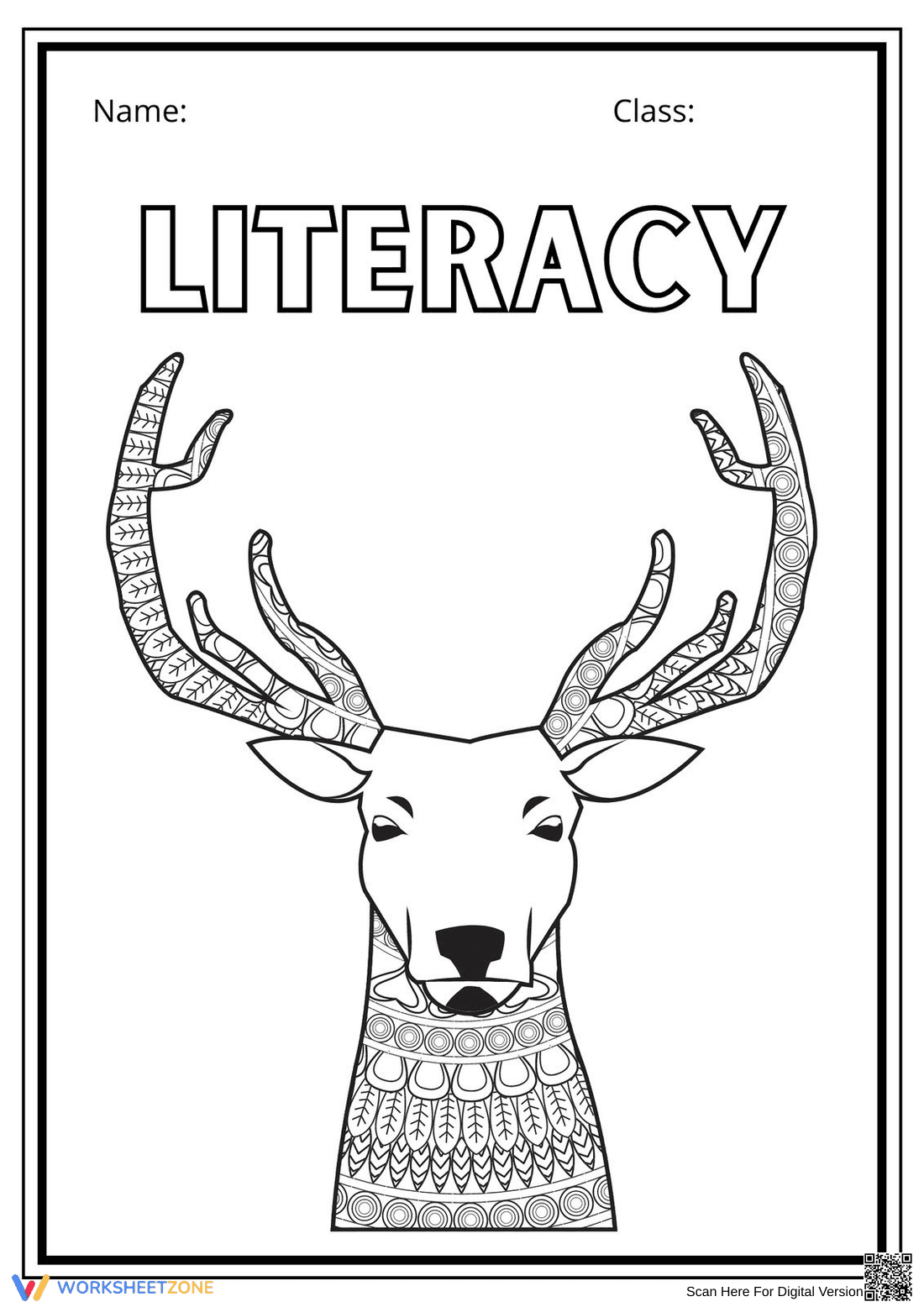
This single-page PDF features a high-quality, stylized deer illustration with intricate patterns suitable for coloring. The word "LITERACY" is presented in a bold, open-face font, allowing students to color or pattern the letters. Fields for "Name" and "Class" are positioned at the top to ensure clear identification of student property and easy sorting for the teacher.
The zero-prep workflow for this resource is designed for maximum efficiency during the busy back-to-school season. First, print the required number of copies for your roster in about 30 seconds. Second, distribute the sheets during your morning meeting or the start of your first ELA block. Third, allow students to personalize their covers while you circulate to check for correct name placement. Total teacher preparation time is under 2 minutes, making this an ideal activity for the first day of school or as a reliable sub plan filler.
The primary standard for this resource is `CCSS.ELA-LITERACY.W.3.10`, which requires students to write routinely over extended and shorter time frames for a range of discipline-specific tasks, purposes, and audiences. While this is a cover page, it serves as the foundational step in establishing the discipline-specific environment required for routine writing. Both standard codes can be copied directly into lesson plans, IEP goals, or district curriculum mapping tools.
Use this worksheet during the first week of school to help students set up their primary literacy folders or interactive notebooks. It serves as an excellent soft start activity that allows the teacher to handle administrative tasks while students are engaged in a quiet, creative task. Additionally, use it as a formative assessment moment to observe fine motor skills and the ability to follow multi-step directions regarding name and class placement.
This resource is designed for Grade 3 students but is appropriate for any elementary learner needing a visual organizational tool. It is particularly effective for visual learners and students who benefit from tactile engagement before starting academic tasks. Pair this cover with a standard two-prong folder or a composition notebook to create a dedicated space for ELA work throughout the school year.
Research by Fisher & Frey (2014) emphasizes the importance of the gradual release of responsibility and the role of environmental print in the classroom. Establishing a dedicated literacy folder using a standardized cover like this one supports student self-regulation and organizational habits. According to the Fisher & Frey (2014) framework, providing students with clear, labeled materials reduces cognitive load, allowing them to focus more energy on the complex tasks of reading and writing. This worksheet aligns with `CCSS.ELA-LITERACY.W.3.10` by creating the physical infrastructure necessary for routine writing practice. By integrating a creative coloring element, the resource also addresses the affective domain of learning, fostering a positive association with literacy tasks. Educators can use this tool to build a cohesive classroom culture where every student has a professional-looking, personalized space for their academic growth and evidence of mastery.


