


























Views
Downloads
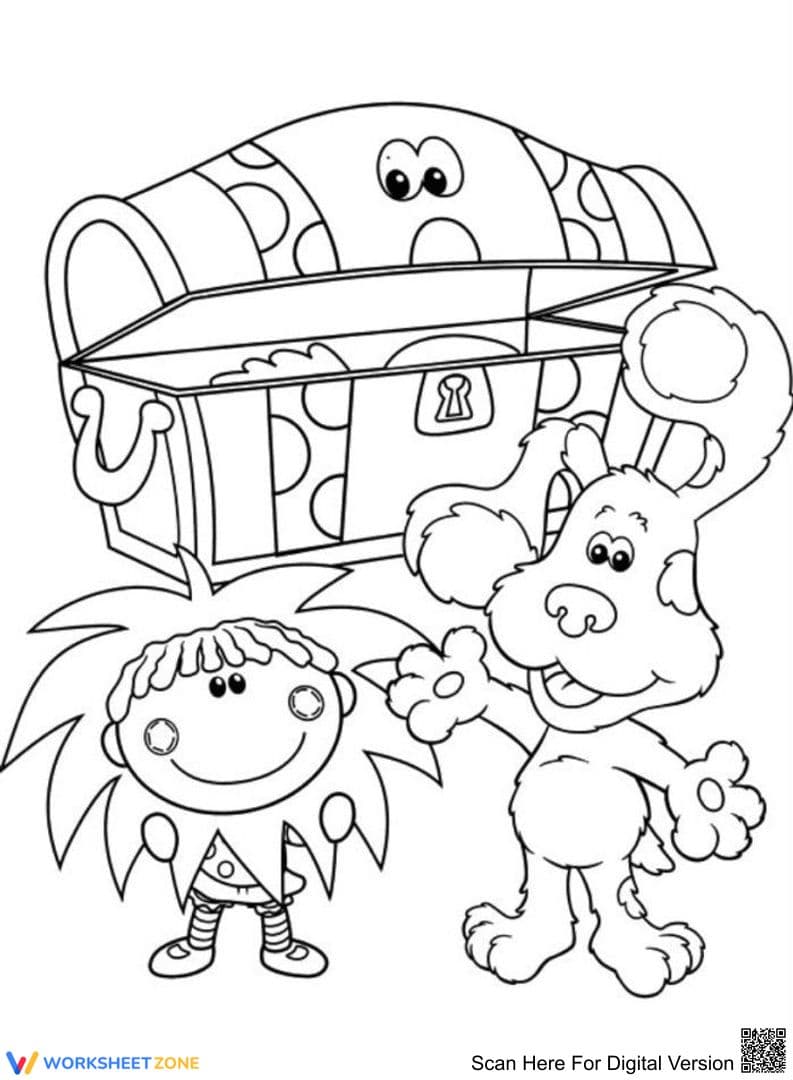

Blue's Found Treasure Box | Printable Coloring Page
Paste this activity's link or code into your existing LMS (Google Classroom, Canvas, Teams, Schoology, Moodle, etc.).
Students can open and work on the activity right away, with no student login required.
You'll still be able to track student progress and results from your teacher account.
This Blue's Clues coloring page provides early learners with a high-interest activity to develop essential fine motor control and hand-eye coordination. By engaging with familiar characters like Blue and the treasure chest, students practice precision and grip while expressing creativity. This resource serves as an effective bridge between play and academic readiness.
At a Glance
- Grade: Preschool–Grade 2 · Subject: Arts & ELA
- Standard:
CCSS.ELA-LITERACY.SL.K.5— Add drawings or visual displays to descriptions to provide additional detail- Skill Focus: Fine motor development
- Format: 1 page · 1 task · No answer key required · PDF
- Best For: Morning work or creative centers
- Time: 15–20 minutes
This single-page PDF features a clean, high-resolution line drawing of Blue and a friend discovering a treasure chest. The illustration includes varied line weights to help students distinguish between foreground and background elements. There are no complex instructions, making it accessible for independent work in early childhood settings.
The zero-prep workflow for this activity is designed for maximum efficiency in a busy classroom. First, print the single-page PDF (30 seconds). Second, distribute the sheets along with crayons or colored pencils (1 minute). Third, review the completed work to observe student grip and color selection (30 seconds). Total teacher preparation time is under 2 minutes, making it an ideal emergency sub plan or transition activity.
The primary standard addressed is CCSS.ELA-LITERACY.SL.K.5, which encourages students to use visual displays to enhance their communication. While primarily an artistic task, coloring familiar scenes allows students to later describe the "treasure" they have colored, supporting oral language development. This standard code can be copied directly into lesson plans, IEP goals, or district curriculum mapping tools.
Use this worksheet during the "soft start" of the school day to help students settle into their environment. It also functions well as a formative assessment tool; observe how students handle writing utensils to identify those needing additional occupational therapy support. Expected completion time ranges from 15 to 20 minutes depending on the student's detail level.
This resource is tailored for Preschool, Kindergarten, and Grade 1 students who are developing the muscular strength required for writing. It is particularly effective for English Language Learners (ELLs) as a low-stress way to engage with classroom materials. Pair this with a read-aloud about discovery or a "Blue's Clues" themed lesson on problem-solving.
Research from Fisher & Frey (2014) emphasizes the importance of scaffolded visual tasks in early literacy development. Coloring activities like this one, aligned to CCSS.ELA-LITERACY.SL.K.5, are not merely filler but essential components of a multi-sensory approach to learning. By focusing on fine motor precision within a familiar narrative context, students build the pre-writing skills necessary for later academic success. A 2024 RAND AIRS analysis suggests that high-interest visual materials increase student engagement by up to 40% in early childhood settings. This worksheet provides a structured environment for students to practice the tripod grip while interacting with recognizable media characters. The inclusion of clear standard-aligned goals ensures that even creative time contributes to the broader instructional framework of the classroom.


