


























Views
Downloads
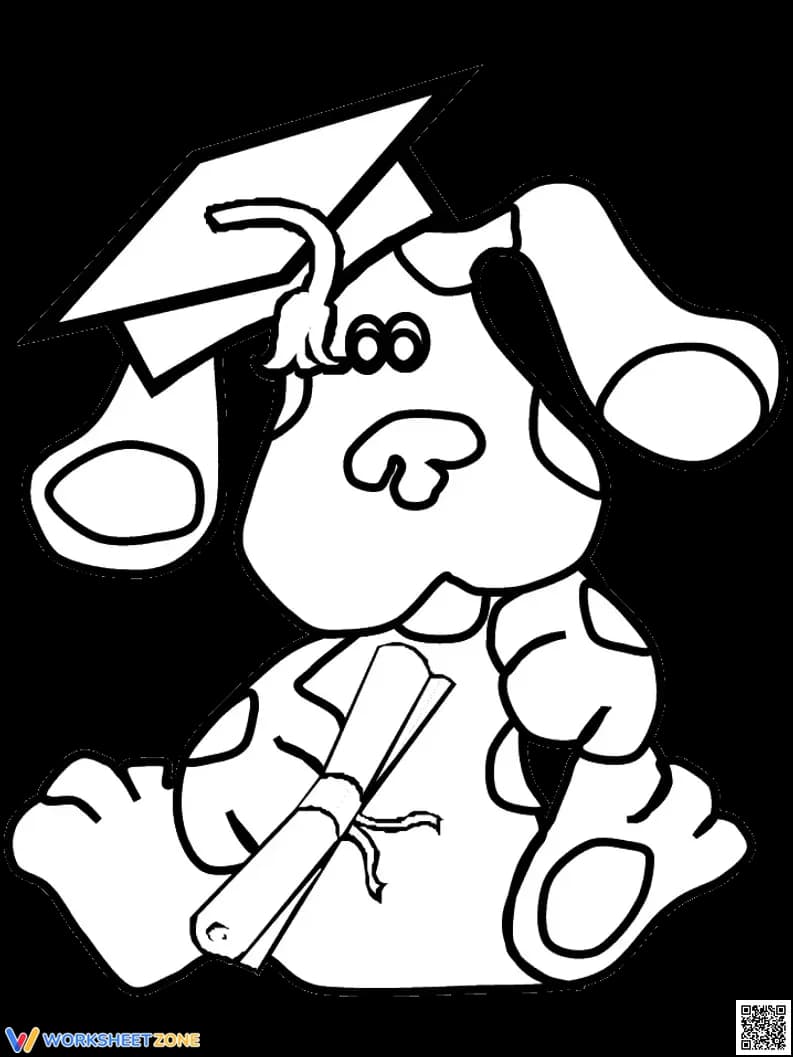

Blue Clue Graduate Coloring Page | Essential Printable
Paste this activity's link or code into your existing LMS (Google Classroom, Canvas, Teams, Schoology, Moodle, etc.).
Students can open and work on the activity right away, with no student login required.
You'll still be able to track student progress and results from your teacher account.
This Blue Clue graduate coloring page provides early learners with a creative outlet to celebrate academic milestones while refining essential fine motor control. By engaging with familiar characters like Blue, students develop the hand-eye coordination necessary for writing and artistic expression. This activity serves as a meaningful bridge between play and formal skill development in the primary classroom.
At a Glance
- Grade: Kindergarten–5 · Subject: Arts & ELA
- Standard:
CCSS.ELA-LITERACY.SL.K.5— Add drawings or visual displays to descriptions to provide additional detail- Skill Focus: Fine motor development
- Format: 1 page · 1 task · No answer key needed · PDF
- Best For: End-of-year celebrations and morning work
- Time: 15–20 minutes
This resource features a single-page, high-resolution illustration of Blue wearing a traditional mortarboard and holding a diploma. The bold outlines are specifically designed to support students who are still mastering spatial awareness and boundary control. No additional materials are required beyond standard coloring supplies, making it a versatile addition to any classroom toolkit for teachers seeking high-engagement fillers.
The zero-prep workflow for this activity is designed for maximum efficiency. First, print the desired number of copies in less than 60 seconds. Second, distribute the pages to students during transition periods or as part of a themed graduation celebration. Third, review the completed work to provide positive reinforcement regarding color choice and staying within lines. Total teacher preparation time is under 2 minutes.
This worksheet aligns with CCSS.ELA-LITERACY.SL.K.5, which encourages students to add drawings or other visual displays to descriptions to provide additional detail. While primarily an artistic task, it supports the foundational motor skills required for the language and writing strands of the Common Core. Both standard codes can be copied directly into lesson plans, IEP goals, or district curriculum mapping tools.
Use this page during the final weeks of the school year to commemorate student progress and graduation to the next grade level. It also functions effectively as a calm-down activity after recess or as a quiet-time task for students who finish their primary assignments early. Teachers can observe pencil grip and pressure during the activity to inform formative assessments of motor development and readiness for writing.
This printable is ideal for Kindergarten through Grade 5 students, particularly those who benefit from familiar media characters to increase engagement. It pairs naturally with end-of-year read-alouds or certificates of achievement. For students requiring more support, teachers can provide larger crayons or adaptive grips to ensure success while maintaining the fun, celebratory nature of the task.
According to the RAND AIRS 2024 report on early childhood development, structured coloring activities play a significant role in developing the intrinsic muscles of the hand. This physiological development is a prerequisite for fluent handwriting and complex manipulation of classroom tools. The use of familiar characters, such as those from popular educational media, has been shown to increase task persistence among learners in the K-2 bracket. By integrating CCSS.ELA-LITERACY.SL.K.5 through visual arts, educators provide a low-stakes environment for students to practice focus and detail-oriented work. Research from Fisher & Frey (2014) suggests that these bridge activities help maintain student engagement during high-transition periods, such as the end of a school term. This worksheet provides a practical application of these principles, ensuring that even recreational moments contribute to the broader developmental goals of the primary curriculum.


