




















Looking for the perfect science fair project ideas to inspire creativity and learning? Science fairs give students the chance to explore real-world questions through hands-on experiments and discovery. Whether they’re growing plants under colored lights, building simple machines, or coding a mini robot, these projects help kids think critically and have fun while learning. In this guide, you will find 100+ creative science fair project ideas for every grade and STEM field, each designed to spark curiosity, encourage problem-solving, and make science exciting for students of all ages.
Science fair project ideas by grade level
Science fairs are a celebration of curiosity and discovery. These science fair project ideas are organized by grade level, making it easy to find age-appropriate experiments that encourage hands-on learning, creativity, and clear results for judging.
1. Elementary school
These projects are simple, safe, and fun – perfect for young learners just beginning to explore how science explains the world around them.
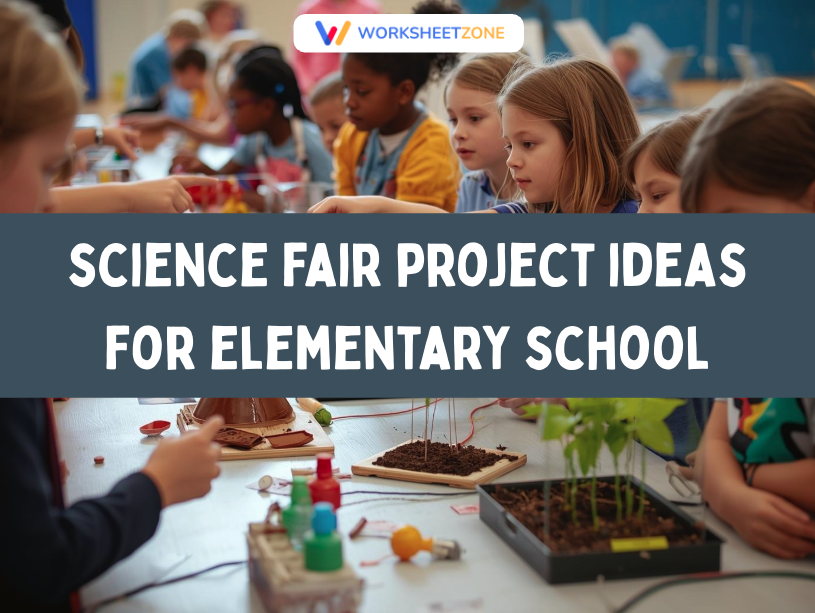
- Glow plants under different colors of light and compare growth.
- Build a mini volcano to demonstrate chemical reactions.
- Make a rainbow in a jar to show liquid density.
- Test which paper airplane design files the farthest.
- Build a balloon-powered car to explore motion and energy.
- Create a simple water filter using sand, charcoal, and cotton.
- Make a solar oven from a pizza box and test how fast it melts chocolate.
- Explore how saltwater and freshwater affect how things float.
- Observe how different surfaces affect how far a toy car rolls.
- Grow crystals from salt or sugar solutions.
- Test which brand of paper towel absorbs the most water.
- Make slime with different ingredients and compare the texture and stretch.
- Create static electricity to lift paper pieces or cereal.
- Build a bridge using straws or popsicle sticks and test its strength.
- Compare how long ice cubes last when wrapped in different materials.
- Observe how temperature affects balloon size.
- Build a parachute and test which design falls the slowest.
- Create a small compost bin and track which materials decompose first.
- Explore how magnets attract through different objects.
- Build a weather journal to record temperature and rainfall over time.
- Create a simple circuit using a battery, foil, and a light bulb.
- Make invisible ink using lemon juice and a light source.
Looking for science fair ideas suitable for younger learners? Check out our fun collection of STEM Activities for Preschoolers to spark early curiosity through hands-on discovery.
2. Middle school
Middle schoolers are ready for projects that involve testing variables, collecting data, and explaining why results happen. These science fair project ideas introduce experimentation and real-world problem-solving.

- Build a lemon battery to power a small LED.
- Measure how salt concentration affects the freezing point of water.
- Create a wind turbine and test different blade shapes for efficiency.
- Design a bridge from different materials and test which holds the most weight.
- Compare heat insulation across common materials like foil, cotton, and plastic.
- Make biodegradable plastic using cornstarch and vinegar.
- Examine how pH levels affect algae growth in water. (If your project involves testing the pH levels of household liquids, it’s helpful to understand the theory behind it through these neutralization reaction exercises.)
- Build a solar-powered fan or small oven.
- Measure how the ramp angle affects a marble’s rolling distance.
- Explore how packaging materials decompose in soil or compost.
- Build a catapult and test projectile distance using different tensions.
- Study how temperature affects the bounce of a rubber ball.
- Compare bacteria growth on household items using agar plates (safe, supervised).
- Build a pulley system and measure how it changes the effort needed to lift a weight.
- Test how natural cleaning products kill bacteria compared to commercial cleaners.
- Build a model of the greenhouse effect using jars and heat lamps.
- Examine how fertilizer affects the growth rate of plants.
- Test how different liquids impact the rate of evaporation.
- Create a solar still to collect clean water from saltwater.
- Build a roller coaster for marbles to study potential and kinetic energy.
- Use vinegar and baking soda to power a homemade rocket.
3. High school
High school students can take on advanced, innovative project ideas that explore physics, biology, environmental issues, and emerging technologies like AI and engineering design.

- Build and test a solar-powered water heating system. (When designing a project on sustainable energy, starting with a renewable and nonrenewable resources worksheet can help you categorize different energy sources for your research paper.)
- Design a wind turbine to compare energy output from different blade angles.
- Construct and evaluate a hydraulic life mechanism.
- Study how propeller size affects drone or fan efficiency.
- Analyze how the bridge shape impacts weight distribution.
- Build a homemade electric motor and measure rotational speed.
- Test how different wire gauges affect current in a circuit.
- Compare natural antibacterial agents like honey, garlic, and vinegar.
- Study how music tempo affects heart rate and concentration.
- Analyze caffeine’s effect on reaction time using a computer test.
- Measure how different exercise intensities affect oxygen levels and recovery.
- Track local air quality over time using a simple sensor setup.
- Test how soil nutrients affect chlorophyll content in plants.
- Build a motion-detecting alarm system using Arduino.
- Create an AI model to identify handwritten numbers or images.
- Study how UV light affects bacterial growth.
- Design an app or website that helps reduce food waste.
- Compare the decomposition rate of organic vs. non-organic produce.
- Build a water purification prototype using solar energy.
- Train a small machine learning model to sort recyclable materials.
- Study how temperature affects solar panel efficiency.
- Create a computer simulation to model disease spread under different conditions.
- Design a robotic arm to pick up and sort small objects.
- Analyze how different screen exposure levels affect sleep patterns.
Science fair project ideas in the STEM field
Science connects every part of our world, from motion and energy to living systems and technology. In this section, you’ll find science fair project ideas grouped by STEM field, helping students dive deeper into the subject that sparks their curiosity and creativity.
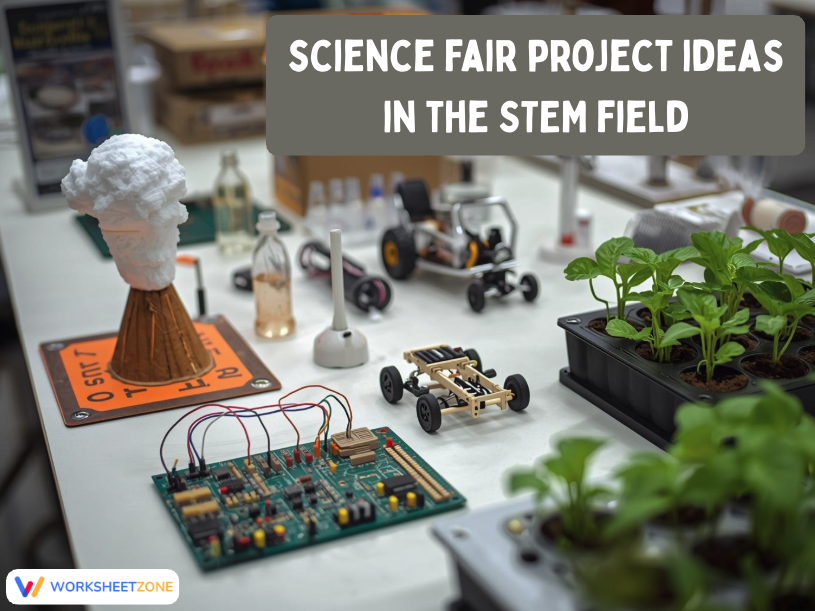
1. Physics and Engineering
- Build a bridge and test its maximum load.
- Design a car that runs on air pressure.
- Create a model of a roller coaster and measure speed changes.
- Study how magnet strength changes with distance.
- Test how surface type affects friction.
- Measure how pendulum length affects swing speed.
- Build a small water turbine and test efficiency.
- Explore lift and drag with different wing designs.
- Create a pulley system to lift objects easily.
- Study how sound travels through solids vs. liquids.
- Build a marble run to demonstrate kinetic energy.
Recommendation: If your science project involves tracking the movement of an object over a grid, mastering mathematical formulas for distance is essential for accurate data analysis.
2. Chemistry
- Make natural indicators from cabbage, beetroot, or turmeric.
- Test which salt dissolves fastest in water?
- Study how temperature affects chemical reaction rates.
- Measure sugar content in beverages using density.
- Explore rust formation in salt vs. fresh water.
- Make and test homemade slime recipes.
- Compare how detergents remove oil stains.
- Investigate how acids affect eggshells.
- Test different materials for thermal conductivity.
- Compare the oxidation speed of fruits in air vs. lemon juice.
- Study which preservatives slow food decay.
3. Biology
- Observe mold growth on bread stored in different environments.
- Study how light color affects photosynthesis.
- Compare germination rates of soaked vs. dry seeds.
- Test which fruits brown fastest after slicing.
- Study the effect of fertilizer on algae growth.
- Test the antibacterial properties of herbs.
- Study how pollutants affect aquatic plant growth.
- Observe insect attraction to different light colors.
- Compare the growth of plants watered with tap water vs. rainwater.
- Test enzyme activity using pineapple or meat tenderizer.
- Study how temperature affects yeast fermentation.
4. Earth & Environmental Science
- Test which soil retains the most water.
- Measure air quality using particulate sensors.
- Study how acid rain affects limestone.
- Build a mini solar still to purify water.
- Compare compost materials for decomposition rate.
- Study how shade affects evaporation.
- Test which materials best prevent soil erosion.
- Measure the pH of rainwater over time.
- Create a small wind turbine for power generation.
- Study the effects of recycling habits at home.
- Build a model ecosystem in a jar.
5. Computer Science & AI
- Train a simple AI to sort colors or shapes.
- Build a chatbot that tells jokes or facts.
- Code a quiz app using basic programming.
- Design a simulation showing virus spread.
- Use data visualization to track weather patterns.
- Analyze the accuracy of voice recognition tools.
- Build a basic image classifier with open datasets.
- Create a typing speed tester with Python.
- Program a maze-solving robot.
- Train AI to identify recyclable materials from photos.
- Study how AI can help predict natural disasters.
FAQs
1. How do I choose the best science fair project idea for my grade?
To choose the best project, start by identifying a topic that genuinely interests you, such as animals, space, or technology. Ensure the complexity matches your grade level—elementary students should focus on clear observations, while middle and high school students should look for projects involving measurable variables and data analysis. Consider the available time, materials, and safety requirements before making your final selection to ensure the project is achievable.
2. What are the most important steps in completing a science fair project?
The core of any successful project follows the scientific method: ask a question, conduct background research, form a hypothesis, test with an experiment, analyze your data, and draw a conclusion. Documenting every step in a lab notebook is crucial for accuracy. Finally, create a clear visual display board that explains your process and findings to the judges, ensuring you can explain the “why” behind your results confidently.
3. Can I use everyday household items for a high-quality science project?
Absolutely, many award-winning science projects use simple household materials like vinegar, baking soda, plants, magnets, or recycled plastics. The quality of a science fair project is determined by the rigor of the scientific process and the depth of the analysis, not the cost of the equipment. Using common items often demonstrates a student’s ability to apply scientific principles to the world directly around them, which judges frequently appreciate.
Final thoughts
Science fairs are a wonderful way for students to turn curiosity into discovery. With these science fair project ideas, learners of all ages can explore, experiment, and understand how science shapes everyday life. From building bridges and testing plant growth to creating AI models, each project encourages creativity, problem-solving, and hands-on learning. The best part? Every idea helps students think like real scientists, asking questions, testing theories, and finding joy in exploration. Let these projects inspire your next great discovery at the science fair! You can also bring these experiments to life in class with our printable science worksheets.
Suggestion: Before starting your experiment, it is crucial to gather information from reliable sources for scientific research to build a strong theoretical foundation.


