




















Poems for 4th graders are a wonderful way to spark curiosity, strengthen reading comprehension, and help students connect with rich language in a fun and accessible format. At this age, kids are ready for poems that blend imagination, rhythm, and deeper meaning without feeling overwhelming. Whether you’re introducing figurative language, exploring themes, or simply building a love for reading, the right poems can transform a lesson. Below are 15 engaging, classroom-friendly poems perfect for 4th-grade readers.
15 poems for 4th graders
The poems below are fun, meaningful, and perfectly suited for 4th graders, helping them enjoy poetry while building key reading skills.
1. “Stopping by Woods on a Snowy Evening” by Robert Frost

This timeless poem paints a peaceful winter scene, inviting readers into quiet woods filled with calm and wonder. Its steady rhythm and vivid imagery make it easy for young readers to visualize the setting and connect emotionally with the speaker’s reflective mood.
“My little horse must think it queer
To stop without a farmhouse near
Between the woods and frozen lake
The darkest evening of the year.”
Teaching tip: Use this poem to introduce imagery. Ask students to draw the snowy woods based on the poem’s descriptions, then highlight the sensory details that helped them visualize the scene.
2. “The Owl and the Pussycat” by Edward Lear
This whimsical classic takes students on a fun journey with an owl and a cat as they sail away together. The playful language and imaginative storyline capture students’ attention and introduce them to lyrical, narrative poetry with a humorous twist.
“The Owl and the Pussy-cat went to sea
In a beautiful pea-green boat,
They took some honey, and plenty of money,
Wrapped up in a five-pound note.”

Teaching tip: Focus on rhyme patterns and nonsense vocabulary. Invite students to create their own silly words or write a short additional verse describing the characters’ next adventure.
3. “Mother to Son” by Langston Hughes
A meaningful and accessible poem, “Mother to Son” uses the metaphor of a staircase to describe life’s challenges. Fourth graders can connect with its message of perseverance and resilience, even if the themes are deeper.
“Well, son, I’ll tell you:
Life for me ain’t been no crystal stair.
It’s had tacks in it,
And splinters,
And boards torn up,
And places with no carpet on the floor—
Bare.”

Teaching tip: Discuss the central metaphor and ask students what the “crystal stair” represents. Follow with a writing prompt: “Write about a time when you kept trying even when something was difficult.”
4. “Dreams” by Langston Hughes
Short yet powerful, this poem encourages readers to hold tightly to their dreams. Its simple structure makes the deeper meaning accessible, offering a strong introduction to symbolism and theme.
“Hold fast to dreams
For if dreams die
Life is a broken-winged bird
That cannot fly.”

Teaching tip: After reading, ask students to identify the metaphors and discuss what each one suggests about the importance of dreams. Follow up with a journal prompt: “What dream is important to you?”
5. “The Road Not Taken” by Robert Frost
This well-known poem focuses on choices and the paths we take in life. Fourth graders connect easily with the idea of making decisions, and the poem’s quiet tone invites reflection.
“Two roads diverged in a yellow wood,
And sorry I could not travel both
And be one traveler, long I stood
And looked down one as far as I could
To where it bent in the undergrowth;”

Teaching tip: Create a class discussion around choices. Let students map two “paths” in their lives – one small (like choosing a book) and one big (like choosing an activity) – and relate those decisions back to the poem.
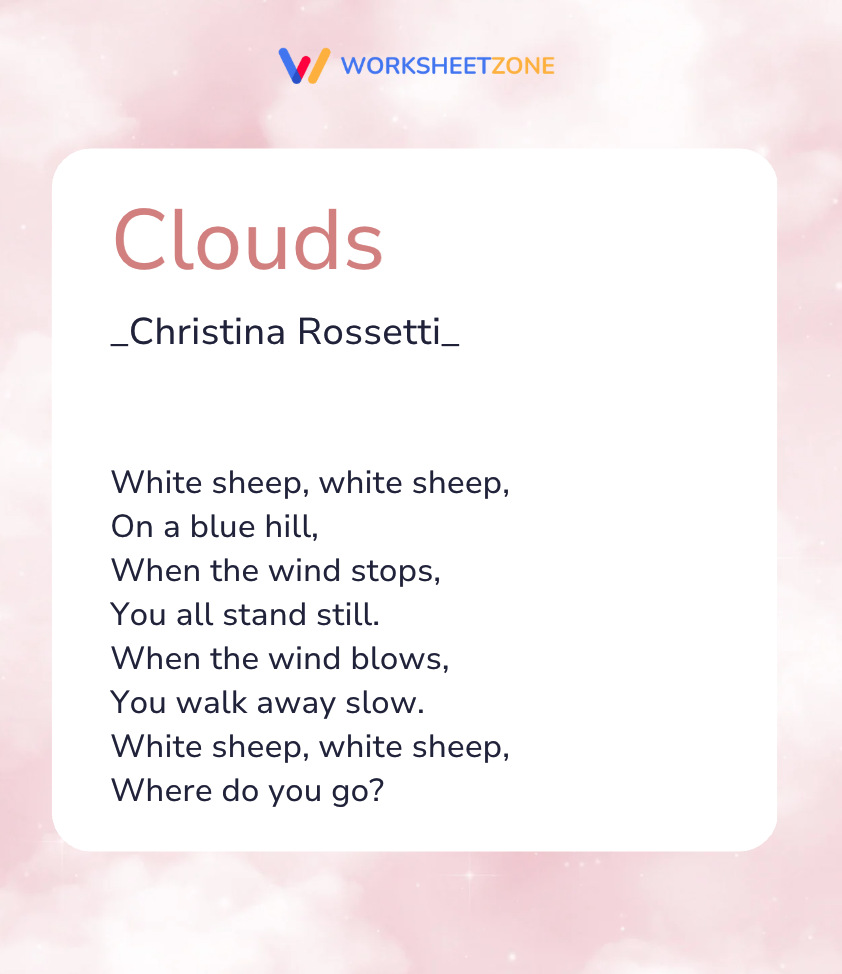
6. “Clouds” by Christina Rossetti
A gentle, descriptive poem, “Clouds” encourages young readers to look up at the sky and appreciate nature’s constant movement. Its simple language makes it a great starting point for exploring descriptive writing.
“White sheep, white sheep.
On a blue hill,
When the wind stops,
You all stand still.”
Teaching tip: Bring students outside to observe real clouds or show sky photos. Have them write their own cloud-inspired poem using sensory words, following Rossetti’s style.
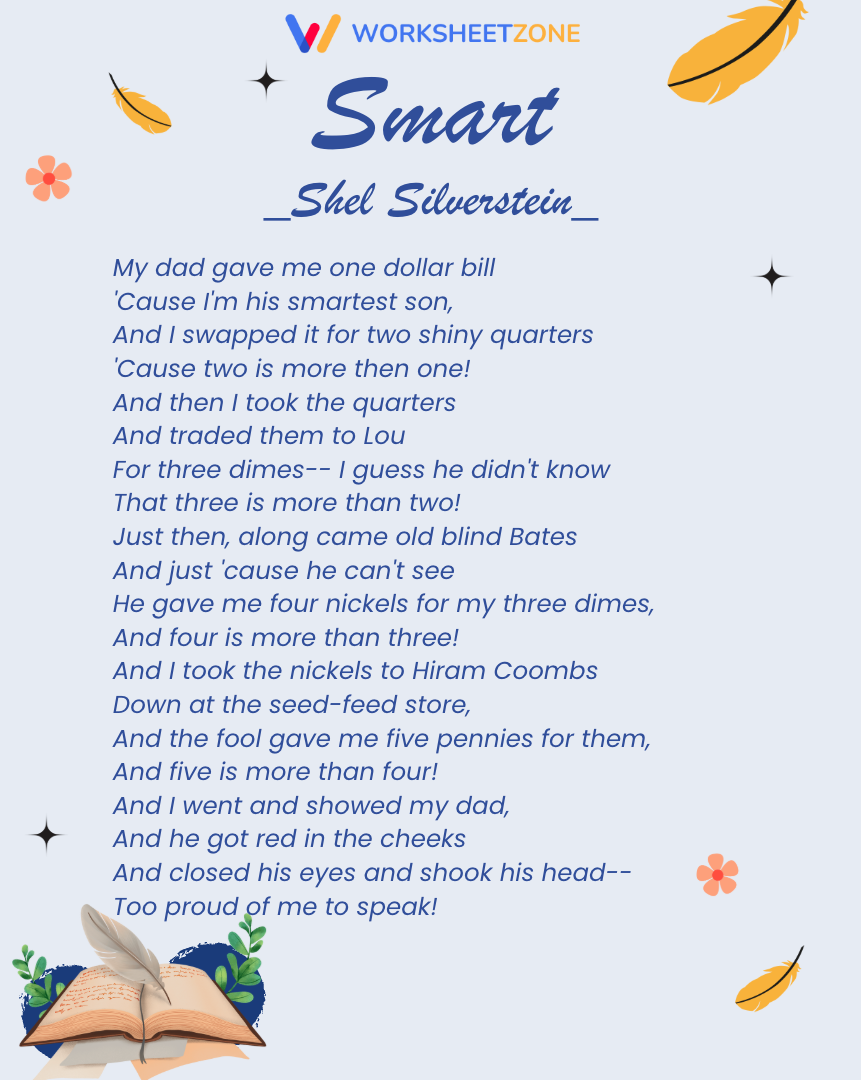
7. “Smart” by Shel Silverstein
This funny poem tells the story of a child who thinks they’re making a smart trade, only to end up with less money. The humor and simple storyline make it perfect for exploring the point of view.
“My dad gave me one dollar bill
‘Cause I’m his smartest son,
And I swapped it for two shiny quarters”
Teaching tip: After reading, discuss the narrator’s misunderstanding. Then introduce the idea of voice and perspective by having students rewrite the poem from the parents’ point of view.
8. “Hope is the thing with feathers” by Emily Dickinson
This metaphorical poem compares hope to a bird that never stops singing, even in tough times. Its gentle tone and meaningful message resonate with students learning about figurative language.
“‘Hope’ is the thing with feathers –
That perches in the soul –
And sings the tune without the words –
And never stops – at all -”

Teaching tip: Have students identify the metaphor and brainstorm other comparisons for hope. Encourage them to illustrate the “hope bird” as they imagine it based on Dickinson’s words.
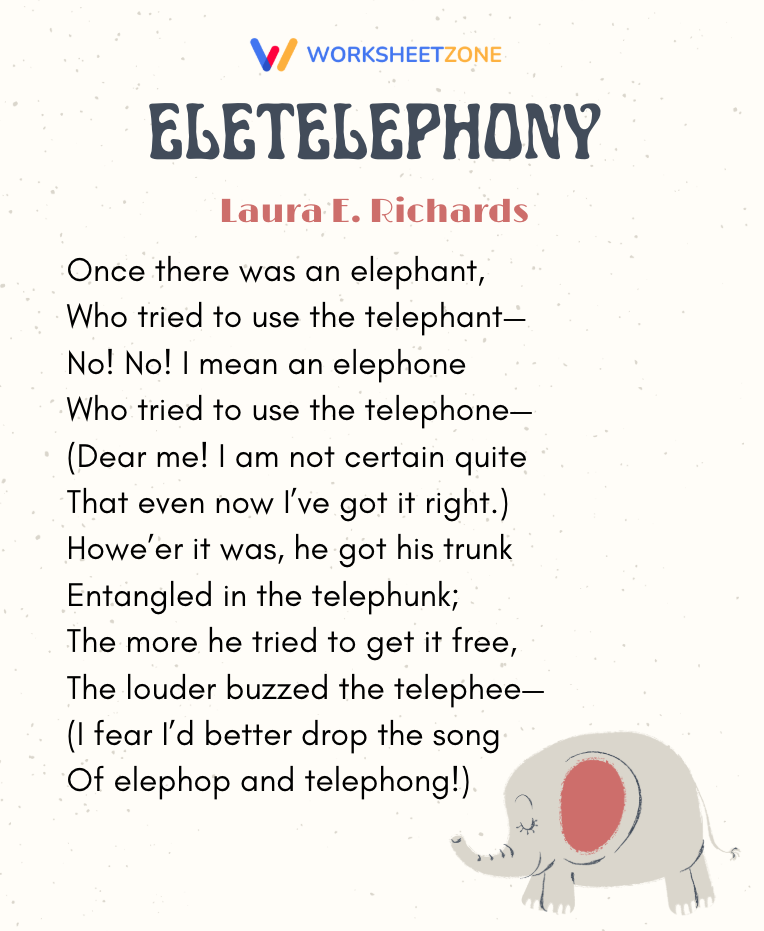
9. “Eletelephony” by Laura E. Richards
This playful, tongue-twisting poem tells the silly story of an elephant getting tangled up in a telephone. Its humor, rhythm, and lighthearted confusion make it a fun read-aloud for 4th graders, especially when practicing fluency and expression. Students enjoy the nonsense words and the challenge of reading them smoothly.
“Once there was an elephant,
Who tried to use the telephant –
No! No! I mean an elephone
Who tried to use the telephone -”
Teaching tip: Use this poem to build fluency. Have students read it slowly, then faster, and finally with full expression. You can also invite them to illustrate the funny scene described in the poem to reinforce comprehension.
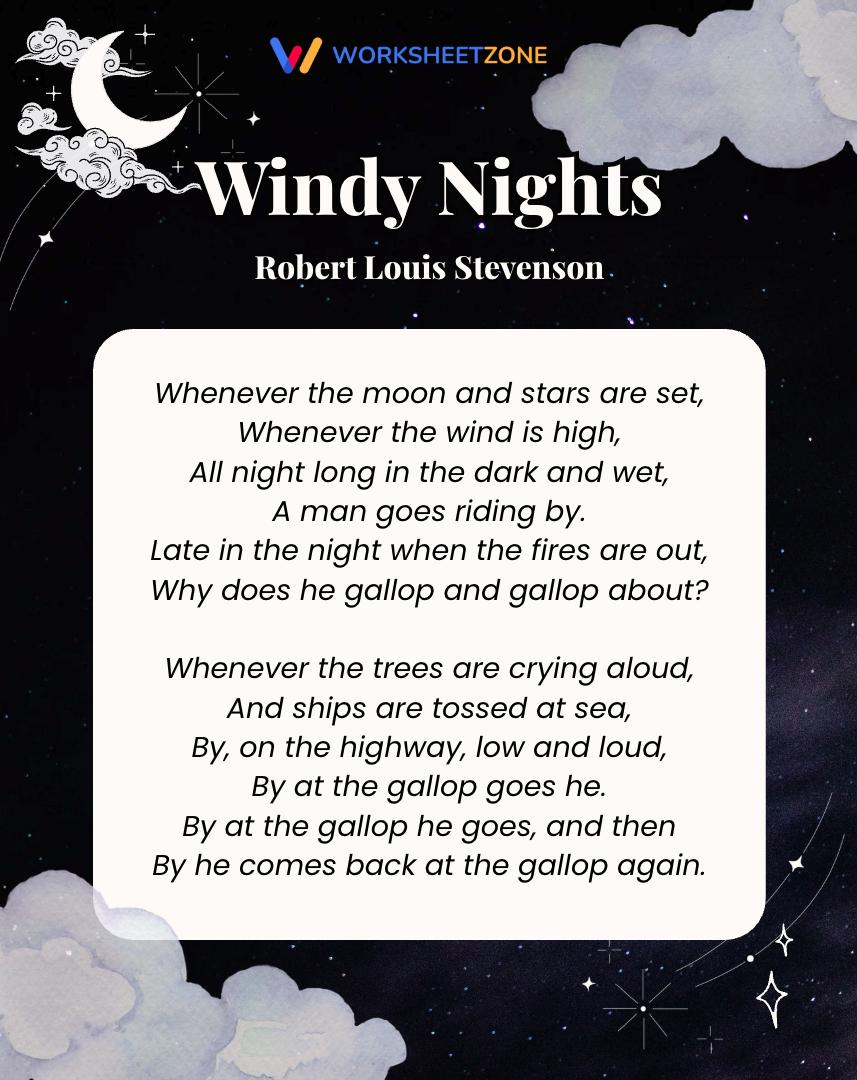
10. “Windy Nights” by Robert Louis Stevenson
Filled with rhythm and nighttime mystery, this poem brings the sound and feel of the wind to life. It inspires a sense of curiosity and adventure while staying accessible to young readers.
“Whenever the moon and stars are set,
Whenever the wind is high,
All night long in the dark and wet,
A man goes riding by.”
Teaching tip: Highlight the poem’s rhythm by clapping or tapping along with the meter. Then discuss how rhythm affects the mood of a poem.
11. “Keep a Poem in Your Pocket” by Beatrice Schenk de Regniers
This imaginative poem celebrates the joy and creativity found in poetry. It encourages students to see poems as treasures they can carry with them everywhere.
“Keep a poem in your pocket
And a picture in your head
And you’ll never feel lonely
At night when you’re in bed.”
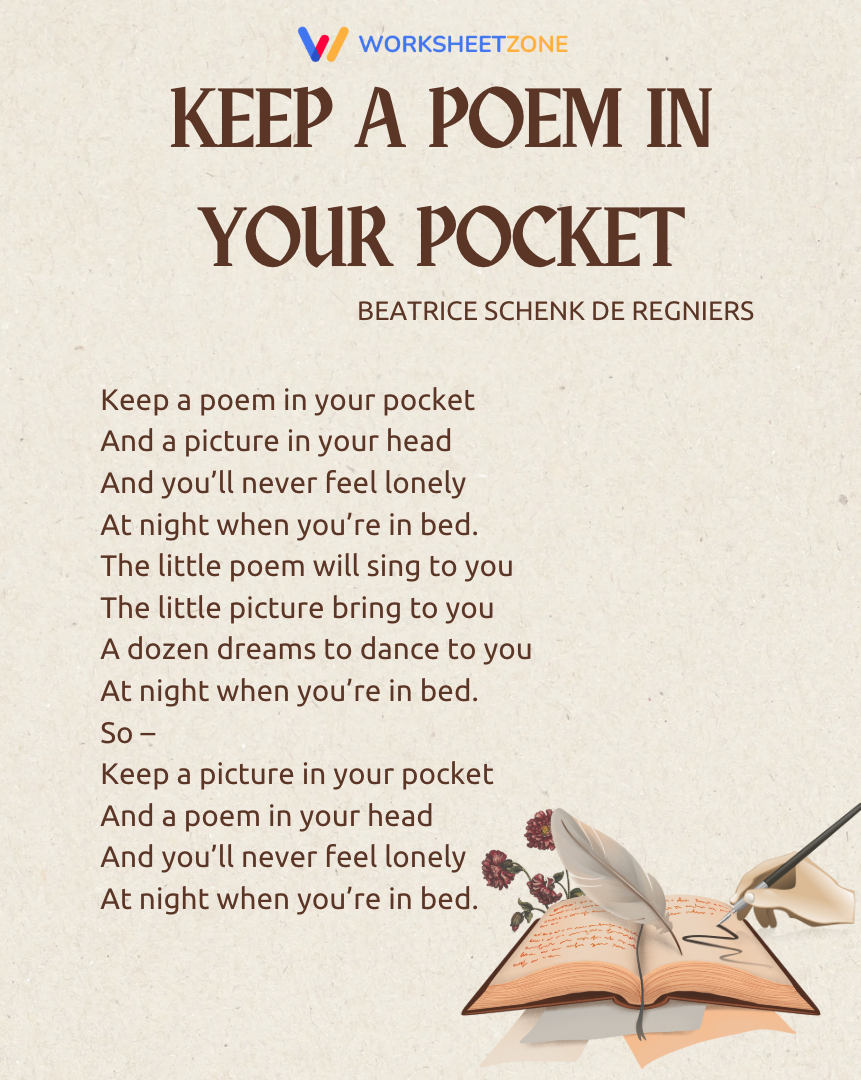
Teaching tip: Invite students to create their own “pocket poems” on small slips of paper. They can decorate them and keep them in their desks or folders to read throughout the week.
12. “If” by Rudyard Kipling
This simplified, age-appropriate version of Kipling’s classic poem introduces themes of responsibility, confidence, and kindness. It encourages students to think about what qualities make a strong and thoughtful person.
“If you can keep your head when all about you
Are losing theirs and blaming it on you,
If you can trust yourself when all men doubt you.
But make allowance for their doubting too;”
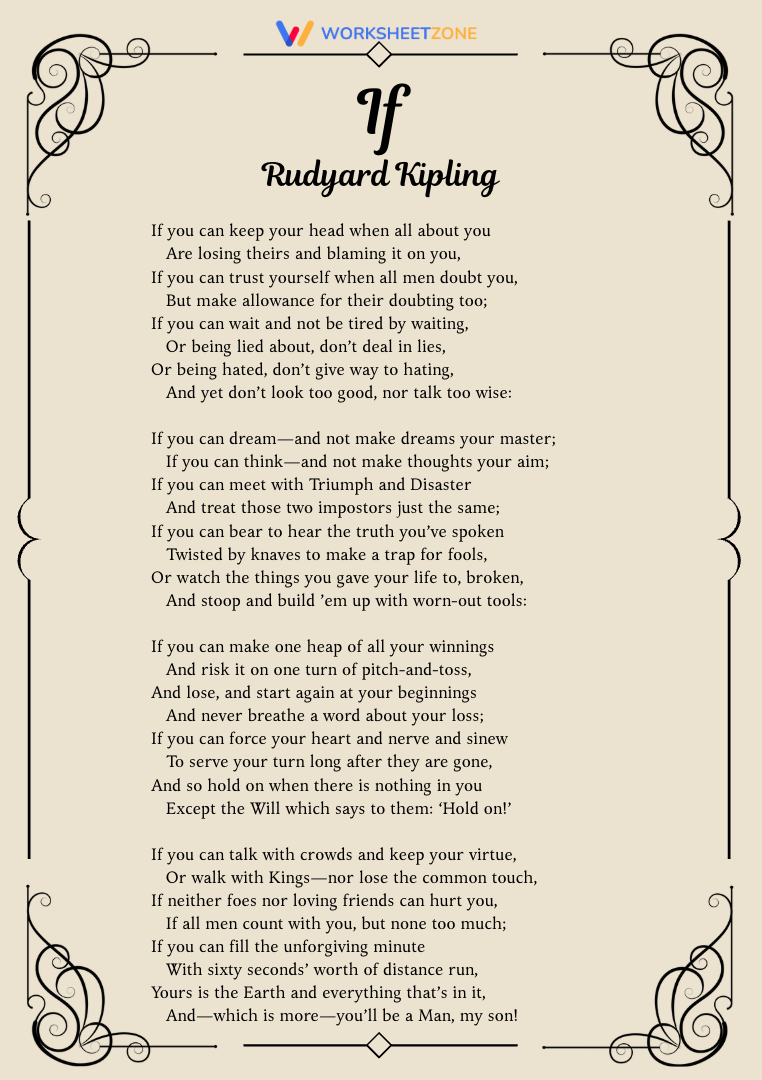
Teaching tip: Discuss one or two qualities mentioned—such as staying calm, being honest, or caring for others—and let students create a mini-poster illustrating one trait they want to develop.
13. “The Quarrel” by Elanor Farjeon
This short and relatable poem tells the story of two siblings who argue and then quickly make up. Its simple structure and familiar theme resonate well with 4th graders.
“I quarreled with my brother,
I don’t know what about,
One thing led to another
And somehow we fell out.”
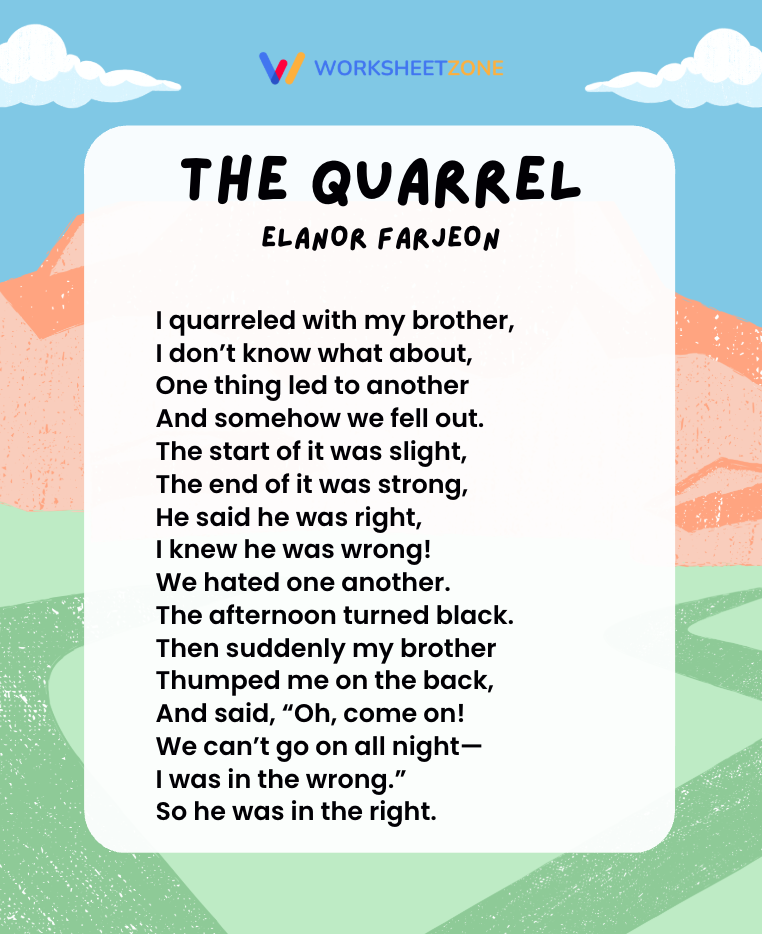
Teaching tip: Use this poem to introduce conflict and resolution. Have students identify the problem, turning point, and resolution, then share a personal experience of making up after an argument.
14. “A Light exists in Spring” by Emily Dickinson
With vivid seasonal imagery, this poem describes the feeling and beauty of spring. It’s a thoughtful, reflective piece that works well for lessons on description and mood.
“A Light exists in Spring
Not present on the Year
At any other period –
When March is scarcely here”
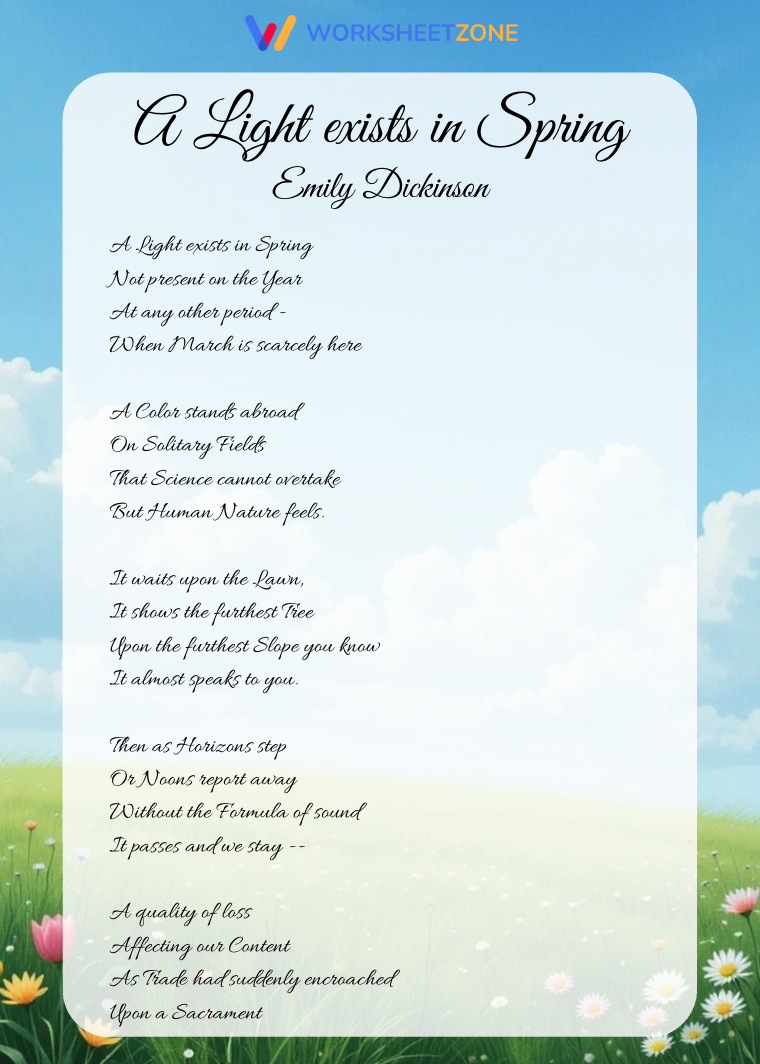
Teaching tip: Pair this poem with a seasonal art activity. Ask students to paint or draw what they imagine the “light” or “feeling” of spring looks like.
15. “The Crocodile” by Lewis Carroll
Short and humorous, this poem describes a crocodile in a playful, almost polite way. Its clever language and imagery make it a fun poem for vocabulary exploration.
“How doth the little crocodile
Improve his shining tail,
And pour the waters of the Nile
On every golden scale!”
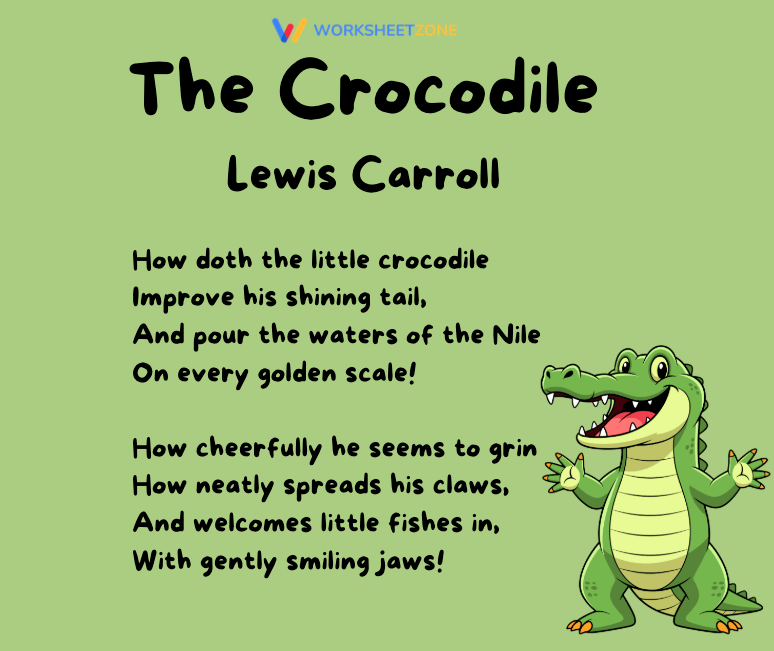
Teaching tip: Use this poem to explore personification. Ask students to list the human-like qualities Carroll gives the crocodile, and then write a stanza giving personality to another animal.
Explore our 4th grade poetry worksheets to strengthen reading and comprehension skills!
FAQs
1. Why is poetry important for 4th graders?
Poetry is vital for 4th-grade development as it enhances phonemic awareness and introduces complex figurative language in a digestible format. By engaging with rhythm and rhyme, students aged 9 to 10 improve their reading fluency and emotional intelligence. Analyzing poetic themes also supports critical thinking skills required by Common Core standards, helping learners transition from basic literal comprehension to deeper inferential understanding of diverse literary texts.
2. How do I choose the right poem for a 4th-grade student?
Selecting appropriate poems requires balancing relatable themes with manageable linguistic complexity. Teachers should look for works that feature vivid imagery, clear metaphors, and engaging rhythms, such as those by Shel Silverstein or Robert Frost. A poem is well-suited if it sparks curiosity without causing frustration. Ideally, the content should provide enough depth for a 15-minute classroom discussion while remaining accessible enough for independent reading by most intermediate-level students.
3. What are the best ways to teach poetry in 4th grade?
Effective poetry instruction involves active participation, such as reading aloud to emphasize cadence or illustrating stanzas to demonstrate comprehension. Educators often use “pocket poems” or collaborative writing exercises to make the genre feel less intimidating. We have noticed that side-by-side comparisons of formal and informal language help students grasp poetic nuances. Incorporating sensory observations and creative journaling further ensures that students connect personally with the text’s emotional and structural elements.
Conclusion
Choosing the right poems for 4th graders helps students build confidence, enjoy language, and explore new ideas through rhythm, imagery, and emotion. Poetry doesn’t have to be intimidating – when presented in fun and meaningful ways, it becomes a doorway to creativity and deeper comprehension. Whether your students enjoy silly rhyme, thoughtful metaphors, or adventurous narratives, the poems above offer a strong foundation for classroom discussions and literacy growth. Encourage kids to read aloud, visualize, and even write their own poems to extend the learning experience.


