




















Anti-bullying activities are educational exercises designed to teach students how to identify harmful behaviors and cultivate a culture of respect. These 20+ strategies help teachers and parents foster empathy and kindness in K-12 learners through hands-on engagement. By implementing these practices, educators can build safer school environments where every student feels supported and included.
20+ proven anti-bullying activities
Research indicates that approximately 20% of students aged 12-18 experience bullying according to the National Center for Education Statistics (NCES). These anti-bullying activities help children recognize bullying behaviors, build empathy, and practice positive responses in a safe and supportive environment.
1. What is bullying? Circle talk

Facilitating a 20-minute circle talk allows students to define social dynamics in a safe, peer-led environment. Identifying specific behaviors is the first step toward prevention. During circle talk sessions, teachers should define these four categories:
- Verbal bullying (teasing, name-calling)
- Physical bullying (hitting, pushing)
- Social bullying (exclusion, spreading rumors)
- Cyberbullying (online harassment)
2. Reinforcing kindness with a community jar
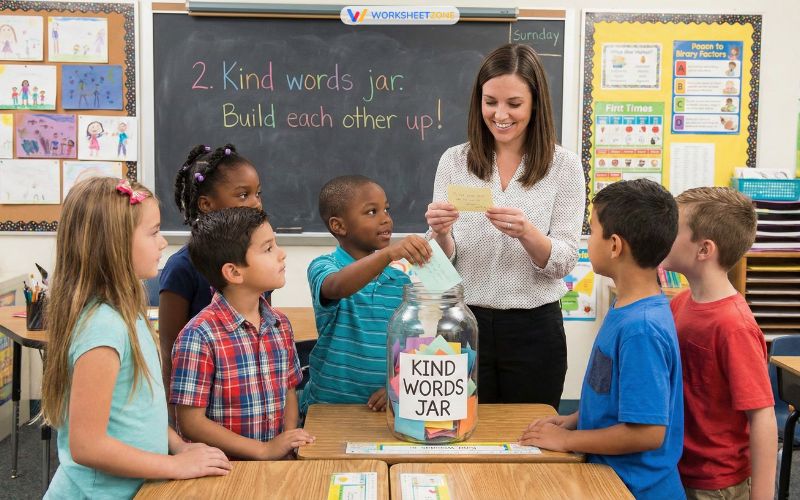
Place a jar in the classroom where students can add notes with kind messages or compliments for others. Read a few notes aloud each week to reinforce positive behavior and show how words can uplift instead of hurt.
Using a physical kindness jar provides a visible reinforcement system for positive student interactions in elementary classrooms.
3. Developing social skills via role-play scenarios

Practicing social responses through role-play builds the muscle memory students need to intervene safely during real-world conflicts. Based on our classroom experience, create short role-play situations where students act out bullying scenarios and practice responding as the target, the bystander, and the helper. This hands-on approach builds confidence and teaches practical ways to respond safely.
4. Transitioning from bystander to upstander activity

Have students brainstorm safe actions they can take when they see bullying, such as getting help, offering support, or speaking up calmly.
Distinguishing between bystanders and upstanders is a critical framework for peer intervention strategies. A bystander is a person who observes a bullying incident but is not directly involved in it.
5. Building empathy with emotion charades

Write different emotions on cards and have students act them out without speaking. This helps children recognize emotions in others and builds empathy, making them more aware of how bullying affects feelings.
6. Committing to a class anti-bullying pledge poster

Creating an anti-bullying pledge poster serves as a formal contract for behavioral expectations within the learning community. Work together to create a class anti-bullying pledge. Students can decorate a poster and sign it, committing to kindness and respect.
7. Strengthening peer bonds with compliment circles

Students take turns giving a genuine compliment to the person next to them. This simple activity encourages positive peer interactions and helps children notice the good in others, reduces social isolation.
8. Analyzing themes through storytime reflection

Read a story that addresses bullying themes, then discuss the characters’ choices and feelings. Ask guiding questions like “What could they have done differently?” or “How would you help this character?”
9. Managing concerns with an anonymous box

Providing an anonymous question box ensures that every student has a safe channel to report incidents without fear of retaliation. Address these submissions during class meetings to normalize asking for help and talking about difficult topics.
10. Visualizing connections with a friendship web

Using a ball of yarn to create a friendship web visually represents the interconnected nature of the classroom social structure. Students toss it to someone they appreciate while sharing a positive reason, showing how actions affect the whole group.
11. Digital citizenship mini-lesson

Introduce basic online safety and respectful communication rules. Discuss examples of cyberbullying and how to respond, emphasizing that kindness applies online as well as offline.
12. Expressing values through anti-bullying art

Inviting students to create art against bullying allows for creative expression of values like inclusion and respect. Display their drawings or posters throughout the school to reinforce positive messages for all grade levels.
13. Practicing perspective through empathy walks

Executing an empathy walk requires students to physically and mentally consider the experiences of those who feel excluded. Afterward, have them write or share one way they could help someone who feels hurt or left out.
14. Reducing aggression with team-building games

Cooperative games that require teamwork help students practice communication, patience, and mutual support. For more ideas, explore these Bullying resources and team building activities for kids to reduce the likelihood of aggressive behaviors.
15. Tracking progress with weekly kindness challenges

Setting a weekly kindness challenge provides students with measurable goals for improving their social interactions. Reflect together on how these actions made everyone feel at the end of each five-day period.
16. Mapping personal support networks

Having students draw a support network map identifies five trusted individuals they can contact during a crisis. Discuss how reaching out for support is a positive and brave choice, helping children understand that they are not alone.
17. Rehearsing the stop-walk-talk protocol

Establishing a consistent three-step response protocol gives students confidence during sudden conflicts. Students should rehearse these three steps:
- Say “Stop” firmly to the person.
- Walk away from the situation immediately.
- Talk to a trusted adult about what happened.
18. Learning from kindness role models

Introducing real-life kindness role models provides students with concrete examples of moral courage and respect. Discuss what choices these role models make and how students can apply similar actions in their own lives.
19. Emotion journaling

Provide students with time to write or draw about their feelings, especially after social interactions or challenging moments. Encourage them to label emotions and reflect on what caused them. This helps build emotional awareness and healthy self-expression.
20. Inclusion day activity

Organize activities where students are intentionally mixed into new groups for games or projects. Emphasize teamwork, listening, and including everyone. This activity helps reduce exclusion and strengthens connections among classmates.
21. “Words hurt / words help” sorting game

Prepare cards with different phrases and ask students to sort them into “hurtful” and “helpful” categories. Discuss how words can affect others emotionally. This activity builds awareness of language choices and their impact.
22. Class problem-solving meeting

Hold regular class meetings where students can calmly discuss conflicts or concerns. Guide them to listen respectfully, share perspectives, and suggest fair solutions together. This activity promotes communication, responsibility, and peaceful conflict resolution.
Frequently Asked Questions
1. What are the best ways to support a child experiencing bullying?
Supporting a child begins with active listening and validating their emotional experience without judgment. It is crucial to reassure them that they are not responsible for the harassment and to document specific incidents for school records. Parents should work closely with educators to establish a safety plan, ensuring the child feels protected and has access to trusted adults throughout the school day.
2. How do anti-bullying activities improve classroom culture?
Classroom activities improve culture by establishing a shared vocabulary for respect and empathy among all students. When learners participate in collaborative exercises, they develop stronger peer bonds and learn to appreciate diverse perspectives. These interactive lessons shift the social dynamic from one of exclusion to one of belonging, significantly reducing the likelihood of aggressive behaviors while encouraging positive bystander intervention.
3. What are the four main types of bullying addressed in school programs?
School programs typically address four distinct categories of harmful behavior: verbal, physical, social, and cyberbullying. Verbal bullying involves teasing or name-calling, while physical bullying includes any unwanted bodily contact. Social bullying, or relational aggression, focuses on damaging a person’s reputation or social standing. Cyberbullying utilizes digital platforms to harass individuals through messages or social media posts outside of school hours.
Conclusion
Anti-bullying activities are more than one-time lessons; they are ongoing practices that shape a caring, respectful community. By integrating discussions, role-play, creative projects, and daily kindness habits, educators and parents can empower children to stand up for themselves and others. When students learn empathy early and practice it often, they help create environments where everyone feels safe, valued, and heard.


