




























1 / 4
0
Views
0
Downloads


0.0
0
Save
0 Likes
Share
Biogeochemical Cycles Webquest
0 Views
0 Downloads

Paste this activity's link or code into your existing LMS (Google Classroom, Canvas, Teams, Schoology, Moodle, etc.).
Students can open and work on the activity right away, with no student login required.
You'll still be able to track student progress and results from your teacher account.
Information
Description
What It Is:
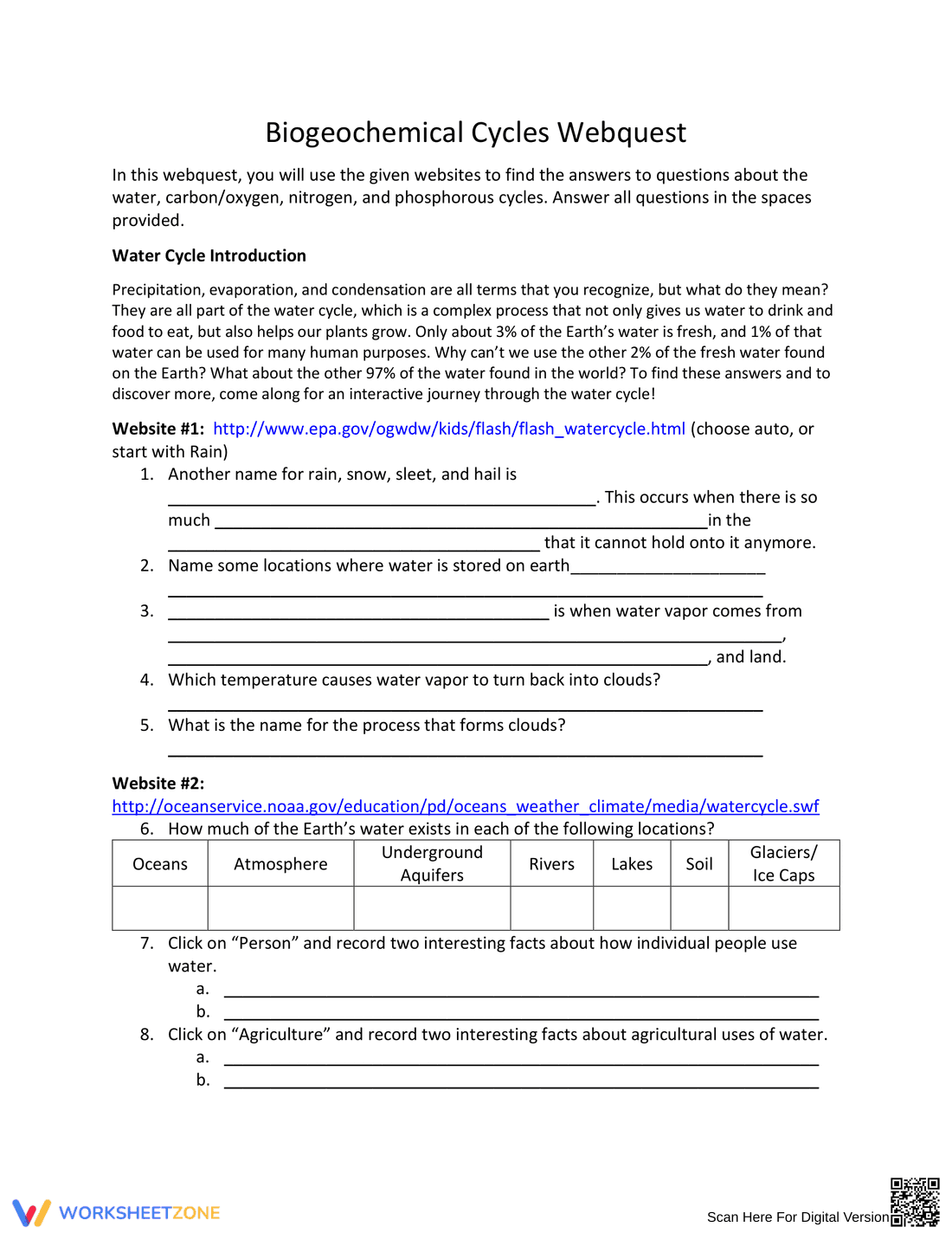
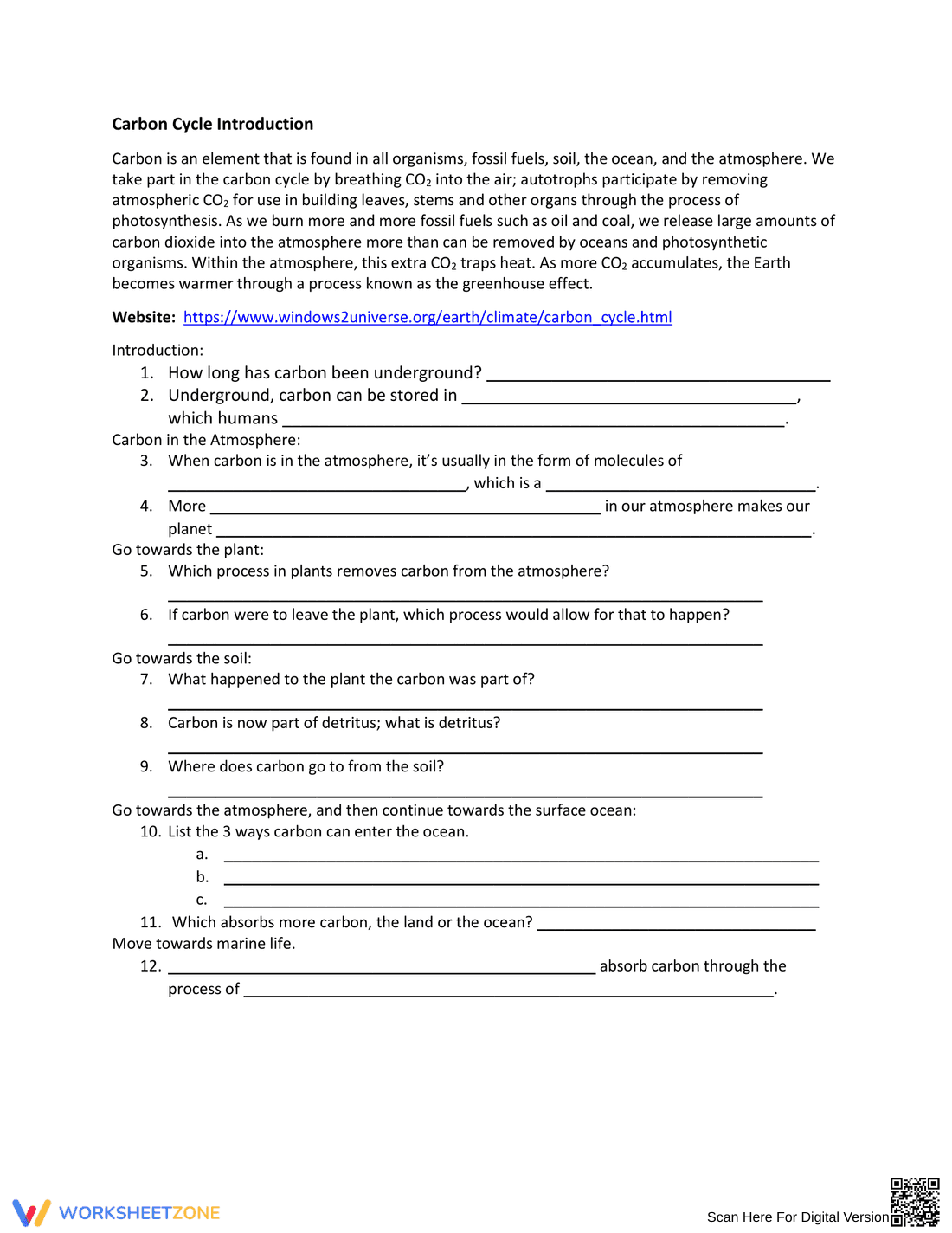
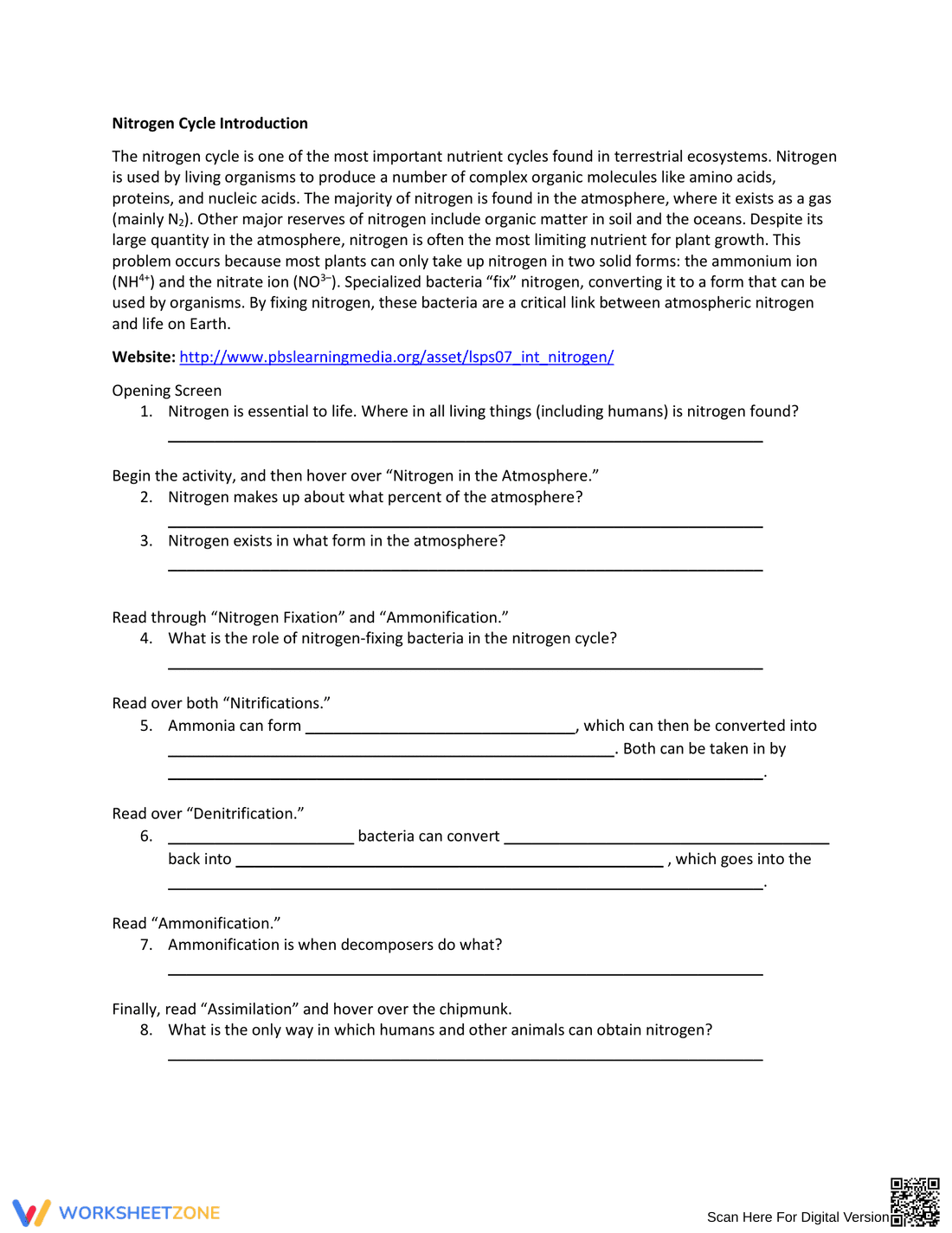
This is an educational worksheet titled 'Biogeochemical Cycles Webquest.' It focuses on the water cycle and includes questions that require students to use provided website links (EPA and NOAA) to find answers. The worksheet includes fill-in-the-blank questions about the water cycle processes, locations of water storage, and a table to record the amount of Earth's water in different locations like oceans, atmosphere, and glaciers. It also prompts students to find and record facts about how people and agriculture use water.
Grade Level Suitability:
This worksheet is suitable for grades 6-9. The content requires research and comprehension skills beyond elementary levels. The concepts of biogeochemical cycles and the use of online resources for research are appropriate for middle school and early high school students.
Why Use It:
This worksheet helps students learn about the water cycle and its components. It encourages research skills by requiring students to use online resources to find answers. It also promotes critical thinking by asking students to find and record facts related to water usage by people and in agriculture. It connects the water cycle to real-world applications.
How to Use It:
Provide students with the worksheet and access to the internet. Instruct them to visit the provided website links and use the information to answer the questions. Students should fill in the blanks and complete the table with the requested information. Encourage them to explore the websites beyond the specific questions to enhance their understanding.
Target Users:
The target users are middle school and early high school students learning about the water cycle, biogeochemical cycles, and environmental science. It is also suitable for teachers looking for engaging and interactive activities to supplement their lessons on these topics.
This is an educational worksheet titled 'Biogeochemical Cycles Webquest.' It focuses on the water cycle and includes questions that require students to use provided website links (EPA and NOAA) to find answers. The worksheet includes fill-in-the-blank questions about the water cycle processes, locations of water storage, and a table to record the amount of Earth's water in different locations like oceans, atmosphere, and glaciers. It also prompts students to find and record facts about how people and agriculture use water.
Grade Level Suitability:
This worksheet is suitable for grades 6-9. The content requires research and comprehension skills beyond elementary levels. The concepts of biogeochemical cycles and the use of online resources for research are appropriate for middle school and early high school students.
Why Use It:
This worksheet helps students learn about the water cycle and its components. It encourages research skills by requiring students to use online resources to find answers. It also promotes critical thinking by asking students to find and record facts related to water usage by people and in agriculture. It connects the water cycle to real-world applications.
How to Use It:
Provide students with the worksheet and access to the internet. Instruct them to visit the provided website links and use the information to answer the questions. Students should fill in the blanks and complete the table with the requested information. Encourage them to explore the websites beyond the specific questions to enhance their understanding.
Target Users:
The target users are middle school and early high school students learning about the water cycle, biogeochemical cycles, and environmental science. It is also suitable for teachers looking for engaging and interactive activities to supplement their lessons on these topics.


