


























Views
Downloads

Printable RL.4.6 Point of View Worksheet | Grade 4 ELA
Paste this activity's link or code into your existing LMS (Google Classroom, Canvas, Teams, Schoology, Moodle, etc.).
Students can open and work on the activity right away, with no student login required.
You'll still be able to track student progress and results from your teacher account.
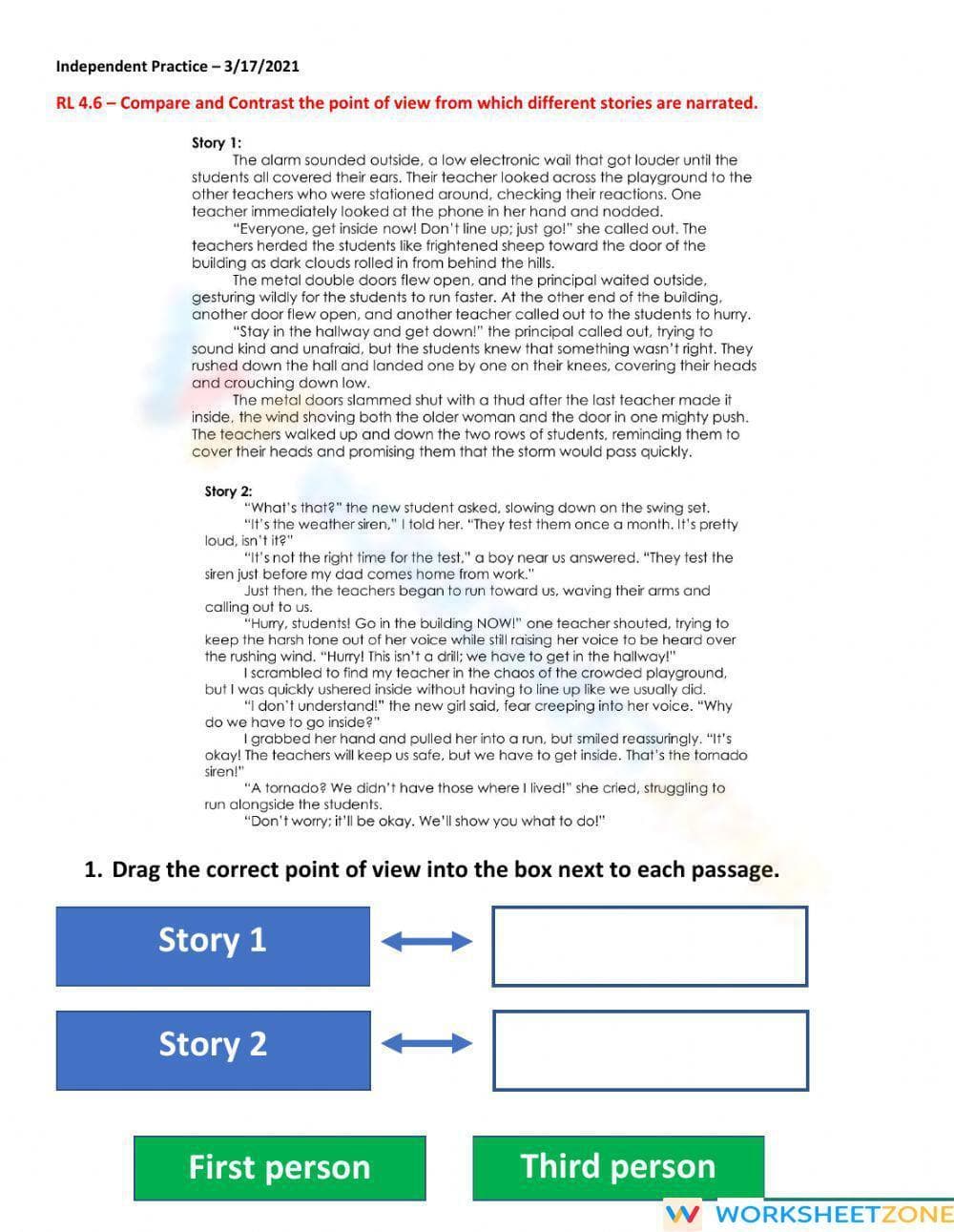
Mastering point of view is essential for fourth-grade readers as they move toward complex literary analysis. This RL.4.6 worksheet provides two contrasting narratives—one told from a third-person perspective and one from a first-person observer. Students practice identifying narrators, dragging-and-dropping evidence, and explaining how different perspectives impact the story's delivery and tone.
At a Glance
- Grade: 4 · Subject: ELA
- Standard:
RL.4.6— Compare and contrast the point of view from which different stories are narrated- Skill Focus: Narrative Point of View Analysis
- Format: 3 pages · 5 problems · Answer key included · PDF
- Best For: Literacy centers and independent practice
- Time: 20–30 minutes
What's Inside
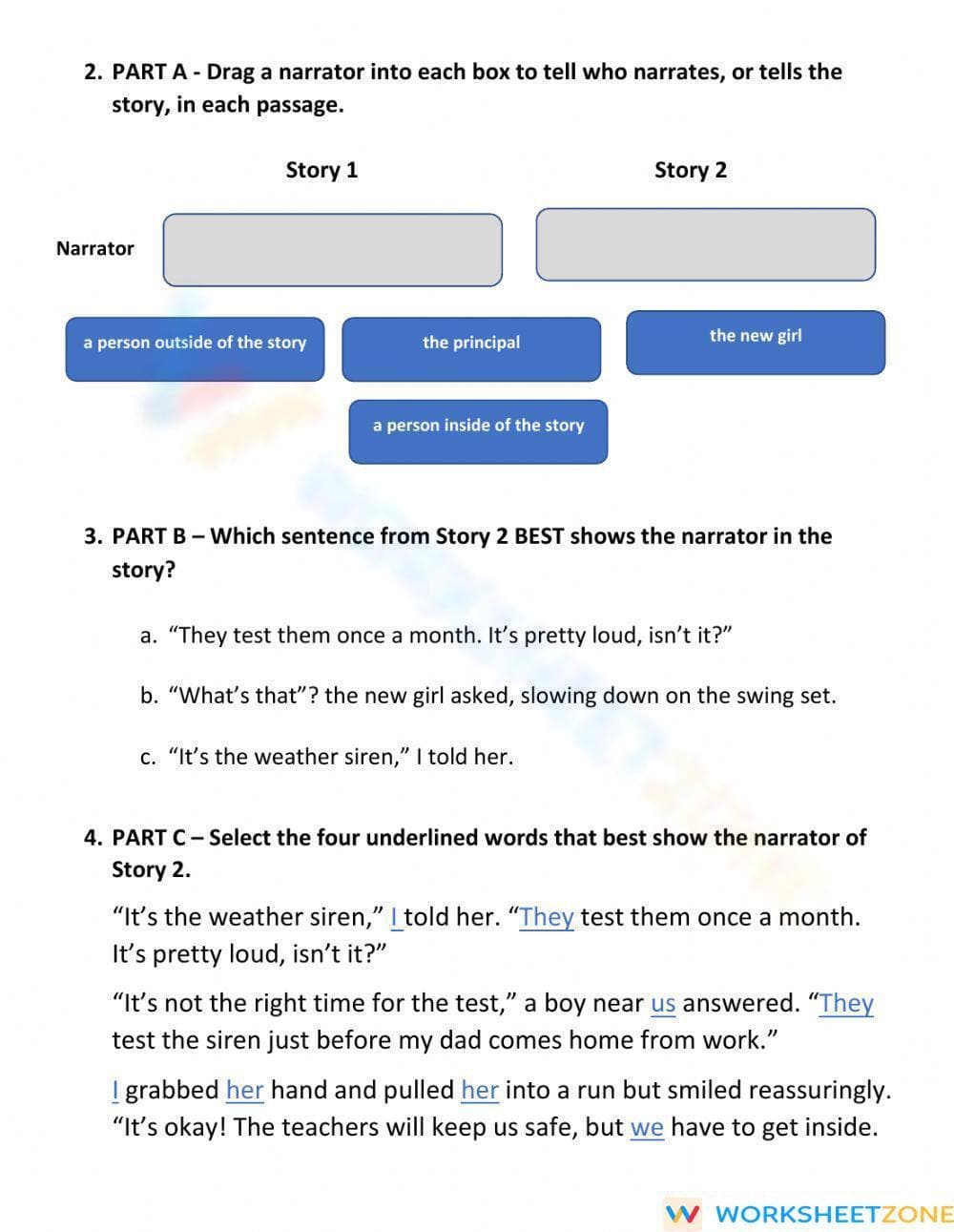
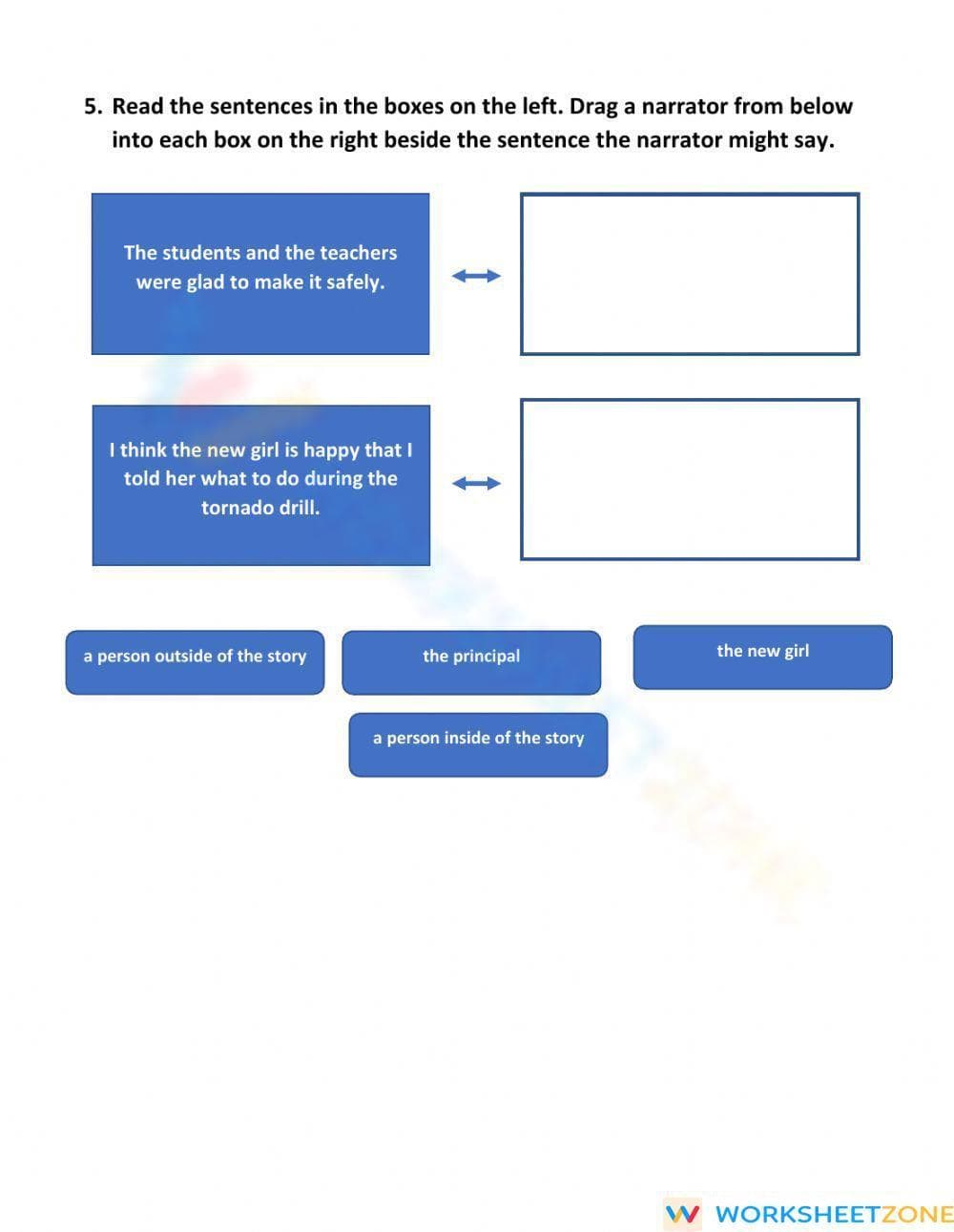
The PDF includes three pages of structured reading activities. Page one features two short stories: a high-stakes emergency drill and a conversation on a playground. Page two moves into evidence-based questions, requiring students to identify specific words that signal the narrator's presence. The final page challenges students to match quotes to their likely speakers, ensuring a deep understanding of character voice.
Skill Progression
- Guided practice: Identifying broad point of view for two narratives using visual drag-and-drop cues.
- Supported practice: Identifying the specific narrator and selecting textual evidence that justifies their classification.
- Independent practice: Matching quotes to narrators, demonstrating a successful transfer of the perspective-taking skill.
This gradual-release approach ensures students master the concept of perspective before moving to higher-order contrast tasks.
Standards Alignment
This resource is aligned to RL.4.6: "Compare and contrast the point of view from which different stories are narrated." It also supports RL.4.1 by requiring students to refer to textual details when explaining what the text says explicitly. These standard codes can be copied directly into lesson plans, IEP goals, or district curriculum mapping tools.
How to Use It
Assign this during your literacy block after a mini-lesson on pronoun signals. It works perfectly as a formative assessment; observe if students correctly identify "Story 2" as first-person based on internal pronoun usage. Most students will complete the five tasks within 25 minutes, making it an ideal choice for a rotations station.
Who It's For
This resource is designed for Grade 4 but offers review for Grade 5 or remediation for Grade 3. It is helpful for English Language Learners who need visual scaffolds and drag-and-drop interactions to demonstrate comprehension. Pair this with a Point of View anchor chart to reinforce the distinction between narrator types.
According to the RAND AIRS 2024 report, the ability to distinguish between internal and external narrators is a critical foundational predictor of future reading achievement. This worksheet directly addresses this academic need by targeting standard RL.4.6, which focuses on the comparative analysis of point of view. By requiring students to identify whether a story is told from a first-person perspective or by a third-person observer, these tasks build the cognitive "narrative mapping" skills necessary for interpreting complex literature later in their schooling. The specific structure of this activity—moving from basic identification to the selection of textual evidence—aligns with evidence-based practices for literacy instruction. Teachers can use these five problems to measure student mastery of perspective-taking, a skill that research from ScienceDirect identifies as essential for developing critical thinking in elementary readers. This ready-to-print resource ensures high-quality, standards-aligned practice for all learners.


