


























0
Views
0
Downloads

0.0
0
Save
0 Likes
Identifying The Smallest Fruit Size Comparison Worksheet
0 Views
0 Downloads
Paste this activity's link or code into your existing LMS (Google Classroom, Canvas, Teams, Schoology, Moodle, etc.).
Students can open and work on the activity right away, with no student login required.
You'll still be able to track student progress and results from your teacher account.
Information
Description
What It Is:
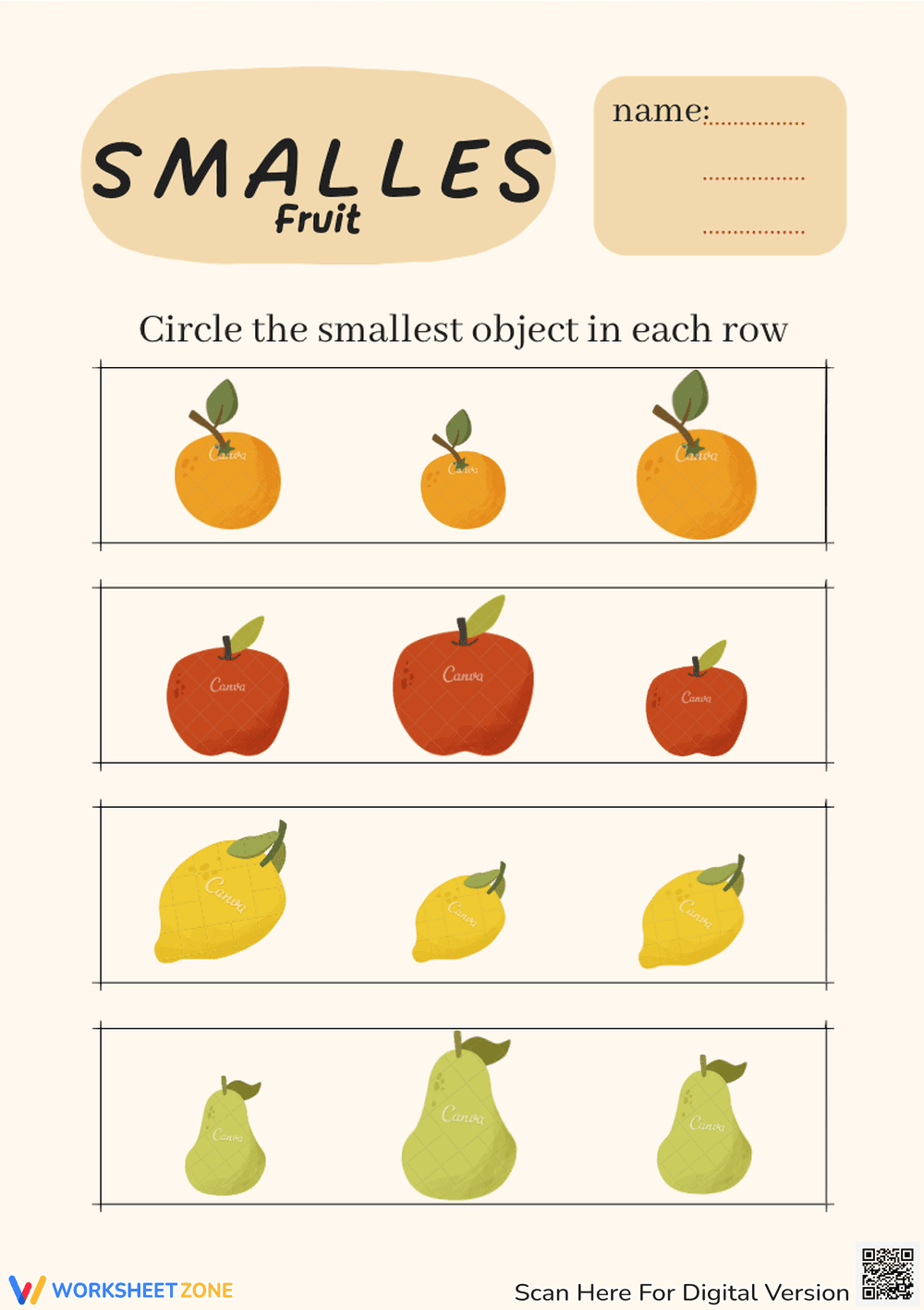
This engaging worksheet features four horizontal rows of colorful fruit illustrations, including oranges, apples, lemons, and pears. Each row presents three fruits of varying sizes, challenging students to distinguish between small, medium, and large objects.
Why Use It:
It supports the development of visual discrimination and early logic skills. By comparing sizes, children strengthen their understanding of relative proportions and fine motor skills as they circle the correct answers.
How to Use It:
• Examine the three pieces of fruit in the first row.
• Identify which of the fruits is the smallest in size.
• Use a pencil or crayon to circle the smallest fruit in each row.
Grade Suitability:
Best for Early Childhood and Kindergarten.
• Younger kids focus on basic size recognition and naming different fruits.
• Older students focus on following directions independently and refining comparison skills.
Target Users:
This worksheet is ideal for preschool teachers, homeschooling parents, and early childhood educators looking for simple, effective visual learning tools.
This engaging worksheet features four horizontal rows of colorful fruit illustrations, including oranges, apples, lemons, and pears. Each row presents three fruits of varying sizes, challenging students to distinguish between small, medium, and large objects.
Why Use It:
It supports the development of visual discrimination and early logic skills. By comparing sizes, children strengthen their understanding of relative proportions and fine motor skills as they circle the correct answers.
How to Use It:
• Examine the three pieces of fruit in the first row.
• Identify which of the fruits is the smallest in size.
• Use a pencil or crayon to circle the smallest fruit in each row.
Grade Suitability:
Best for Early Childhood and Kindergarten.
• Younger kids focus on basic size recognition and naming different fruits.
• Older students focus on following directions independently and refining comparison skills.
Target Users:
This worksheet is ideal for preschool teachers, homeschooling parents, and early childhood educators looking for simple, effective visual learning tools.


