


























Views
Downloads

Printable Beginning Letter Sounds Worksheet | Preschool ELA
Paste this activity's link or code into your existing LMS (Google Classroom, Canvas, Teams, Schoology, Moodle, etc.).
Students can open and work on the activity right away, with no student login required.
You'll still be able to track student progress and results from your teacher account.
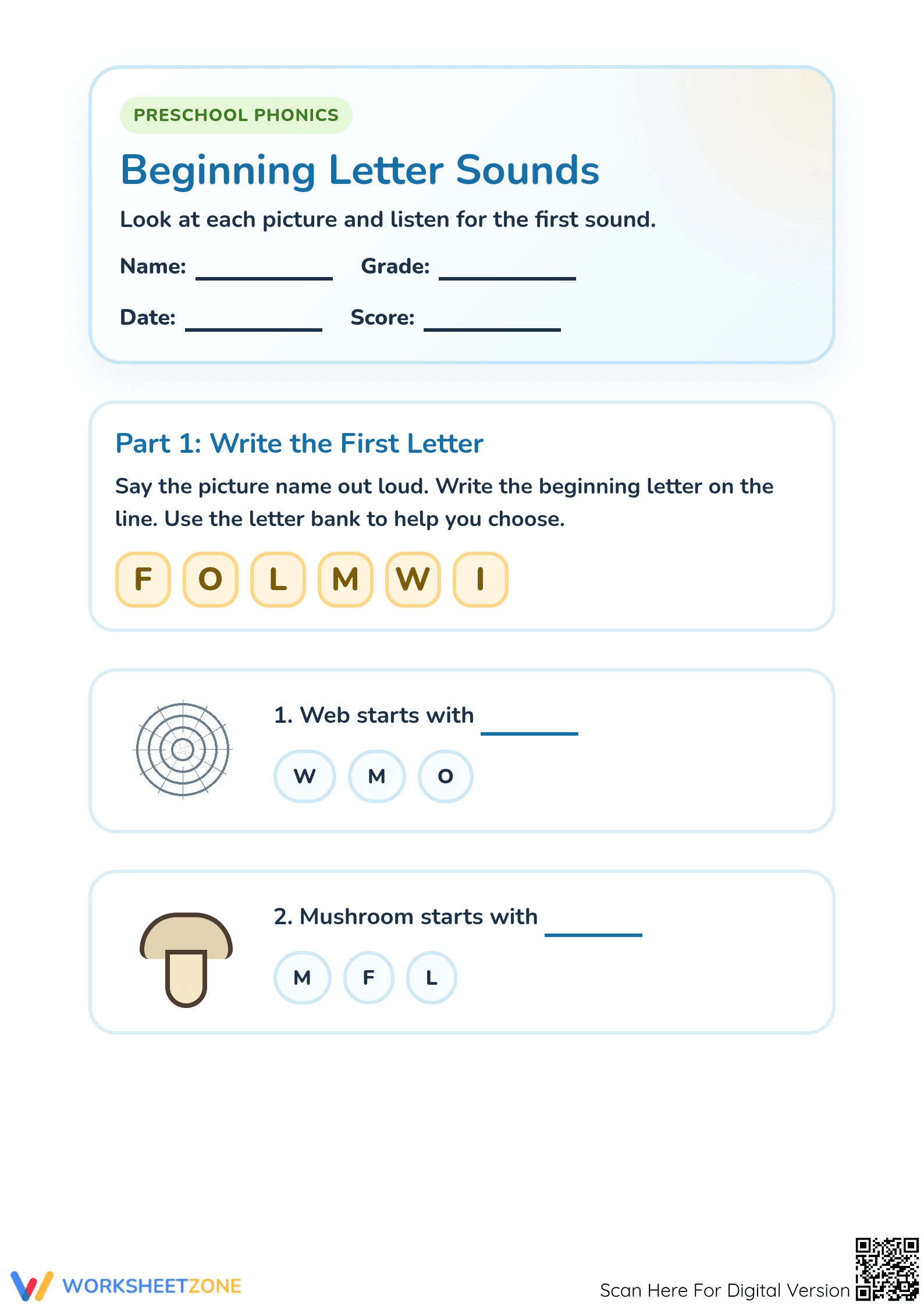
This Beginning Letter Sounds worksheet strengthens early phonemic awareness by asking students to identify and write initial letters for common objects. By connecting visual symbols with spoken sounds, learners build the foundational skills necessary for fluent reading and confident spelling in early childhood education. This resource focuses on the isolation and identification of starting phonemes as a critical first step in the reading process.
At a Glance
- Grade: Preschool · Subject: ELA
- Standard:
CCSS.ELA-LITERACY.RF.K.3.A— Identify the primary sound associated with a specific letter- Skill Focus: Beginning letter sounds
- Format: 3 pages · 9 problems · Answer key included · PDF
- Best For: Independent phonics practice and literacy centers
- Time: 10–15 minutes
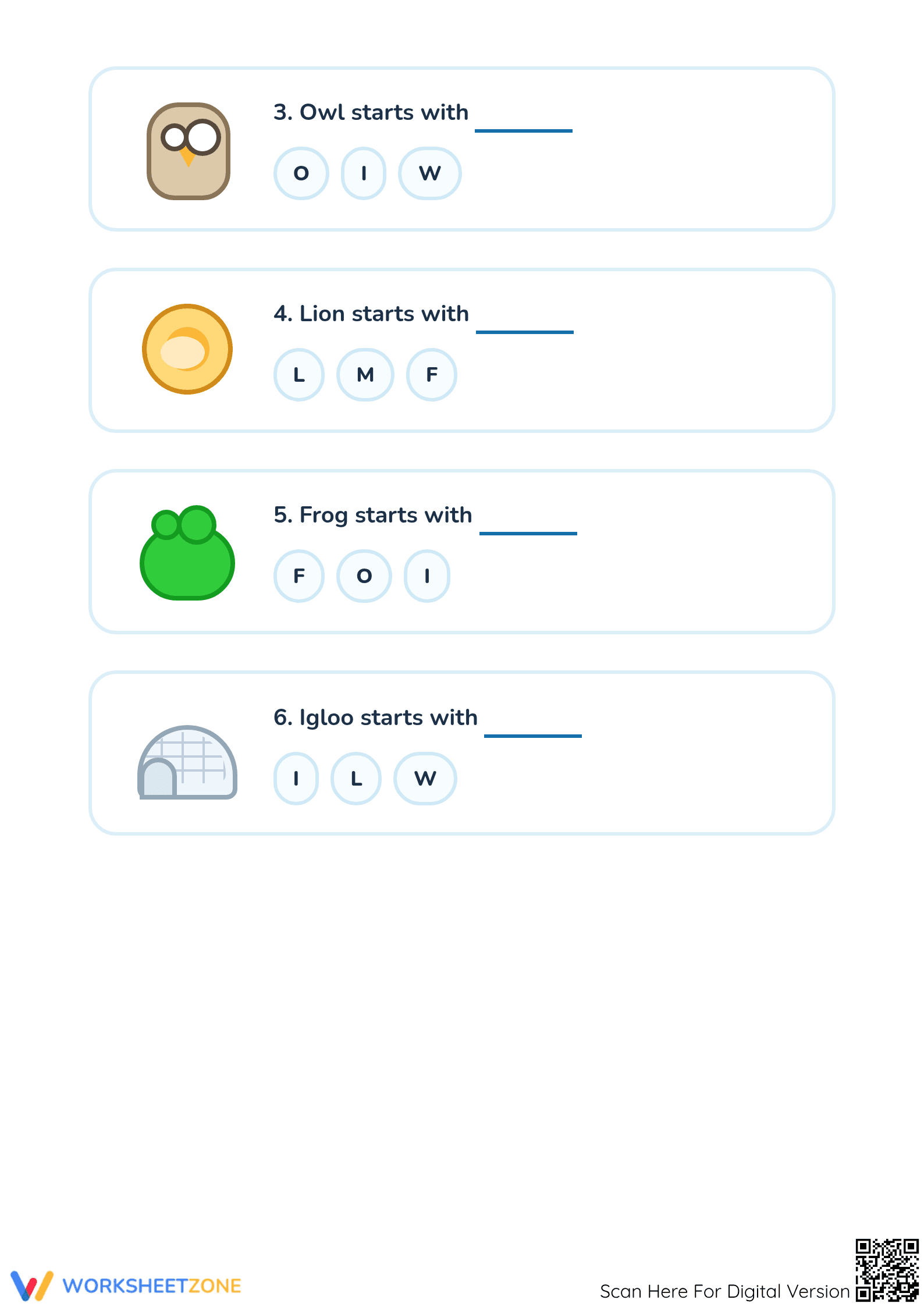
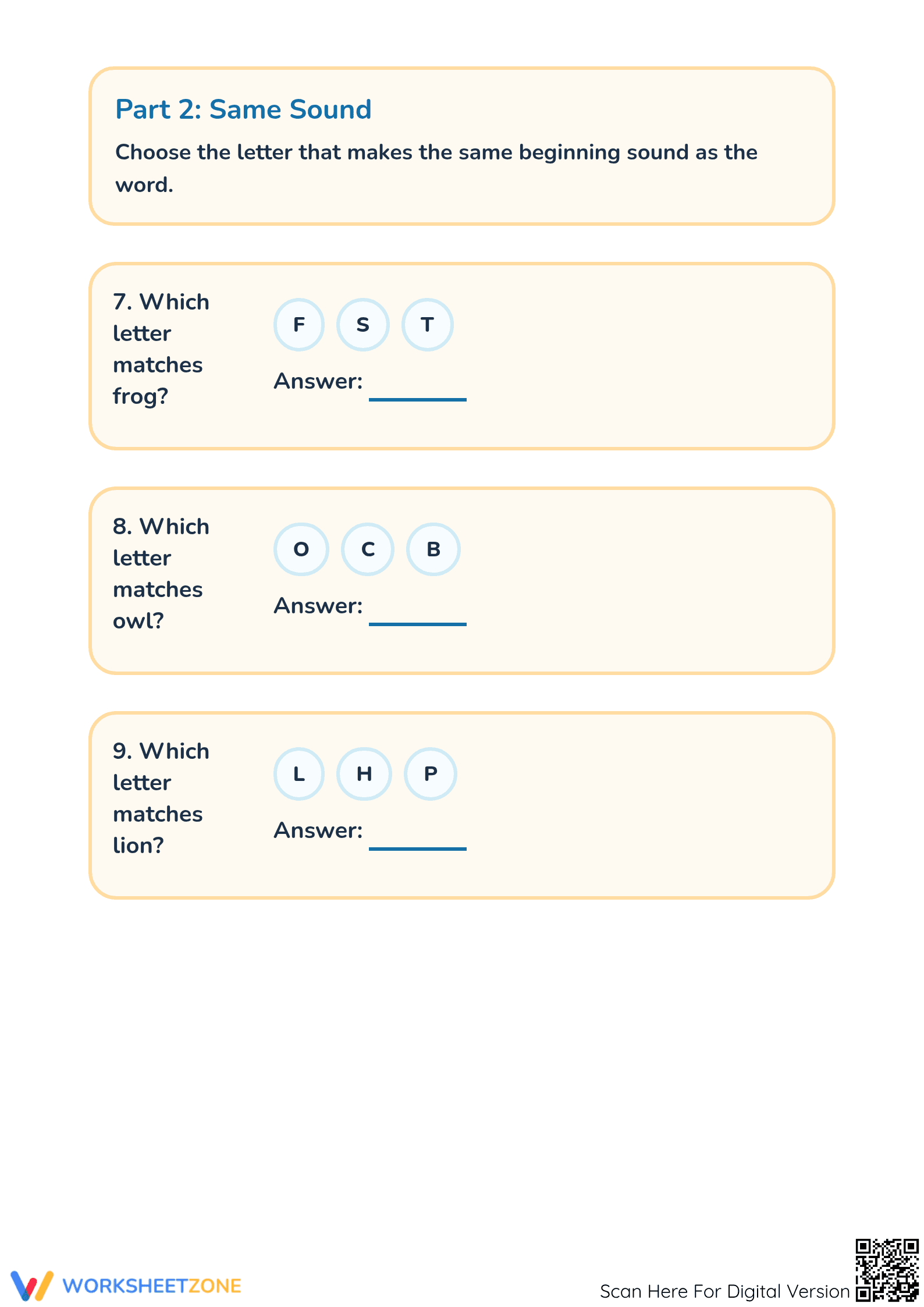
This 3-page PDF contains nine structured problems across two distinct parts. Part 1 focuses on visual-to-phoneme mapping with pictures like an owl, mushroom, and frog, accompanied by a helpful letter bank to support early learners. Part 2 reinforces these connections through sound matching tasks. A complete answer key is provided to facilitate quick grading and student self-correction.
Skill Progression
- Guided Practice: The initial items provide a letter bank to scaffold students as they identify the beginning sound of familiar objects like a web and mushroom, ensuring high success rates for new learners.
- Supported Practice: Subsequent tasks require students to choose the correct starting letter from a small multiple-choice field, reducing cognitive load while maintaining focus on the target phoneme identification.
- Independent Practice: The final section tests retention by asking students to match specific sounds to letters without direct picture support, following a gradual-release instructional model that builds confidence.
This structure follows the I Do, We Do, You Do methodology, moving from heavy scaffolding to independent identification to ensure mastery.
Standards Alignment
The primary standard CCSS.ELA-LITERACY.RF.K.3.A focuses on demonstrating basic knowledge of one-to-one letter-sound correspondences by producing the primary sound for consonants. This worksheet provides direct evidence of a student's ability to isolate the initial sound in a spoken word and associate it with its printed symbol. Both standard codes can be copied directly into lesson plans, IEP goals, or district curriculum mapping tools.
How to Use It
Use this as a dedicated center activity after a whole-group lesson on initial phonemes. We recommend that teachers observe students as they say the word out loud to ensure they are isolating the first sound correctly before selecting a letter. This provides an excellent opportunity for formative assessment. Expect a total completion time of approximately 15 minutes for most students.
Who It's For
This resource is specifically designed for Preschool and early Kindergarten students. It provides excellent support for English Language Learners (ELL) through high-quality visual cues and familiar vocabulary. For best results, pair this worksheet with a letter-sound anchor chart or a phonics-based read-aloud passage to reinforce the auditory-visual connection.
Aligned with CCSS.ELA-LITERACY.RF.K.3.A, this worksheet provides targeted practice in initial phoneme identification. Early mastery of letter-sound correspondence is crucial for reading success. By isolating beginning sounds in familiar words, students develop phonological processing skills vital for decoding. This resource offers a structured path from guided identification to independent mastery, preparing learners for higher-level phonics and word blending. High-interest visuals maintain engagement while promoting measurable growth in phonemic awareness.


