


























Views
Downloads

Printable Beginning Letter Sounds Worksheet | Preschool ELA
Paste this activity's link or code into your existing LMS (Google Classroom, Canvas, Teams, Schoology, Moodle, etc.).
Students can open and work on the activity right away, with no student login required.
You'll still be able to track student progress and results from your teacher account.
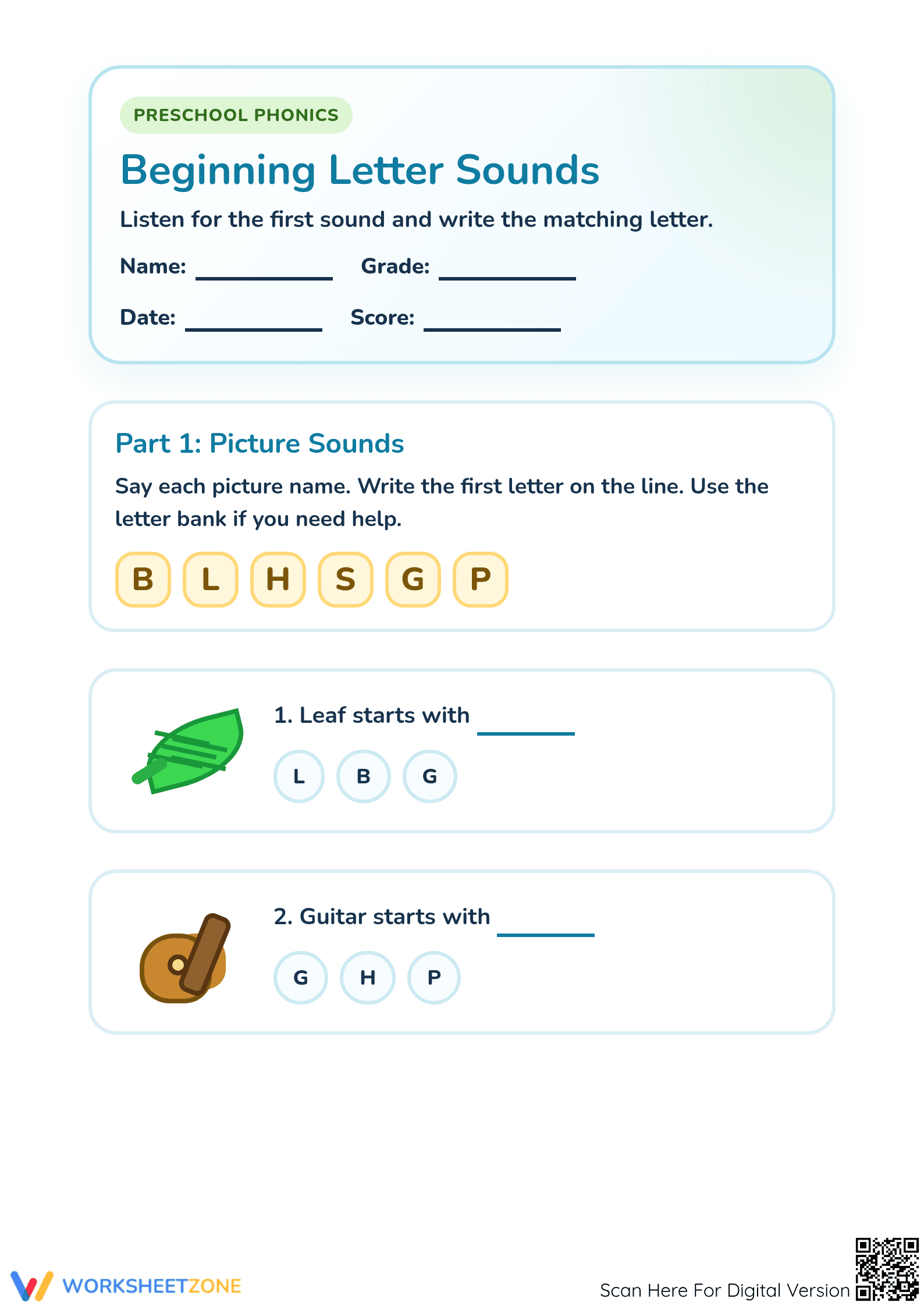
This Preschool Phonics worksheet helps early learners master initial consonant sounds through visual cues and letter matching. Students build essential phonemic awareness by identifying the first sound of common objects like leaves, guitars, and balloons. This resource provides a structured bridge between auditory recognition and written letter association for young children starting their literacy journey.
At a Glance
- Grade: Preschool · Subject: English Language Arts
- Standard:
CCSS.ELA-LITERACY.RF.K.2.D— Isolate and pronounce the initial sounds in CVC words- Skill Focus: Beginning Letter Sounds
- Format: 3 pages · 9 problems · Answer key included · PDF
- Best For: Independent phonics practice and morning work
- Time: 10–15 minutes
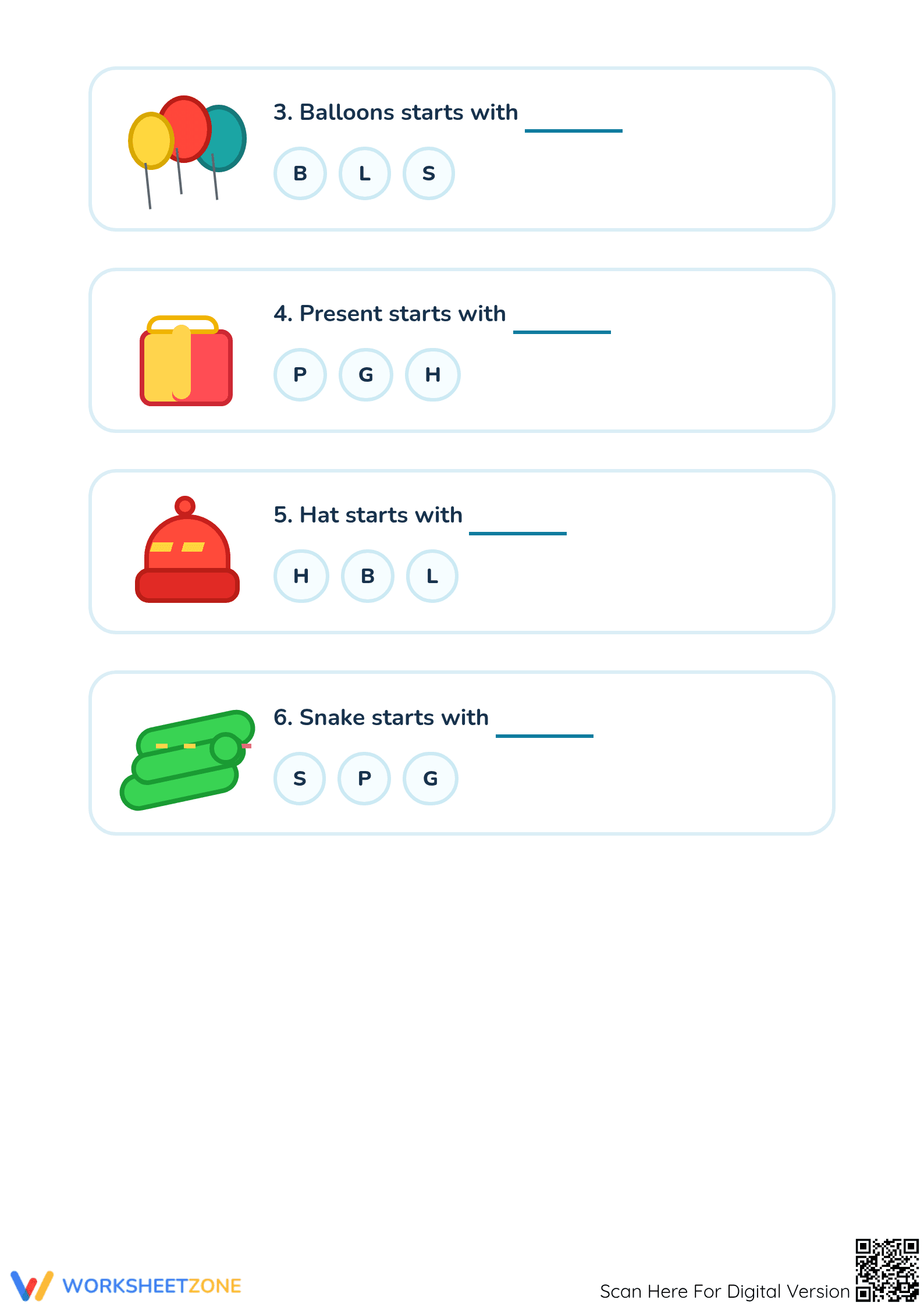
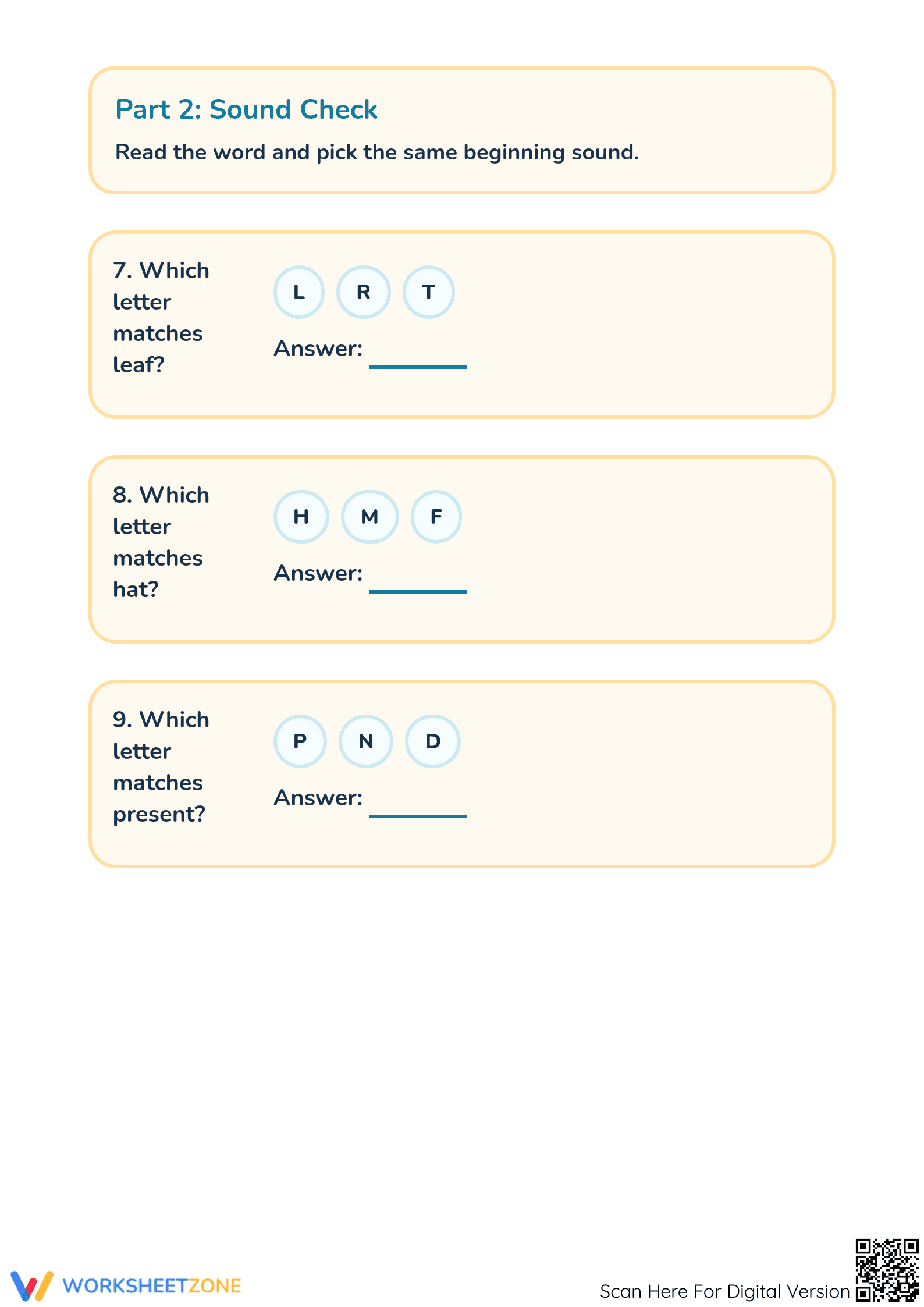
The packet contains three pages of interactive content designed for small hands and emerging readers. Part 1 features six picture-to-sound tasks with a convenient letter bank (B, L, H, S, G, P) and multiple-choice options to scaffold the writing process. Part 2 shifts to "Sound Check," where students read a word and select the matching beginning sound from three options. A full answer key is provided for quick grading.
Zero-Prep Workflow
- Print (30 seconds): Select the three content pages and the answer key from the PDF file.
- Distribute (1 minute): Provide one packet to each student; no additional manipulatives or scissors are required for completion.
- Review (3 minutes): Use the included answer key to check for sound-symbol correspondence accuracy during small group rotations.
Standards Alignment
The primary alignment is `CCSS.ELA-LITERACY.RF.K.2.D`, which requires students to isolate and pronounce the initial sounds (phonemes) in spoken single-syllable words. By asking students to "say each picture name" and "listen for the first sound," the worksheet directly addresses the phonological awareness requirements of early childhood frameworks. This standard code can be copied directly into lesson plans, IEP goals, or district curriculum mapping tools.
How to Use It
Use this worksheet during your phonics block after a direct instruction lesson on initial consonants. It serves as an excellent formative assessment tool; observe if students are whispering the names of the objects to themselves, which indicates they are actively segmenting the sounds. This is ideal for morning work or as a quiet-time activity to reinforce the "letter of the week" concept.
Who It's For
This resource is tailored for preschool and transitional kindergarten students who are beginning to recognize that spoken words are composed of individual sounds. It is also suitable for English Language Learners who need visual support to build their basic academic vocabulary. Pair this with a "Beginning Sounds" anchor chart or a phonics pocket chart activity for a comprehensive learning experience.
Phonemic awareness is the single most important predictor of later reading success in early childhood education. This `CCSS.ELA-LITERACY.RF.K.2.D` worksheet focuses on the critical skill of initial sound isolation, which is a foundational component of the phonological processor. Research conducted by Fisher & Frey (2014) highlights that intentional, scaffolded practice with letter-sound correspondence significantly accelerates the transition from speech to print for emerging readers. By providing a clear letter bank and visual supports, this resource reduces the cognitive load on young learners, allowing them to focus entirely on the auditory-visual connection. The inclusion of 9 targeted problems ensures that students receive enough repetition to solidify the concept without becoming overwhelmed. Educators can use this tool to track progress in phonological development, providing a tangible artifact of a student's ability to map sounds to symbols in a classroom setting.


