


























Views
Downloads

Printable Beginning Letter Sounds | Preschool ELA
Paste this activity's link or code into your existing LMS (Google Classroom, Canvas, Teams, Schoology, Moodle, etc.).
Students can open and work on the activity right away, with no student login required.
You'll still be able to track student progress and results from your teacher account.
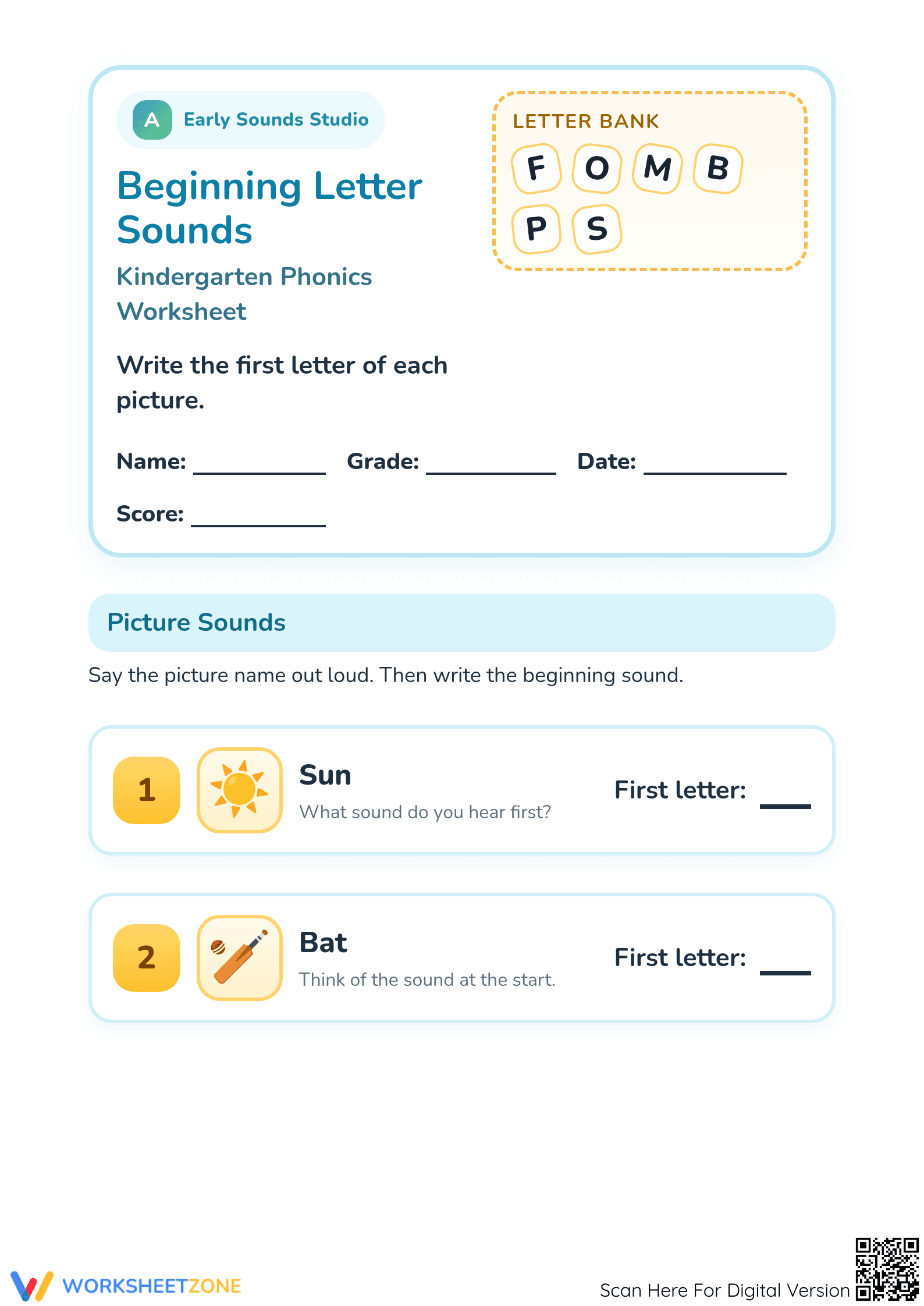
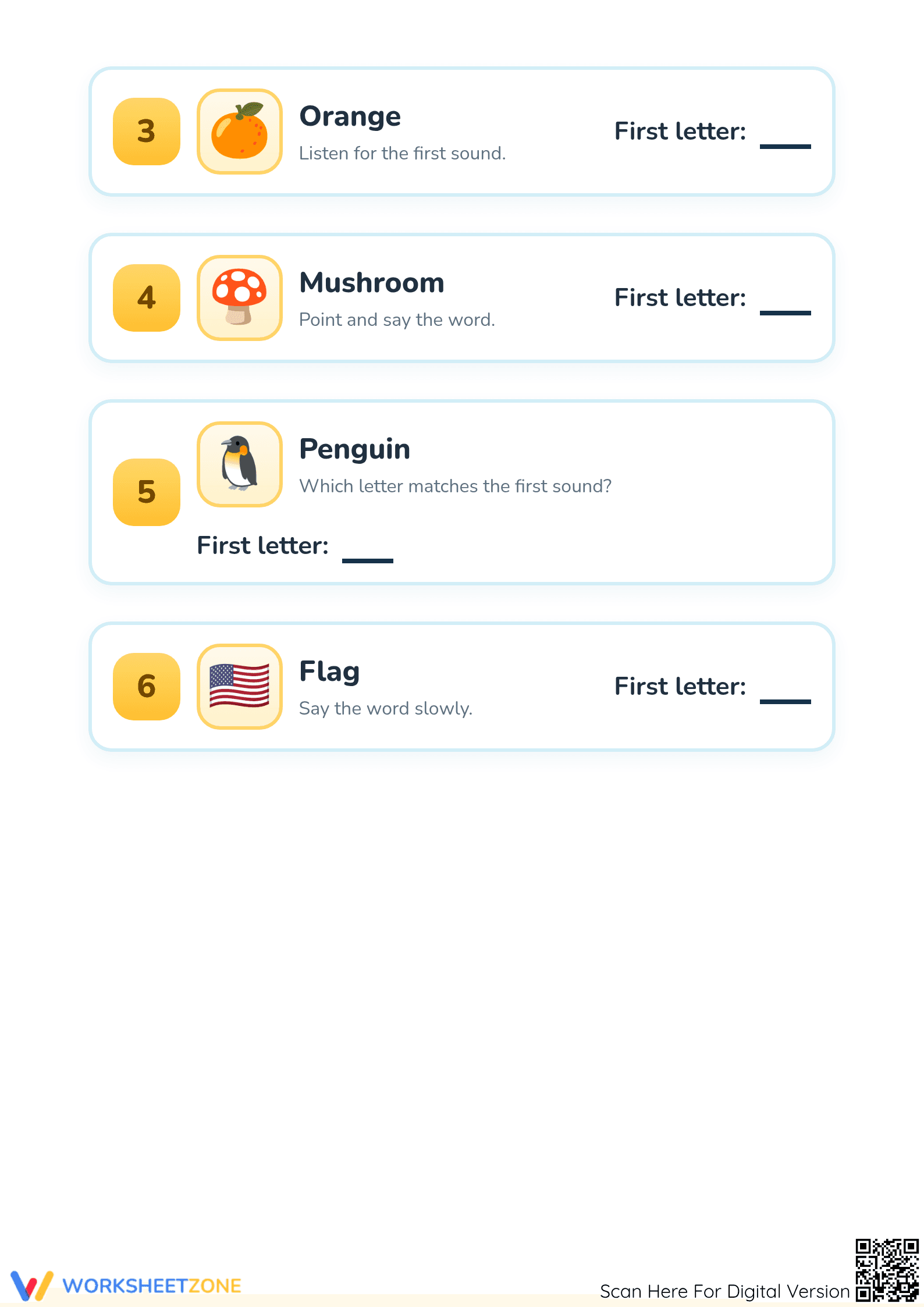
This printable Preschool beginning letter sounds worksheet helps early learners master initial phonemes through engaging visual cues. Students identify pictures like a sun, bat, and mushroom, then write the corresponding first letter from a provided letter bank. It transforms abstract phonics concepts into concrete practice, ensuring students build a strong foundation for reading readiness.
At a Glance
- Grade: Preschool · Subject: English Language Arts
- Standard:
CCSS.ELA-LITERACY.RF.K.2.D— Isolate and pronounce the initial sounds in spoken one-syllable words for early reading readiness- Skill Focus: Specific Initial Phoneme Identification Skills
- Format: 2 comprehensive pages · 6 structured problems · Full answer key included · PDF
- Best For: Daily Phonics Warm-Up, Literacy Centers, or Early Intervention Practice
- Time: 10–15 minutes
What's Inside
This resource features six distinct tasks focusing on common objects with clear beginning sounds. The worksheet includes a convenient Letter Bank (F, O, M, B, P, S) to support young writers who are still mastering letter formation. Structural features like large icons and clear response lines make the layout accessible for preschool children. A full answer key is provided for quick teacher verification.
Zero-Prep Workflow
Implementing this activity into your classroom routine is a simple process. First, print the two-page PDF in seconds. Second, distribute the sheets to students during your phonics block. Finally, review the answers as a group to provide immediate feedback on pronunciation. Total teacher preparation time is under two minutes, making this an ideal solution for sub plans or unexpected schedule gaps.
Standards Alignment
This worksheet aligns with CCSS.ELA-LITERACY.RF.K.2.D, requiring students to isolate and pronounce the initial sounds in simple one-syllable words. By connecting the visual image of a "Bat" to the /b/ sound, students practice essential sound-letter mapping. This standard code can be copied directly into lesson plans, IEP goals, or district curriculum mapping tools to track foundational reading skills.
How to Use It
Use this worksheet during the independent practice phase of a lesson on initial sounds. After modeling the pronunciation of the items, allow students to work to match the pictures to the letters in the bank. For a formative assessment, observe students as they say the word slowly for the Flag or Penguin tasks; note if they are consistently identifying the first sound accurately.
Who It's For
This resource is designed for preschool and kindergarten students beginning their phonics journey. It provides necessary scaffolding through the letter bank, making it excellent for English Language Learners or students requiring intervention in phonemic awareness. It pairs naturally with an alphabet anchor chart or a picture-sort lesson to reinforce the connection between spoken phonemes and written graphemes.
Early literacy research emphasizes that phonemic awareness is the single strongest predictor of later reading success. According to a RAND AIRS 2024 analysis, structured phonics practice using visual-to-phoneme mapping significantly reduces the risk of future reading difficulties in early childhood populations. This worksheet targets CCSS.ELA-LITERACY.RF.K.2.D by requiring students to identify the first sound in six common objects, fostering the cognitive bridge between auditory signals and alphabetical symbols. By providing 6 structured problems with a supporting letter bank, the resource aligns with EdReports 2024 recommendations for high-quality foundational skills instruction. The inclusion of a no-prep workflow ensures that teachers can deliver consistent, evidence-based practice without the burden of extensive preparation. This standalone resource serves as a vital tool for developing the phonological processing skills necessary for decoding and fluency in the primary grades.


