


























Views
Downloads
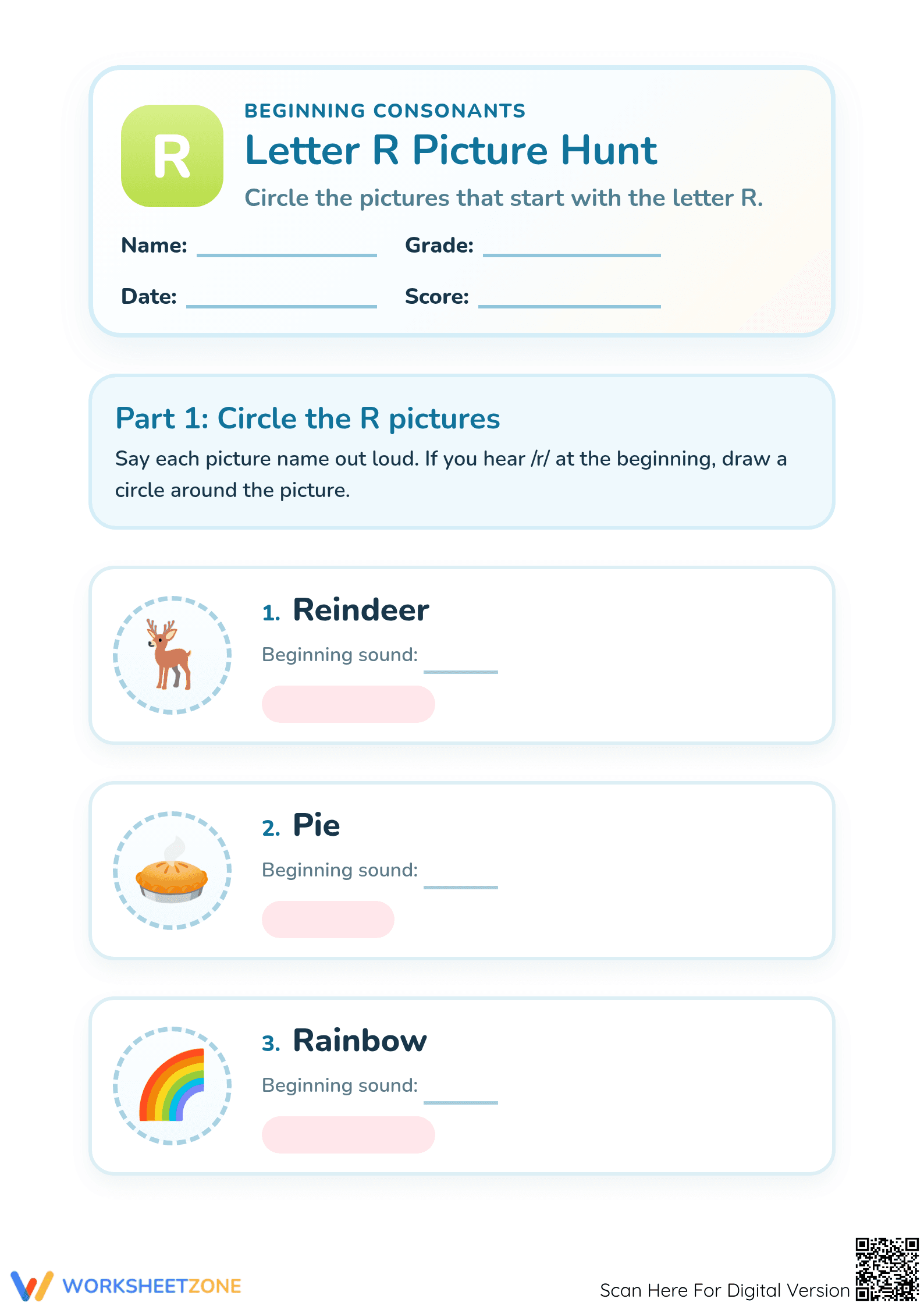
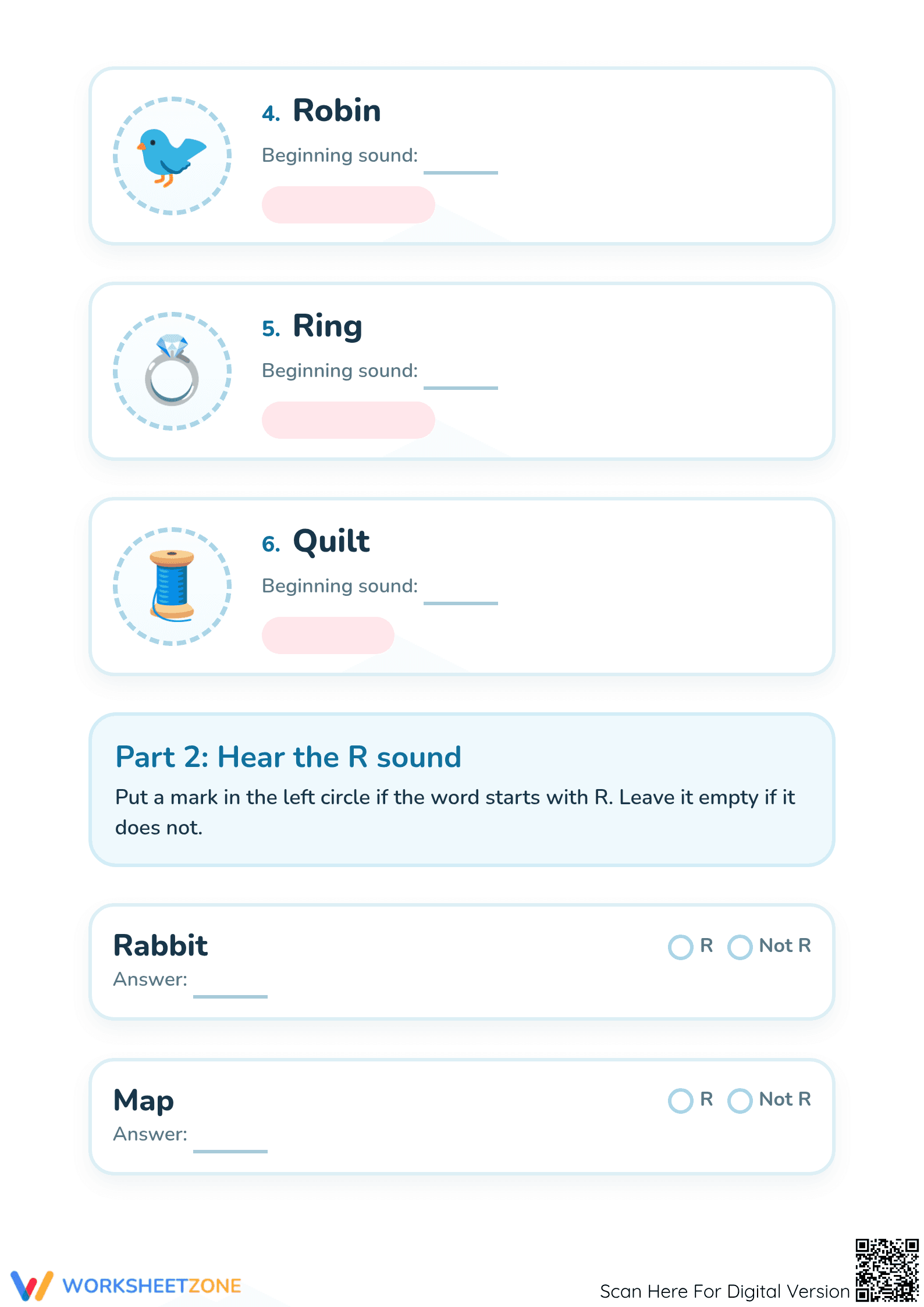
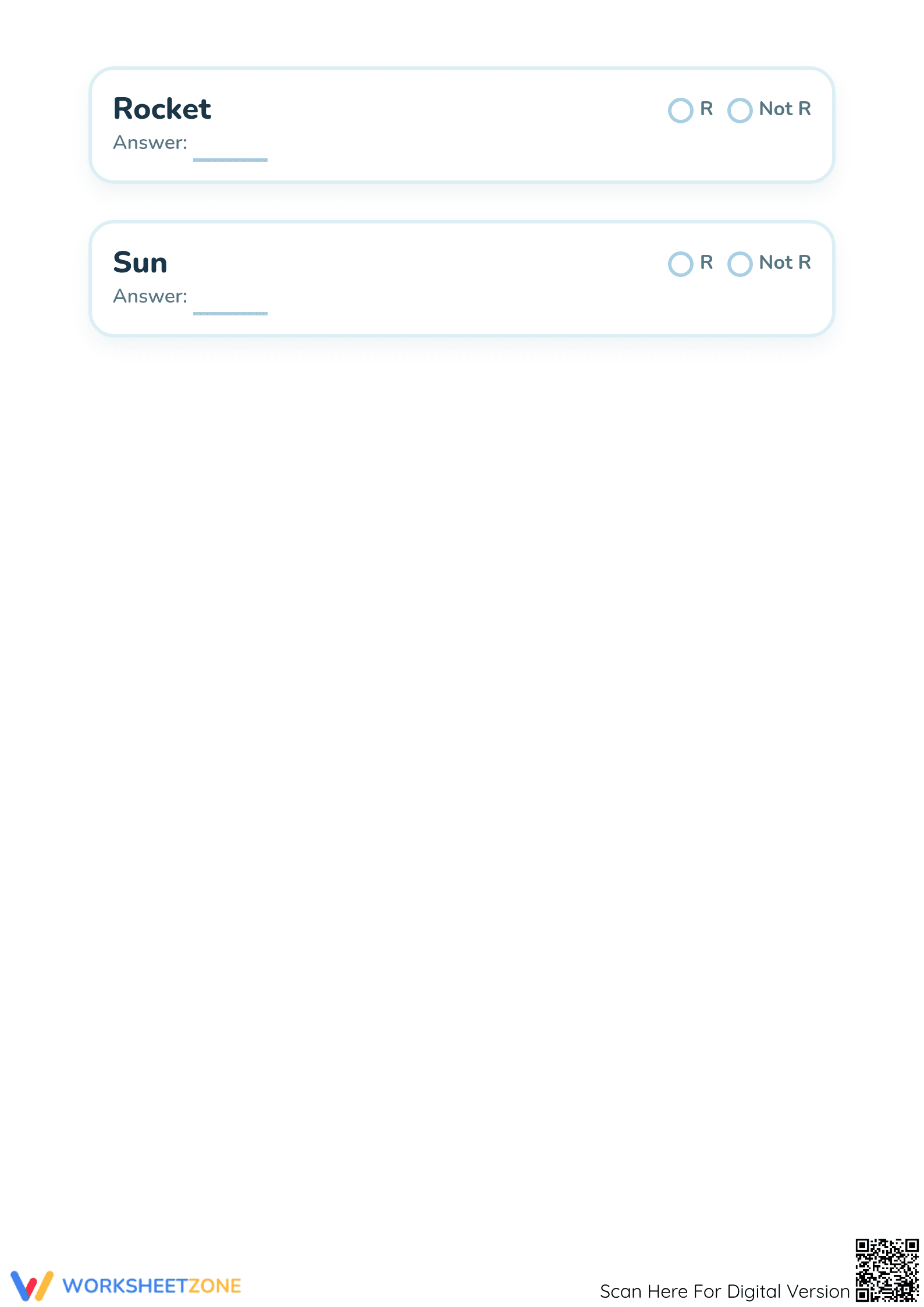

Essential Letter R Beginning Consonant Worksheet | Preschool
Paste this activity's link or code into your existing LMS (Google Classroom, Canvas, Teams, Schoology, Moodle, etc.).
Students can open and work on the activity right away, with no student login required.
You'll still be able to track student progress and results from your teacher account.
This Essential Letter R Beginning Consonant Worksheet helps preschool learners identify and produce the initial /r/ sound through engaging visual activities. By connecting the letter R to familiar objects like reindeer and rainbows, students build foundational phonemic awareness and letter-sound correspondence. This printable resource ensures young readers master beginning consonants with confidence and accuracy.
At a Glance
- Grade: Preschool · Subject: ELA
- Standard:
RF.K.3.A— Produce the primary sound for each consonant in a one-to-one correspondence- Skill Focus: Beginning Consonant /r/ Recognition
- Format: 3 pages · 10 problems · Answer key included · PDF
- Best For: Daily phonics practice and early literacy
- Time: 10–15 minutes
This comprehensive 3-page PDF features 10 targeted phonics tasks divided into two distinct parts. Part one presents six high-quality images where students must identify objects starting with the letter R, such as a robin and a ring. Part two challenges students to hear the /r/ sound in spoken words, requiring them to mark the correct beginning sound for four additional terms. A complete answer key is included for quick grading.
This resource is designed for immediate classroom implementation with a three-step workflow. First, print the document to provide high-contrast, easy-to-read worksheets for every student. Second, distribute the pages for independent or guided work during literacy centers or morning blocks. Finally, review the answers using the provided key to provide instant feedback. Total teacher preparation time for this activity is effectively minimal.
The primary alignment is CCSS.ELA-LITERACY.RF.K.3.A, which focuses on demonstrating basic knowledge of letter-sound correspondences by producing the primary sound for consonants. This worksheet specifically isolates the /r/ consonant to prevent cognitive overload in early learners. This standard code can be copied directly into lesson plans, IEP goals, or district curriculum mapping tools.
Use this worksheet as a formative assessment during direct phonics instruction. For example, have students complete Part 1 after a group "sound hunt" to observe which learners can independently distinguish the /r/ sound from distractors like "pie" or "quilt." It also serves as an excellent zero-prep sub plan or home-connection activity. Expect students to finish within 15 minutes.
This material is specifically tailored for preschool and early kindergarten students who are beginning their journey with phonemic awareness. It provides necessary scaffolding through clear visuals and simple instructions, making it ideal for Tier 1 instruction or small-group intervention. Pair this worksheet with an alphabet anchor chart or a short reading passage about animals for a cohesive literacy experience.
According to the RAND AIRS 2024 analysis of early childhood literacy, systematic exposure to consonant-vowel-consonant precursors and isolated phoneme recognition is a critical predictor of future reading fluency. This worksheet aligns with evidence-based practices by providing explicit practice for the RF.K.3.A standard, focusing on the beginning consonant /r/. By requiring students to hear the sound and see the letter in tandem, the activity reinforces the phoneme-grapheme connection necessary for decoding. Research highlights that early intervention with structured phonics materials significantly reduces the likelihood of future reading difficulties. Educational practitioners can utilize these 10 tasks to gather data on student mastery levels regarding one-to-one letter-sound correspondences. This standalone resource offers a reliable way to assess foundational ELA skills in a classroom setting, ensuring that every learner develops the essential tools for successful literacy development.


