


























Views
Downloads

Essential Grade 3 Math: Multi-Digit Addition & Subtraction
Paste this activity's link or code into your existing LMS (Google Classroom, Canvas, Teams, Schoology, Moodle, etc.).
Students can open and work on the activity right away, with no student login required.
You'll still be able to track student progress and results from your teacher account.
This worksheet provides targeted practice for Grade 3 students on multi-digit addition and subtraction within 1,000. Through a mix of standard problems and real-world word problems, learners will build fluency and confidence in essential arithmetic operations, directly supporting their understanding of number relationships and place value concepts.
At a Glance
- Grade: 3 · Subject: Math
- Standard:
CCSS.MATH.CONTENT.3.NBT.A.2— Fluently add and subtract within 1000 using strategies.- Skill Focus: Multi-Digit Addition and Subtraction
- Format: 3 pages · 17 problems · Answer key included · PDF
- Best For: Independent practice, skill reinforcement, or homework
- Time: 20–30 minutes
What's Inside
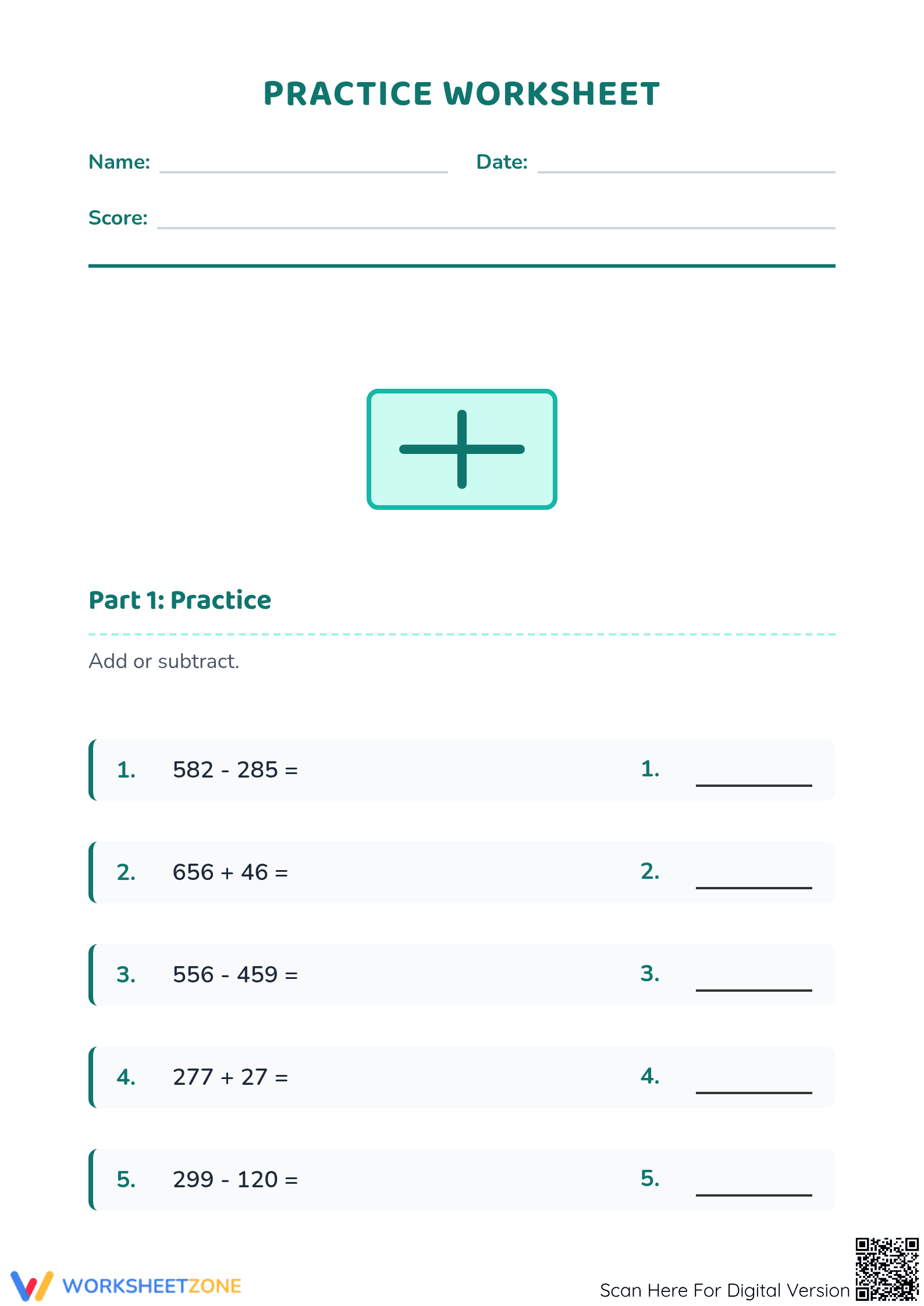
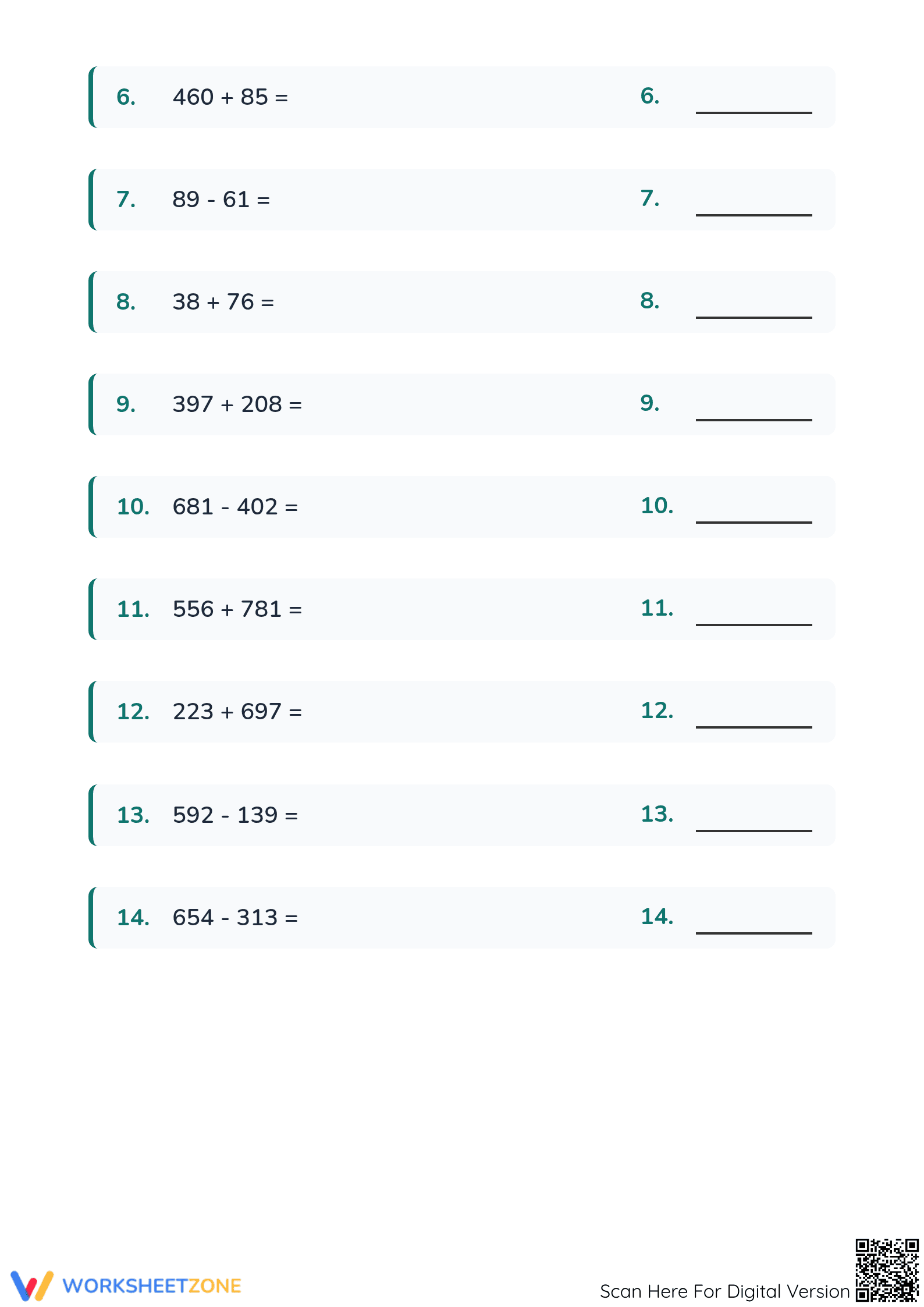
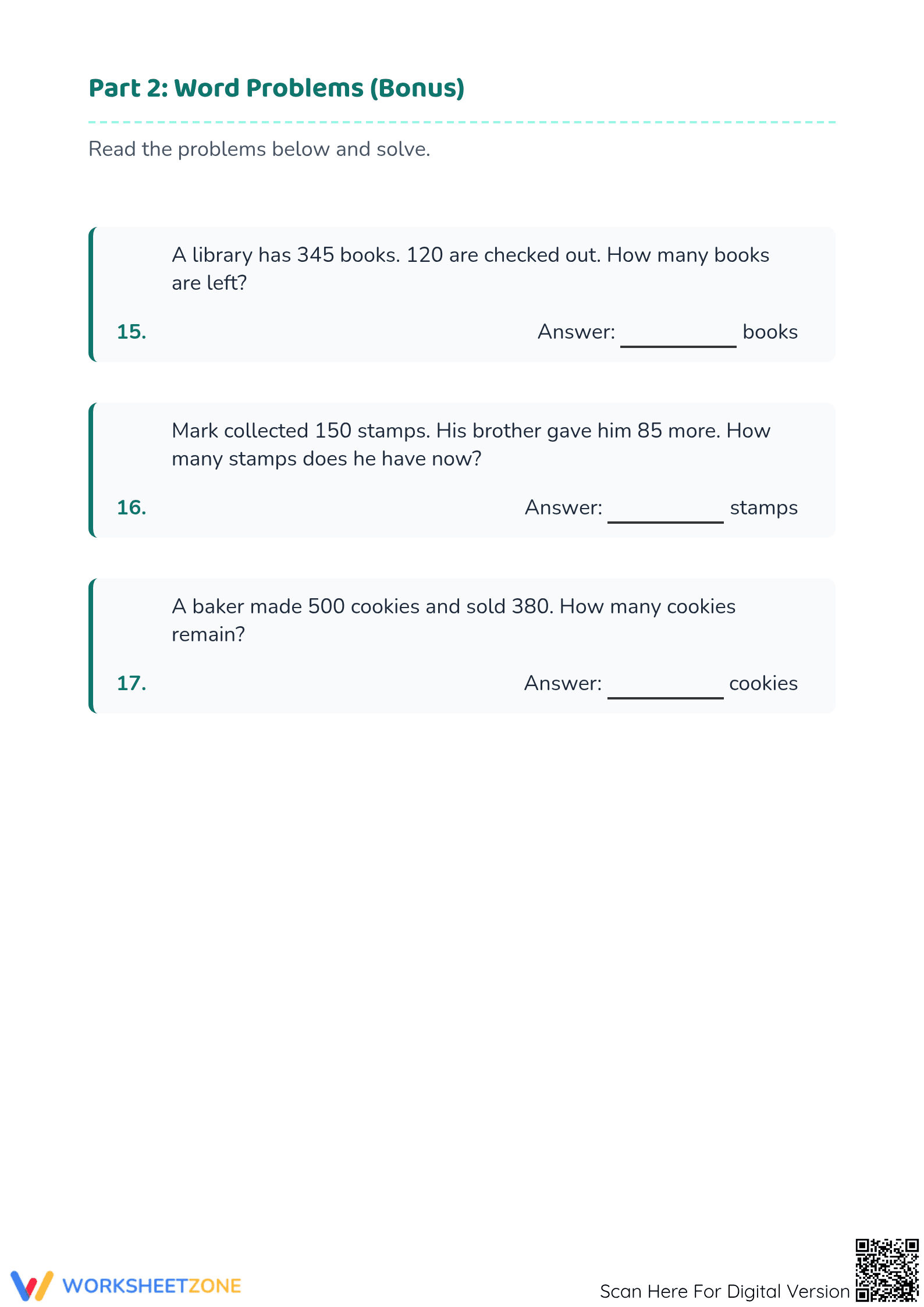
This three-page resource is structured for comprehensive practice. The first two pages contain 14 numerical problems requiring students to add or subtract multi-digit numbers. The final page presents three bonus word problems, challenging students to apply their skills in context. A complete answer key is provided for easy grading.
A Clear Path to Fluency
This worksheet follows a gradual release model:
- Guided Practice: The first few problems can be completed with teacher support to reinforce the steps of multi-digit computation.
- Supported Practice: Students gain proficiency as they work through the 14 direct computation problems, either independently or with a partner.
- Independent Application: The final three word problems require students to independently apply their skills to solve contextual scenarios, demonstrating mastery.
This structure ensures every learner can access the material.
Standards-Based Learning
This worksheet is directly aligned with CCSS.MATH.CONTENT.3.NBT.A.2, which requires students to "fluently add and subtract within 1000." It also supports foundational skills from Grade 2. Both standard codes can be copied directly into lesson plans, IEP goals, or district curriculum mapping tools.
Classroom Implementation
This resource is flexible for independent practice after a lesson or as a homework assignment. For a quick formative assessment, observe how students handle regrouping; this reveals their place value understanding. Most students will complete the worksheet in 20-30 minutes.
Meeting Student Needs
Designed for third graders, this sheet also suits advanced second graders or fourth graders needing review. For students needing support, pair this with a place value chart. For an extension, ask students to write their own word problem using numbers from the computation section.
This Grade 3 worksheet provides practice in multi-digit addition and subtraction, a key component of the standard CCSS.MATH.CONTENT.3.NBT.A.2. The ability to fluently add and subtract within 1000 is a gateway skill for more complex mathematics, including multiplication and division. Research emphasizes that procedural fluency should be developed in tandem with conceptual understanding. According to the RAND AIRS (2024) report on foundational math skills, repeated, structured practice with varied problem types, like the mix of computation and word problems included here, is crucial for solidifying these algorithms. This worksheet offers that necessary practice, helping students move from computational strategies to efficient, standard algorithms, which is a primary goal of elementary mathematics instruction and a predictor of future success in the subject. The inclusion of both addition and subtraction reinforces their inverse relationship.


