


























Views
Downloads
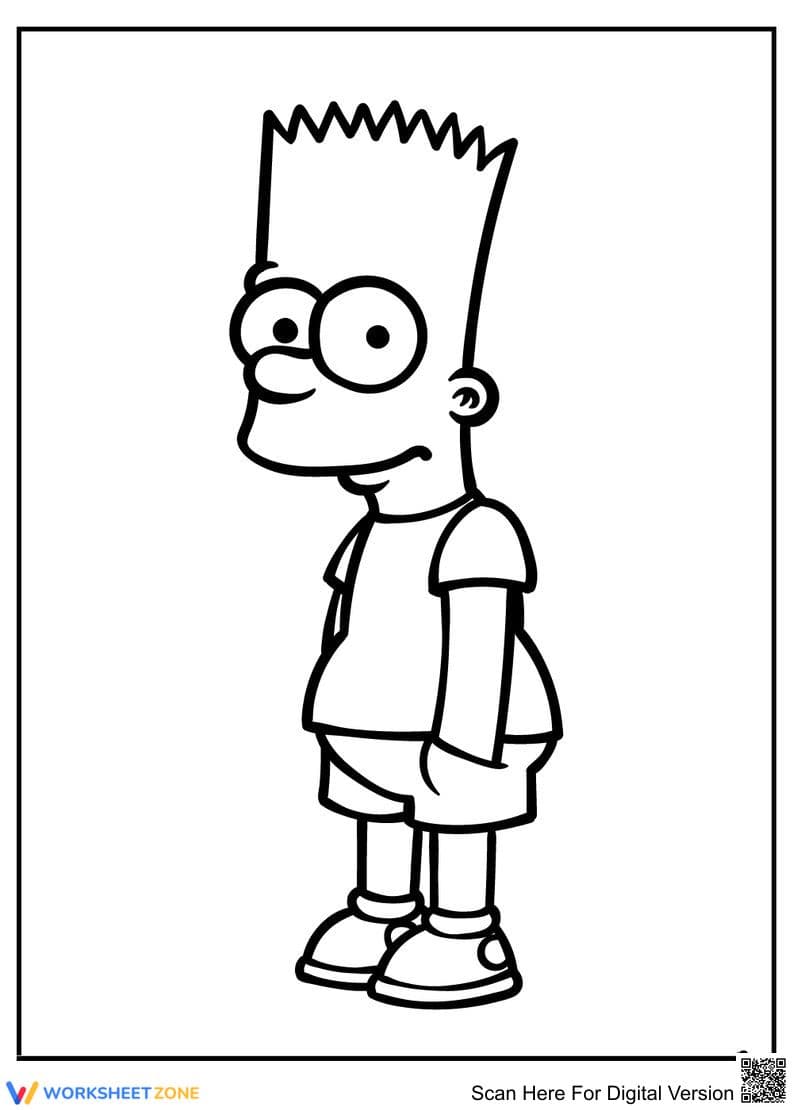

Bart Simpson Coloring Page | Printable Art Activity
Paste this activity's link or code into your existing LMS (Google Classroom, Canvas, Teams, Schoology, Moodle, etc.).
Students can open and work on the activity right away, with no student login required.
You'll still be able to track student progress and results from your teacher account.
This Bart Simpson coloring page provides a high-interest creative outlet for students to practice fine motor control and color application. By engaging with a familiar cartoon character, learners develop hand-eye coordination while exploring artistic expression. This single-page printable is designed for immediate use in early childhood and elementary classrooms to support creative development.
At a Glance
- Grade: K-5 · Subject: Arts & Crafts
- Standard:
VA:Cr1.1.Ka— Engage in exploration and imaginative play with art materials- Skill Focus: Fine motor coordination
- Format: 1 page · 1 task · No answer key · PDF
- Best For: Morning work or early finishers
- Time: 15–20 minutes
Inside this resource, you will find one high-resolution, full-page illustration of Bart Simpson in his signature pose. The clean, bold outlines are specifically designed to help younger students stay within the lines, while the open space allows for creative background additions. This PDF is formatted for standard letter-sized paper, ensuring a perfect print every time.
The zero-prep workflow for this activity is designed for maximum efficiency. First, print the single-page PDF (30 seconds). Second, distribute the sheets along with crayons, markers, or colored pencils (1 minute). Third, allow students to work independently while you transition between lessons or manage small groups (0 minutes prep). Total teacher preparation time is under 2 minutes, making it an ideal sub-plan addition.
This activity aligns with VA:Cr1.1.Ka, which focuses on engaging in exploration and imaginative play with materials. While primarily an art resource, it supports pre-writing skills by strengthening the small muscles in the hand. This standard code can be copied directly into lesson plans, IEP goals, or district curriculum mapping tools to document creative expression time and fine motor development.
Use this worksheet as a calming brain break after intensive core instruction or as a reward for completing primary tasks. It also serves as an excellent formative assessment for observing pencil grip and pressure control in Kindergarten students. Expect students to spend between 15 and 20 minutes completing the coloring and adding their own artistic flair to the background.
This resource is ideal for Preschool through Grade 5 students, though older fans of the series will also enjoy it. It is particularly effective for students requiring occupational therapy support or those who benefit from high-interest visual stimuli. Pair this with a character-building lesson or a short story-writing prompt about the character to extend the learning experience.
According to the RAND AIRS 2024 report on early childhood development, structured coloring activities play a significant role in developing the manual dexterity required for later handwriting proficiency. This Bart Simpson coloring page addresses standard VA:Cr1.1.Ka by providing a familiar framework for artistic exploration. Research from Fisher & Frey (2014) suggests that incorporating popular culture into the classroom can increase student engagement and lower the affective filter, making it easier for students to focus on the physical task of coloring. By providing 1 clear, high-contrast image, this worksheet ensures that students can achieve a sense of completion within a single 20-minute session. The use of recognizable characters helps bridge the gap between home and school environments, fostering a positive attitude toward classroom-based fine motor tasks. This resource provides a reliable, evidence-based method for supporting artistic and physical development in young learners.


