


























Views
Plays

Architecture Assessment Test | Grade 9-12 Essential Guide
Paste this activity's link or code into your existing LMS (Google Classroom, Canvas, Teams, Schoology, Moodle, etc.).
Students can open and work on the activity right away, with no student login required.
You'll still be able to track student progress and results from your teacher account.
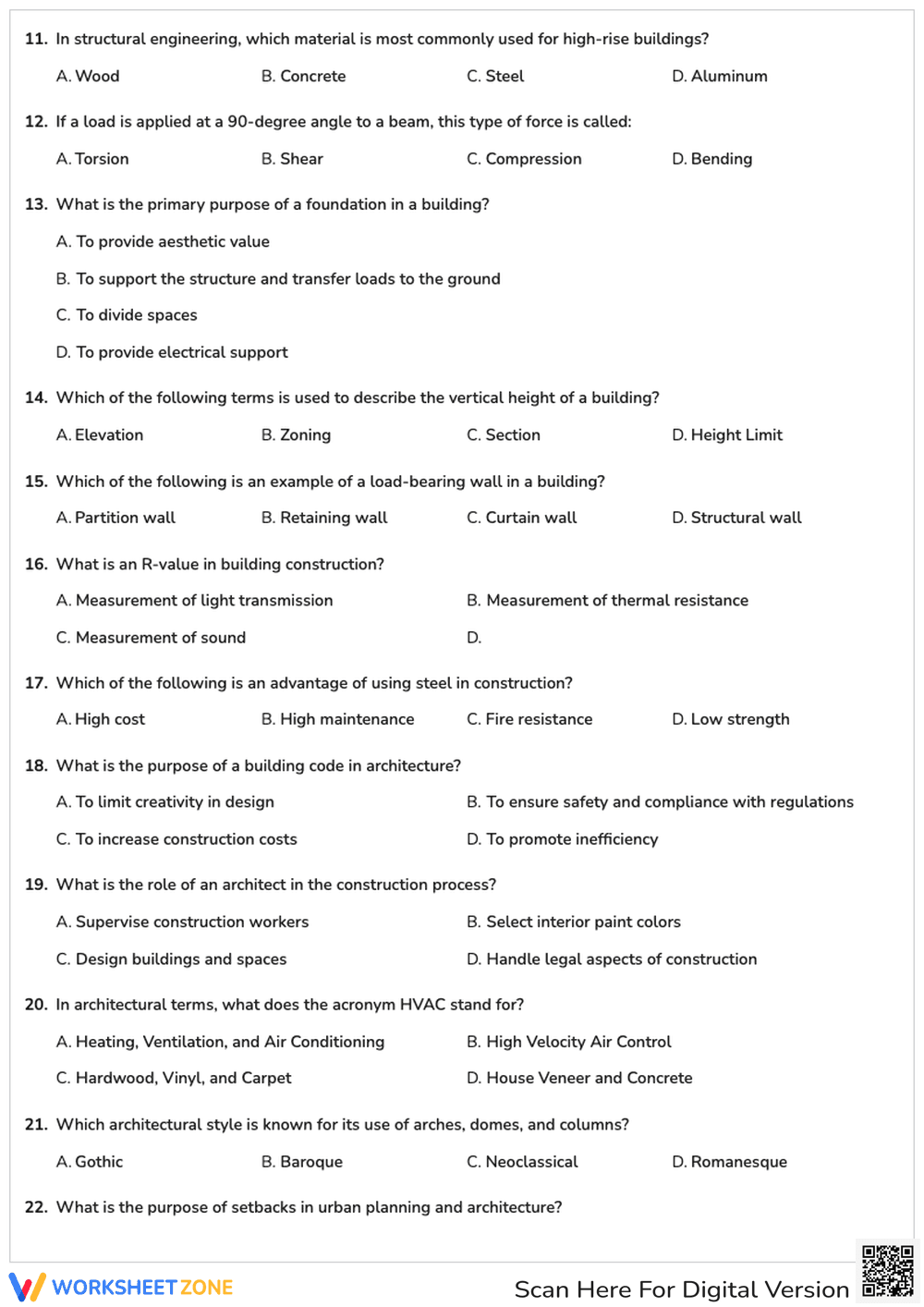
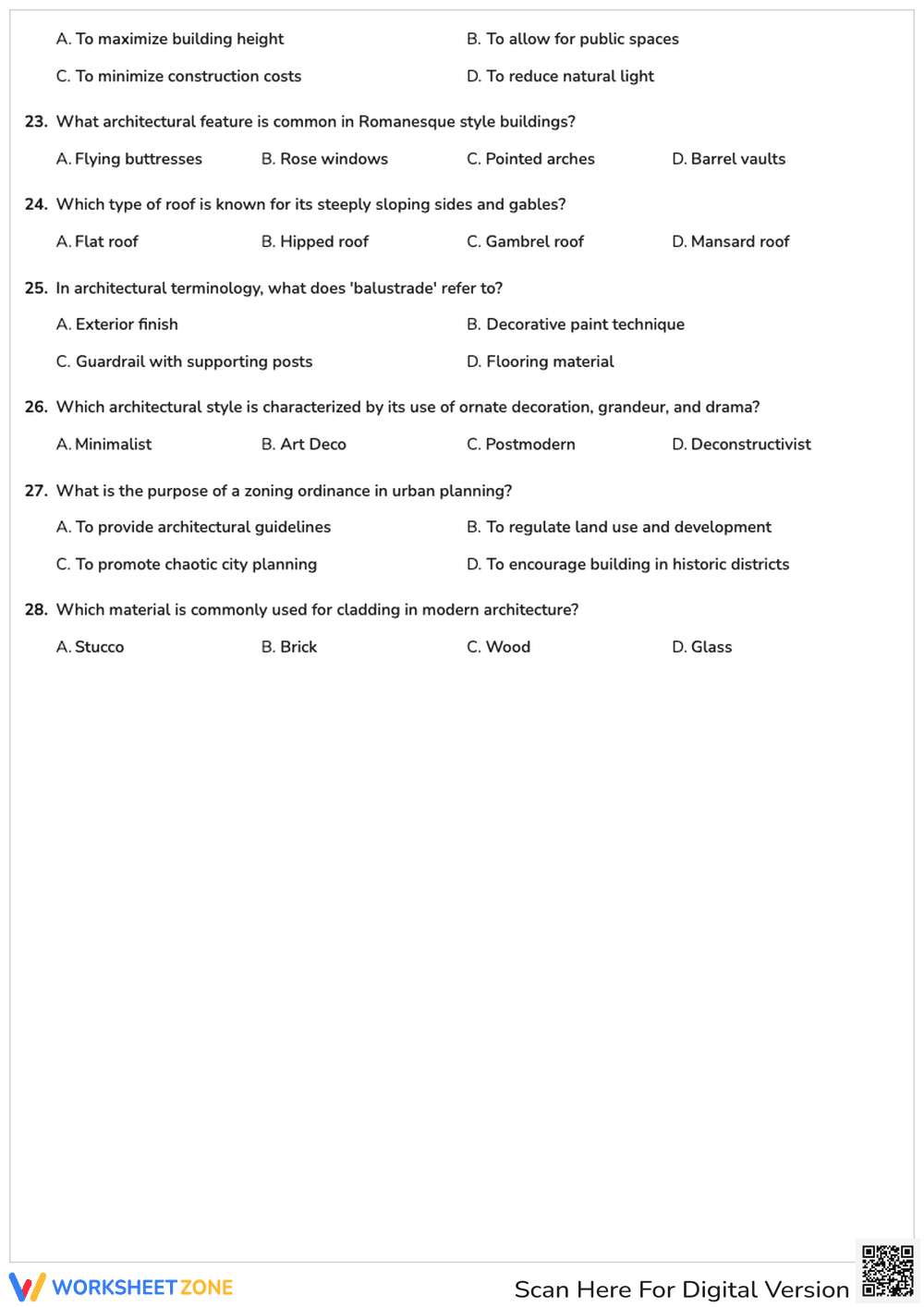
This Grade 9-12 architecture assessment worksheet provides students with a comprehensive review of structural engineering and design principles. By evaluating knowledge of materials, building codes, and historical styles, students demonstrate mastery of technical concepts required for pre-professional architectural studies. It ensures learners understand the relationship between form, function, and safety in the built environment.
At a Glance
- Grade: 9-12 · Subject: Architecture & Engineering
- Standard:
HS-ETS1-2— Design a solution to a complex real-world problem by breaking it down- Skill Focus: Structural Systems & Architectural History
- Format: 2 pages · 18 problems · Answer key included · PDF
- Best For: CTE Assessment or Vocational Test Prep
- Time: 20–30 minutes
What's Inside
This two-page assessment features 18 rigorous multiple-choice questions designed to simulate professional entrance exams. The content spans structural engineering (load-bearing walls, R-values, forces), urban planning (zoning, setbacks), and architectural history (Romanesque, Neoclassical). The clear layout provides ample white space for student focus, and the document includes a full answer key for rapid grading and immediate feedback.
Zero-Prep Workflow
- Print: Generate copies of the 2-page PDF in under 1 minute for your entire class.
- Distribute: Hand out the assessment as a quiet individual activity; no additional materials or teacher setup required.
- Review: Use the included answer key to grade 18 questions in seconds, allowing for a full review within a single 30-minute block.
This streamlined design makes the worksheet an ideal resource for emergency sub plans or end-of-unit knowledge checks.
Standards Alignment
The primary standard is `HS-ETS1-2`, which requires students to design solutions to complex real-world problems by breaking them down into smaller, more manageable problems that can be solved through engineering. This worksheet supports that by testing the foundational knowledge of materials and structural forces necessary for engineering design. Both standard codes can be copied directly into lesson plans, IEP goals, or district curriculum mapping tools.
How to Use It
Use this as a diagnostic pre-assessment before beginning a unit on structural design to identify gaps in student knowledge regarding building materials and forces. Alternatively, assign it as a summative quiz following a lecture on architectural history and urban planning. For formative assessment, observe which students struggle with technical acronyms like HVAC or R-value to target specific vocabulary instruction during the next class session.
Who It's For
This resource is tailored for high school students in Career and Technical Education (CTE) pathways, specifically those interested in architecture, civil engineering, or construction management. It pairs naturally with a technical drawing project, a structural load-bearing simulation lab, or an introductory lesson on urban development and zoning laws.
According to the RAND AIRS 2024 report on technical education, structured assessments that bridge the gap between theoretical design and practical engineering constraints are vital for student retention in STEM pathways. This worksheet addresses that need by focusing on the technical vocabulary and structural logic defined in the HS-ETS1-2 standard. By requiring students to differentiate between forces like shear and compression, or materials like steel and concrete, the assessment reinforces the cognitive frameworks necessary for advanced architectural modeling. Research from Fisher & Frey (2014) suggests that frequent, low-stakes objective testing helps solidify the domain-specific language required for complex problem-solving. This 18-question assessment provides the necessary data points for educators to track student progress toward mastery in architectural principles, ensuring that learners are prepared for the rigorous demands of post-secondary B.Arch programs and professional certification tracks.


