




























Views
Downloads

Grades 3-6 Magnetism — Printable No-Prep Worksheet

Paste this activity's link or code into your existing LMS (Google Classroom, Canvas, Teams, Schoology, Moodle, etc.).
Students can open and work on the activity right away, with no student login required.
You'll still be able to track student progress and results from your teacher account.
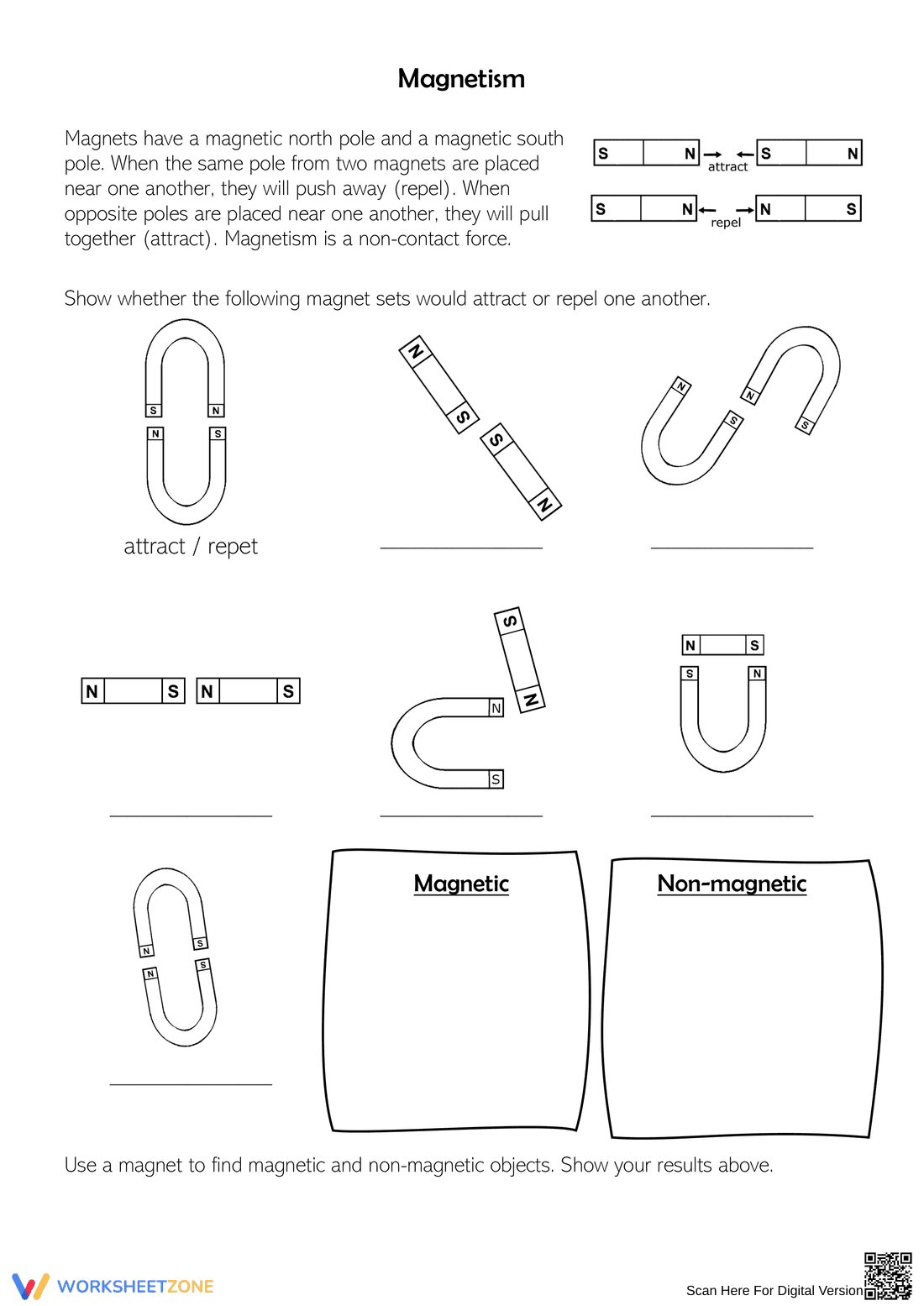
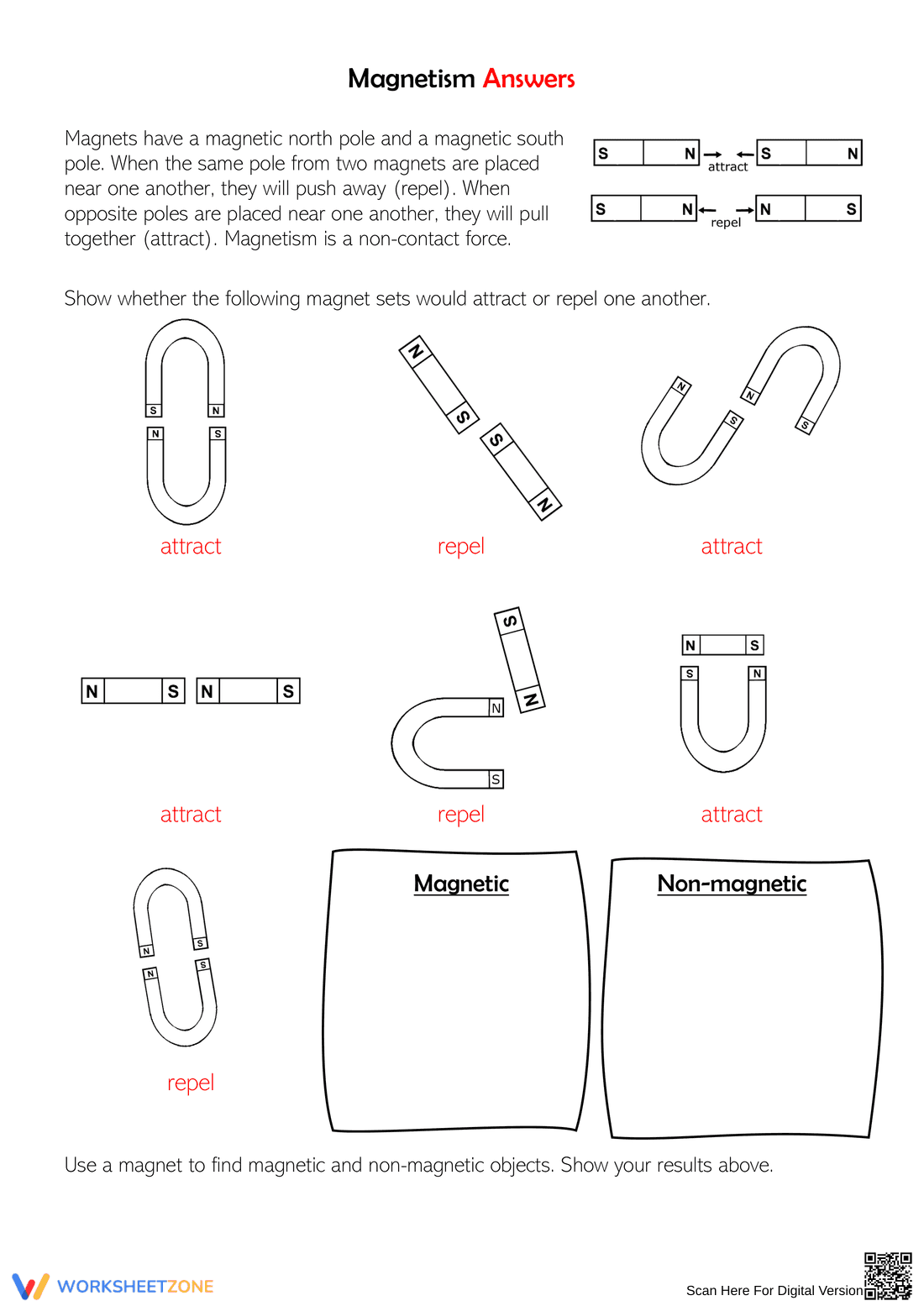
Mastery of magnetism is essential for young scientists. This Magnetism Worksheet helps students visualize how magnetic poles interact and distinguish between magnetic and non-magnetic materials. By predicting whether magnets will attract or repel, learners build a concrete understanding of non-contact forces and the physical properties of matter through hands-on exploration.
At a Glance
- Grade: 3–6 · Subject: Science
- Standard:
3-PS2-3— Ask questions to determine cause and effect relationships of magnetic interactions between two objects- Skill Focus: Magnetic Poles and Material Sorting
- Format: 1 page · 9 tasks · Sorting Activity included · PDF
- Best For: Introduction to magnetic forces and engaging classroom science centers
- Time: 15–20 minutes
What's Inside
This single-page PDF is designed for immediate classroom utility, featuring a clear introductory section that defines north and south poles. Students are presented with seven visual scenarios involving bar and horseshoe magnets, requiring them to apply the rule of "opposites attract, likes repel." Additionally, the worksheet includes two dedicated sorting zones for a hands-on investigation where students test and classify various classroom objects as magnetic or non-magnetic.
Zero-Prep Workflow
- Step 1: Print — Generate copies for your class in under 30 seconds.
- Step 2: Distribute — Hand out the worksheets along with a set of small magnets for the sorting portion of the activity.
- Step 3: Review — Discuss the results as a class or use the prediction section as a quick exit ticket.
The total teacher preparation time is less than 2 minutes, making it an ideal choice for busy science blocks or unexpected substitute plans.
Standards Alignment
This resource is directly aligned with `3-PS2-3`: "Ask questions to determine cause and effect relationships of magnetic interactions between two objects not in contact with each other." By identifying how different orientations of magnets results in specific movements, students demonstrate their understanding of non-contact forces. Both standard codes can be copied directly into lesson plans, IEP goals, or district curriculum mapping tools.
How to Use It
For best results, use this worksheet during the "Explore" phase of a 5E lesson cycle. After a demonstration, students work independently to predict interactions. Use the sorting boxes as a formative-assessment observation tip: watch how students test objects, noting if they distinguish between metallic items and specifically magnetic metals. This activity typically takes 15 to 20 minutes to complete.
Who It's For
This worksheet is perfect for elementary and middle school students in grades 3 through 6. It is particularly effective for visual learners who benefit from the clear diagrams of magnetic poles. For differentiation, you might pair this with a reading passage about Earth's magnetic field or an anchor chart displaying the "Attract vs. Repel" rules to support students who are still mastering the vocabulary.
The study of magnetism through direct observation is a cornerstone of early physical science education, as emphasized by the NGSS framework for non-contact forces. According to research from ScienceDirect TpT Analysis, structured worksheets that combine theoretical prediction with hands-on sorting tasks significantly improve student retention of scientific concepts. By engaging with 3-PS2-3, students move beyond surface-level facts to understand the underlying mechanics of magnetic fields and pole interactions. This worksheet provides the necessary scaffolds for students to articulate why certain materials react to magnets while others remain inert, fostering a deeper scientific literacy. Using such evidence-based tools ensures that classroom time is spent on high-impact learning activities that align with national standards and best practices in STEM instruction.


