


























Views
Downloads

Are We There Yet? Printable Kindergarten Reading Worksheet
Paste this activity's link or code into your existing LMS (Google Classroom, Canvas, Teams, Schoology, Moodle, etc.).
Students can open and work on the activity right away, with no student login required.
You'll still be able to track student progress and results from your teacher account.
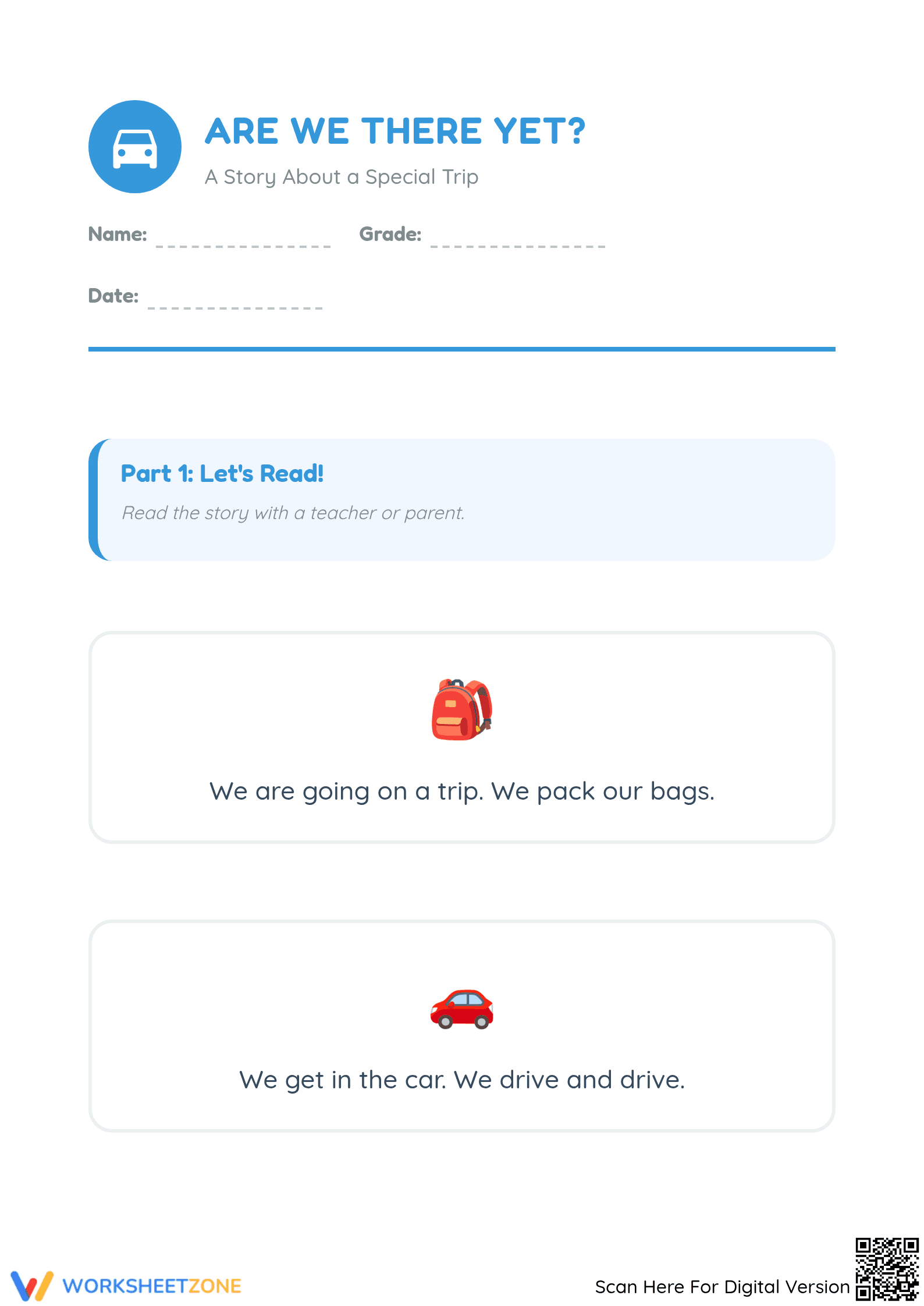
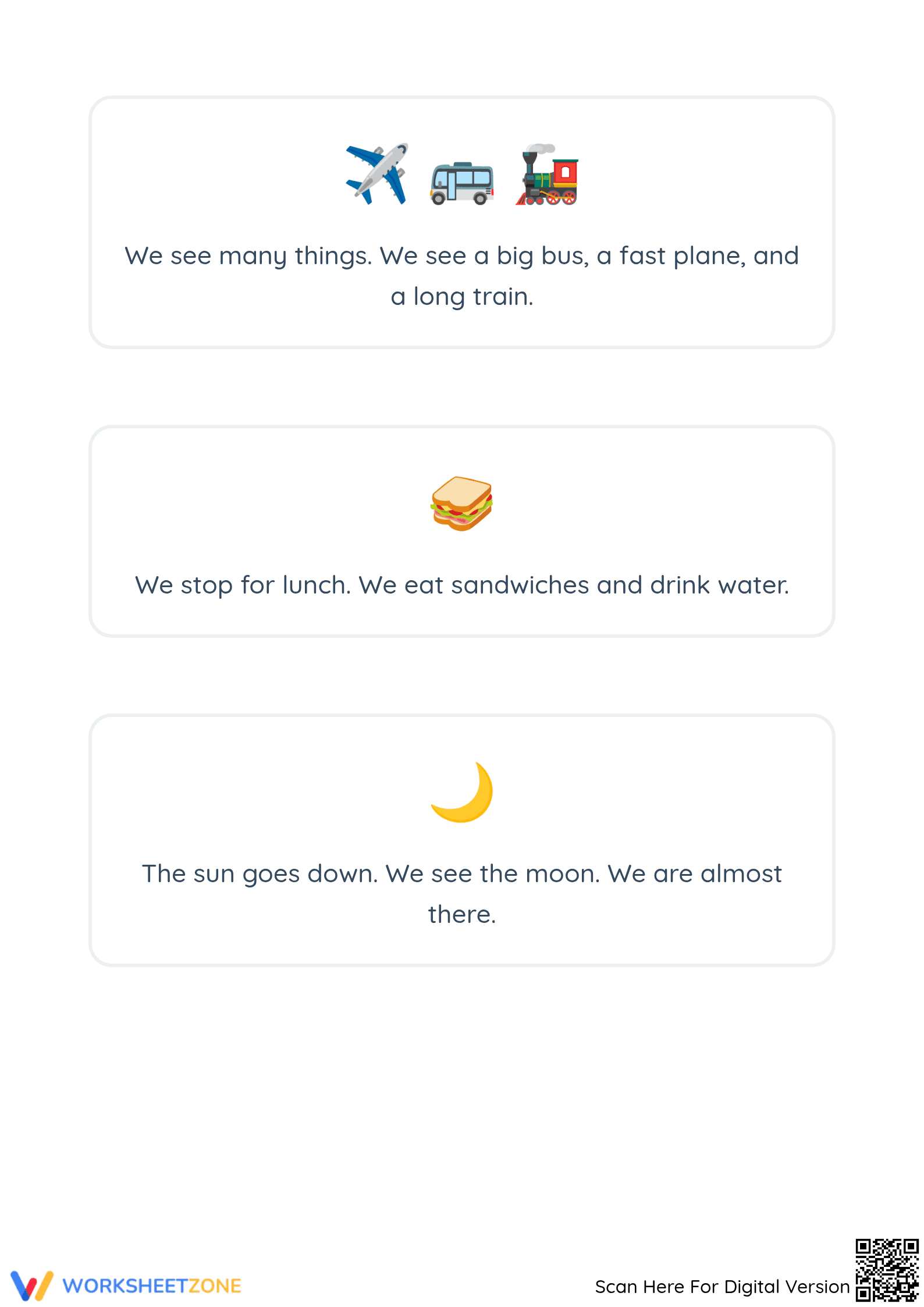
This Kindergarten ELA worksheet helps students build foundational reading comprehension through a charming story about a special trip. Students practice recalling key details and sequencing events to develop critical literacy skills. It provides a structured way for young learners to engage with text and demonstrate understanding through varied activities.
At a Glance
- Grade: Kindergarten · Subject: ELA Literature
- Standard:
CCSS.ELA-LITERACY.RL.K.2— Retell familiar stories, including key details such as the order of events- Skill Focus: Story Retelling and Sequencing
- Format: 5 pages · 9 problems · Answer key included · PDF
- Best For: Literacy centers and independent reading practice
- Time: 15–20 minutes
What's Inside
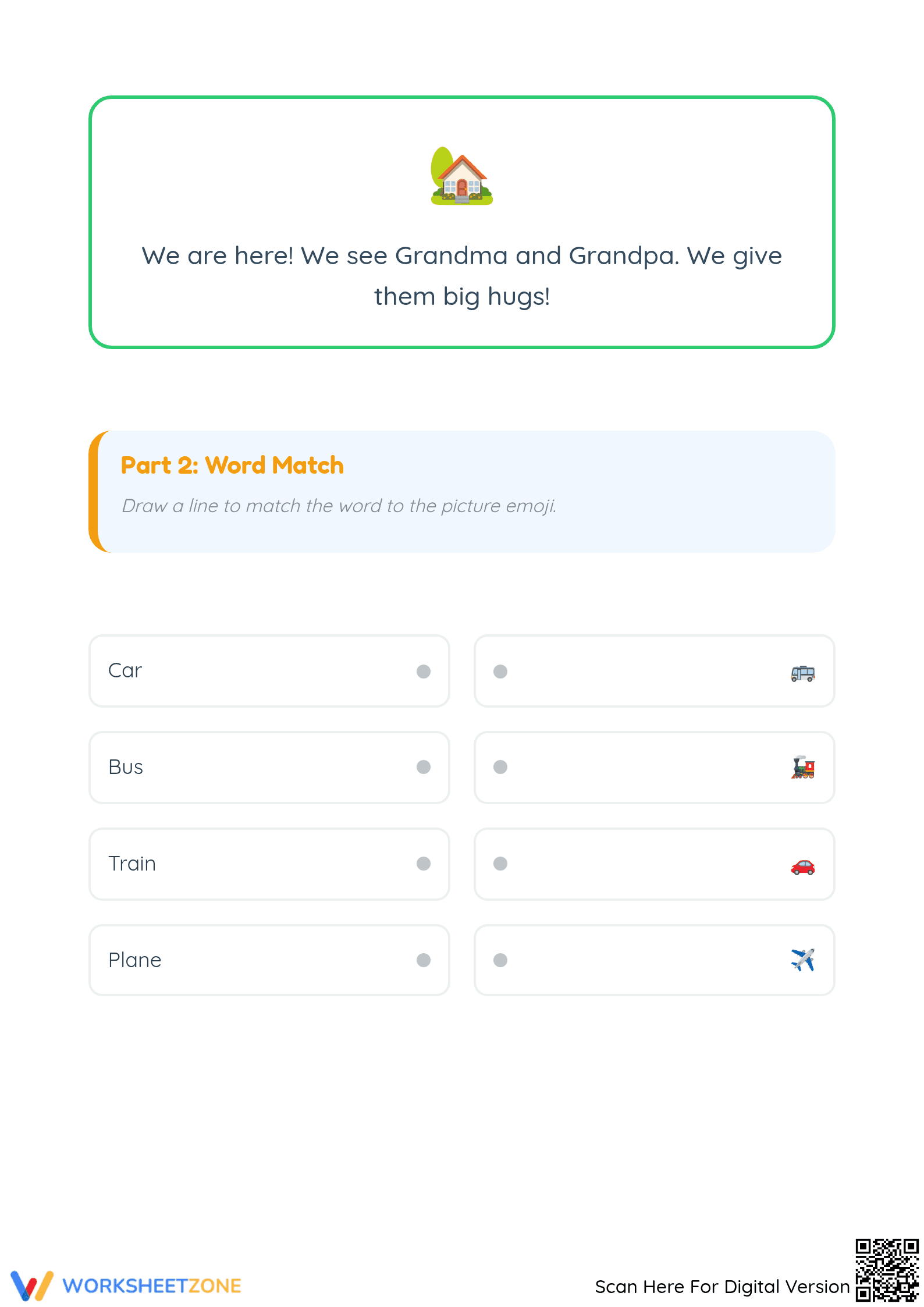
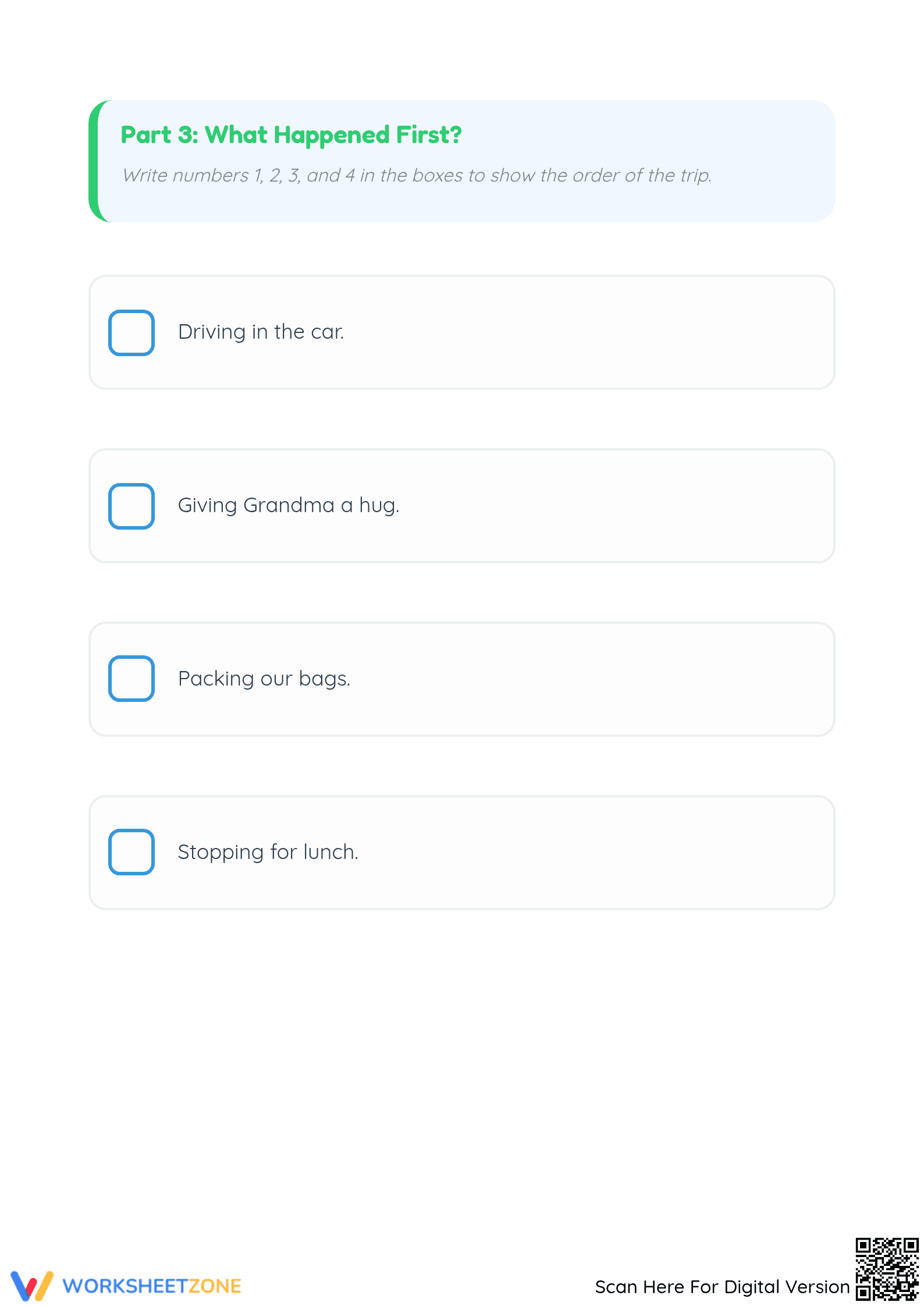
This comprehensive 5-page packet includes a multi-part reading passage with large text and visual cues. It features 4 vocabulary word-to-emoji matching tasks, a 4-step chronological sequencing exercise, and a creative drawing prompt. A complete answer key is included to ensure easy grading and immediate feedback for students.
Zero-Prep Workflow
To implement this resource, teachers can follow three simple steps. First, print the PDF for your entire class, which takes roughly 30 seconds. Second, distribute the 5-page packets during your literacy block, requiring about 1 minute of transition time. Finally, use the provided answer key to quickly review the word matching and sequencing sections in under 30 seconds. Total teacher prep time is strictly under 2 minutes, making this an ideal choice for emergency sub plans or last-minute literacy centers.
Standards Alignment
This resource is aligned to CCSS.ELA-LITERACY.RL.K.2: With prompting and support, retell familiar stories, including key details. The worksheet directly supports this standard by requiring students to identify the correct chronological order of the trip's events from start to finish. Both standard codes can be copied directly into lesson plans, IEP goals, or district curriculum mapping tools.
How to Use It
Use this as a guided reading activity during your small group rotations. Read the story aloud with students to model fluency, then have them complete the word match independently to check for word-object association. For a formative assessment, observe students as they number the sequencing boxes to see if they can recall the middle and ending events accurately without flipping back through the pages.
Who It's For
This activity is designed specifically for Kindergarten students who are beginning to track print and recall story details. It works exceptionally well for English Language Learners due to the heavy emoji and visual support throughout the word matching section. Pair this resource with a classroom anchor chart on story elements to further reinforce the sequencing concepts introduced in the text.
The "Are We There Yet?" worksheet is meticulously designed to align with CCSS.ELA-LITERACY.RL.K.2, focusing on the essential Kindergarten skill of story retelling through chronological sequencing. According to the NAEP framework, early exposure to text structure and event ordering is a significant predictor of later reading proficiency. Research from Fisher & Frey (2014) highlights the importance of the gradual release of responsibility, which this worksheet facilitates through its transition from teacher-supported reading to independent vocabulary and sequencing tasks. By integrating visual emojis with text, the resource reduces cognitive load, allowing students to focus on the logical progression of the narrative. This evidence-based approach ensures that students are not merely identifying words but are constructing a coherent mental model of the story's events. The inclusion of a creative drawing prompt further encourages personal connection to the text, a key component of deep comprehension in early childhood education.


