


























Views
Downloads
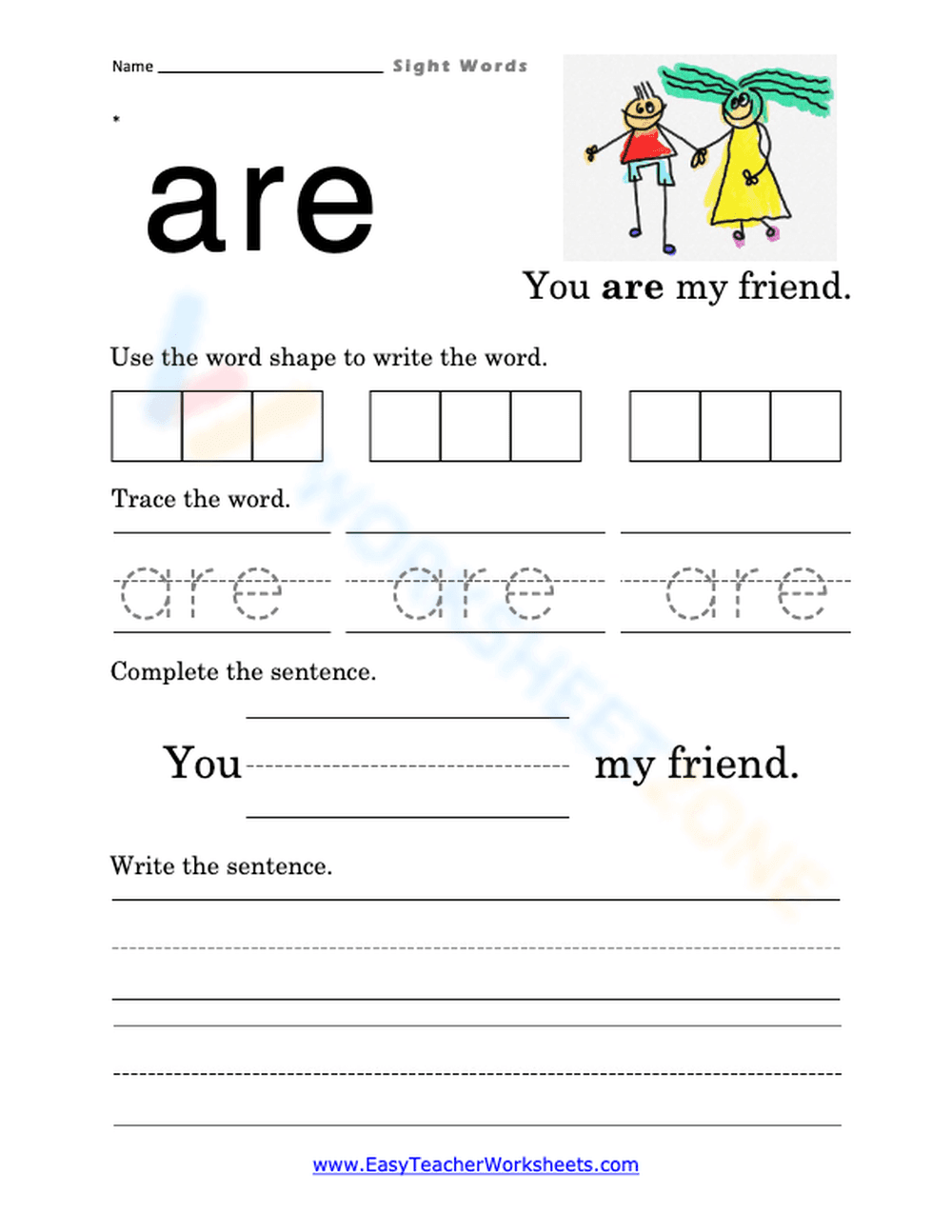

Essential Sight Word 'Are' Worksheet | Grade 1 English
Paste this activity's link or code into your existing LMS (Google Classroom, Canvas, Teams, Schoology, Moodle, etc.).
Students can open and work on the activity right away, with no student login required.
You'll still be able to track student progress and results from your teacher account.
This Grade 1 sight word worksheet provides focused practice for the high-frequency verb "are" through a multi-sensory approach. Students strengthen literacy skills by identifying word shapes, tracing letter forms, and applying the word within a complete sentence. This structured format ensures foundational reading fluency and writing confidence for early learners.
At a Glance
- Grade: 1 · Subject: English Language Arts
- Standard:
RF.1.3.G— Recognize and read grade-appropriate irregularly spelled high-frequency words in context- Skill Focus: Targeted sight word recognition, tracing, and independent handwriting
- Format: 1 page · 8 tasks · Complete answer key included · PDF download
- Best For: Daily literacy centers, morning work, and focused independent practice
- Time: 10–15 minutes of quiet instructional time
What's Inside
This single-page PDF features four instructional sections to build mastery of the word "are." It starts with word-shape boxes for visual recognition, followed by three tracing opportunities on primary-ruled lines. The resource includes a full answer key and requires students to complete a cloze sentence and finally transcribe "You are my friend" independently to demonstrate full application.
Zero-Prep Workflow
The zero-prep design allows teachers to integrate this resource in under two minutes. Simply print the copies needed for your literacy block or morning work. Once distributed, students work through the sections with minimal guidance. The clear layout makes it an ideal sub-plan filler or a quick formative check that requires no additional teacher setup.
Standards Alignment
This resource aligns to CCSS.ELA-LITERACY.RF.1.3.G, focusing on recognizing grade-appropriate irregularly spelled words. By providing visual, kinesthetic, and contextual interactions, the worksheet supports the cognitive retrieval of high-frequency words. This standard code can be copied directly into lesson plans, IEP goals, or district curriculum mapping tools to ensure instructional alignment and track student progress.
How to Use It
Use this worksheet as a formative assessment after introducing "are" during direct instruction. It serves as an excellent check to see which students can transition from tracing to independent writing. Alternatively, place it in a literacy center. Observe students as they fill word shapes; if they struggle with spacing, it offers a perfect moment for a quick intervention.
Who It's For
This resource is ideal for first-grade students and English Language Learners (ELLs) requiring sight word support. It pairs naturally with high-frequency word anchor charts or daily reading passages. The sentence frames provide necessary scaffolding for emerging writers, while the final writing task offers a meaningful challenge for students developing their orthographic mapping skills.
Research emphasizes the importance of multi-modal practice for high-frequency word acquisition. According to Fisher & Frey (2014), the gradual release of responsibility—moving from word-shape recognition to tracing and independent construction—is critical for long-term retention. This worksheet implements these strategies by focusing on the sight word "are" (RF.1.3.G) through eight interaction points. Engaging students in reading and writing the word in context helps solidify the connection between phonemic awareness and orthographic mapping. Such systematic practice is essential for building the reading fluency required for complex texts. Educators can use this structured activity as a reliable component of a comprehensive ELA curriculum, ensuring students meet foundational standards through evidence-based instructional design.


