


























Views
Downloads
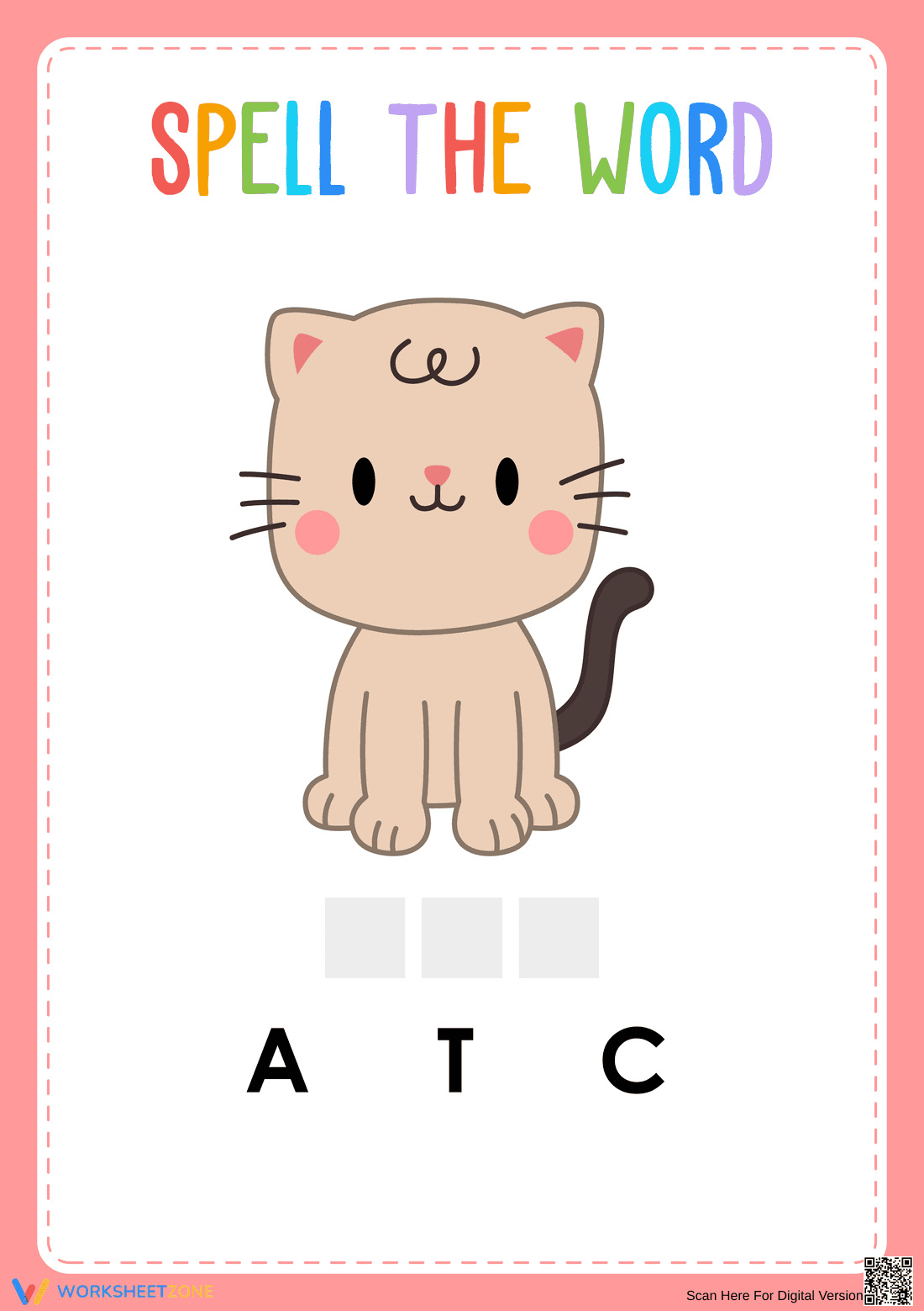

Grade K Animal Spelling — Printable No-Prep Worksheet
Paste this activity's link or code into your existing LMS (Google Classroom, Canvas, Teams, Schoology, Moodle, etc.).
Students can open and work on the activity right away, with no student login required.
You'll still be able to track student progress and results from your teacher account.
This foundational spelling worksheet helps early learners practice letter arrangement and word formation by unscrambling the word for a familiar animal. Students build essential phonics and vocabulary skills as they identify the animal, sound out the letters, and write the correct CVC word in the provided boxes.
At a Glance
- Grade: K · Subject: ELA
- Standard:
CCSS.ELA-LITERACY.L.K.2.D— Spell simple words phonetically- Skill Focus: CVC spelling and letter unscrambling
- Format: 1 page · 1 problem · No answer key needed · PDF
- Best For: Morning work or literacy centers
- Time: 5–10 minutes
This single-page resource features a clear, engaging illustration of a cat alongside a targeted spelling task. Students are presented with three scrambled letters (A, T, C) and three blank boxes. The straightforward layout removes visual clutter, allowing young readers to focus entirely on sounding out the word and placing the letters in the correct sequence. A subtle hint is provided at the bottom of the page to support independent learning.
This resource is designed for a completely zero-prep workflow, making it ideal for busy mornings or unexpected schedule changes.
- Print (1 minute): Simply download the PDF and print the required number of copies. The high-contrast design prints beautifully in color or grayscale.
- Distribute (1 minute): Hand out the sheets during transition times or place them directly into literacy center folders.
- Review (3 minutes): The self-explanatory nature of the task means students can begin immediately with minimal instruction.
Total teacher preparation time is under two minutes, making it an excellent sub plan addition.
This activity aligns directly with CCSS.ELA-LITERACY.L.K.2.D: Spell simple words phonetically, drawing on knowledge of sound-letter relationships. It also supports early phonemic awareness by requiring students to isolate and sequence individual sounds. Both standard codes can be copied directly into lesson plans, IEP goals, or district curriculum mapping tools.
Teachers can utilize this worksheet during morning arrival as a quick warm-up activity to settle students into the daily routine. Alternatively, it serves as an effective independent station during small-group literacy rotations. As a formative assessment tip, observe whether students attempt to sound out the letters sequentially or if they recognize the whole word instantly. Expected completion time ranges from five to ten minutes depending on the student's familiarity with CVC words.
This resource is primarily designed for Kindergarten students, though it serves as excellent review for early first graders or an extension activity for advanced preschoolers. The visual support makes it highly accessible for English Language Learners building basic vocabulary. Pair this worksheet with a direct instruction lesson on short "a" vowel sounds or a read-aloud featuring feline characters to reinforce the target word.
Developing early spelling proficiency requires targeted practice with familiar vocabulary and clear visual supports. This resource directly addresses CCSS.ELA-LITERACY.L.K.2.D by asking students to spell simple words phonetically. According to Fisher & Frey (2014), providing structured opportunities to manipulate letters significantly improves phonemic awareness and reading fluency. When young learners engage with scrambled letters, they are forced to actively apply their knowledge of sound-letter relationships rather than relying on rote memorization. This task isolates the spelling process, removing cognitive barriers associated with complex instructions. By integrating this targeted practice into daily routines, educators can effectively monitor phonetic development and identify areas requiring additional intervention. Consistent exposure to these foundational literacy tasks builds the confidence necessary for students to tackle more complex texts and writing assignments as they progress through early elementary grades.


