


























Views
Downloads

Animal Spelling Worksheet | Kindergarten Essential
Paste this activity's link or code into your existing LMS (Google Classroom, Canvas, Teams, Schoology, Moodle, etc.).
Students can open and work on the activity right away, with no student login required.
You'll still be able to track student progress and results from your teacher account.
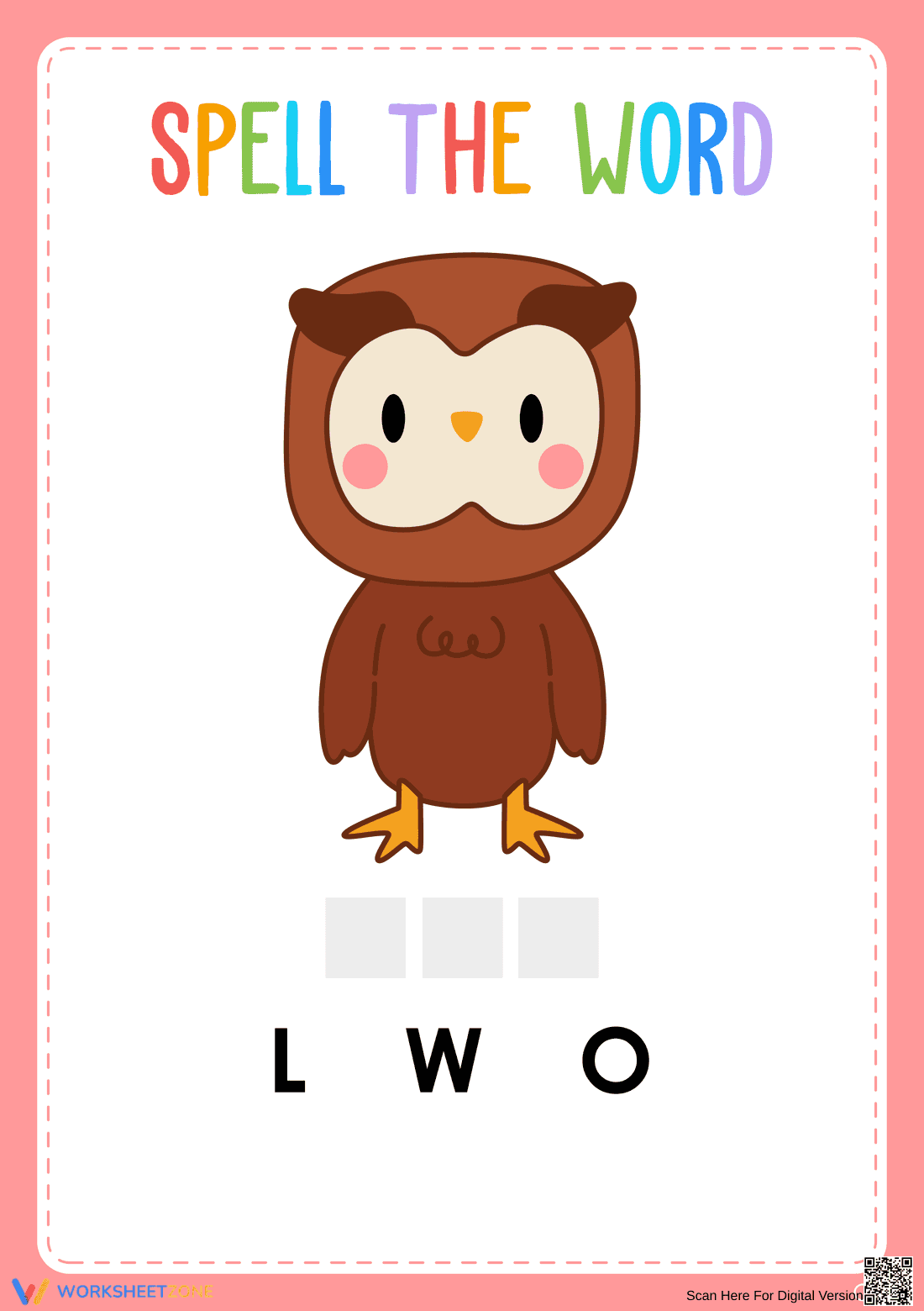
This Kindergarten animal spelling worksheet helps early learners master basic phonics and letter sequencing by identifying and spelling the word "owl." Students engage with a high-quality visual cue to connect vocabulary with written form, reinforcing the foundational literacy skills necessary for reading fluency and independent writing.
At a Glance
- Grade: Kindergarten · Subject: English Language Arts
- Standard:
CCSS.ELA-LITERACY.L.K.2.D— Spell simple words phonetically by drawing on knowledge of sound-letter relationships- Skill Focus: Animal Vocabulary & Spelling
- Format: 1 page · 1 problem · Answer key included · PDF
- Best For: Morning work or literacy centers
- Time: 5–10 minutes
The resource features a single, clear page focused on the word "owl." It includes a large, colorful illustration of an owl to provide immediate context. Below the image, students find three scrambled letters (L, W, O) and three empty boxes. This structure provides a clear visual scaffold for letter placement and word construction, ensuring students stay focused on the specific task of sequencing.
Zero-Prep Workflow
- Print: Generate the single-page PDF in less than 30 seconds for your entire class.
- Distribute: Hand out the sheets during morning work, literacy centers, or as a quick filler activity.
- Review: Check the correct spelling as a group to provide immediate feedback on letter sounds.
Total teacher preparation time is under 2 minutes, making this an ideal resource for busy classrooms or emergency sub plans.
Standards Alignment
This worksheet is aligned to `CCSS.ELA-LITERACY.L.K.2.D`, which requires students to spell simple words phonetically by drawing on knowledge of sound-letter relationships. This task specifically targets the phonetic pattern of "owl," helping students recognize how individual phonemes map to specific graphemes. Both standard codes can be copied directly into lesson plans, IEP goals, or district curriculum mapping tools.
How to Use It
Use this as a quick formative assessment during a unit on birds or forest animals. Observe if students can independently identify the starting sound /o/ and place the "O" in the first box. It also works well as a "ticket out the door" to gauge letter recognition speed and fine motor control during letter formation. Expected completion time is 5 to 10 minutes.
Who It's For
This worksheet is ideal for Preschool, Kindergarten, and Grade 1 students who are beginning their journey into phonics. It is particularly helpful for English Language Learners (ELL) who benefit from the direct image-to-word association. Pair this with a classroom anchor chart about animals or a read-aloud book featuring nocturnal creatures to provide a complete instructional experience.
According to Fisher & Frey (2014), the use of visual scaffolds and scrambled letter tasks supports the gradual release of responsibility by providing a constrained set of choices that build student confidence. This worksheet addresses the CCSS.ELA-LITERACY.L.K.2.D standard by focusing on phonetic spelling and letter-sound correspondence. Research indicates that early exposure to categorized vocabulary, such as animal names, significantly improves word retention and reading comprehension in primary grades. By isolating a single word like "owl," the task reduces cognitive load, allowing students to focus entirely on the mechanics of spelling and letter formation. This targeted approach is a proven method for supporting literacy development in diverse classroom settings, ensuring that all learners can achieve mastery of basic spelling patterns before moving on to more complex multisyllabic words.


