


























Views
Downloads
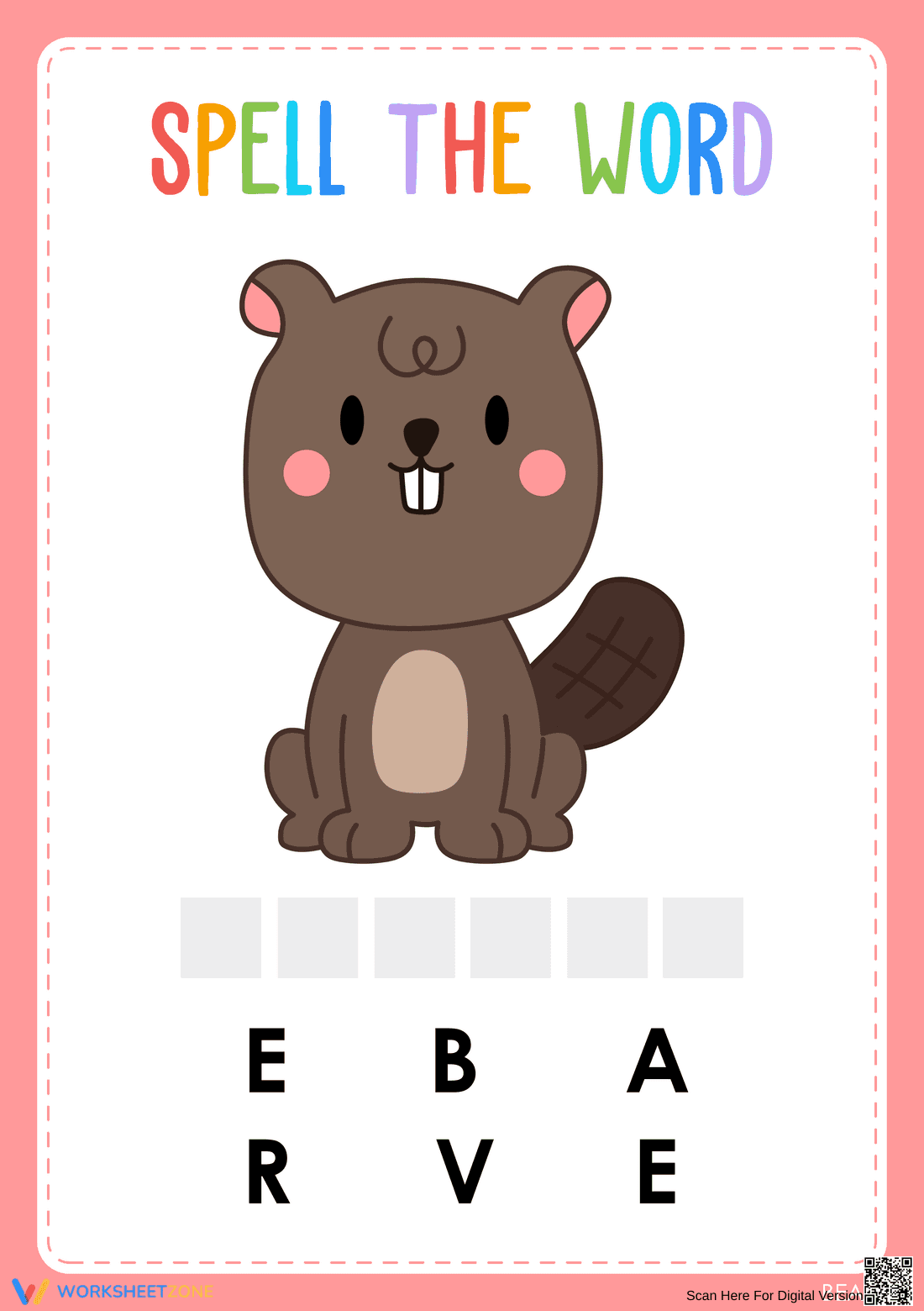

Printable Animal Spelling Worksheet | Grade K
Paste this activity's link or code into your existing LMS (Google Classroom, Canvas, Teams, Schoology, Moodle, etc.).
Students can open and work on the activity right away, with no student login required.
You'll still be able to track student progress and results from your teacher account.
This single-page spelling worksheet helps early learners practice letter recognition and word formation. By unscrambling letters to spell the word "beaver," students build foundational phonics skills and improve their vocabulary. The visual cue of the animal supports comprehension, making this an engaging activity for young readers developing early literacy skills.
At a Glance
- Grade: K · Subject: ELA
- Standard:
CCSS.ELA-LITERACY.L.K.2— Spell simple words using letter-sound knowledge- Skill Focus: Spelling and Letter Unscrambling
- Format: 1 page · 1 problem · No answer key · PDF
- Best For: Morning work or literacy centers
- Time: 5–10 minutes
Inside this printable resource, educators will find a straightforward activity focused on spelling an animal word. The page features a colorful beaver illustration, six blank boxes, and scrambled letters. A small text cue at the bottom serves as a self-checking mechanism, eliminating the need for a separate key. The uncluttered layout ensures young learners focus entirely on the task.
This resource is designed for a zero-prep workflow.
- Print (1 minute): Download the PDF and print.
- Distribute (1 minute): Hand out the worksheet. The instructions are self-explanatory.
- Review (3 minutes): Observe students as they place letters in the correct boxes.
Total teacher prep time is under two minutes, making this perfect for a sub plan.
This activity aligns with CCSS.ELA-LITERACY.L.K.2, which requires students to demonstrate command of the conventions of standard English capitalization, punctuation, and spelling when writing. Specifically, it targets the ability to spell simple words phonetically, drawing on knowledge of sound-letter relationships. The visual scaffolding supports early vocabulary acquisition. Both standard codes can be copied directly into lesson plans, IEP goals, or district curriculum mapping tools.
This worksheet is highly versatile in an early childhood classroom. Use it as a quick morning work activity to settle students before direct instruction begins, or place it in a literacy center for independent practice. As a formative assessment tip, observe whether students attempt to sound out the letters sequentially or if they rely entirely on the visual cue at the bottom of the page. Expected completion time ranges from five to ten minutes, depending on the student's familiarity with the letters.
This resource is primarily designed for preschool, kindergarten, and first-grade students who are beginning to form words and recognize spelling patterns. The built-in visual support makes it accessible for English Language Learners (ELLs) and students requiring additional scaffolding. It pairs naturally with a read-aloud book about forest animals or a direct instruction lesson on consonant-vowel-consonant-e (CVCe) or vowel team spelling patterns.
Integrating targeted spelling practice with visual supports significantly enhances early literacy development in young learners. According to Fisher & Frey (2014), providing students with clear, scaffolded tasks allows them to build confidence and mastery in foundational skills. This worksheet directly targets CCSS.ELA-LITERACY.L.K.2, helping students spell simple words using letter-sound knowledge. By combining a recognizable animal illustration with a scrambled letter task, the activity reduces cognitive load while maintaining rigorous phonics practice. Research consistently demonstrates that early, frequent exposure to word formation exercises improves long-term reading fluency and writing proficiency. This single-page format ensures that learners remain focused on the specific objective without becoming overwhelmed by multiple complex instructions. Educators can rely on this structured approach to deliver effective, evidence-based literacy instruction in a highly accessible format.


