


























Views
Downloads
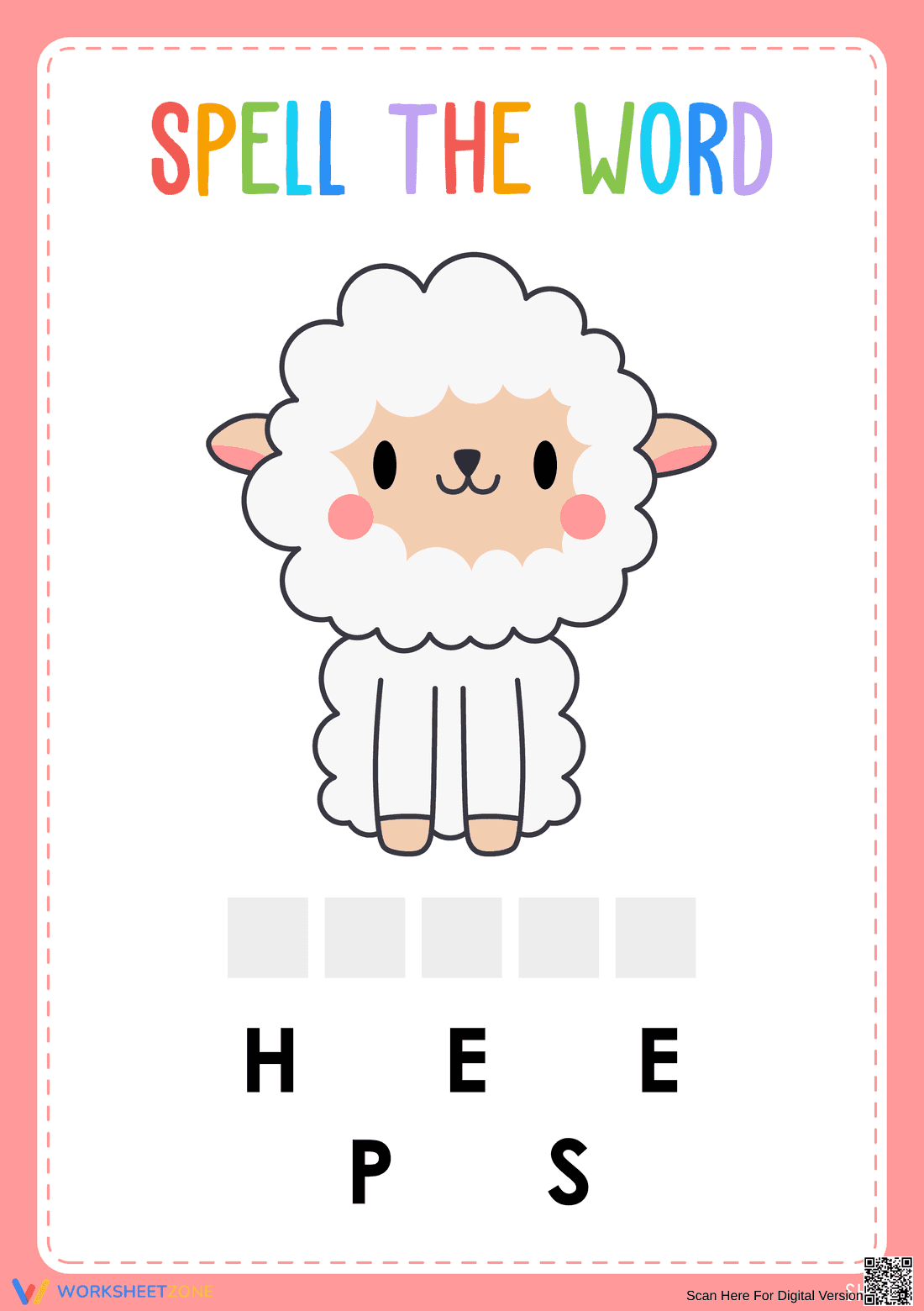

Animal Spelling Worksheet | Essential Grade K ELA
Paste this activity's link or code into your existing LMS (Google Classroom, Canvas, Teams, Schoology, Moodle, etc.).
Students can open and work on the activity right away, with no student login required.
You'll still be able to track student progress and results from your teacher account.
This animal-themed spelling worksheet helps early learners bridge the gap between letter recognition and word formation. By focusing on a familiar animal, students practice phonemic awareness and letter sequencing in a low-stress environment. This activity ensures young readers build the foundational spelling skills necessary for fluent writing and reading comprehension.
At a Glance
- Grade: Kindergarten · Subject: ELA
- Standard:
CCSS.ELA-LITERACY.L.K.2.D— Spell simple words phonetically by drawing on knowledge of sound-letter relationships- Skill Focus: Animal Vocabulary & Spelling
- Format: 1 page · 1 task · Answer key included · PDF
- Best For: Morning work or phonics centers
- Time: 5–10 minutes
The worksheet features a high-quality illustration of a sheep to provide a clear visual cue. Below the image, five empty letter boxes guide the student toward the correct word length. A jumbled letter bank containing 'H', 'E', 'E', 'P', and 'S' is provided at the bottom, offering a scaffolded approach to spelling that reduces frustration for emergent writers.
Skill Progression
- Guided Practice: The teacher identifies the animal and the starting sound /sh/, pointing to the letter 'S' in the bank to initiate the spelling process.
- Supported Practice: Students use the provided letter bank to cross off letters as they fill in the five boxes, ensuring no letters are missed or repeated incorrectly.
- Independent Practice: Learners write the full word "SHEEP" and may color the illustration to reinforce the visual-verbal connection and fine motor control.
This gradual-release model moves students from simple recognition to active construction of a five-letter word using a structured letter bank.
Standards Alignment
This resource is aligned with CCSS.ELA-LITERACY.L.K.2.D, which requires students to spell simple words phonetically. It also supports CCSS.ELA-LITERACY.RF.K.3, focusing on phonics and word recognition through the identification of the "ee" vowel team. Both standard codes can be copied directly into lesson plans, IEP goals, or district curriculum mapping tools.
How to Use It
Use this worksheet during a "Farm Animals" unit or as a quick formative assessment after a lesson on the "ee" vowel team. For a formative assessment observation, note if students correctly place the double 'E' or if they struggle with the 'SH' digraph. This 10-minute activity is perfect for transition times or as a quiet-time task during literacy rotations.
Who It's For
This printable is designed for Preschool, Kindergarten, and Grade 1 students who are beginning to experiment with letter-sound correspondence. It is particularly effective for English Language Learners (ELLs) who benefit from the direct image-to-word association. Pair this with a picture book about farm animals or a set of magnetic letters for a multi-sensory experience.
According to Fisher & Frey (2014), the use of visual scaffolds combined with letter banks significantly improves the orthographic mapping process in early childhood education. This worksheet utilizes these principles by providing a clear anchor image and a constrained set of choices, which reduces cognitive load while students focus on the specific phonemic sequence of the word "sheep." By aligning with CCSS.ELA-LITERACY.L.K.2.D, the activity ensures that students are meeting rigorous national benchmarks for phonetic spelling. Research indicates that repetitive, focused practice on high-frequency vocabulary like animal names helps build the "sight word" bank necessary for reading fluency. This resource provides a structured environment for that practice, allowing teachers to monitor progress in letter formation and sound-symbol association. It serves as a reliable tool for early literacy intervention and general classroom instruction alike.


