


























Views
Downloads
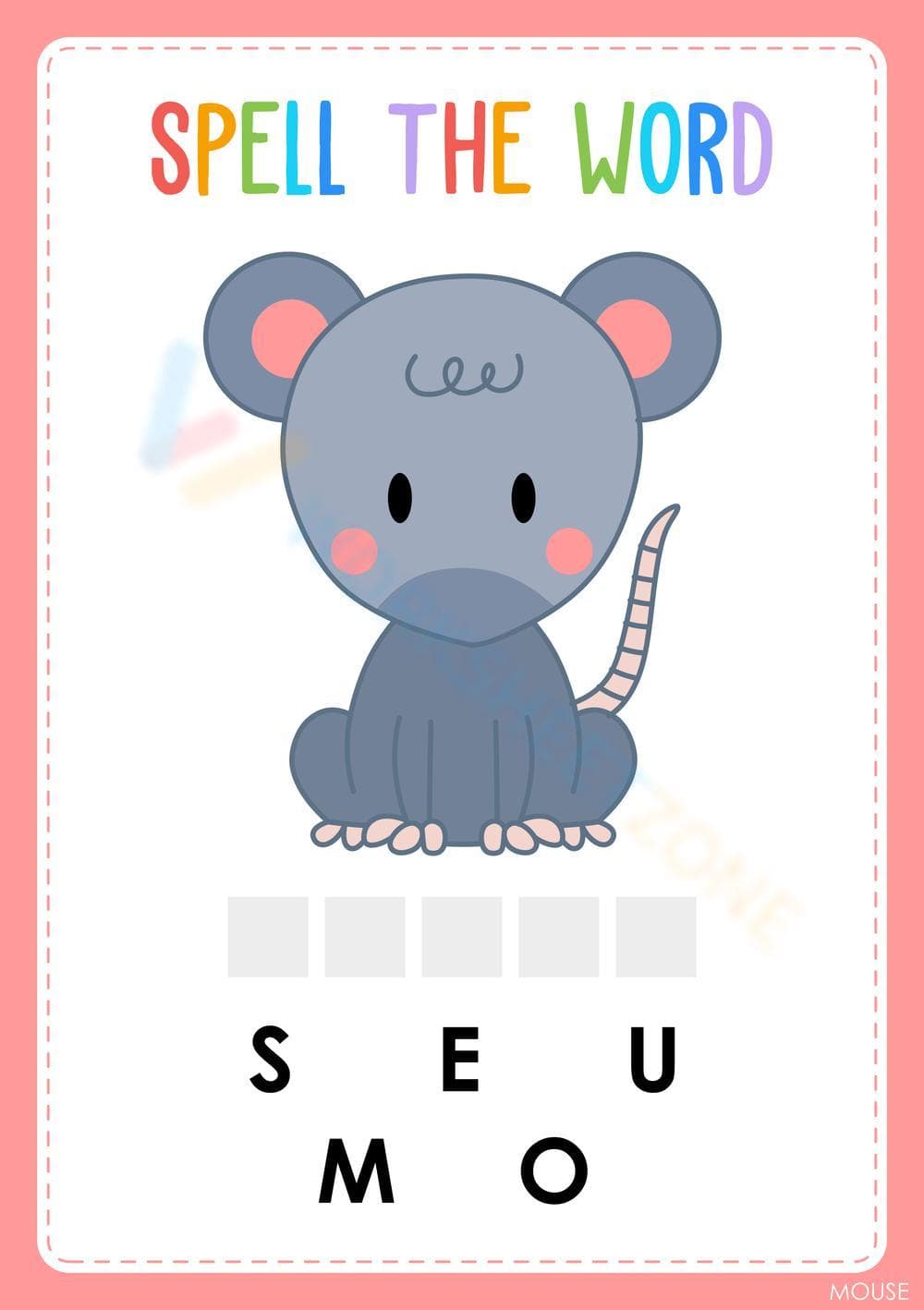

Grade K Animal Spelling — Printable No-Prep Worksheet
Paste this activity's link or code into your existing LMS (Google Classroom, Canvas, Teams, Schoology, Moodle, etc.).
Students can open and work on the activity right away, with no student login required.
You'll still be able to track student progress and results from your teacher account.
This engaging early literacy worksheet helps young learners practice spelling and letter recognition by unscrambling the word for a familiar animal. Students look at the visual cue, identify the scrambled letters, and write the correct spelling in the provided boxes, building foundational phonics and vocabulary skills.
At a Glance
- Grade: Kindergarten · Subject: ELA
- Standard:
CCSS.ELA-LITERACY.L.K.2.D— Spell simple words using sound-letter relationships- Skill Focus: Spelling and Letter Unscrambling
- Format: 1 page · 1 problem · Answer key included · PDF
- Best For: Independent practice
- Time: 5–10 minutes
This single-page resource features a large, colorful illustration of a mouse to provide strong visual context for early readers. Below the image, students will find five blank letter boxes and a set of scrambled letters to rearrange. The correct spelling is discreetly printed at the bottom right corner, serving as a built-in self-checking tool or answer key for immediate feedback.
Zero-Prep Workflow
This activity is designed for maximum efficiency in early childhood classrooms:
- Print (1 minute): Simply download the PDF and print the required number of copies. The bold graphics print well in both color and grayscale.
- Distribute (1 minute): Hand out the sheets along with pencils or crayons. The intuitive layout requires minimal verbal instruction.
- Review (3 minutes): Students can self-check using the bottom-corner key, or teachers can quickly scan the five boxes for accuracy.
Total teacher prep time is under two minutes, making this an excellent option for morning work, literacy centers, or emergency sub plans.
Standards Alignment
This resource aligns with CCSS.ELA-LITERACY.L.K.2.D: Spell simple words phonetically, drawing on knowledge of sound-letter relationships. It also supports early phonemic awareness by requiring students to map individual letters to the sounds they hear in the target word. Both standard codes can be copied directly into lesson plans, IEP goals, or district curriculum mapping tools.
How to Use It
This worksheet is highly versatile for early literacy instruction. Use it during morning arrival as a quick warm-up activity before direct instruction begins. Alternatively, place it in an independent literacy center where students can practice spelling familiar animal words at their own pace. As a formative assessment tip, observe how students approach the scrambled letters—note whether they identify the initial consonant sound first or if they rely entirely on trial and error. Expected completion time is 5 to 10 minutes.
Who It's For
This activity is primarily designed for Kindergarten students, though it serves as excellent enrichment for Preschoolers showing early letter interest or as a gentle review for Grade 1 students. For differentiation, teachers can provide physical letter tiles for students who need tactile support before writing. It pairs perfectly with a read-aloud book about animals or a classroom anchor chart focusing on initial consonant sounds.
Integrating visual cues with letter manipulation tasks significantly enhances early spelling acquisition. According to Fisher & Frey (2014), providing structured, scaffolded opportunities for students to interact with vocabulary builds essential cognitive pathways for literacy. This worksheet targets CCSS.ELA-LITERACY.L.K.2.D, requiring learners to spell simple words using sound-letter relationships. By presenting a clear image alongside scrambled letters, the activity reduces cognitive load, allowing young readers to focus entirely on phoneme-grapheme mapping rather than word retrieval. The inclusion of a self-checking mechanism further promotes independent learning and immediate error correction, which are critical components of effective early childhood instruction. Engaging with familiar categories, such as animal words, provides a meaningful context that sustains student interest and reinforces foundational reading skills in a developmentally appropriate format.


