


























Views
Downloads
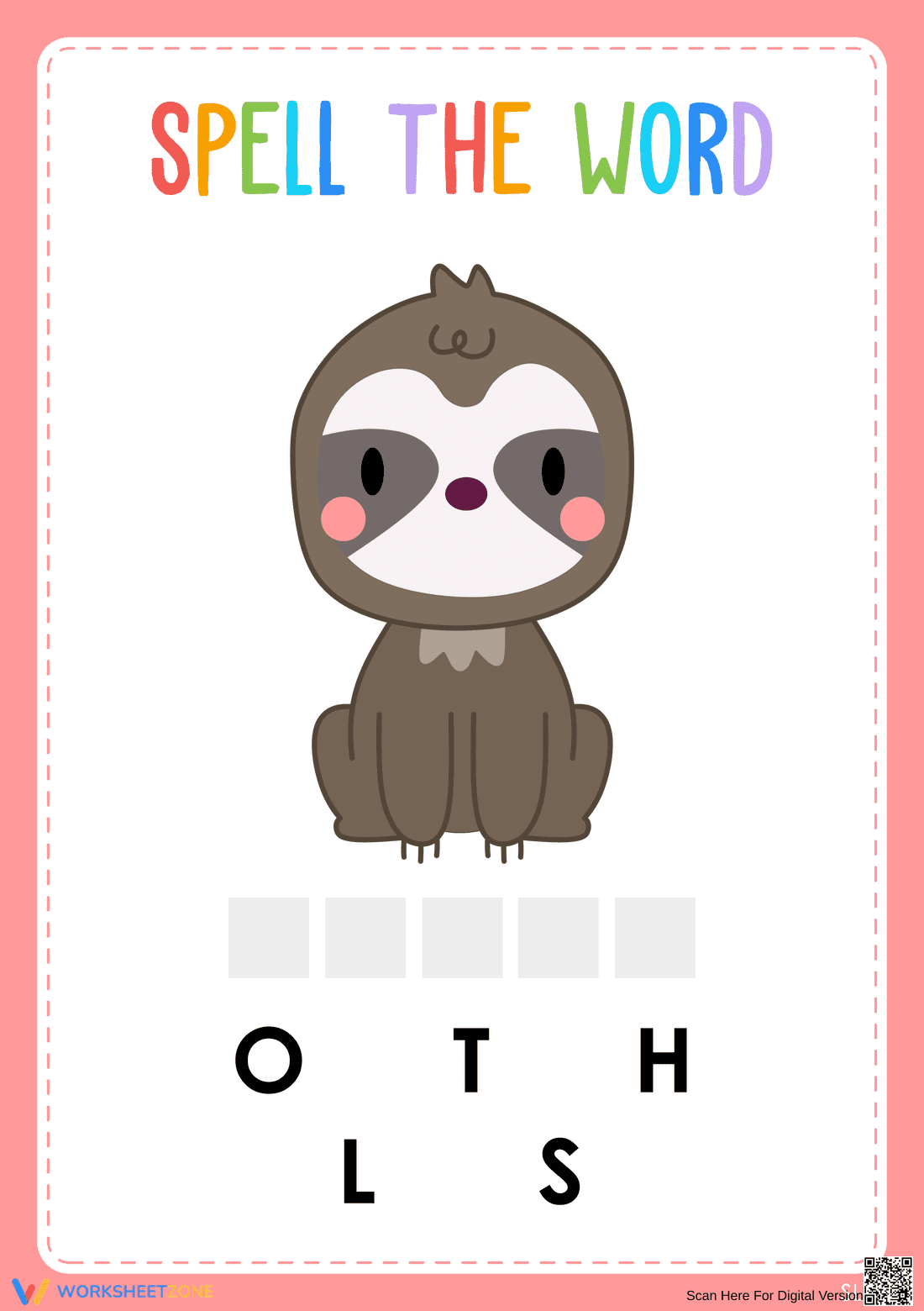

Printable Animal Spelling Worksheet | Grade K-1 ELA
Paste this activity's link or code into your existing LMS (Google Classroom, Canvas, Teams, Schoology, Moodle, etc.).
Students can open and work on the activity right away, with no student login required.
You'll still be able to track student progress and results from your teacher account.
This engaging animal spelling worksheet helps early learners practice letter recognition and word formation. By unscrambling letters to spell the word "sloth," students actively build foundational phonics and vocabulary skills. The visual support of a friendly animal illustration keeps young readers motivated while they master basic spelling patterns.
At a Glance
- Grade: Kindergarten · Subject: ELA
- Standard:
CCSS.ELA-LITERACY.L.K.2.D— Spell simple words phonetically using sound-letter knowledge- Skill Focus: Spelling and Letter Unscrambling
- Format: 1 page · 1 problem · Answer key included · PDF
- Best For: Independent practice or morning work
- Time: 5–10 minutes
This single-page resource features a clear, focused task where students unscramble five provided letters to spell the name of the pictured animal. The page includes five blank letter boxes to guide proper letter placement and handwriting practice. A built-in answer hint is located at the bottom corner for quick self-checking. The clean layout minimizes distractions, ensuring students remain focused on the specific spelling objective.
Designed for immediate classroom implementation, this resource requires absolutely no teacher setup. Print (1 minute): Simply download the PDF and print the required number of copies. Distribute (1 minute): Hand out the sheets during morning work, literacy centers, or as a quick transition activity. Review (3 minutes): Students can self-correct using the provided word at the bottom of the page, or teachers can quickly check the five-letter sequence. Total teacher prep time is under two minutes, making this an ideal, reliable option for emergency sub plans or last-minute schedule changes.
This activity is directly aligned with CCSS.ELA-LITERACY.L.K.2.D: "Spell simple words phonetically, drawing on knowledge of sound-letter relationships." It also supports early vocabulary acquisition by categorizing words into familiar animal groups. Both standard codes can be copied directly into lesson plans, IEP goals, or district curriculum mapping tools.
Teachers can utilize this worksheet during literacy centers as an independent spelling station. It serves perfectly as a morning bell-ringer activity to settle students into the daily routine while activating their phonics knowledge. As a formative assessment tip, observe how students approach the scrambled letters; note whether they sound out the target word first or attempt to guess based on the visual cue. Expected completion time ranges from five to ten minutes, depending on the student's familiarity with the specific animal vocabulary.
This resource is primarily designed for Kindergarten and first-grade students developing early spelling and phonics skills. It provides excellent differentiation for preschool learners who are just beginning to identify letters, as they can use the visual hint to match the letters to the boxes. For a complete lesson, pair this worksheet with a read-aloud book about rainforest animals or a direct instruction lesson on consonant blends and short vowel sounds.
Effective spelling instruction relies on connecting visual cues with phonetic practice. According to Fisher & Frey (2014), integrating thematic vocabulary, such as animal names, significantly increases student engagement and retention during foundational literacy tasks. This worksheet targets CCSS.ELA-LITERACY.L.K.2.D, requiring students to spell simple words phonetically using sound-letter knowledge. By presenting scrambled letters alongside a clear illustration, the activity reduces cognitive overload while maintaining rigorous phonetic demands. The structured format, featuring distinct letter boxes, supports spatial awareness and handwriting alignment, which are critical components of early literacy development. Providing targeted, brief practice sessions helps solidify spelling patterns without causing student fatigue. This evidence-based approach ensures that young learners build confidence in their spelling abilities while expanding their categorical vocabulary in a meaningful, context-rich manner.


