


























Views
Downloads
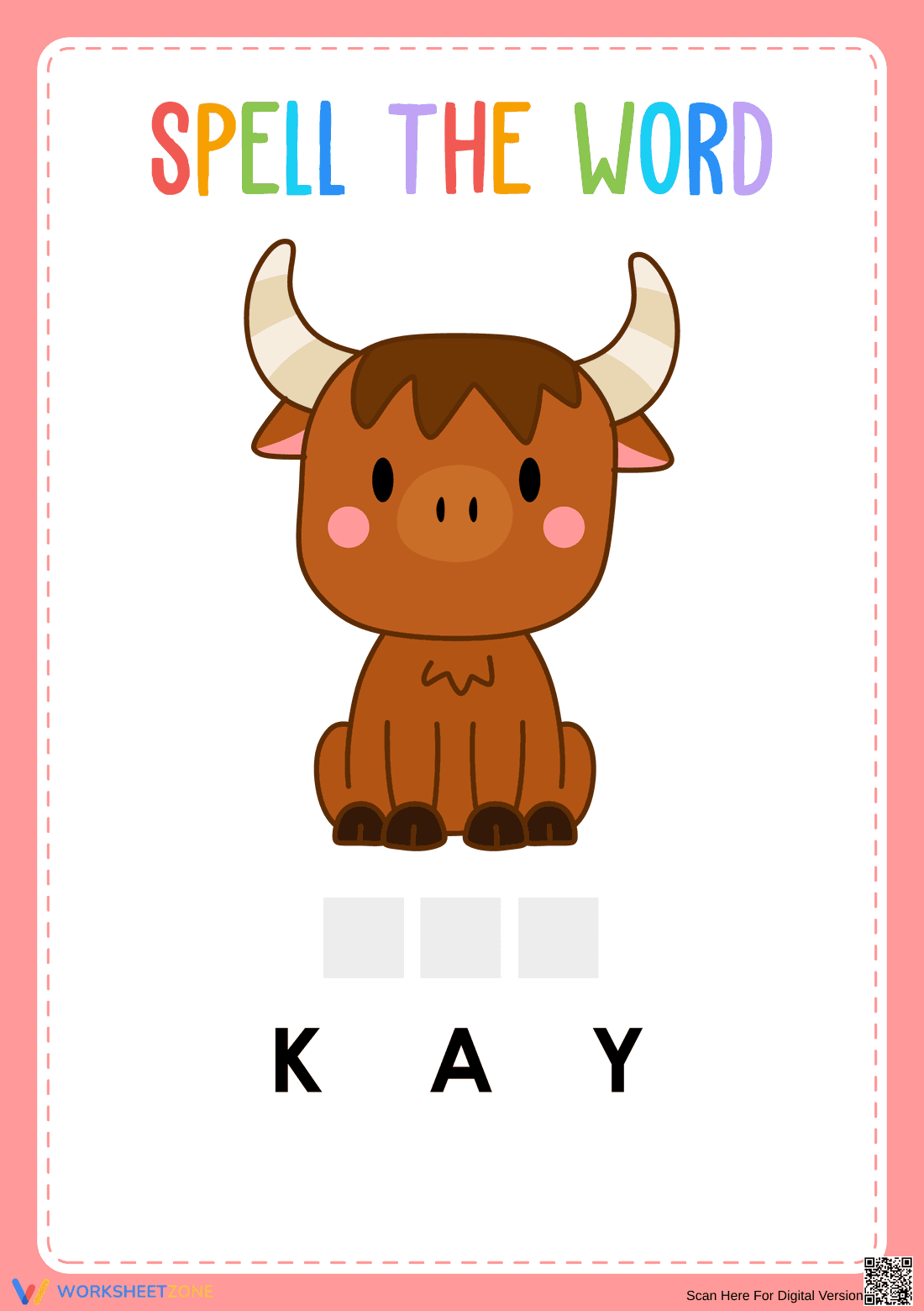

Grade K Animal Spelling — Printable No-Prep Worksheet
Paste this activity's link or code into your existing LMS (Google Classroom, Canvas, Teams, Schoology, Moodle, etc.).
Students can open and work on the activity right away, with no student login required.
You'll still be able to track student progress and results from your teacher account.
This printable spelling worksheet helps early learners practice letter arrangement and vocabulary by unscrambling letters to name an animal. Students look at the illustration of a yak, identify the scrambled letters, and write the correct spelling in the provided boxes, building foundational phonics and word recognition skills.
At a Glance
- Grade: Kindergarten · Subject: English Language Arts
- Standard:
CCSS.ELA-LITERACY.L.K.2.D— Spell simple words phonetically using sound-letter knowledge- Skill Focus: Spelling simple CVC words and unscrambling letter sequences
- Format: 1 printable page · 1 spelling problem · Self-checking hint included · PDF
- Best For: Independent morning work, literacy centers, or quick assessments
- Time: 5–10 minutes
Inside this single-page resource, educators will find a focused spelling task featuring a colorful cartoon yak. The page includes three scrambled letters (K, A, Y) and three blank square boxes where students can write the correct sequence. A small text hint is provided in the bottom corner to support self-correction. The clean layout ensures young readers are not distracted by unnecessary visual clutter.
Zero-Prep Workflow
- Print (1 minute): Simply download the PDF and print the required number of copies. The vibrant colors also print well in grayscale.
- Distribute (1 minute): Hand out the sheets during literacy centers or morning work. No cutting, laminating, or special materials are required beyond a pencil.
- Review (1 minute): Quickly check student work or allow them to self-check using the hint at the bottom of the page.
Total teacher prep time is under two minutes, making this an excellent, ready-to-go option for emergency sub plans or quick transitions.
Standards Alignment
This resource aligns with CCSS.ELA-LITERACY.L.K.2.D: Spell simple words phonetically, drawing on knowledge of sound-letter relationships. It also supports early vocabulary acquisition by connecting visual animal cues to written text. Both standard codes can be copied directly into lesson plans, IEP goals, or district curriculum mapping tools.
How to Use It
Deploy this worksheet during morning work to activate phonics skills before direct instruction begins. Alternatively, place it in a literacy center where students can practice unscrambling letters independently. As a formative assessment observation tip, watch how students approach the scrambled letters—note whether they try to sound out the word "yak" first or if they rely purely on guessing the letter order. Expected completion time ranges from five to ten minutes.
Who It's For
This activity is designed for Kindergarten and early Grade 1 students who are mastering basic CVC words and letter-sound correspondence. It serves as an excellent tool for visual learners who benefit from picture cues. For differentiation, provide physical letter tiles for students who need tactile support before writing. Pair this resource with a read-aloud book about farm or wild animals to reinforce the vocabulary in context.
Integrating visual cues with spelling tasks significantly reinforces early literacy development. When students interact with materials aligned to CCSS.ELA-LITERACY.L.K.2.D, they learn to spell simple words phonetically while building confidence in their decoding abilities. According to Fisher & Frey (2014), providing targeted, brief practice opportunities allows young learners to consolidate their understanding of letter-sound relationships without experiencing cognitive overload. This specific worksheet isolates the spelling task, requiring students to manipulate just three letters to form a meaningful word. By connecting the scrambled letters to a clear, engaging illustration, the activity bridges the gap between oral vocabulary and written expression. Such focused exercises are essential for developing automaticity in early reading and writing, ensuring that foundational phonics skills are firmly established before moving on to more complex phonetic patterns. Teachers can rely on these evidence-based methods to support diverse learners effectively.


