


























Views
Downloads
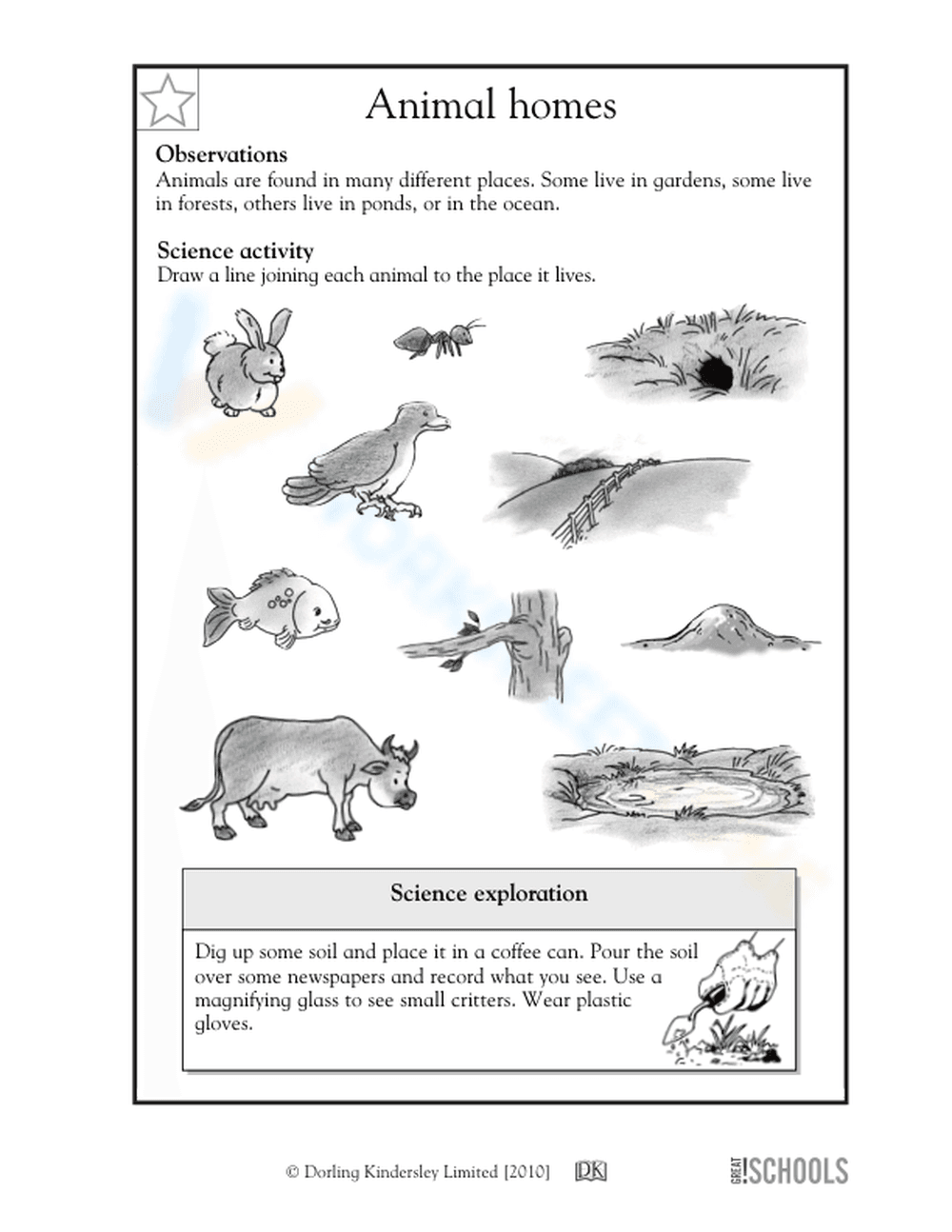

Animal Homes Worksheet | Essential Grade 1-2 Science
Paste this activity's link or code into your existing LMS (Google Classroom, Canvas, Teams, Schoology, Moodle, etc.).
Students can open and work on the activity right away, with no student login required.
You'll still be able to track student progress and results from your teacher account.
This Grade 1-2 science worksheet focuses on the fundamental concept of animal habitats, helping young learners understand where various species seek shelter and survival. By matching specific animals to their natural environments, students develop observational skills and a foundational understanding of ecosystems. This resource ensures that children can identify the direct relationship between an animal's physical needs and its surroundings.
At a Glance
- Grade: 1–2 · Subject: Living Things
- Standard:
2-LS4-1— Compare the diversity of life and different habitats where animals live- Skill Focus: Habitat Identification and Ecosystem Relationships
- Format: 1 page · 5 problems · Answer key included · PDF
- Best For: Individual practice or science center rotations
- Time: 15–20 minutes
What's Inside: This single-page PDF includes a focused Science Activity featuring five distinct animal illustrations including a rabbit, ant, bird, fish, and cow. Students are tasked with drawing lines to connect each creature to its corresponding habitat, such as an underground burrow, a nest, or a pond. Additionally, the page features a Science Exploration extension project that encourages students to observe small critters in their own backyard soil using a magnifying glass.
Designed for maximum teacher efficiency, this resource offers a zero-prep workflow. Simply print the single-sheet PDF, distribute it to your class, and guide students through the observations and connections. Total preparation time is under two minutes, making it an ideal grab-and-go resource for busy classrooms.
Primarily aligned to 2-LS4-1, this resource helps students observe plants and animals, comparing life diversity across different habitats. Identifying where animals live (e.g., a rabbit in a hole, a fish in a pond) categorizes life forms by environmental needs, directly supporting lesson plans or curriculum mapping.
Best utilized during the explain or elaborate phase of a 5E science lesson, this worksheet allows for formative assessment. Observe students as they match animals, like an ant, to prompt discussions on social insect structures. The Science Exploration can extend learning as a weekend homework activity, linking school to real-world observation.
Tailored for first and second-grade students exploring biological diversity, this activity effectively supports English Language Learners (ELLs) through clear visual scaffolding for vocabulary like burrow, nest, and habitat. It pairs well with classroom read-alouds or digital passages on world ecosystems to deepen conceptual connections.
The foundational concept of matching organisms to their environments is supported by the RAND AIRS 2024 framework, which emphasizes the importance of early life science literacy in developing scientific inquiry skills. By engaging with 2-LS4-1 through visual identification tasks, students build the cognitive scaffolds necessary for more complex studies of biodiversity and conservation. Research from ScienceDirect TpT Analysis indicates that structured matching activities in early elementary science significantly improve retention of habitat-specific vocabulary compared to passive reading alone. This worksheet provides the requisite five tasks to establish a clear pattern of animal-habitat relationships, moving from garden-dwelling rabbits to aquatic-based fish. The inclusion of an exploration component ensures that students transition from abstract matching to concrete observation, a key requirement for meeting Next Generation Science Standards (NGSS) in the primary grades. This resource serves as a reliable tool for assessing student ability to recognize that living things thrive in specific places that meet their survival needs.


