


























Views
Downloads
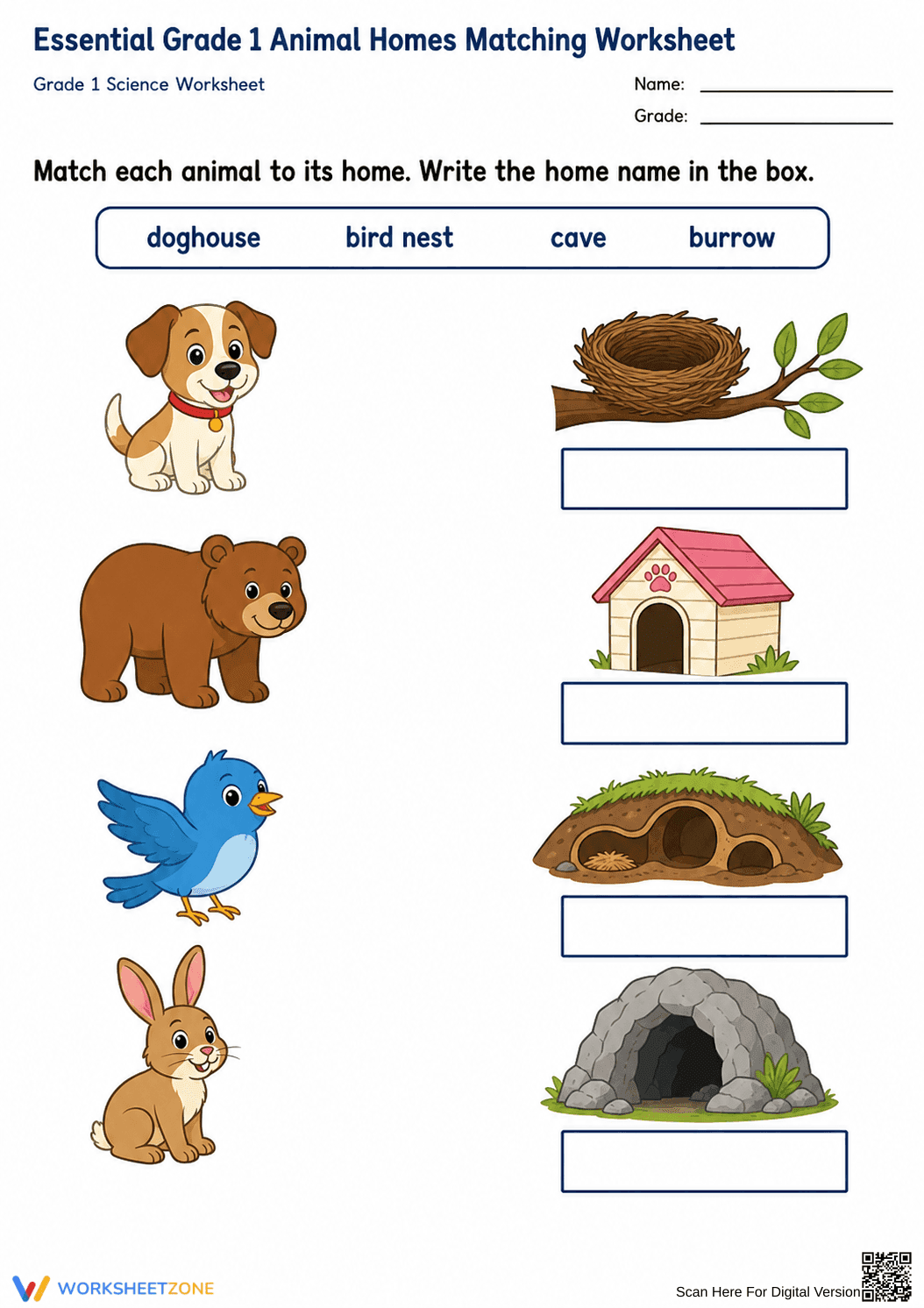
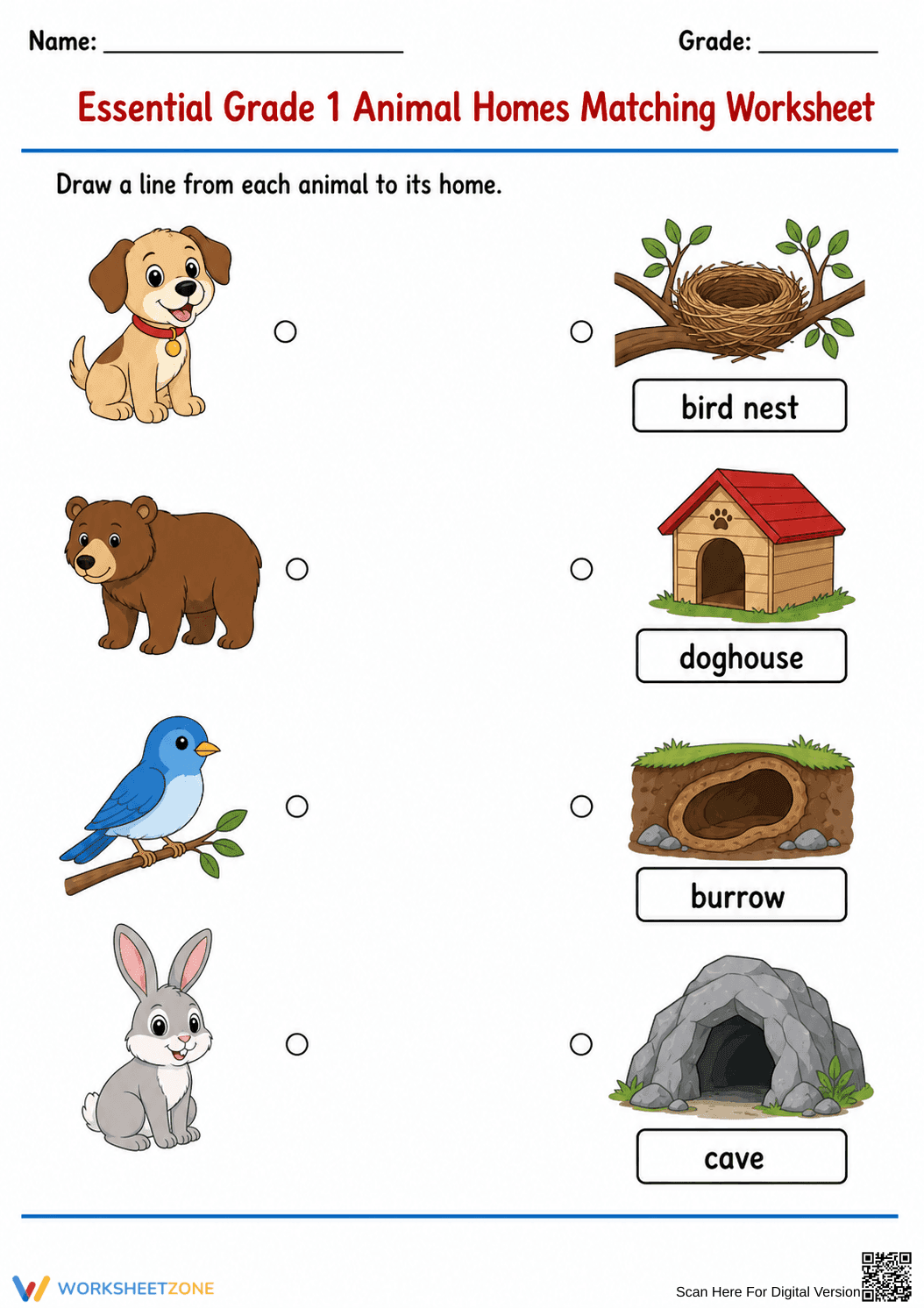

Essential Grade 1 Animal Homes Matching Worksheet
Paste this activity's link or code into your existing LMS (Google Classroom, Canvas, Teams, Schoology, Moodle, etc.).
Students can open and work on the activity right away, with no student login required.
You'll still be able to track student progress and results from your teacher account.
This Grade 1 science worksheet helps young learners identify the relationship between animals and their specific shelters. By matching animals like bears and birds to their respective homes, students develop a foundational understanding of how living things seek refuge and protect themselves. This focused activity builds essential vocabulary and observational skills required for early life science mastery.
At a Glance
- Grade: 1 · Subject: Living Things
- Standard:
1-LS1-1— Identify how animals use body parts and environments to protect themselves and seek shelter- Skill Focus: Animal habitat identification and vocabulary
- Format: 2 pages · 4 problems · Answer key included · PDF
- Best For: Independent practice or quick science warm-up
- Time: 5–10 minutes
What's Inside
The PDF includes a cleanly designed worksheet featuring four distinct animals and four clear illustrations of their natural or domestic homes. A helpful word bank containing terms like "burrow," "cave," and "doghouse" provides the necessary scaffolding for first-grade writers. The second page is a complete answer key with visual indicators, making the review process instantaneous for teachers or parents.
Zero-Prep Workflow
This resource allows immediate classroom integration with teacher prep under 2 minutes. First, print the single-page student sheet (30 seconds) and distribute it to the class for a low-stakes assessment or morning work (30 seconds). Next, allow students to work independently to match the animals to their shelters using the word bank. Finally, display the answer key to facilitate a three-minute whole-group review. This streamlined format makes it an ideal emergency sub plan.
Standards Alignment
This activity aligns with `1-LS1-1`, which focuses on how organisms have external parts and use their environments to meet basic needs like protection and finding shelter. By connecting specific creatures to their habitats, students demonstrate their understanding of biological requirements. This standard code can be copied directly into lesson plans, IEP goals, or district curriculum mapping tools to ensure instructional compliance.
How to Use It
Introduce this worksheet during the "Explain" or "Elaborate" phase of a 5E lesson on living things to reinforce direct instruction. It serves as an excellent formative-assessment tool; observe if students can differentiate between domestic shelters like doghouses and natural ones like burrows. Most Grade 1 students will complete the matching and writing tasks within a ten-minute instructional block.
Who It's For
This worksheet is ideal for Grade 1 students in general education settings, as well as English Language Learners who benefit from the strong visual-text pairing. It is particularly effective when used alongside an anchor chart of animal types or a short passage about forest animals. The layout ensures students with emerging literacy skills succeed without overwhelming text demands.
Research by Fisher & Frey (2014) highlights the effectiveness of scaffolded vocabulary acquisition through visual-to-text matching in early primary education. By providing a clear word bank and identifiable illustrations of homes like caves and nests, this worksheet facilitates the construction of mental schemas regarding animal survival strategies and environmental dependencies. This approach ensures that learners are not merely memorizing names but are identifying the functional relationship between an organism's physical needs and its habitat. The inclusion of the 1-LS1-1 standard ensures that the practice remains rigorous and aligned with broader science trajectories. Furthermore, such classification tasks help develop the cognitive flexibility required for more complex biological inquiries in later grades. Teachers can use this data to identify gaps in categorical thinking before moving into more abstract ecological concepts. The structured format provides a reliable baseline for measuring student progress in recognizing the essential requirements of living things within a standard-aligned curriculum.


