


























Views
Downloads

Animal Fact vs. Fiction Worksheet | Grade 5 Essential
Paste this activity's link or code into your existing LMS (Google Classroom, Canvas, Teams, Schoology, Moodle, etc.).
Students can open and work on the activity right away, with no student login required.
You'll still be able to track student progress and results from your teacher account.
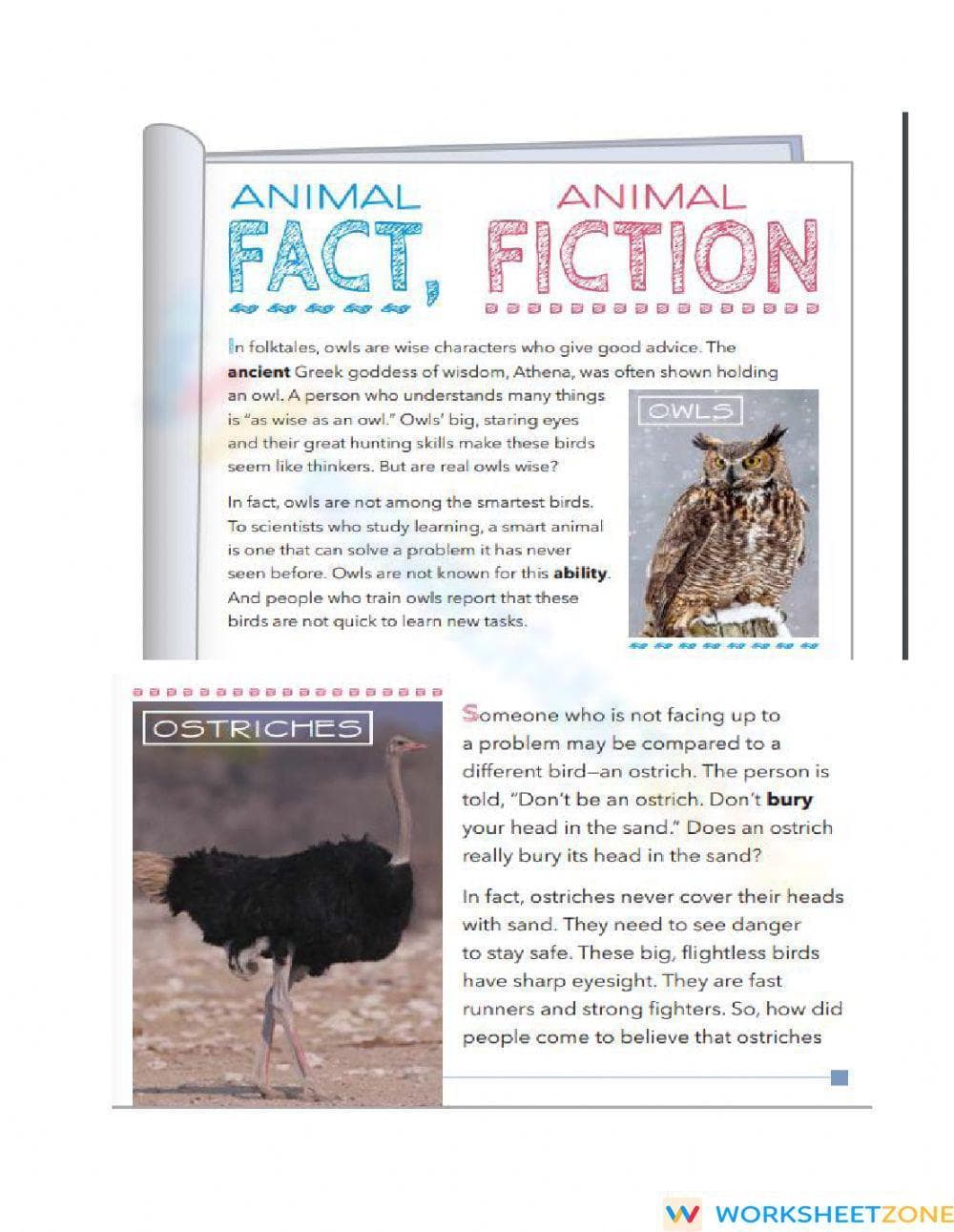
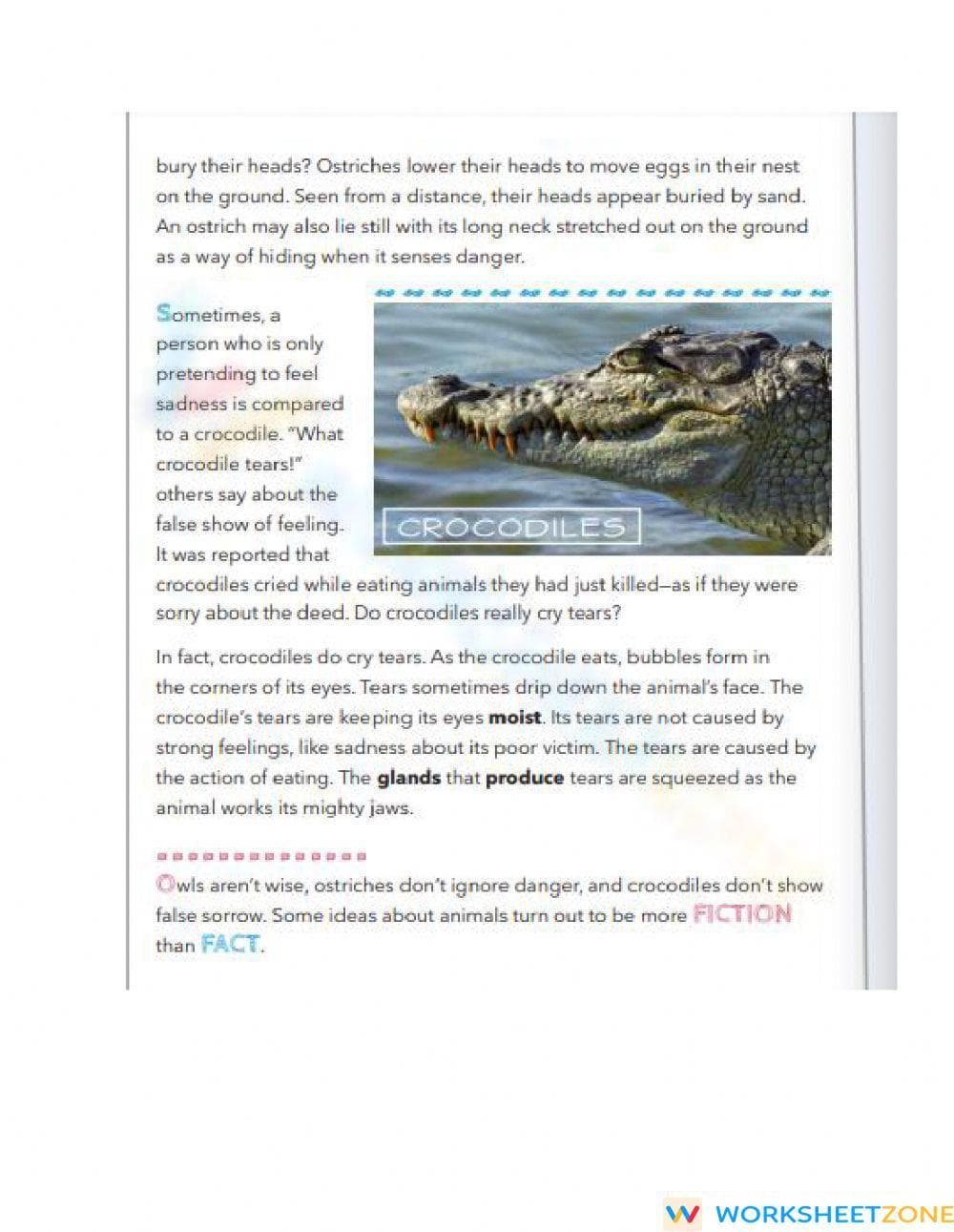
This Grade 5 reading comprehension worksheet helps students distinguish between common animal myths and scientific realities. By analyzing informational text about owls, ostriches, and crocodiles, learners develop critical thinking skills. Students identify evidence to support claims, improving their ability to navigate complex nonfiction passages with confidence and accuracy.
At a Glance
- Grade: 5 · Subject: ELA
- Standard:
CCSS.ELA-LITERACY.RI.5.1— Quote accurately from a text when explaining what the text says explicitly- Skill Focus: Fact vs. Fiction / Informational Reading
- Format: 3 pages · 6 problems · Answer key included · PDF
- Best For: Close reading and vocabulary development practice
- Time: 25–35 minutes
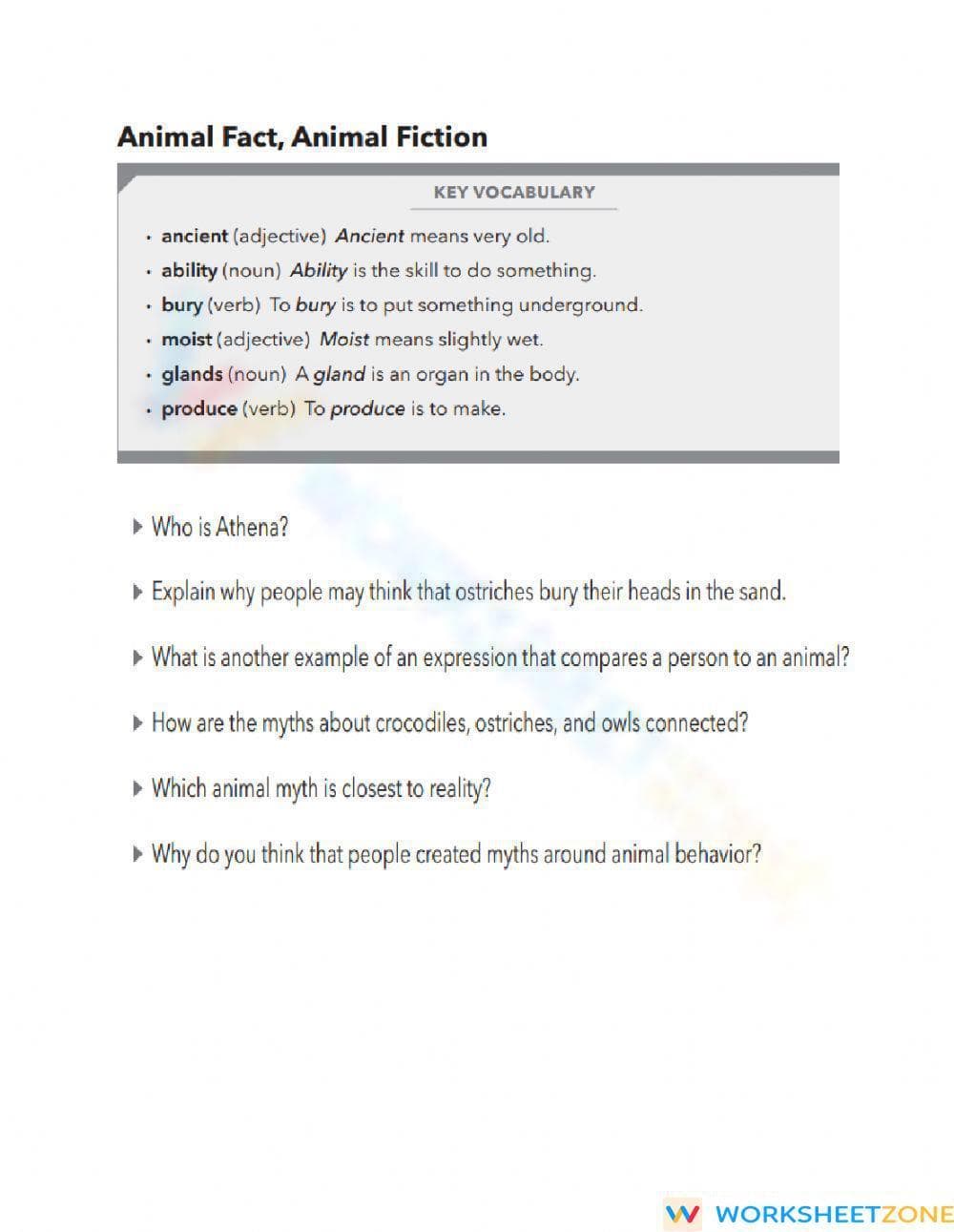
This comprehensive three-page resource includes high-interest informational text and a dedicated assessment page. The reading portion covers three animals, contrasting cultural myths with biological facts. The final page features a "Key Vocabulary" section with six academic terms and six open-ended comprehension questions designed to probe deep understanding and textual evidence extraction.
The worksheet follows a structured skill progression to ensure student success.
- Guided Practice: The reading introduces animal myths alongside scientific counterpoints, modeling fact-checking of informational text.
- Supported Practice: A curated vocabulary list provides the linguistic scaffolding necessary to understand the scientific explanations.
- Independent Practice: Students answer six critical thinking questions that require them to synthesize information and explain connections.
This gradual-release approach moves students from recognizing facts to analyzing misconceptions.
Standards Alignment
Primary alignment is to `CCSS.ELA-LITERACY.RI.5.1`, requiring students to quote accurately when explaining explicit text and drawing inferences. The resource also supports `CCSS.ELA-LITERACY.RI.5.3` by asking students to explain interactions between ideas based on specific text information. Both standard codes can be copied directly into lesson plans or district curriculum mapping tools.
How to Use It
This worksheet is ideal for the "independent application" phase of a close-reading lesson. After discussing informational structures, assign this passage to assess students' ability to differentiate fact from fiction. For a formative assessment tip, observe if students reference pages one and two for evidence. Completion time ranges from 25 to 35 minutes.
Who It's For
This resource is designed for fifth-grade students, but the subject matter makes it suitable for Grade 4 extensions or Grade 6-7 remediation. It supports English Language Learners through clear vocabulary definitions. Naturally pair this worksheet with a video clip of owls or crocodiles to provide a visual anchor for the scientific facts.
The Animal Fact vs. Fiction worksheet is a standards-aligned tool for CCSS.ELA-LITERACY.RI.5.1. By requiring students to extract explicit evidence to debunk biological myths, the resource reinforces the close reading methodology. According to a ScienceDirect TpT Analysis, informational texts that challenge student preconceptions lead to higher engagement and better retention of academic vocabulary. This printable PDF focuses on six academic terms and six comprehension tasks, ensuring students practice referencing text to support claims. This rigorous approach to informational reading prepares Grade 5 learners for middle school literature and science curricula. The inclusion of a clear vocabulary scaffold and multi-layered questions makes this an essential addition to any classroom's reading comprehension toolkit, particularly for those following the Lexia Level 16 framework.


