


























Views
Downloads


Amusement Park Math Problems: Printable Grade 4-5 Aligned
Paste this activity's link or code into your existing LMS (Google Classroom, Canvas, Teams, Schoology, Moodle, etc.).
Students can open and work on the activity right away, with no student login required.
You'll still be able to track student progress and results from your teacher account.
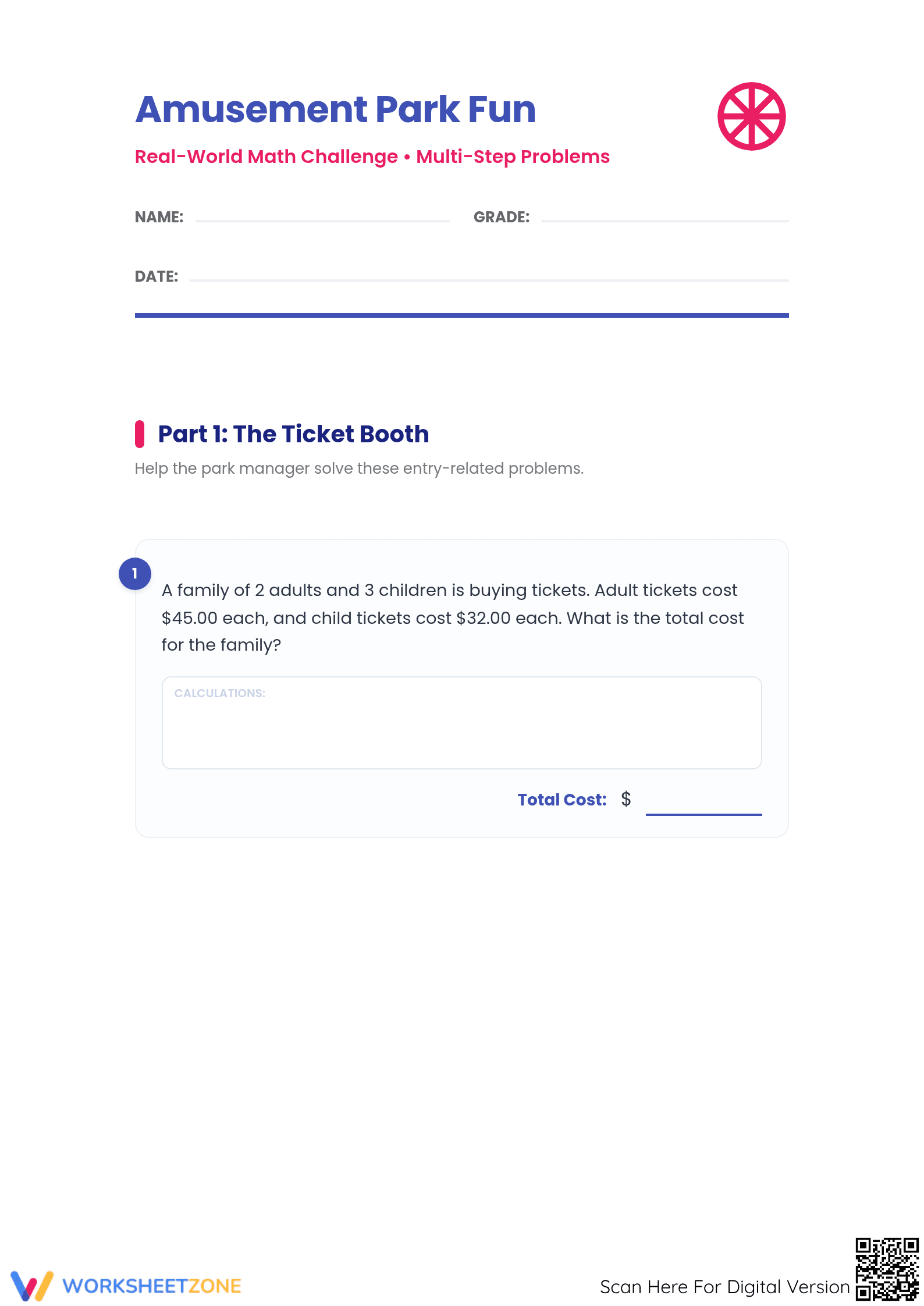
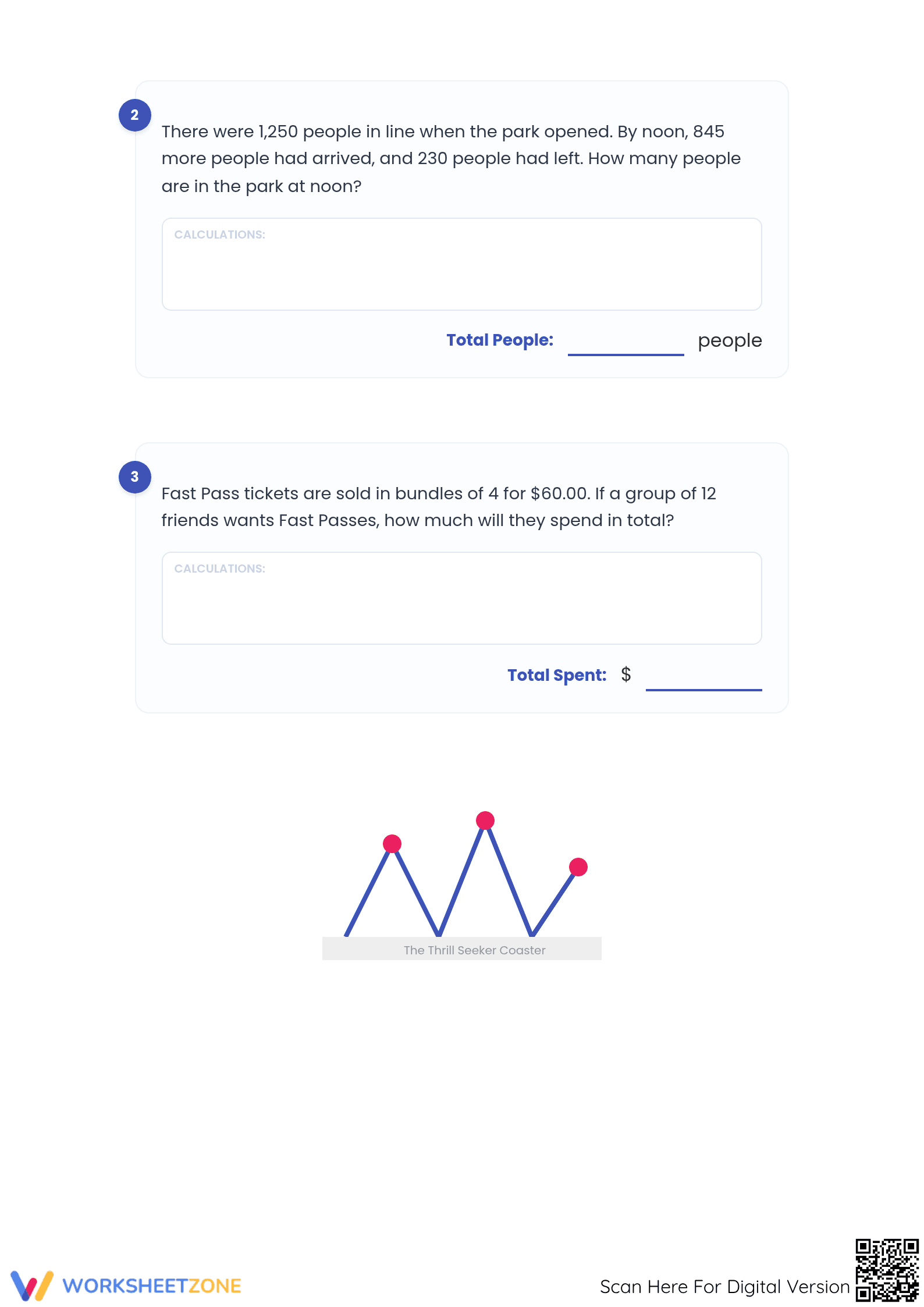
This amusement park themed math resource challenges students to apply arithmetic skills to real-world scenarios. Students calculate ticket costs, manage visitor counts, and determine ride wait times through ten multi-step word problems. This resource covers four operations, fractions, and measurement, ensuring students transfer classroom concepts to practical situations.
At a Glance
- Grade: 4–5 · Subject: Math
- Standard:
CCSS.MATH.CONTENT.4.OA.A.3— Solve multi-step word problems using the four operations and represent them with equations- Skill Focus: Real-world multi-step application
- Format: 5 pages · 10 problems · Answer key included · PDF
- Best For: Independent practice or sub plans
- Time: 45–60 minutes
What's Inside
Inside this 5-page packet, you will find ten high-interest word problems divided into two thematic sections: The Ticket Booth and Ride Wait Times. Each problem features a dedicated "Calculations" workspace to encourage students to show their work and identify multi-step operations. The set includes a full answer key, ensuring quick grading and immediate feedback for classroom or homework use.
Zero-Prep Workflow
Implementing this activity requires zero teacher preparation. 1. Print the five-page PDF (30 seconds). 2. Distribute the worksheets and explain the amusement park theme (1 minute). 3. Review the multi-step calculation boxes to check for procedural understanding (2 minutes total). Because the instructions are self-contained and the theme is naturally engaging, this resource serves as an ideal sub plan or a productive Friday afternoon enrichment activity.
Standards Alignment
The primary alignment is `CCSS.MATH.CONTENT.4.OA.A.3`, which focuses on solving multistep word problems with whole numbers using the four operations. Students also engage with `CCSS.MATH.CONTENT.4.MD.A.2` when calculating time intervals and measurement conversions for ride requirements. Both standard codes can be copied directly into lesson plans, IEP goals, or district curriculum mapping tools.
How to Use It
Use this worksheet during the "You Do" phase of a gradual release lesson on multi-step problems. After direct instruction, assign the "Ticket Booth" section as a formative assessment to observe how students handle money-based multiplication. For extension, have students create their own "Ride 11" problem using the data provided. This allows teachers to quickly spot-check who is struggling with identifying the correct sequence of operations.
Who It's For
This resource is designed for Grade 4 and Grade 5 students who are transitioning from simple arithmetic to complex problem-solving. It is particularly effective for visual learners who benefit from thematic context and structured workspaces. Pair this packet with a short video about amusement park engineering or a reading passage on the history of roller coasters for a cross-curricular STEM experience.
According to the RAND AIRS 2024 analysis, contextualizing mathematics in real-world scenarios significantly improves student retention of the `CCSS.MATH.CONTENT.4.OA.A.3` standard. This worksheet utilizes an amusement park theme to help students master the plain-English skill of solving multi-step word problems involving multiplication, division, and fractions. By providing explicit calculation boxes, the resource scaffolds the cognitive load required to organize multi-part operations. Research indicates that when students are asked to help a park manager, engagement levels increase compared to abstract drills. This packet ensures that the rigorous demands of the four operations are met within a framework that mirrors the complexity of everyday life. The structured release of responsibility aligns with best practices for elementary mathematics instruction and serves as a reliable evidence-based tool for the Grade 4 and 5 classroom.


