


























Views
Downloads

Alphabet Tracing Worksheet | Grade K Printable
Paste this activity's link or code into your existing LMS (Google Classroom, Canvas, Teams, Schoology, Moodle, etc.).
Students can open and work on the activity right away, with no student login required.
You'll still be able to track student progress and results from your teacher account.
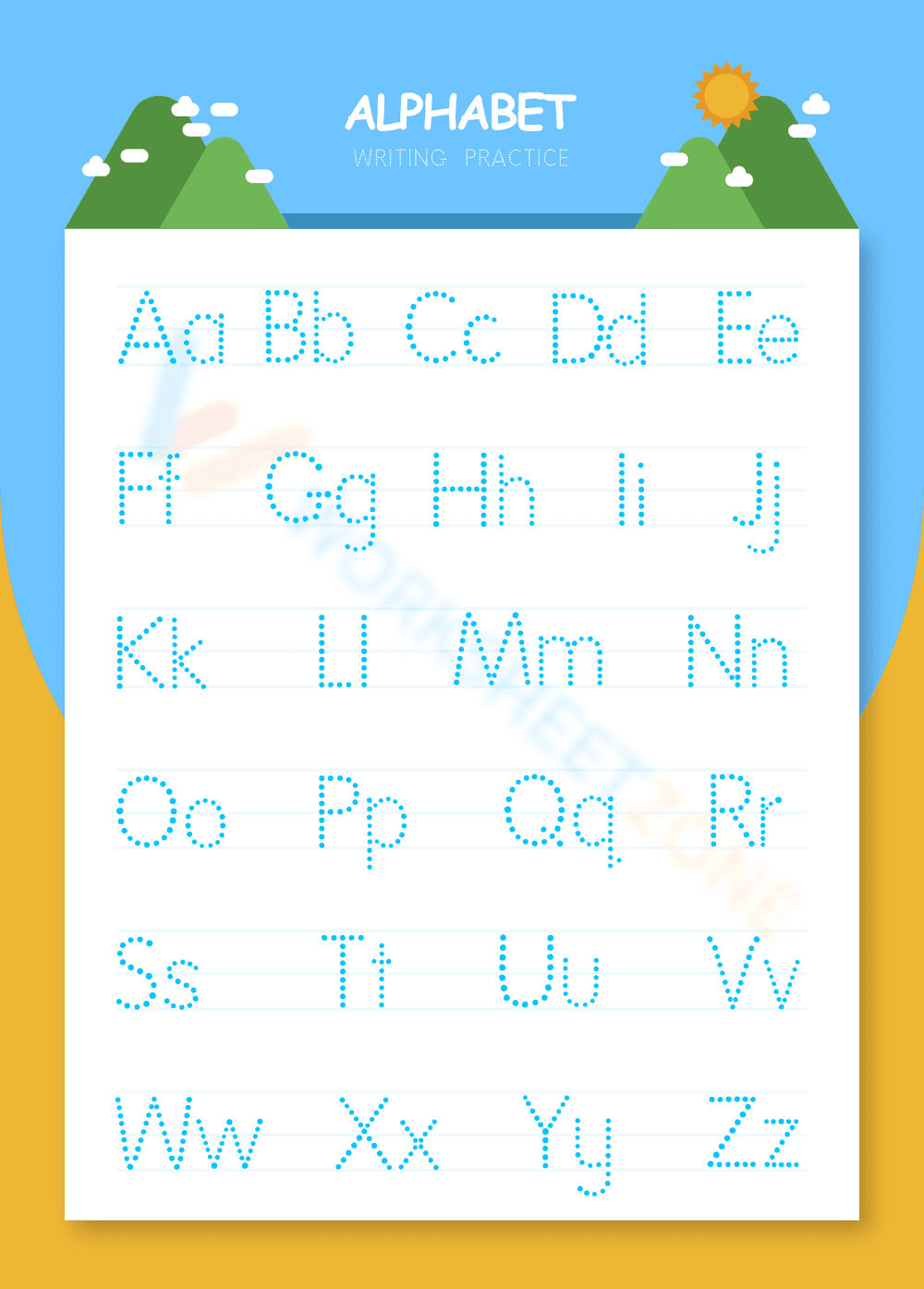
This foundational alphabet tracing worksheet helps early learners master letter formation and build fine motor control. By practicing both uppercase and lowercase letters from A to Z, students develop the muscle memory required for fluent handwriting and early literacy success.
At a Glance
- Grade: K · Subject: ELA
- Standard:
CCSS.ELA-LITERACY.L.K.1.A— Print upper- and lowercase letters- Skill Focus: Letter formation and tracing
- Format: 1 page · 26 problems · No answer key needed · PDF
- Best For: Morning work or centers
- Time: 10–15 minutes
Inside this single-page resource, educators will find a complete set of dotted-line tracing exercises for the English alphabet. Each of the twenty-six tasks pairs the uppercase and lowercase version of a letter, providing clear visual guides for proper sizing. The clean layout ensures young students remain focused on their pencil grip and stroke sequence without feeling overwhelmed by unnecessary graphics.
Zero-Prep Workflow
- Print (1 minute): Simply download the PDF and print a class set. The high-contrast dotted lines reproduce perfectly in black and white.
- Distribute (1 minute): Hand out the sheets along with pencils or crayons. The intuitive design means students know exactly what to do immediately.
- Review (0 minutes): As a tracing activity, this requires no formal grading. Teachers can quickly scan the room to check for proper pencil grip and stroke direction.
Total teacher prep time is under two minutes, making this an excellent, reliable option for emergency sub plans or quick morning work routines.
Standards Alignment
This resource directly supports CCSS.ELA-LITERACY.L.K.1.A: Print many upper- and lowercase letters. It also reinforces early concepts of print and fine motor development necessary for foundational writing skills. Both standard codes can be copied directly into lesson plans, IEP goals, or district curriculum mapping tools.
How to Use It
Deploy this worksheet during morning arrival to establish a calm, productive routine before direct instruction begins. Alternatively, place it in an independent literacy center where students can practice tracing with dry-erase markers if placed in plastic sleeves. While students work, teachers should observe pencil grip and ensure children are forming letters from top to bottom rather than bottom to top. Expect most kindergarteners to complete the entire page in 10 to 15 minutes.
Who It's For
This printable is designed primarily for kindergarten students, though it serves as excellent remedial practice for first graders struggling with legibility. For differentiation, teachers can cut the page into strips to reduce the visual load for students who need to focus on just a few letters at a time. It pairs perfectly with an alphabet anchor chart or a direct instruction lesson on phonics and letter sounds.
Mastering the physical act of writing is a critical precursor to expressive composition. This resource targets CCSS.ELA-LITERACY.L.K.1.A, ensuring students can accurately print upper- and lowercase letters. According to Fisher & Frey (2014), explicit instruction and repeated guided practice in letter formation significantly reduce the cognitive load required for handwriting. When students no longer have to consciously think about how to form a letter, they can allocate their working memory to spelling, vocabulary, and sentence construction. By providing twenty-six structured tracing opportunities, this worksheet builds the automaticity and fine motor endurance necessary for long-term academic success. Consistent practice with proper stroke sequences prevents the development of inefficient handwriting habits. This targeted repetition is essential for bridging the gap between early letter recognition and independent writing capabilities.


