




























Views
Downloads
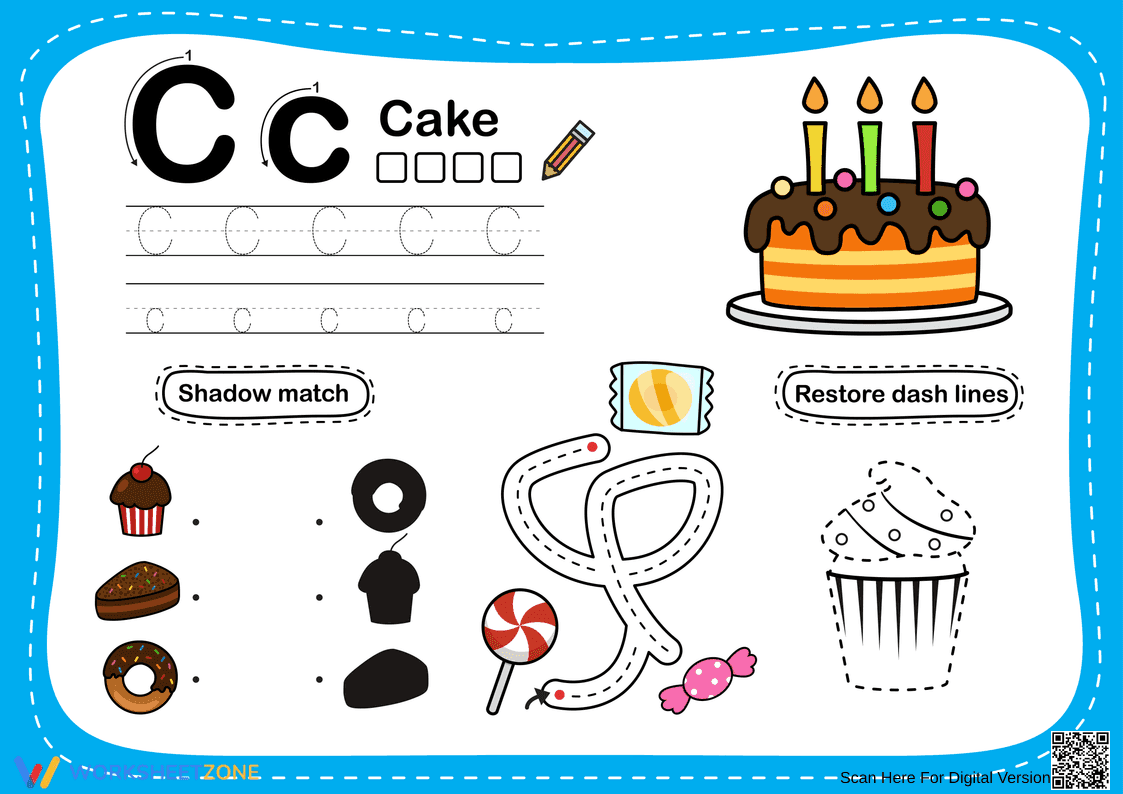

Letter C Tracing Worksheet | Printable PreK-K ELA

Paste this activity's link or code into your existing LMS (Google Classroom, Canvas, Teams, Schoology, Moodle, etc.).
Students can open and work on the activity right away, with no student login required.
You'll still be able to track student progress and results from your teacher account.
This printable letter C worksheet helps early learners develop essential handwriting and fine motor skills. By combining uppercase and lowercase letter tracing with engaging visual puzzles, students build foundational literacy while practicing pencil control. The activities reinforce letter recognition through targeted, hands-on practice.
At a Glance
- Grade: PreK-K · Subject: ELA
- Standard:
CCSS.ELA-LITERACY.L.K.1.A— Print upper- and lowercase letters- Skill Focus: Letter C tracing and fine motor control
- Format: 1 page · 4 tasks · No answer key needed · PDF
- Best For: Morning work or literacy centers
- Time: 10–15 minutes
This single-page resource features four distinct activity zones designed to maintain student engagement. Children begin with guided tracing for both uppercase and lowercase letter C, complete with directional arrows. Next, they trace the word "Cake" to connect the letter to a concrete vocabulary word. The bottom half includes a shadow matching game with sweet treats and two "restore dash lines" exercises where students trace curved paths and complete a cupcake illustration.
This resource offers a streamlined, zero-prep workflow for busy educators:
- Print (1 minute): Generate the single-page PDF directly from your device. No special formatting or color ink is required.
- Distribute (1 minute): Hand out the sheets along with pencils or crayons. The visual instructions make the tasks immediately clear to early learners.
- Review (1 minute): Quickly scan completed pages to check for proper pencil grip and stroke direction.
With under two minutes of total teacher preparation, this sheet is highly suitable for emergency sub plans or quick transitions.
This activity aligns directly with CCSS.ELA-LITERACY.L.K.1.A, which requires students to print many upper- and lowercase letters. It also supports early visual discrimination and fine motor development necessary for writing. Both standard codes can be copied directly into lesson plans, IEP goals, or district curriculum mapping tools.
Deploy this worksheet during morning arrival to establish a calm, focused routine before direct instruction begins. It also functions perfectly as an independent station during literacy centers. While students work, observe their pencil grip and stroke sequence as a quick formative assessment. Expect children to complete the four tasks within a 10 to 15-minute timeframe.
This material is designed for preschool and kindergarten students mastering early alphabet concepts. The embedded visual cues and varied task types provide natural differentiation for learners who struggle with sustained writing tasks, breaking the work into manageable chunks. Pair this printable with a read-aloud focused on the letter C or a classroom alphabet anchor chart.
Developing automaticity in letter formation is a critical precursor to fluent writing and reading comprehension. This resource targets CCSS.ELA-LITERACY.L.K.1.A, helping students print upper- and lowercase letters accurately. According to Fisher & Frey (2014), integrating fine motor practice with explicit letter recognition tasks significantly improves early literacy outcomes in primary classrooms. By combining traditional tracing with visual discrimination exercises like shadow matching, the worksheet engages multiple cognitive pathways. This multimodal approach ensures that young learners do not merely copy shapes, but actively connect the letter C to its structural components and vocabulary associations. Consistent practice with guided directional arrows builds the muscle memory required for independent writing, reducing cognitive load during later composition tasks. This targeted practice lays the groundwork for future academic success in foundational English Language Arts.


