


























Views
Downloads


Printable Alphabet Pattern Worksheet | Grade K-1 Essential
Paste this activity's link or code into your existing LMS (Google Classroom, Canvas, Teams, Schoology, Moodle, etc.).
Students can open and work on the activity right away, with no student login required.
You'll still be able to track student progress and results from your teacher account.
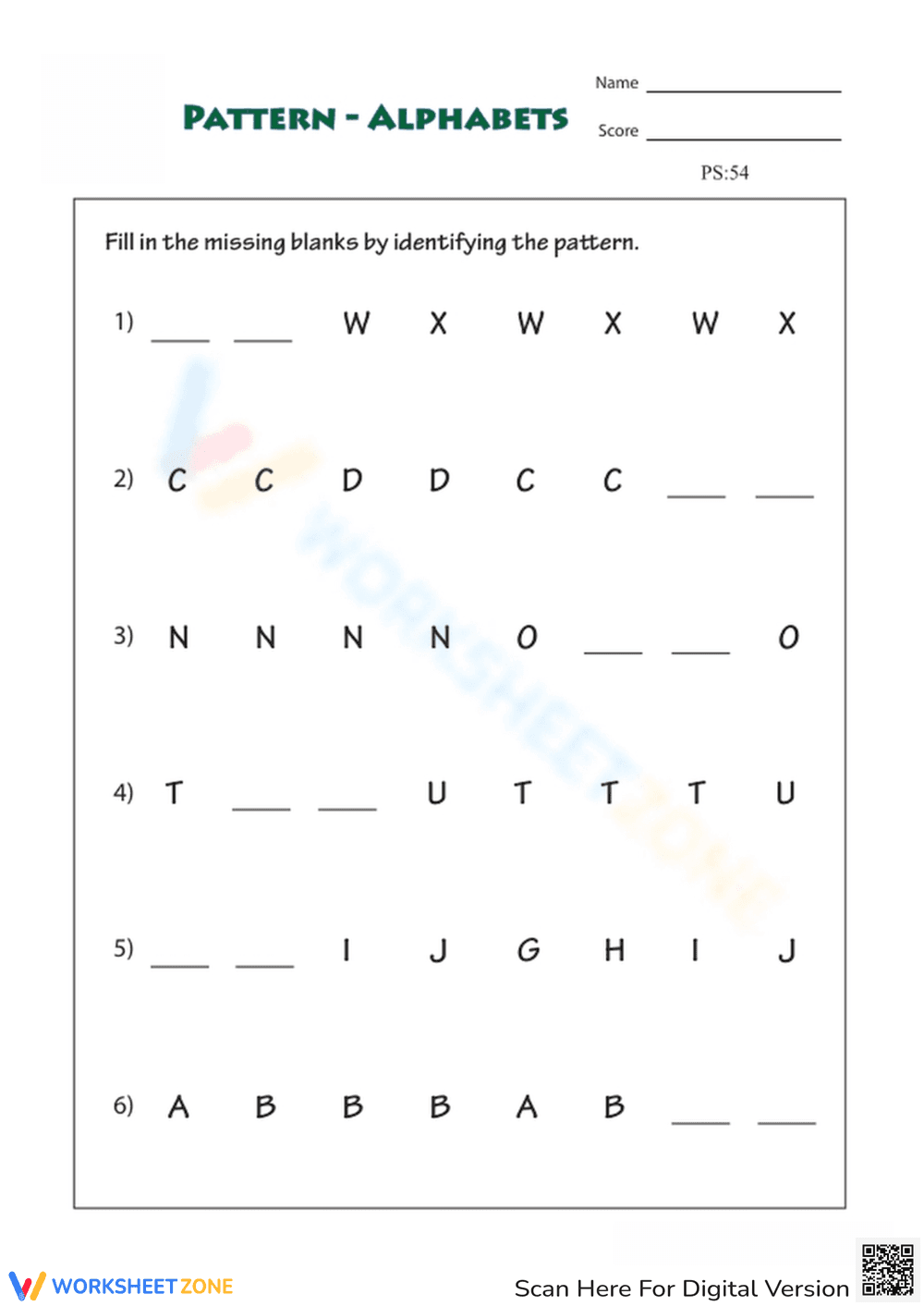
Improve early literacy skills with this focused alphabet pattern recognition worksheet designed for Kindergarten and Grade 1 students. This resource challenges learners to identify recurring sequences of letters and fill in missing blanks, bridging the gap between basic letter identification and the logical sequencing required for fluent reading and writing development in early childhood.
At a Glance
- Grade: K–1 · Subject: ELA
- Standard:
CCSS.ELA-LITERACY.RF.K.1.D— Recognize and name all upper- and lowercase letters of the alphabet in a sequence- Skill Focus: Alphabet Pattern Recognition
- Format: 1 high-quality page · 6 structured problems · Full answer key included · PDF ready
- Best For: Independent student practice during early morning work or literacy centers
- Time: 10–15 minutes of focused student engagement
What's Inside
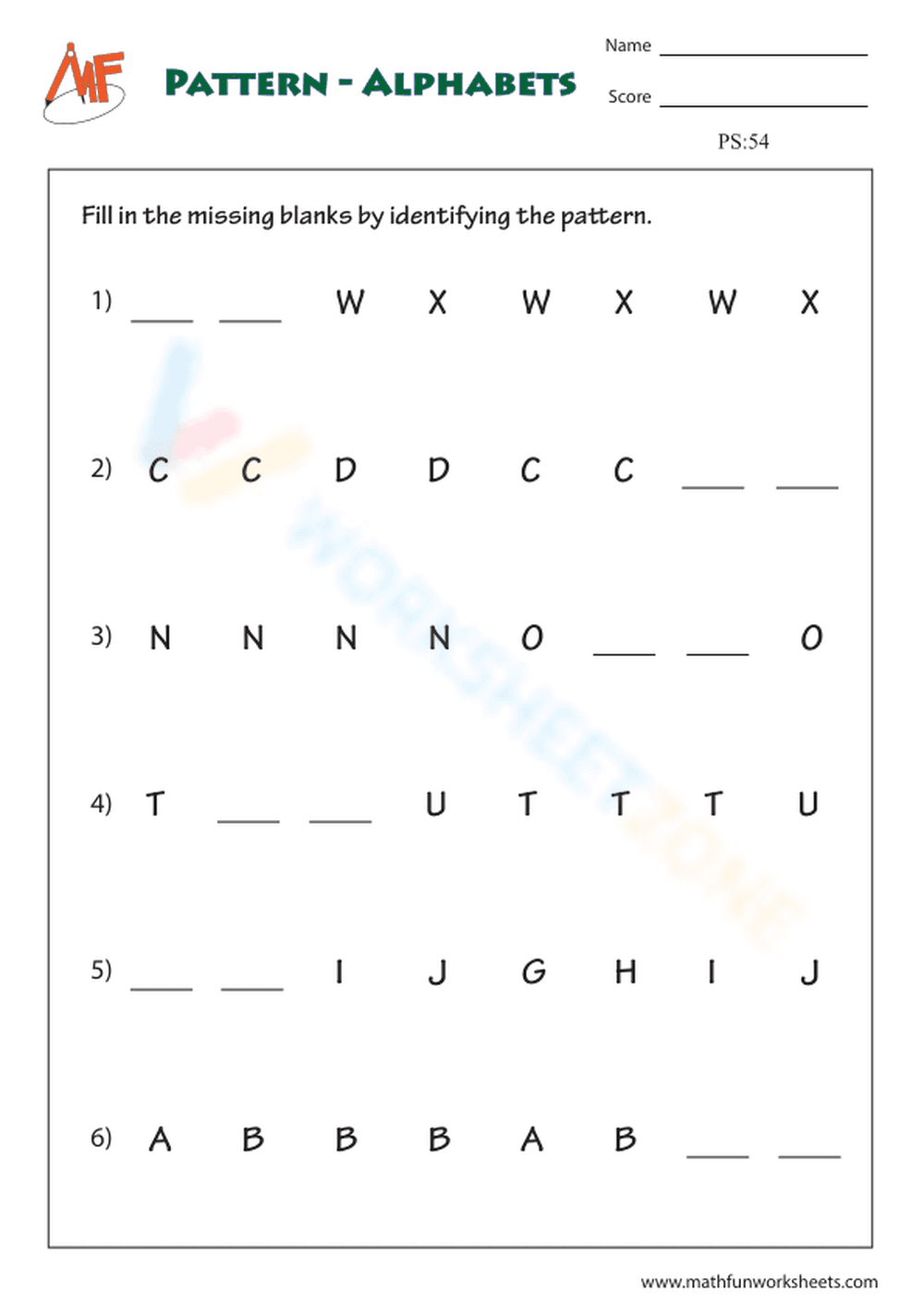
This single-page PDF contains six distinct letter pattern problems. Each task presents a sequence of uppercase letters—such as RSSSR or AAA_A—and requires students to deduce the pattern to complete the empty spaces. The clear layout reduces cognitive load, while the varying complexity of patterns ensures students must pay close attention to letter order and repetition.
Zero-Prep Workflow
This resource is designed for an efficient classroom experience with a three-step workflow. First, print the single-page document (30 seconds). Second, distribute to students as they arrive or during a transition period (1 minute). Finally, review the answers using the provided key for immediate feedback (30 seconds). Total teacher preparation time is less than two minutes, making it ideal for sub plans.
Standards Alignment
This worksheet aligns primarily with CCSS.ELA-LITERACY.RF.K.1.D, which requires students to recognize and name all upper- and lowercase letters of the alphabet. By working through these patterns, students reinforce their visual discrimination skills and alphabet knowledge. Both standard codes can be copied directly into lesson plans, IEP goals, or district curriculum mapping tools for administrative tracking and instructional alignment.
How to Use It
Use this worksheet as a warm-up activity during your literacy block to activate students' pattern-seeking brains. It also serves as a high-quality formative assessment; observe if students struggle with specific letter shapes or if they can vocalize the "rule" of the pattern they discovered. Expect completion within fifteen minutes, allowing for a quick check-in before moving to more complex phonics instruction or shared reading.
Who It's For
This activity is perfect for Kindergarten students beginning their letter journey and Grade 1 students needing a refresher on sequencing. It supports English Language Learners by providing a visual, logic-based entry point to the alphabet. Pair this resource with a physical alphabet anchor chart or a letter-tile manipulation activity to provide a multi-sensory learning experience that reinforces the concepts of order and repetition.
The development of alphabet pattern recognition is a critical milestone in early childhood education, as it directly influences a student's ability to decode words and understand text structures. According to the RAND AIRS 2024 literacy report, consistent engagement with letter sequencing and identification tasks significantly reduces the risk of future reading difficulties by strengthening the orthographic processing centers of the brain. This worksheet provides the structured practice necessary for students to master the CCSS.ELA-LITERACY.RF.K.1.D standard by focusing on the visual patterns inherent in our writing system. By challenging students to identify missing elements in a sequence, educators can foster higher-order thinking skills while simultaneously reinforcing foundational ELA knowledge. Such printable resources are vital components of a comprehensive literacy curriculum, offering a low-threshold, high-impact method for monitoring progress in letter identification and sequencing logic within a diverse classroom setting.


