


























Views
Downloads
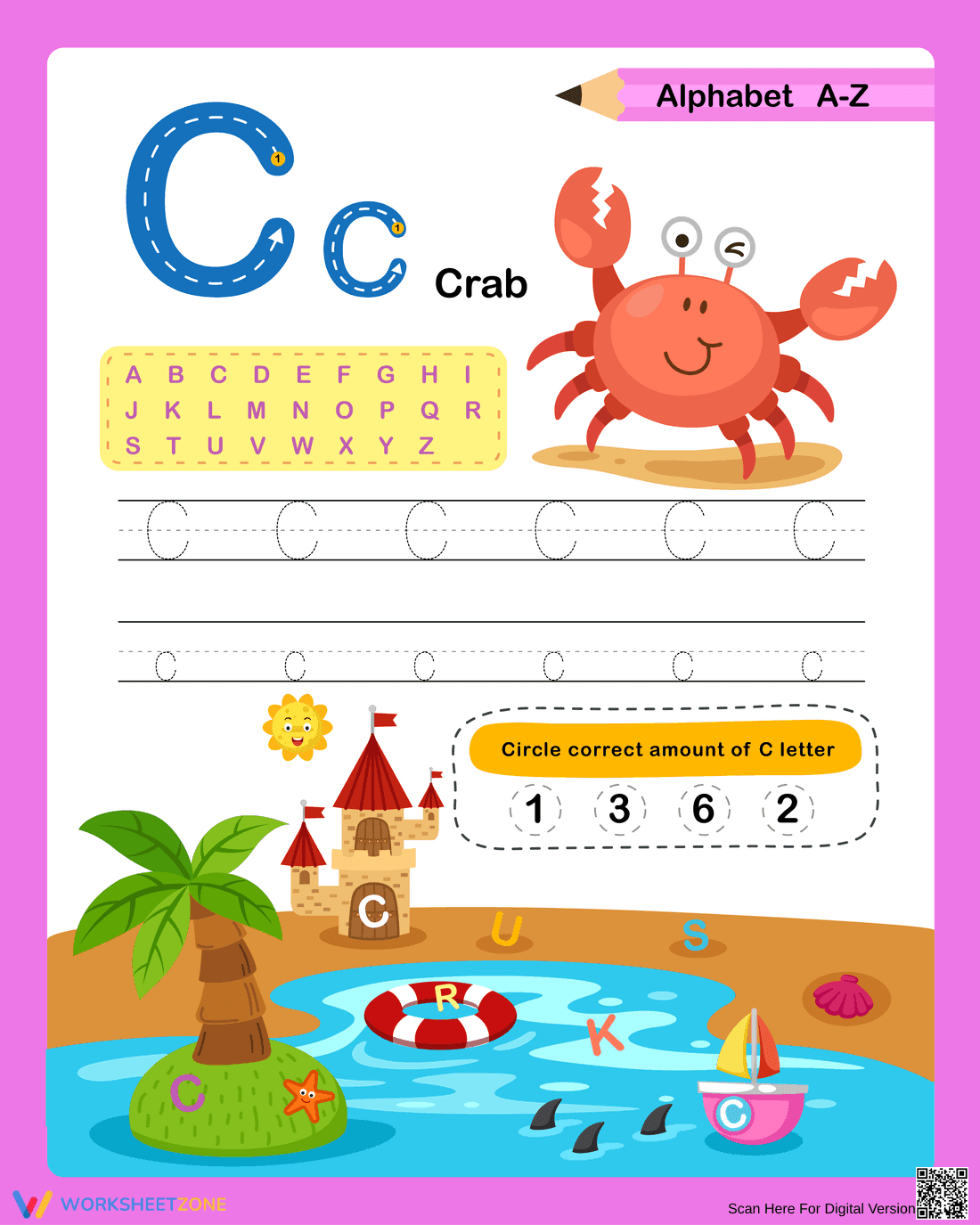

Letter C Alphabet Worksheet | Grade K Essential
Paste this activity's link or code into your existing LMS (Google Classroom, Canvas, Teams, Schoology, Moodle, etc.).
Students can open and work on the activity right away, with no student login required.
You'll still be able to track student progress and results from your teacher account.
This essential Letter C worksheet provides early learners with a structured path to mastering alphabet recognition and formation. By combining tactile tracing with a visual search activity, students develop the phonemic awareness and fine motor control necessary for early literacy success. It bridges the gap between letter identification and writing.
At a Glance
- Grade: Kindergarten · Subject: ELA Alphabet
- Standard:
CCSS.ELA-LITERACY.RF.K.1.D— Recognize and name all upper- and lowercase letters of the alphabet in print- Skill Focus: Letter C recognition, uppercase tracing, and lowercase tracing
- Format: 1 page · 3 tasks · Answer key included · PDF
- Best For: Morning work and literacy centers
- Time: 10–15 minutes
What's Inside
This single-page PDF features a comprehensive layout for young learners. It includes a large visual of the letter C paired with a "Crab" illustration to reinforce the hard /k/ sound. The worksheet provides two tracing rows for uppercase and lowercase forms, utilizing dashed lines to guide stroke order. A "Letter Search" scene and counting task are also included to reinforce visual discrimination.
Zero-Prep Workflow
This resource is designed for immediate implementation with a three-step workflow. First, print the single-page PDF for your class (20 seconds). Second, distribute the sheets during your literacy block or as a quiet morning activity (40 seconds). Third, review the letter search results as a whole group to provide immediate feedback. Total teacher preparation time is under one minute, making it an ideal sub plan.
Standards Alignment
This resource is specifically aligned to `CCSS.ELA-LITERACY.RF.K.1.D`, which requires students to recognize and name all upper- and lowercase letters of the alphabet. By providing distinct tracing paths, the worksheet ensures students understand the structural differences between forms. This standard code can be copied directly into lesson plans, IEP goals, or district curriculum mapping tools to document student progress toward foundational reading benchmarks.
How to Use It
Use this worksheet during the introduction of the letter C. It works well as a formative assessment to gauge fine motor support needs. For an interactive experience, place the sheet in a plastic sleeve for dry-erase marker use in a literacy center. This allows for repeated practice and high engagement. Expected completion time for most Kindergarten students is between 10 and 15 minutes.
Who It's For
This worksheet is tailored for Preschool and Kindergarten students developing print concepts. It is effective for English Language Learners who benefit from the visual "Crab" anchor image. The clear design supports students with visual processing needs. Pair this with a physical alphabet manipulative or a read-aloud book focusing on the letter C for a multi-sensory learning experience.
The acquisition of letter-name knowledge is a primary predictor of later reading achievement in early childhood education. This worksheet aligns with the instructional frameworks identified by Fisher & Frey (2014), which emphasize the importance of scaffolded practice in developing foundational literacy skills. By integrating uppercase and lowercase tracing with a contextualized visual search, the resource supports the "gradual release of responsibility" model. Students move from guided tracing to independent identification of the letter C within a complex visual field. Research from the NAEP suggests that early mastery of the alphabet, specifically the ability to recognize and name all upper- and lowercase letters (CCSS.ELA-LITERACY.RF.K.1.D), significantly correlates with higher reading comprehension scores in subsequent grades. This printable resource provides the repetitive, high-engagement practice necessary to solidify these neural pathways, ensuring that young learners transition from letter recognition to decoding with confidence and accuracy.


