


























Views
Downloads



Aligned Dialogue and Action Worksheet | Grade 8 ELA
Paste this activity's link or code into your existing LMS (Google Classroom, Canvas, Teams, Schoology, Moodle, etc.).
Students can open and work on the activity right away, with no student login required.
You'll still be able to track student progress and results from your teacher account.
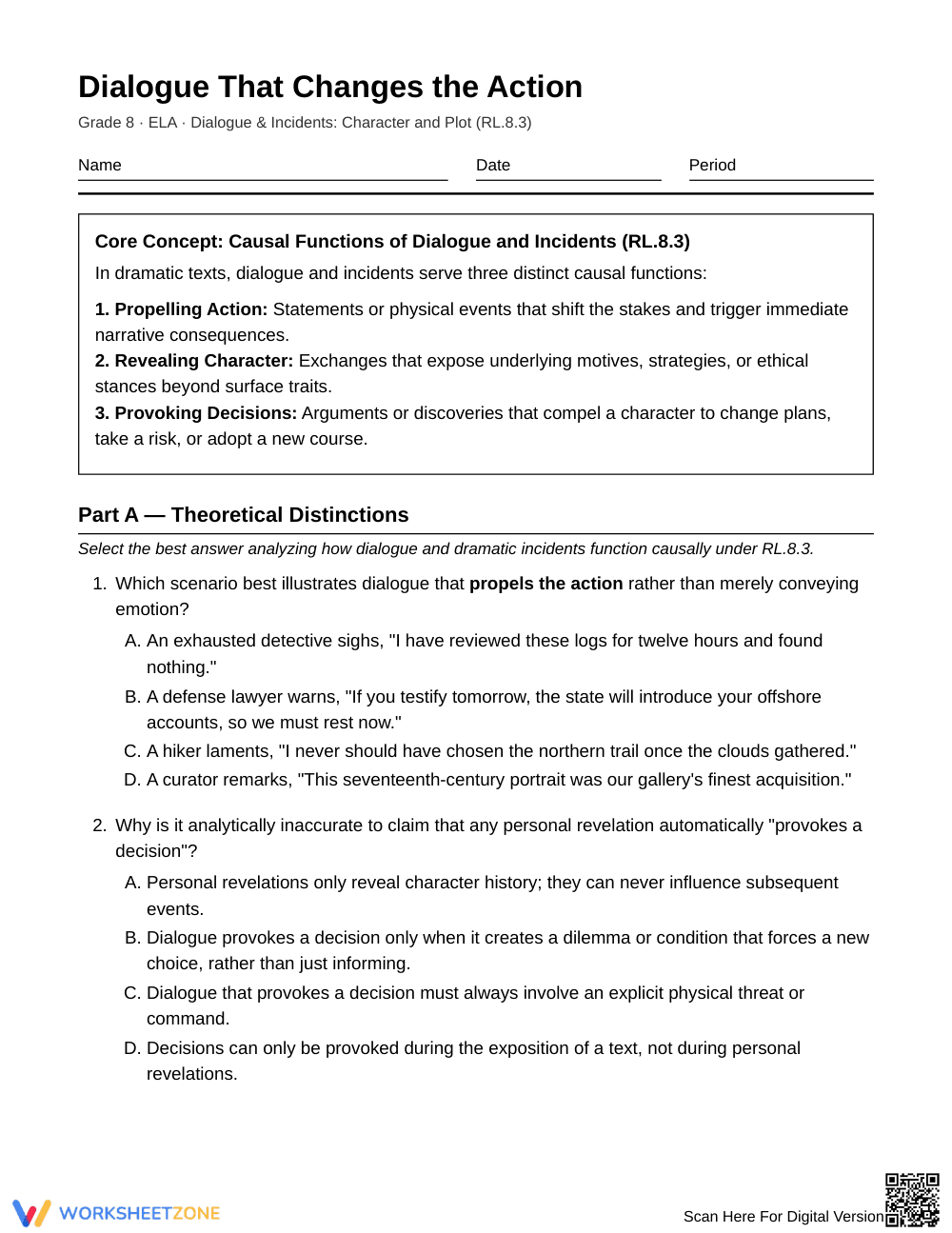
This Grade 8 literature worksheet equips students to trace how spoken lines and dramatic incidents drive narrative movement in dramatic scenes. Working through 10 targeted tasks, eighth graders differentiate between passive dialogue and causal action, evaluate character motivations, and explain how specific spoken interactions provoke pivotal plot decisions.
At a Glance
- Grade: 8 · Subject: ELA
- Standard:
RL.8.3— Analyze how dialogue or incidents propel action, reveal character, or provoke a decision- Skill Focus: Character and Plot: Dialogue That Changes the Action
- Format: 5 pages · 10 problems · Answer key included · PDF
- Best For: Independent practice and dramatic text analysis
- Time: 40–50 minutes
What's Inside
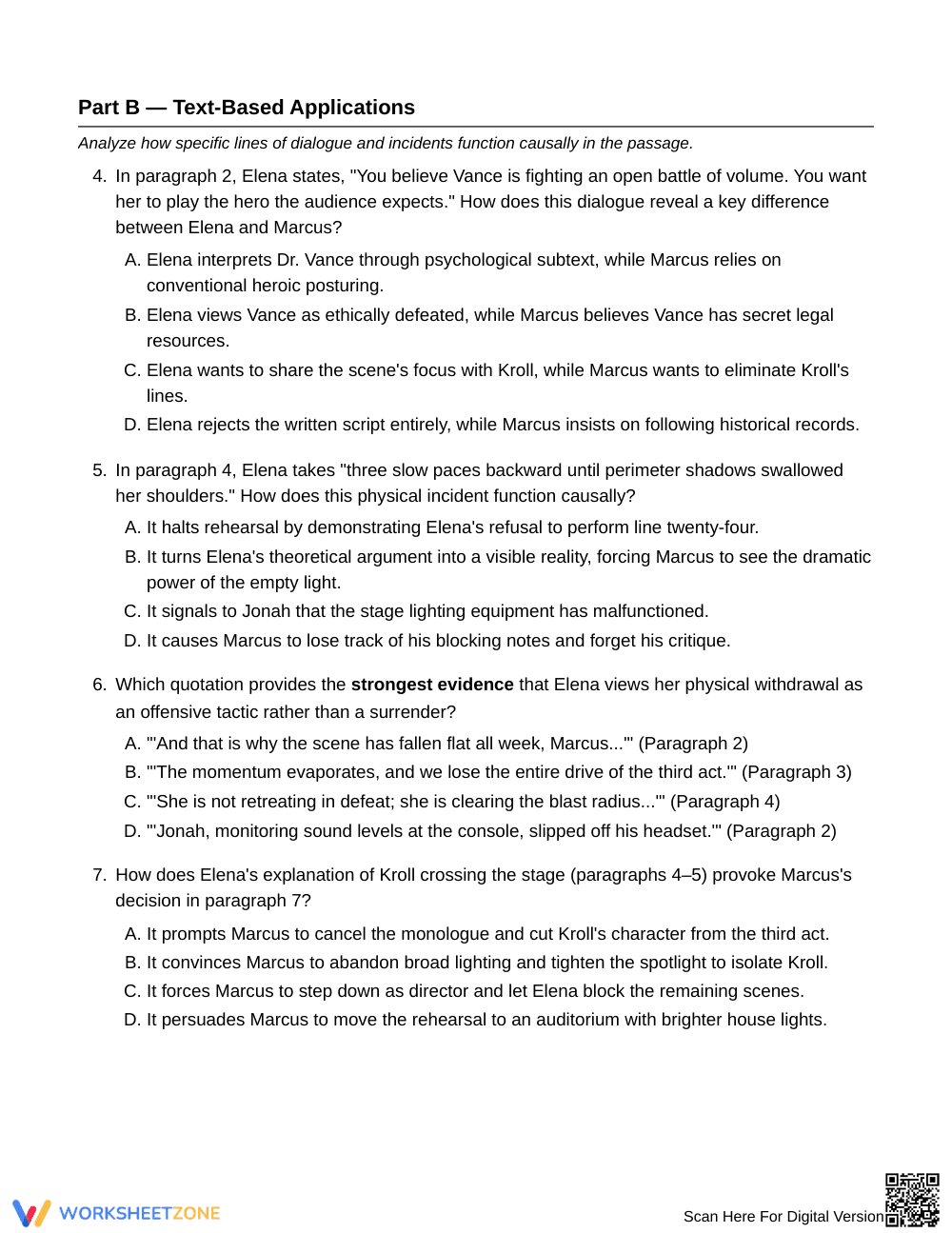
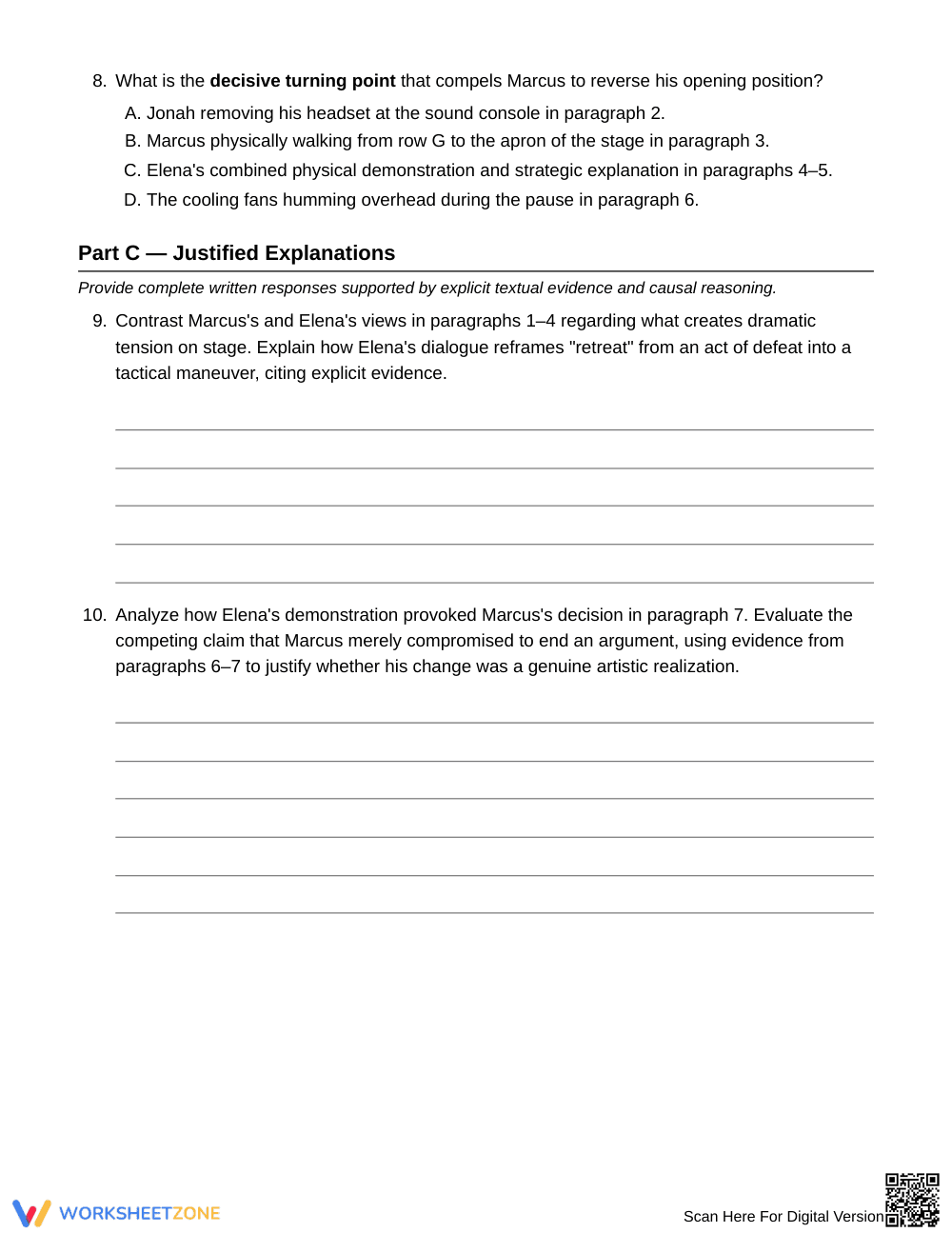
The 5-page printable PDF features an instructional anchor box establishing the three causal functions of dialogue under RL.8.3. Students examine an original theatrical passage, "The Center Special," across eight analytical multiple-choice items and two written-response prompts. A comprehensive 3-page answer key provides complete rationales, sample student responses, and explicit textual evidence references for streamlined grading.
Skill Progression
- Guided practice: Part A includes 3 conceptual multiple-choice items defining how dialogue functions causally versus simply conveying background emotion or information.
- Supported practice: Part B presents 5 passage-based text analysis questions exploring how character dialogue and physical stage incidents alter directorial decisions in "The Center Special."
- Independent practice: Part C delivers 2 constructed-response prompts requiring students to write justified claims contrasting artistic viewpoints and evaluating causal turning points using direct quotes.
This structure follows an explicit gradual-release model, moving learners systematically from concept clarification to rigorous, text-grounded analysis.
Standards Alignment
The primary standard addressed is RL.8.3: Analyze how particular lines of dialogue or incidents in a story or drama propel the action, reveal aspects of a character, or provoke a decision. The tasks also reinforce supporting standard RL.8.1 by requiring students to cite strong, thorough textual evidence to justify causal claims. Both standard codes can be copied directly into lesson plans, IEP goals, or district curriculum mapping tools.
How to Use It
Deploy this activity immediately following direct instruction on plot mechanics or dramatic subtext. In whole-class settings, use Part A as a quick check for understanding before reading the passage together. For formative assessment, observe student reasoning on question 4 to confirm whether learners can identify the causal link between Elena's spatial blocking and Marcus's change of mind. Most students finish within 40 to 50 minutes.
Who It's For
This resource serves general education eighth-grade ELA classes, advanced seventh-grade readers, and high school remedial groups needing targeted reinforcement with dramatic analysis. Pair this worksheet directly with a short one-act play or anchor chart highlighting dramatic terminology and causal transitions.
Mastering standard RL.8.3 requires eighth-grade students to evaluate how dramatic dialogue and critical incidents serve causal narrative functions rather than merely providing character exposition. According to Fisher & Frey (2014), intentional scaffolding that transitions adolescent readers from explicit concept definitions to rigorous, text-dependent written justifications significantly deepens literary comprehension and analytical stamina. This 5-page worksheet targets that developmental milestone by guiding students through 10 carefully sequenced problems focused on character decisions and plot momentum. By engaging with an original dramatic passage, learners isolate the precise conversational shifts and physical actions that alter narrative trajectories. The accompanying 3-page answer key provides educators with detailed rationales, evidence-based exemplars, and clear diagnostic criteria. When implemented as part of a structured English language arts curriculum, this resource delivers targeted practice that bridges foundational reading fluency with sophisticated textual interpretation, ensuring students develop mastery in analyzing dramatic structure.


