


























Views
Downloads
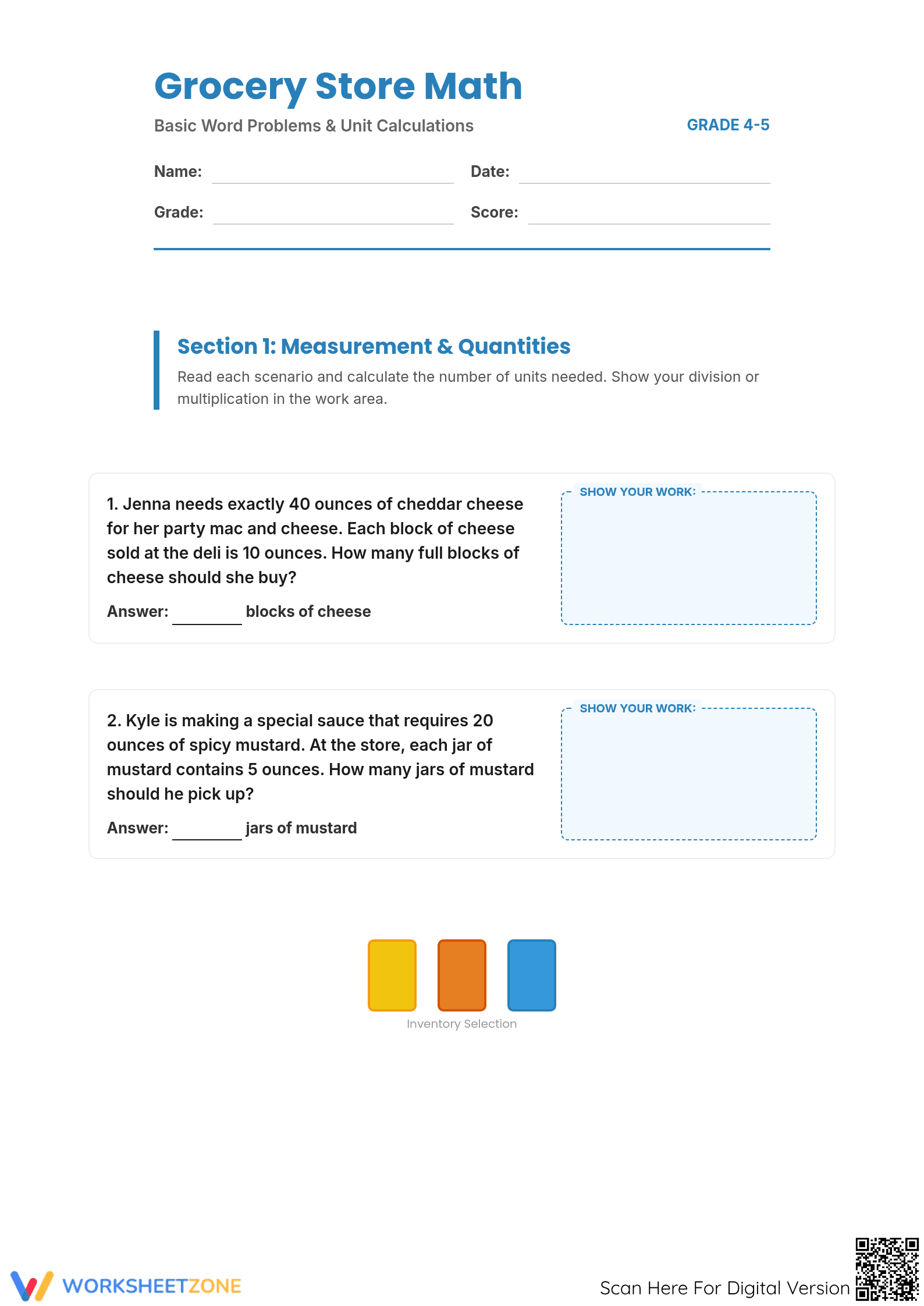
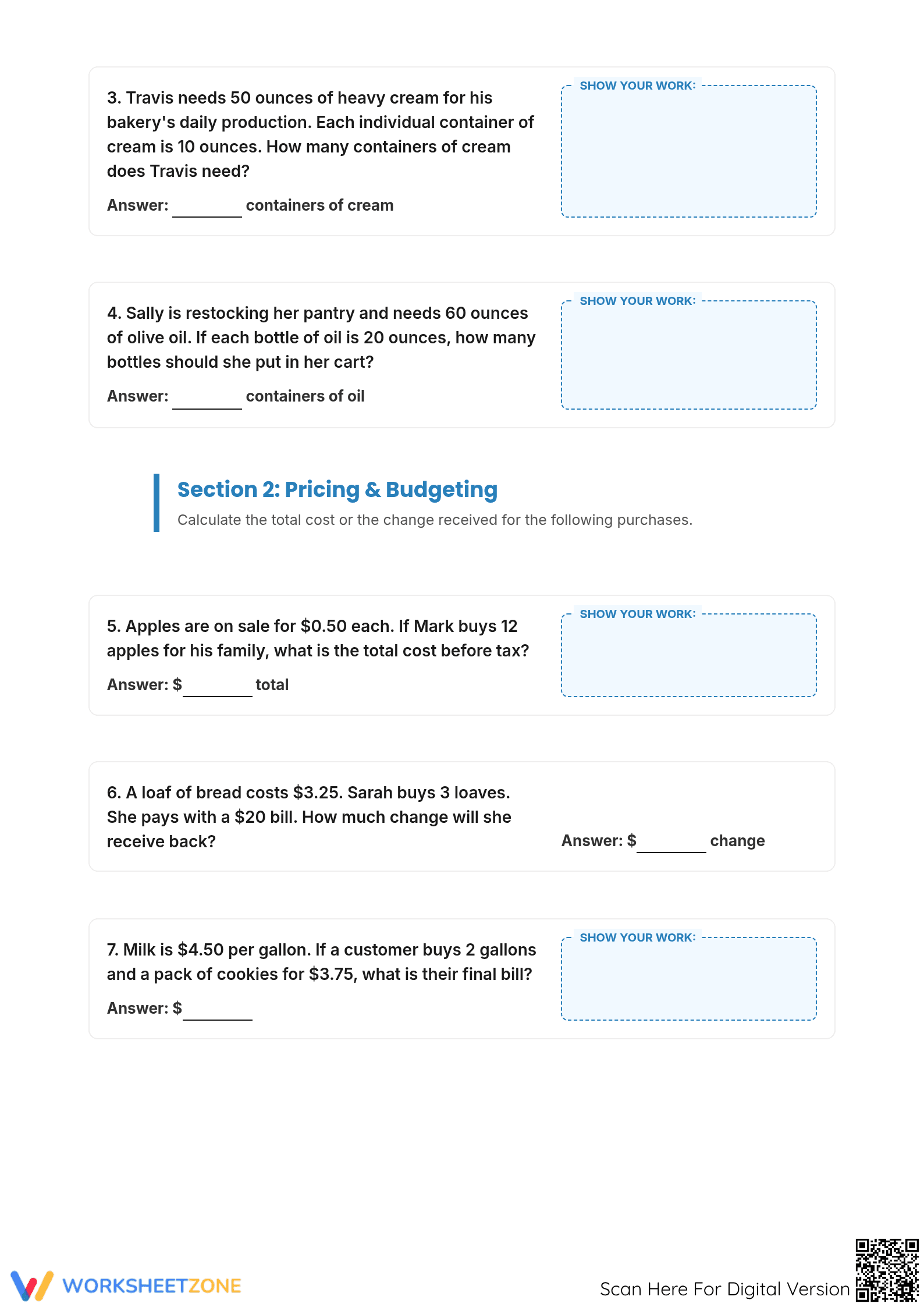
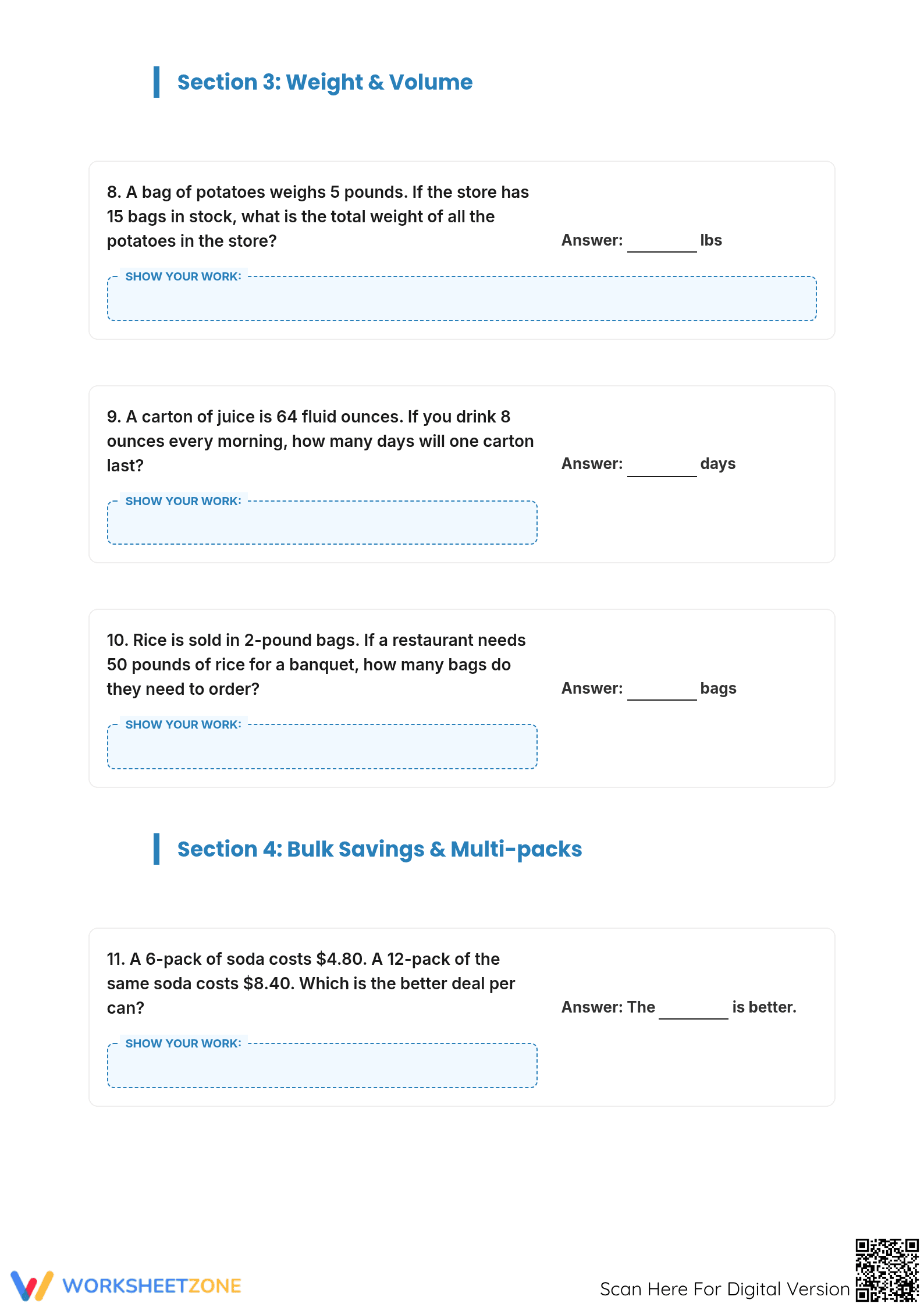
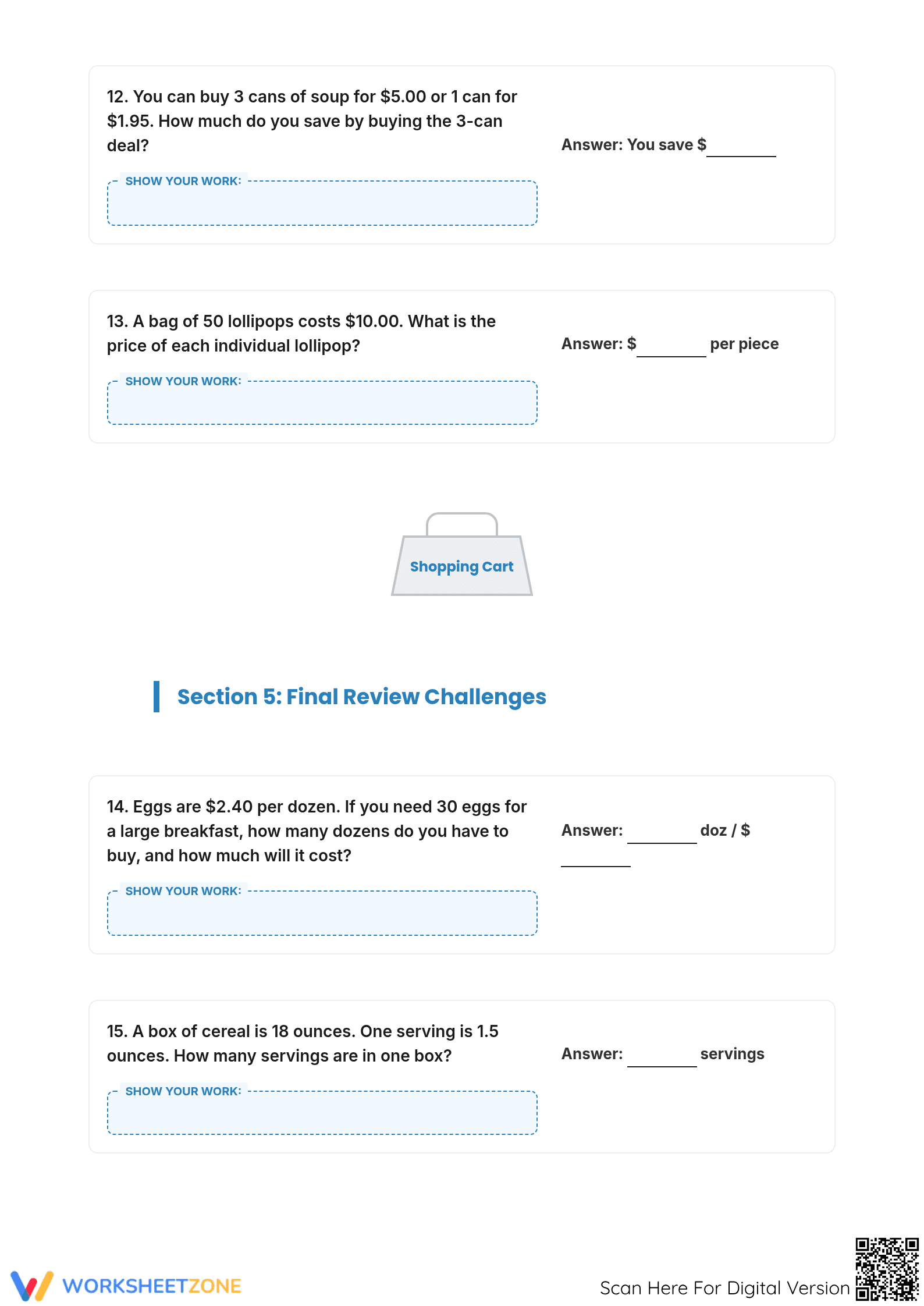

Grocery Store Math: Complete Grade 4-5 Word Problem Packet
Paste this activity's link or code into your existing LMS (Google Classroom, Canvas, Teams, Schoology, Moodle, etc.).
Students can open and work on the activity right away, with no student login required.
You'll still be able to track student progress and results from your teacher account.
This comprehensive Grocery Store Math worksheet engages Grade 4 and 5 students in practical numeracy applications. By solving word problems, students master calculating unit rates, managing budgets, and converting measurements. This resource transforms abstract concepts into life skills through a relatable shopping simulation.
At a Glance
- Grade: 4-5 · Subject: Math
- Standard:
CCSS.MATH.CONTENT.4.MD.A.2— Use four operations to solve word problems involving distances, time, volume, mass, and money- Skill Focus: Real-world multi-step word problems
- Format: 5 pages · 20 problems · Answer key included · PDF
- Best For: Independent practice and real-world math centers
- Time: 45–60 minutes
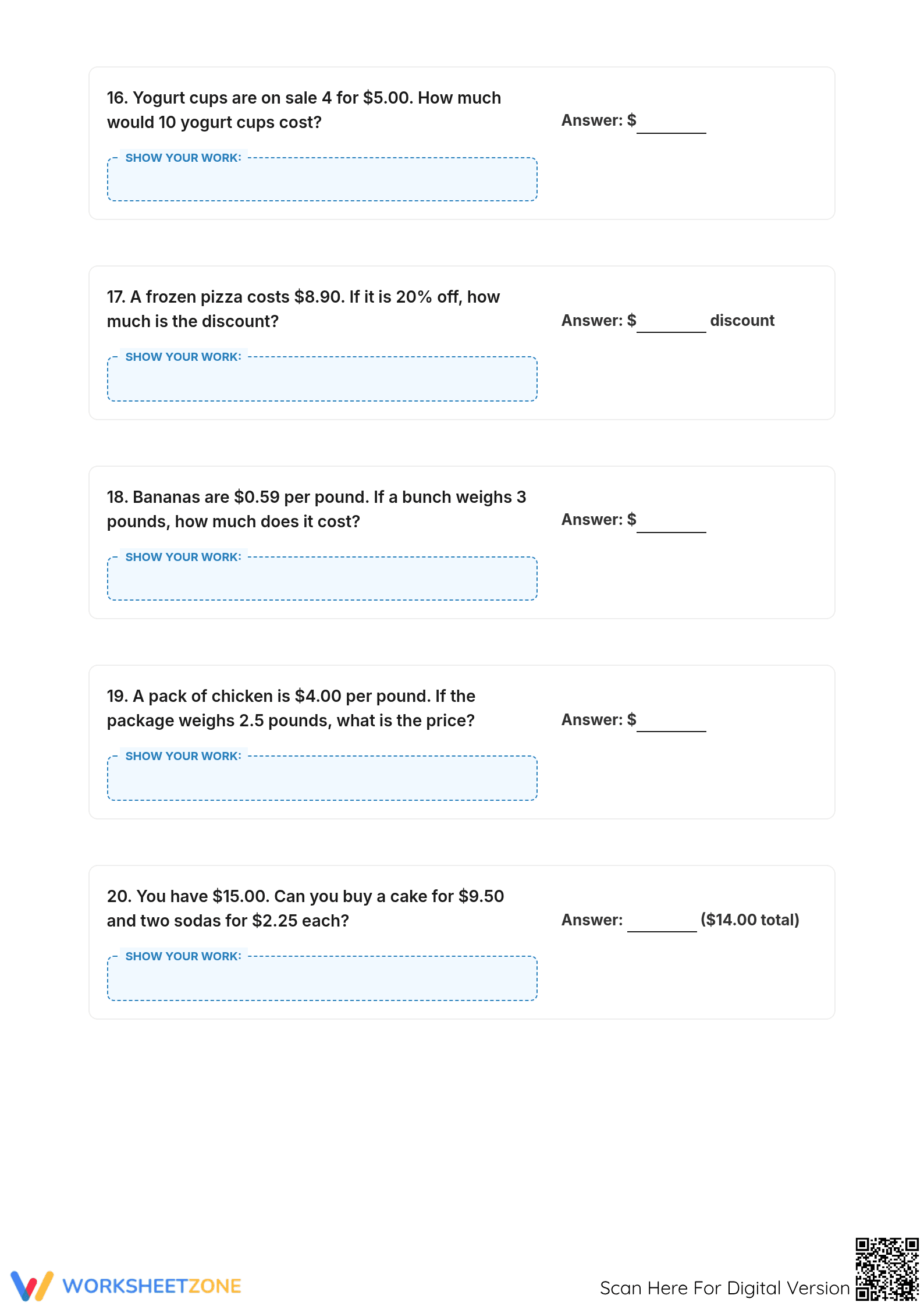
The packet consists of five pages containing 20 structured problems. It is organized into sections: Measurement, Budgeting, Weight, Bulk Savings, and Final Challenges. Each problem includes a "Show Your Work" box to encourage mathematical reasoning. A full answer key is included for efficient grading.
Zero-Prep Workflow
This classroom-ready resource requires zero teacher preparation. Simply print the 5-page PDF (30 seconds), distribute the packets to your Grade 4 or 5 students (1 minute), and facilitate a whole-group review of the final challenges (15 minutes). The total teacher setup time is under two minutes, making this an ideal solution for emergency substitute plans or busy Friday morning math blocks.
Standards Alignment
The primary alignment is `CCSS.MATH.CONTENT.4.MD.A.2`, which requires students to use the four operations to solve word problems involving liquid volumes, masses of objects, and money. It also supports `CCSS.MATH.CONTENT.5.NBT.B.7` by requiring operations with decimals to hundredths. Both standard codes can be copied directly into lesson plans, IEP goals, or district curriculum mapping tools.
How to Use It
Incorporate this as a "Math Center" rotation where students work collaboratively to find the best deals in Section 4. Alternatively, use it as a summative assessment after a unit on decimals and measurement. For formative observation, watch for students who correctly identify whether to multiply or divide in the "Measurement & Quantities" section. Completion typically takes between 45 and 60 minutes.
Who It's For
This resource is designed for Grade 4 and 5 students, including those in Title I settings who benefit from concrete, situational math. It provides natural differentiation through the increasing complexity of the sections. Pair this worksheet with actual grocery circulars or a classroom "store" anchor chart to provide additional visual scaffolding for English Language Learners or students with IEPs.
The Grocery Store Math worksheet leverages the principles of the Gradual Release of Responsibility model, as detailed by Fisher & Frey (2014). By grounding operations in a retail environment, the resource reduces cognitive load and allows students to focus on the procedural accuracy of multi-step problem solving. Research indicates that learning math through real-world scenarios improves long-term retention of measurement and decimal operations. This 20-problem set targets the `CCSS.MATH.CONTENT.4.MD.A.2` standard, ensuring students can fluently transition between units of mass and monetary value. As students navigate unit rate calculations and bulk savings, they develop the quantitative literacy necessary for academic success. This self-contained tool provides the rigorous practice required to move students from guided calculations to independent mastery of complex, multi-operational word problems in any instructional setting.


