


























Views
Downloads

Printable Base 10 Addition Worksheet | Grade 1-2 Math
Paste this activity's link or code into your existing LMS (Google Classroom, Canvas, Teams, Schoology, Moodle, etc.).
Students can open and work on the activity right away, with no student login required.
You'll still be able to track student progress and results from your teacher account.
This Base 10 Addition: Master Class worksheet helps students develop a concrete understanding of place value while solving two-digit addition problems. By counting rods and cubes, learners visualize the relationship between tens and ones to find sums accurately. This structured practice builds the foundational mental math skills necessary for advanced multi-digit computation and regrouping in early elementary mathematics.
At a Glance
- Grade: 1–2 · Subject: Math
- Standard:
CCSS.MATH.CONTENT.1.NBT.C.4— Use concrete models to add within 100 and relate the strategy to a written method- Skill Focus: Base Ten Addition
- Format: 5 pages · 15 problems · Answer key included · PDF
- Best For: Small group instruction or independent practice
- Time: 20–30 minutes
What's Inside
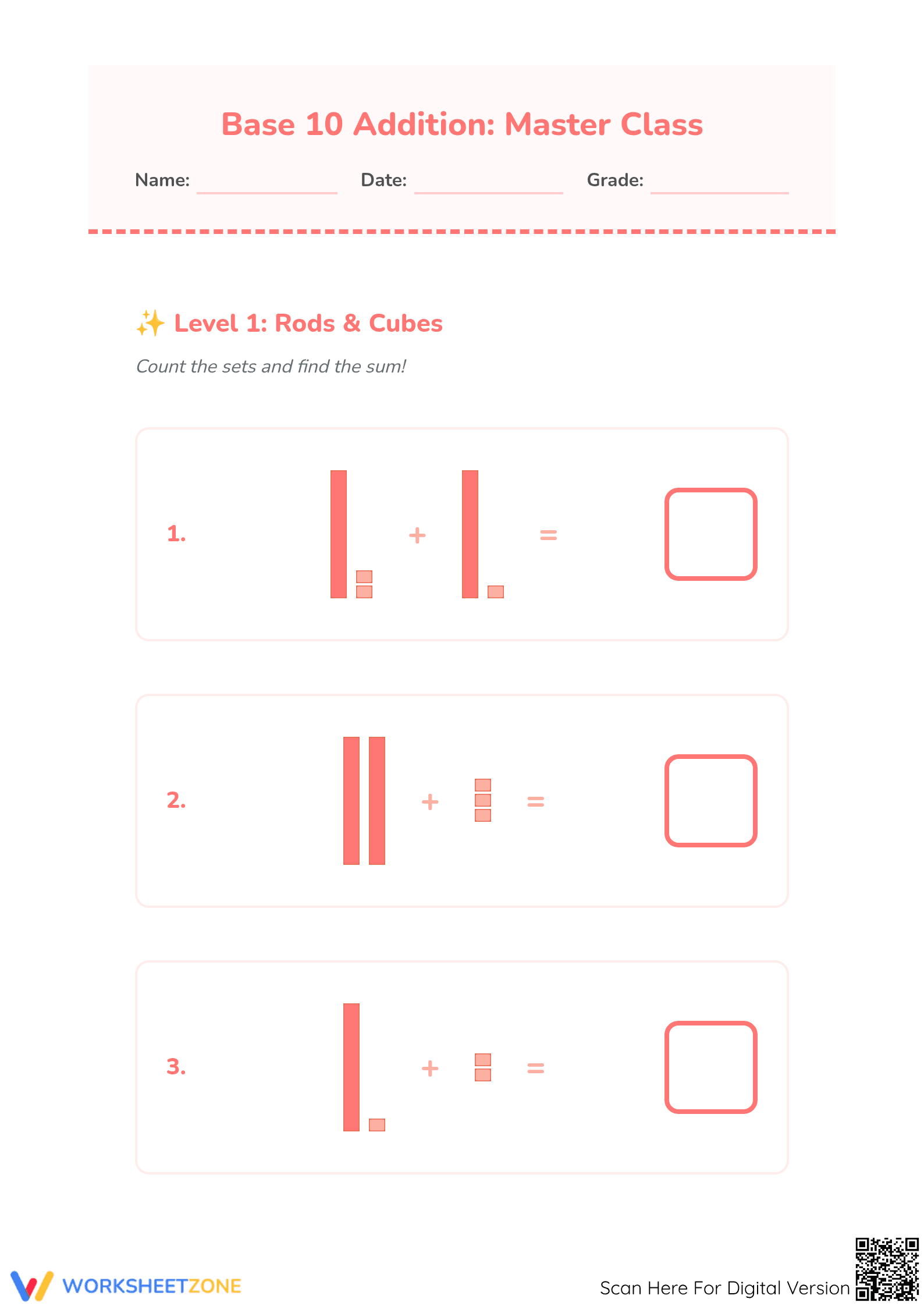
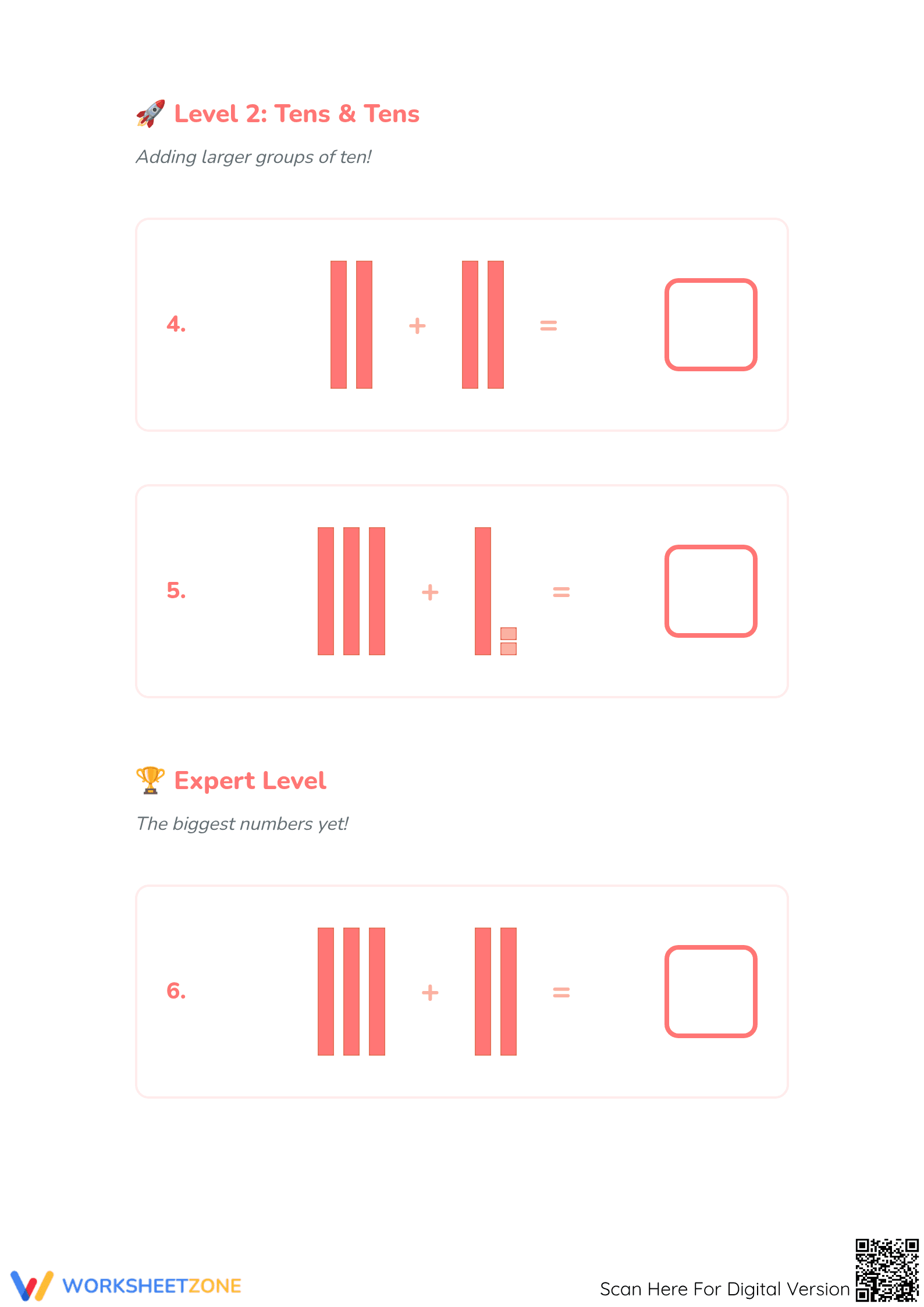
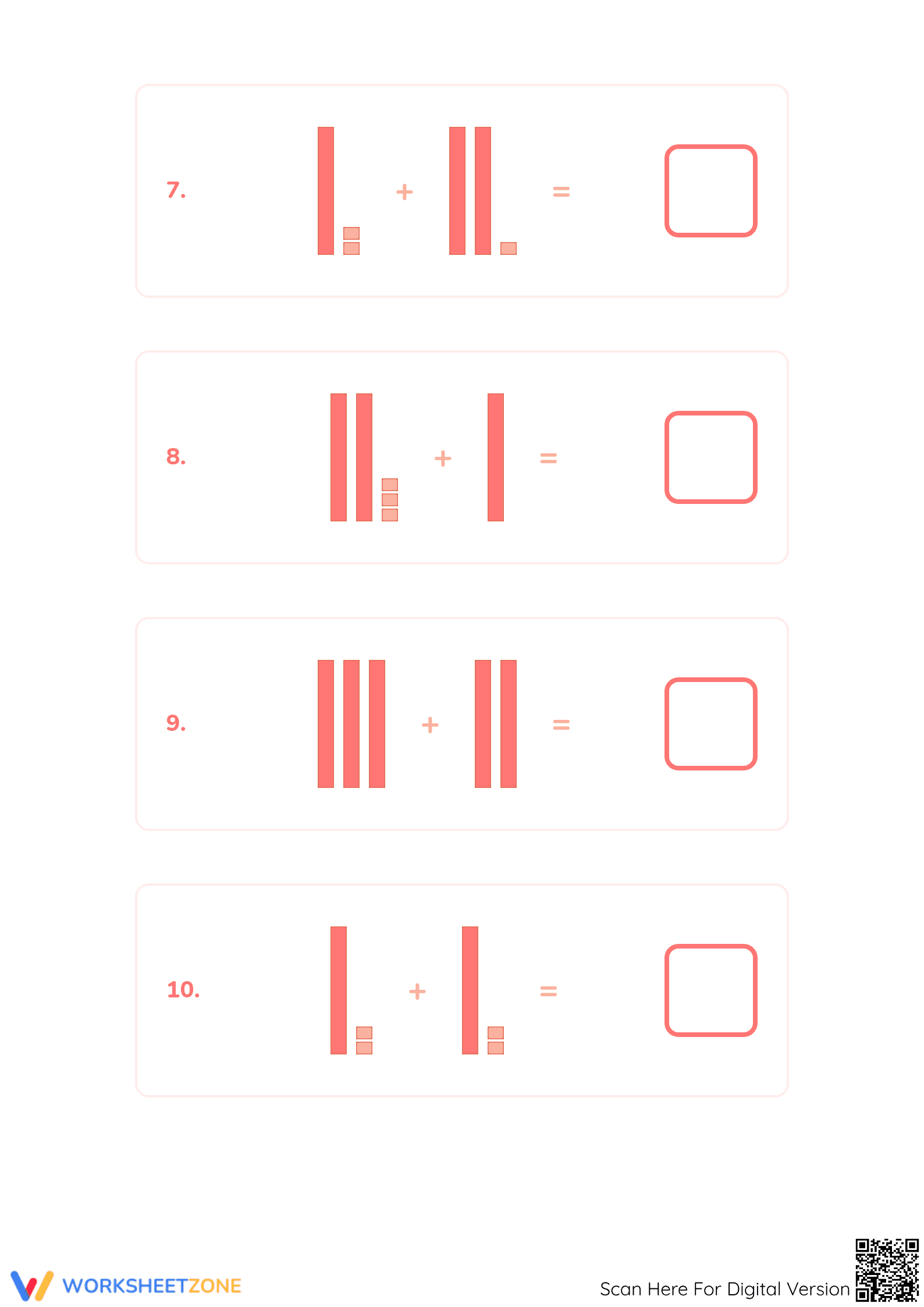
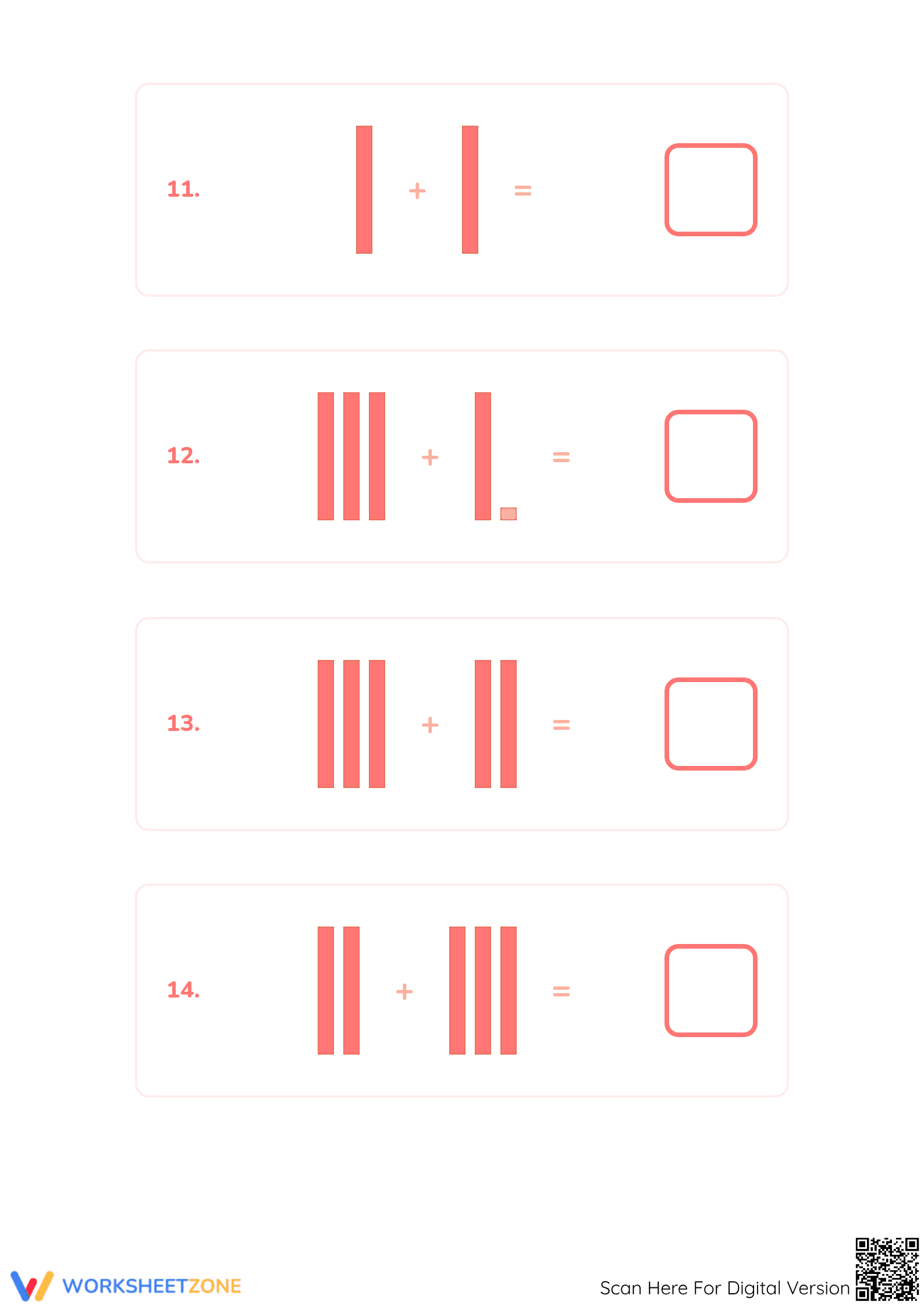
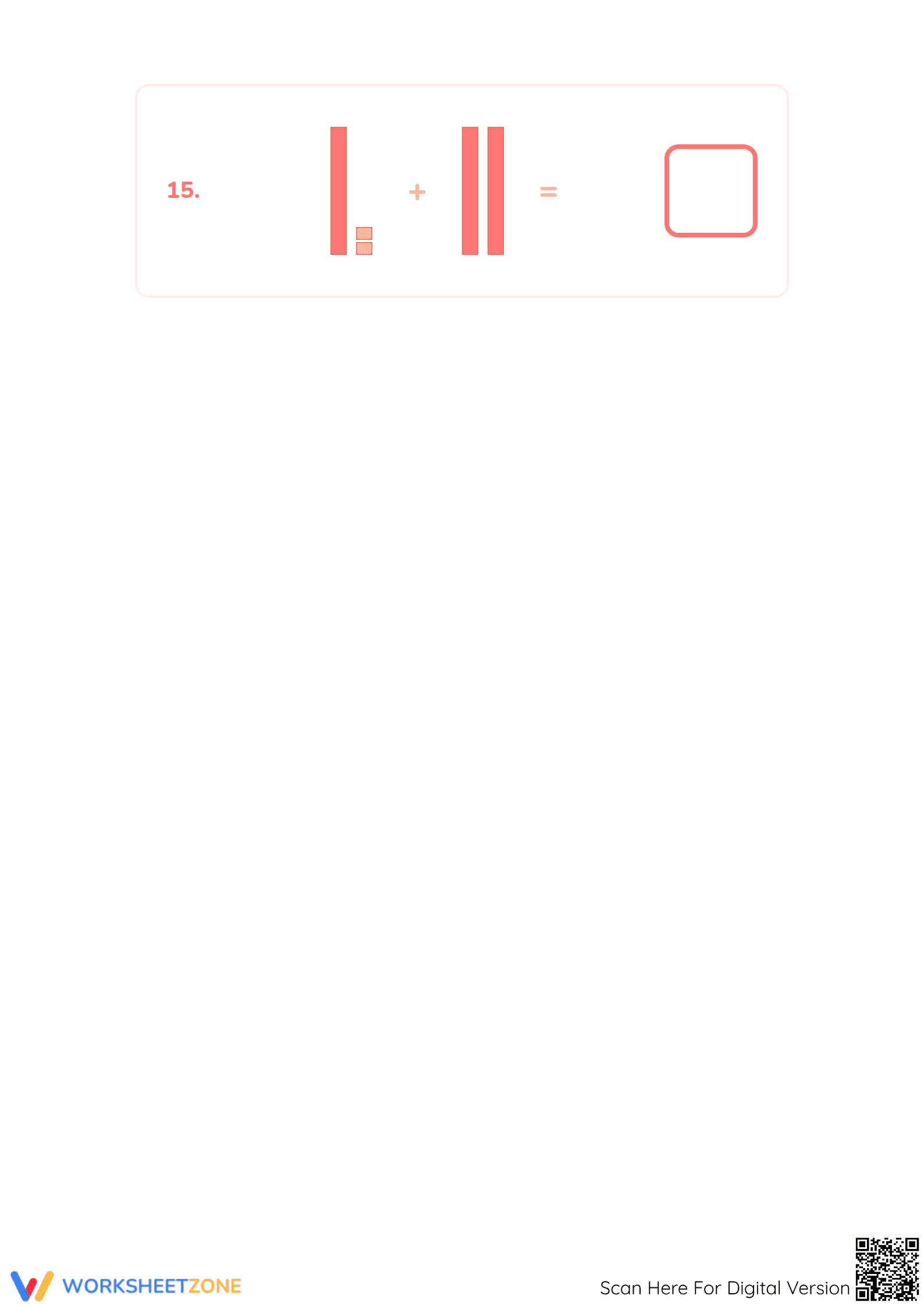
The "Master Class" collection features 5 pages containing 15 addition problems. Each task provides clear visual representations of base 10 blocks, including "rods" for tens and "cubes" for ones. The document is organized into tiered difficulty levels—from basic Rods & Cubes to an Expert Level featuring larger numbers. A complete answer key is provided for rapid grading and student self-correction.
Skill Progression
- Guided Practice: The first three problems introduce addition by combining small sets of rods and cubes, allowing students to count individual units before moving to abstract symbols.
- Supported Practice: Level 2 increases the demand by requiring students to add larger groups of tens, reinforcing the concept that one rod represents a ten-unit bundle.
- Independent Practice: The Expert Level challenges students with the largest sets in the packet, testing their ability to sum multiple rods and cubes without additional scaffolding.
This gradual release model ensures students move from concrete counting to conceptual mastery, preparing them for the transition to abstract column addition.
Standards Alignment
This resource is directly aligned with CCSS.MATH.CONTENT.1.NBT.C.4, requiring students to add within 100 using concrete models or drawings. It also supports CCSS.MATH.CONTENT.2.NBT.B.5 by providing the concrete modeling necessary for fluently adding within 100. Both standard codes can be copied directly into lesson plans, IEP goals, or district curriculum mapping tools.
How to Use It
Use this worksheet during the "You Do" phase of a lesson on place value addition. It serves as an excellent bridge between physical manipulatives and symbolic addition. For a formative assessment, observe students as they complete the second page; if a student is counting every individual unit on a rod instead of recognizing it as "ten," they likely need more instruction on unitizing.
Who It's For
This packet is designed for first and second-grade students developing base-ten number sense. It is effective for visual learners or students receiving Tier 2 intervention who benefit from seeing numbers decomposed. Pair this resource with physical base 10 blocks to provide a multi-sensory learning experience that accommodates diverse classroom needs.
According to the RAND AIRS 2024 report on mathematics materials, the use of concrete representations like base 10 blocks is a high-leverage practice for improving student outcomes in early number sense. This worksheet effectively implements this evidence-based strategy by asking students to CCSS.MATH.CONTENT.1.NBT.C.4 add within 100 using models. Research by Fisher & Frey (2014) emphasizes that visual scaffolds, such as the rods and cubes featured in this 15-problem set, allow students to internalize the base-ten system before transitioning to abstract algorithms. By providing 5 pages of targeted practice, this resource ensures sufficient repetition for students to move from counting-all to efficient counting-on strategies. Educators can rely on this standard-aligned tool to provide the rigorous practice required for students to meet the foundational demands of the Common Core State Standards in Mathematics.


