


























Views
Downloads
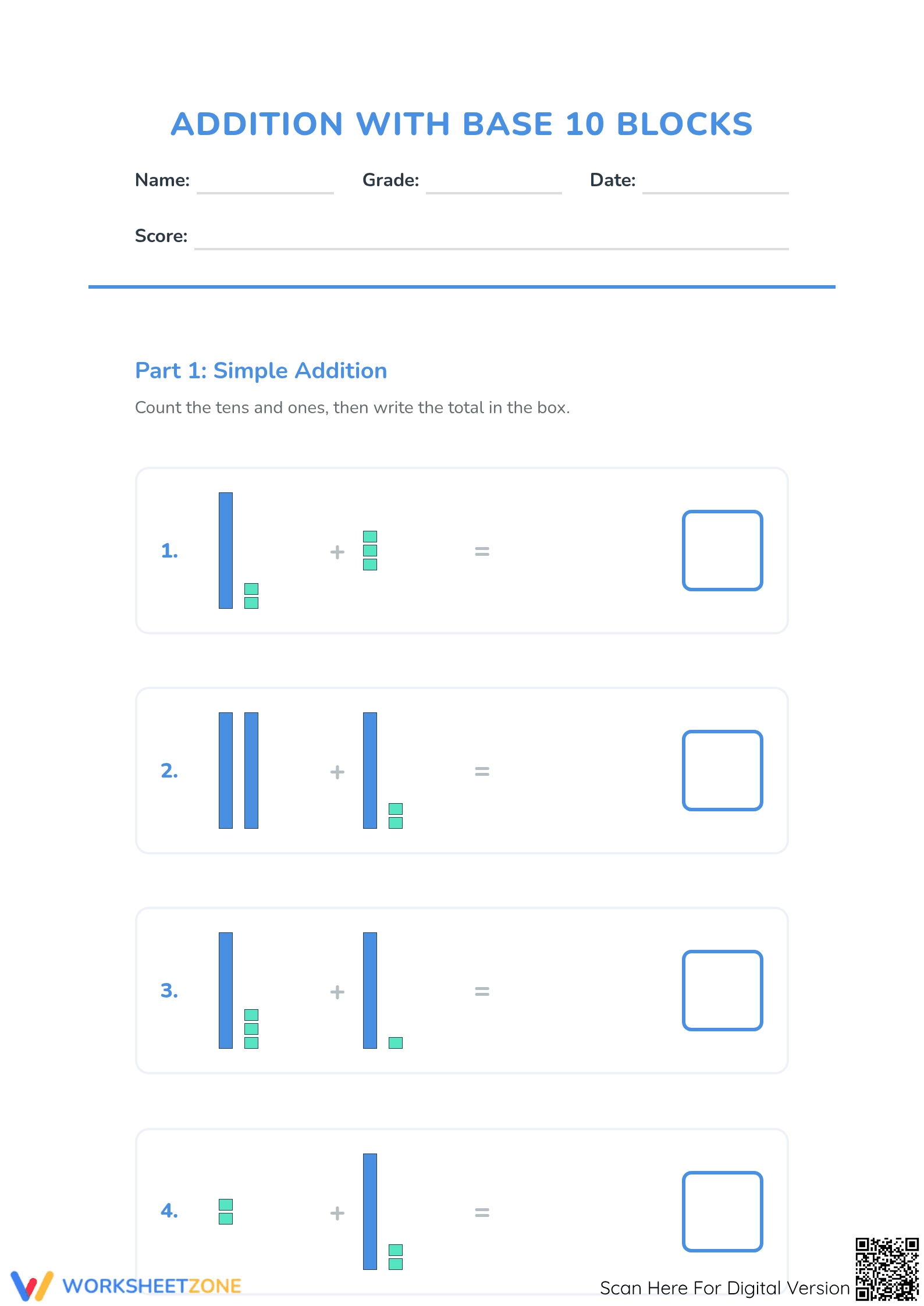
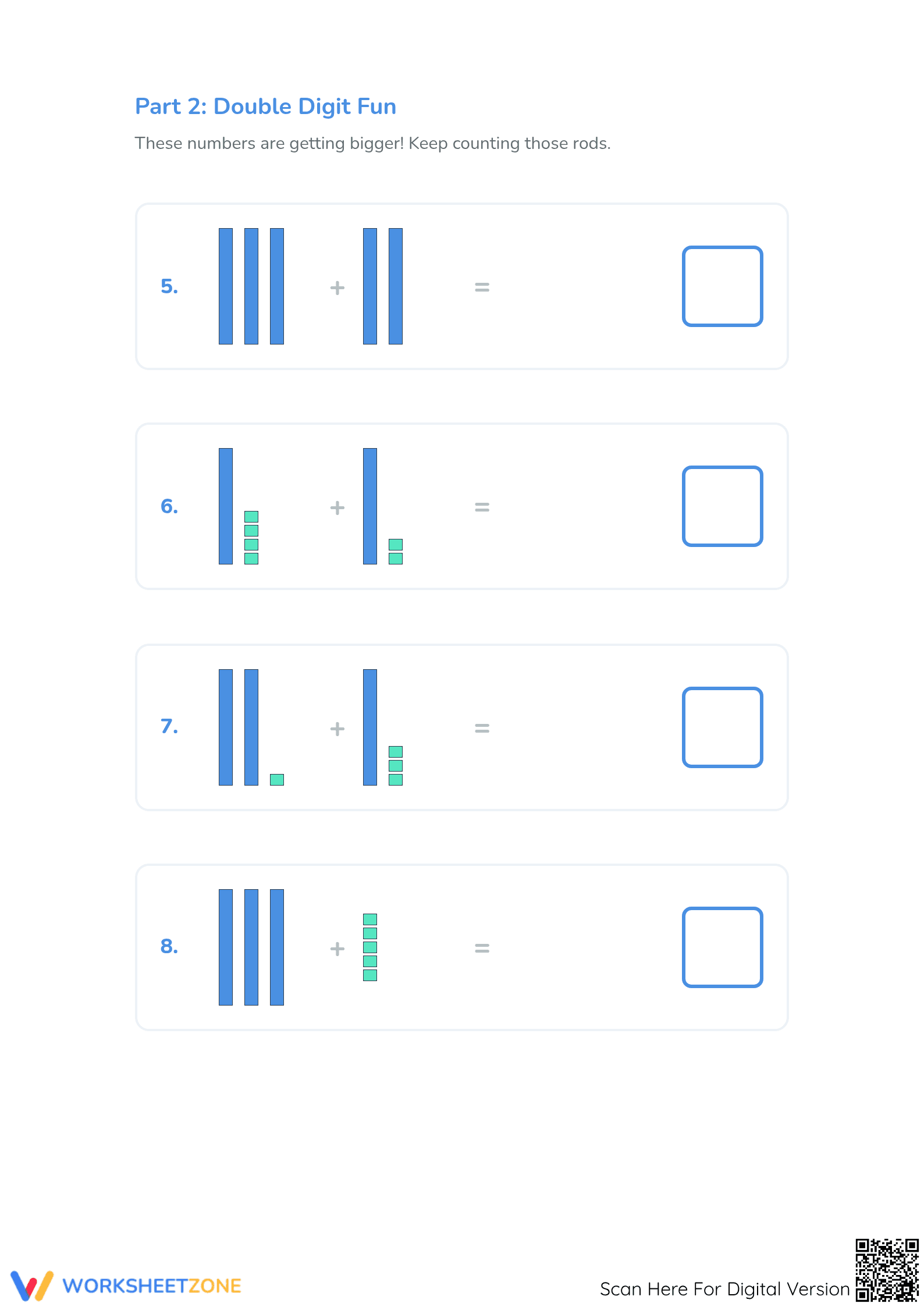
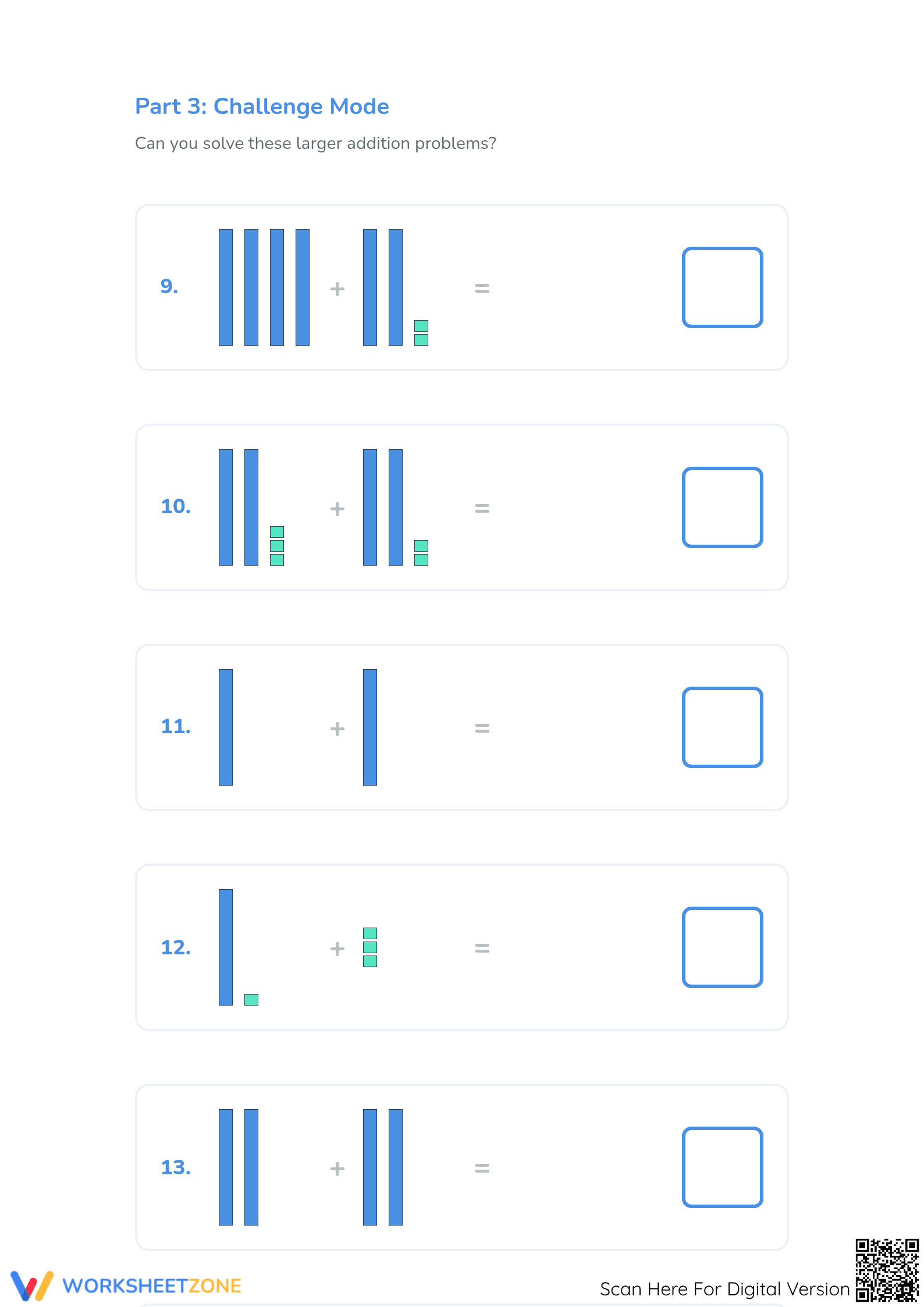
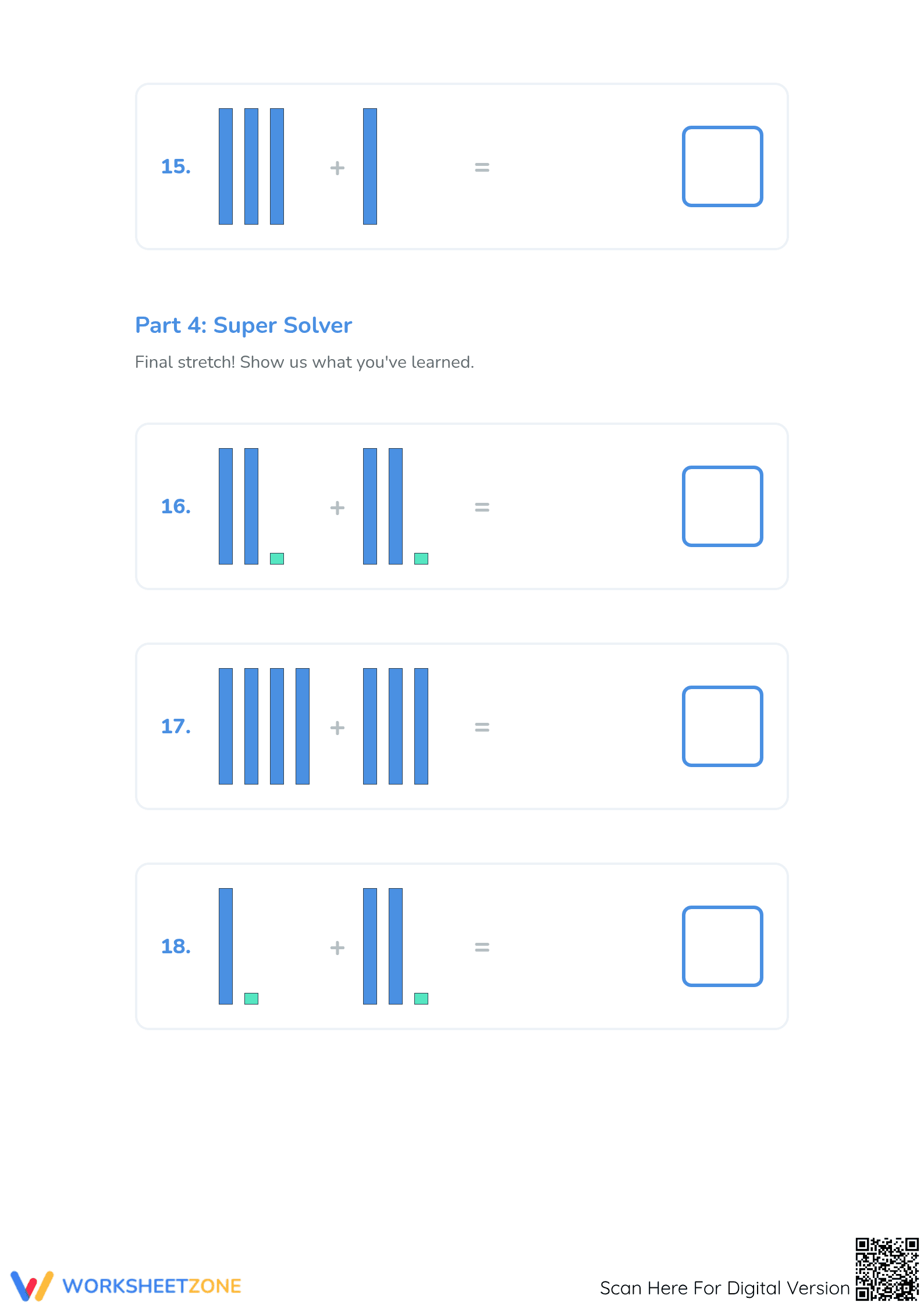

Grade 1-2 Addition with Base 10 Blocks — Printable Worksheet
Paste this activity's link or code into your existing LMS (Google Classroom, Canvas, Teams, Schoology, Moodle, etc.).
Students can open and work on the activity right away, with no student login required.
You'll still be able to track student progress and results from your teacher account.
Mastering place value is a fundamental milestone for early mathematicians. This comprehensive 4-page worksheet provides students with targeted practice in addition using visual base 10 blocks. By translating concrete rod and unit models into numeric sums, learners develop a deep conceptual understanding of how tens and ones combine to form larger values.
At a Glance
- Grade: 1–2 · Subject: Math
- Standard:
CCSS.MATH.CONTENT.1.NBT.C.4— Add within 100 using concrete models or drawings based on place value- Skill Focus: Base 10 Block Addition
- Format: 4 pages · 18 problems · Answer key included · PDF
- Best For: Independent practice and conceptual reinforcement
- Time: 25–35 minutes
What's Inside
This packet contains 18 structured addition problems spread across four distinct pages. Each problem features a clear visual representation of rods and units. The worksheet is organized into four sections: Simple Addition, Double Digit Fun, Challenge Mode, and Super Solver. A complete answer key is provided for rapid grading.
Zero-Prep Workflow
This resource is designed for immediate classroom implementation. Teachers can simply print the four-page PDF and distribute it to students in under two minutes. No additional manipulatives are required, as the visual models are embedded directly on the page. Reviewing work is equally efficient using the provided answer key, making it an ideal choice for emergency sub plans.
Standards Alignment
The primary alignment for this resource is CCSS.MATH.CONTENT.1.NBT.C.4. This standard requires students to add within 100 using concrete models or drawings and strategies based on place value. By counting the rods and units to find the sum, students demonstrate their understanding that one adds tens to tens and ones to ones. This code can be copied directly into lesson plans.
How to Use It
Use this worksheet during the independent practice phase of a lesson. After demonstrating how to count rods and units, assign the first two pages as student practice. For a formative assessment, observe students during Challenge Mode to see if they are accurately regrouping or simply counting individual units. This activity typically takes 30 minutes to complete in a standard setting.
Who It's For
This resource is perfect for first and second-grade students who are transitioning from counting-all to place-value addition strategies. It is particularly helpful for visual learners and students requiring RTI Tier 2 support. For a complete lesson, pair this worksheet with a physical base 10 block demonstration or a digital interactive place value chart.
The use of concrete-representational-abstract (CRA) sequences is a proven pedagogical approach in elementary mathematics instruction. Research by Fisher & Frey (2014) emphasizes that visual scaffolds, such as base 10 blocks, are essential for bridging the gap between physical manipulatives and abstract numerical operations. By providing 18 tasks aligned with CCSS.MATH.CONTENT.1.NBT.C.4, this resource ensures students move beyond rote memorization to a conceptual understanding of tens and ones. The progression from simple sums to challenge problems supports cognitive load management, allowing Grade 1 and Grade 2 learners to build accuracy. This standards-aligned tool provides high-quality evidence of student mastery in place value addition, serving as a reliable artifact for progress monitoring or classroom assessment. Teachers can confidently integrate these visual models into their daily curriculum to enhance mathematical fluency and foundational number sense for all learners.


