


























Views
Downloads



5.NBT.7 Aligned Worksheet: Adding and Subtracting Decimals
Paste this activity's link or code into your existing LMS (Google Classroom, Canvas, Teams, Schoology, Moodle, etc.).
Students can open and work on the activity right away, with no student login required.
You'll still be able to track student progress and results from your teacher account.
Master decimal operations with this focused assessment. This 5.NBT.7-aligned worksheet provides students with targeted practice in adding and subtracting decimals to the hundredths place. By working through these problems, learners solidify their understanding of place value and algorithmic accuracy, ensuring they meet core fifth-grade mathematical benchmarks with confidence and precision.
At a Glance
- Grade: 5 · Subject: Math
- Standard:
5.NBT.7— Add and subtract decimals to hundredths using place value strategies and operations- Skill Focus: Decimal Addition and Subtraction
- Format: 4 pages · 48 problems · Answer key included · PDF
- Best For: Formative assessment or mastery-based decimal practice
- Time: 30–45 minutes
What's Inside
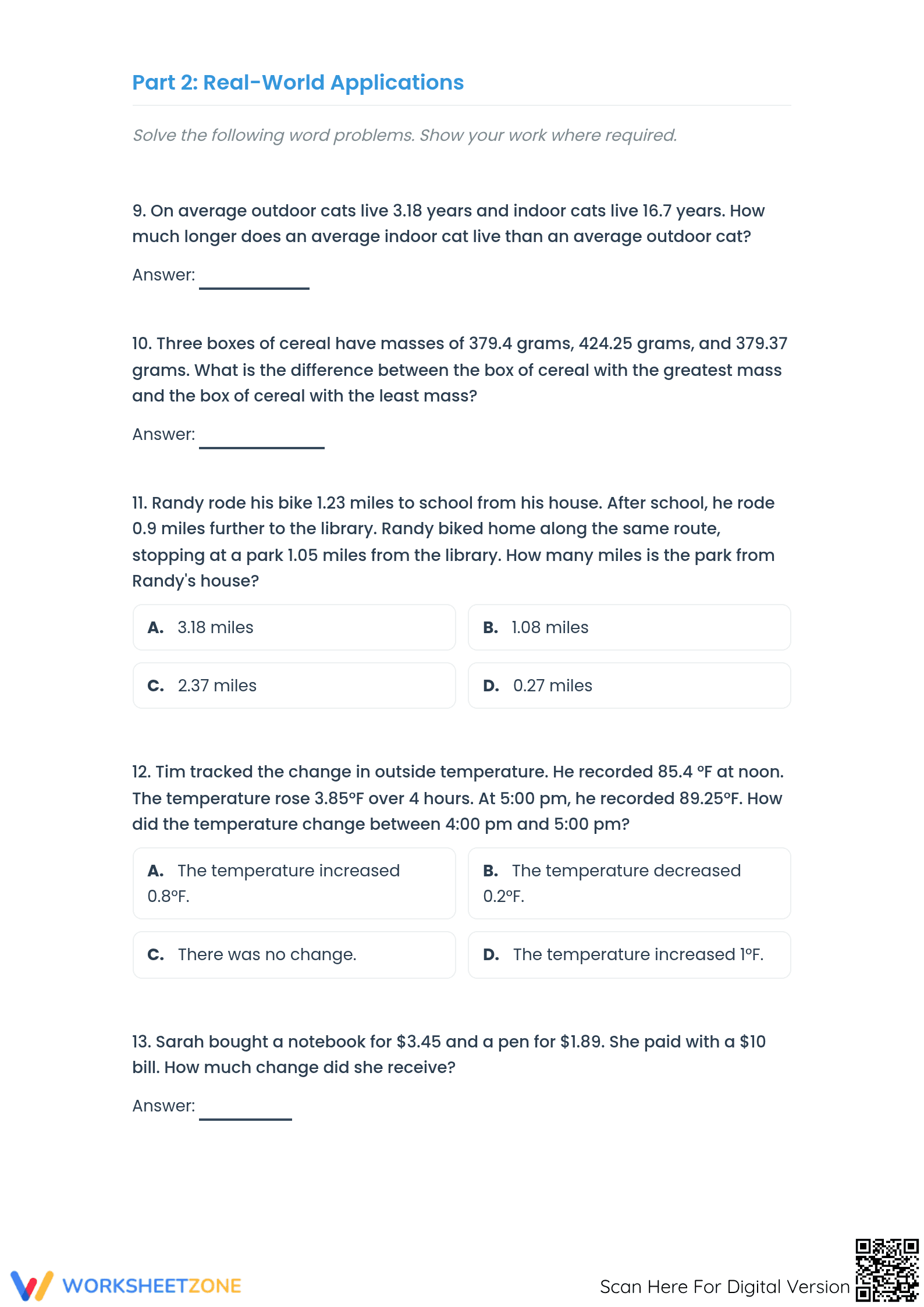
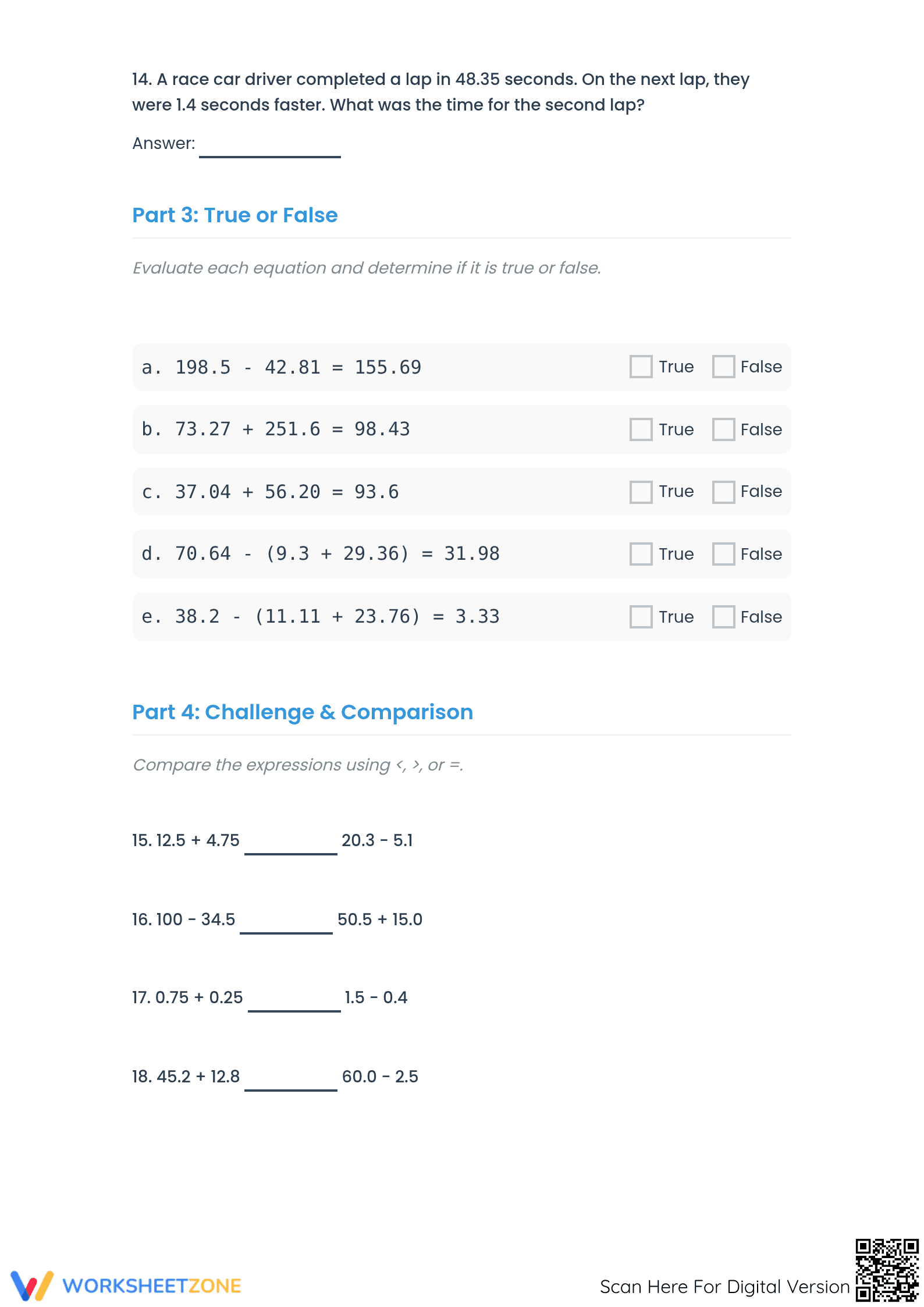
This comprehensive four-page resource features 48 distinct mathematical problems focused exclusively on adding and subtracting decimals. Each page provides ample white space for students to align place values vertically, a critical step for preventing calculation errors. The resource includes a complete set of answer keys, allowing for rapid grading or student self-correction during independent study or classroom rotations.
Mastery Evidence
Each task on this worksheet is mapped to the specific requirements of the 5.NBT.7 standard, focusing on the relationship between place value and decimal operations. Educators can utilize the varied difficulty levels of the problems to determine if students are Approaching, Meeting, or Exceeding expectations. The structured format allows for easy data entry into digital gradebooks or IEP progress monitoring tools, providing clear evidence of student growth.
Standards Alignment
Aligned to 5.NBT.7, students must "Add, subtract, multiply, and divide decimals to hundredths, using concrete models or drawings and strategies based on place value, properties of operations, and/or the relationship between addition and subtraction." This worksheet specifically targets the addition and subtraction components of the domain. Both standard codes can be copied directly into lesson plans, IEP goals, or district curriculum mapping tools.
How to Use It
Deploy this worksheet as a mid-unit formative assessment after students have been introduced to the concept of lining up the decimal point. Use the first page as a guided practice tool to observe whether students are correctly carrying or borrowing across place values. The remaining pages serve as excellent independent practice or as a summative check to verify mastery before progressing to decimal multiplication. Expected completion is 40 minutes.
Who It's For
This resource is designed for fifth-grade students working toward standard mastery, but it also serves as a robust intervention for Grade 6-8 students who require remedial decimal support. It pairs naturally with place value anchor charts or decimal base-ten blocks for students needing visual scaffolding to succeed.
Standard 5.NBT.7 requires students to demonstrate fluency with decimal operations to the hundredths place, a foundational skill for middle-school algebraic thinking. According to the NAEP, mastery of decimal place value and operational properties is a significant predictor of future success in rational number computation. This worksheet bridges the gap between conceptual understanding and procedural fluency by providing high-repetition practice within a structured, assessment-ready format. Research from Fisher & Frey (2014) emphasizes the importance of providing students with scaffolded opportunities to apply place value rules in varied contexts to ensure long-term retention. By integrating these 48 problems into a standard instructional cycle, educators provide the necessary "You Do" phase of the gradual release model, ensuring that students can independently and accurately relate strategies to written methods as mandated by national standards.


