


























Views
Downloads

Grade 5 Abdullah's Morning — Printable No-Prep Worksheet
Paste this activity's link or code into your existing LMS (Google Classroom, Canvas, Teams, Schoology, Moodle, etc.).
Students can open and work on the activity right away, with no student login required.
You'll still be able to track student progress and results from your teacher account.
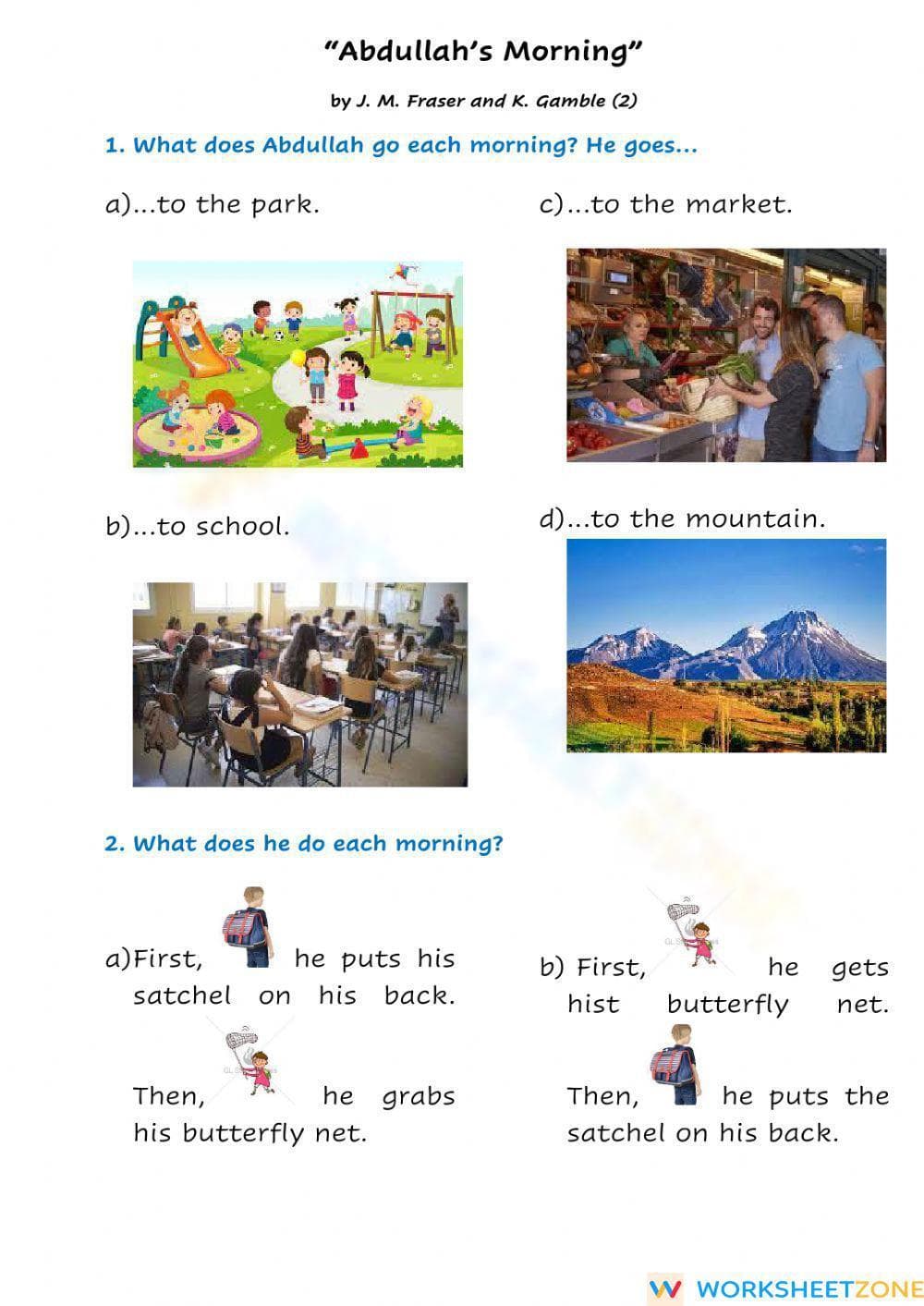
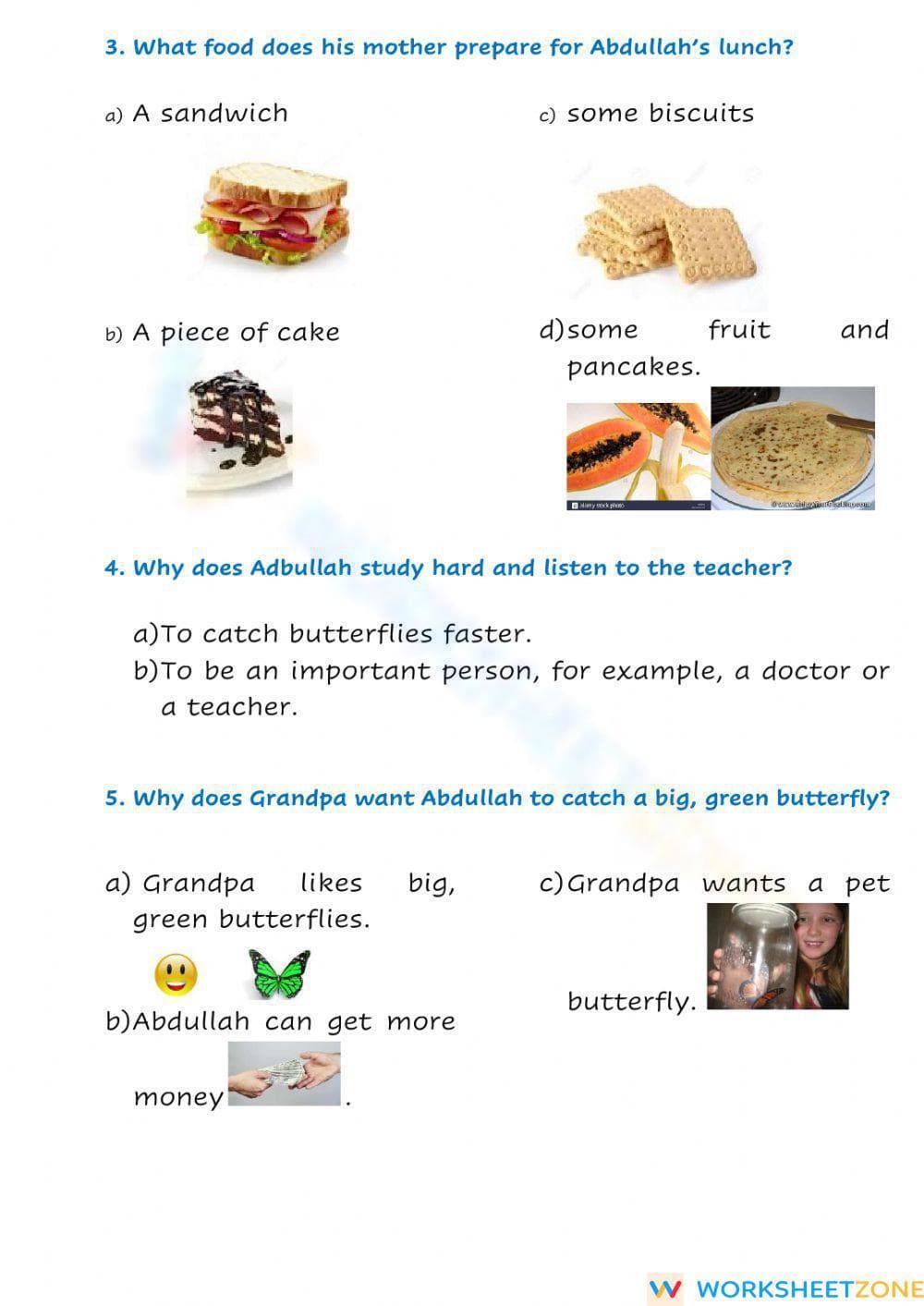
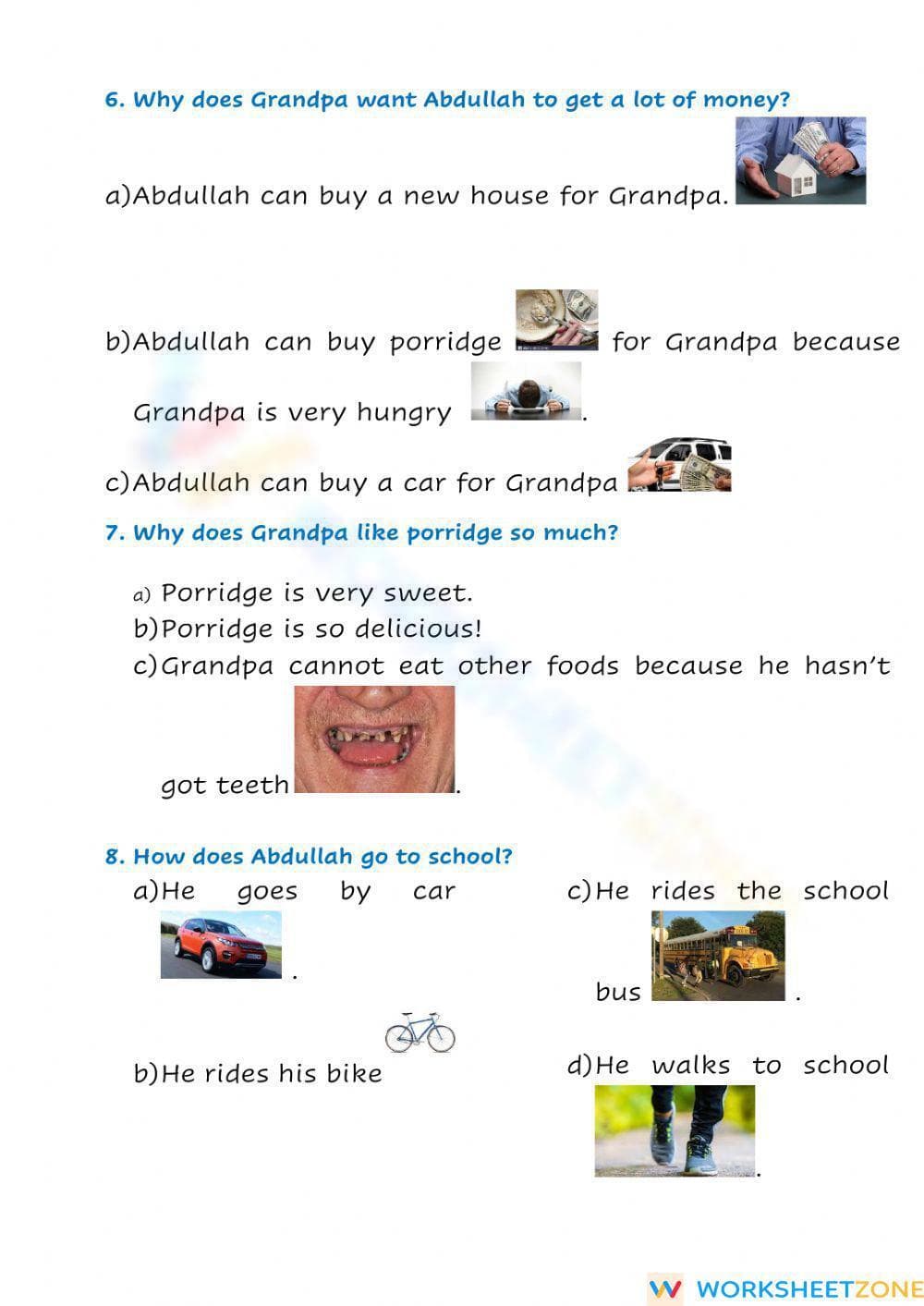
This Grade 5 reading comprehension worksheet helps students master literal comprehension by answering eight targeted questions about the story book Abdullah's Butterfly by JM Fraser and K Gamble. Students will analyze Abdullah's morning routine and key narrative events to build strong textual evidence skills while improving their reading accuracy and retention.
At a Glance
- Grade: 5 · Subject: ELA
- Standard:
CCSS.ELA-LITERACY.RL.5.1— Quote accurately from a text when explaining what the text says explicitly and when drawing inferences.- Skill Focus: Literal Comprehension & Sequence
- Format: 3 pages · 8 problems · Answer key included · PDF
- Best For: Independent literacy centers, homework assignments, and quick formative reading checks.
- Time: 15–20 minutes
What's Inside
This resource contains three pages of comprehension questions designed to accompany the story of Abdullah. It features eight multiple-choice and sequence-based tasks that include visual supports, such as photos of the park, market, and school. A complete answer key is provided to facilitate quick grading and student feedback.
Zero-Prep Workflow
This classroom-ready resource follows a simple three-step process: Print, Distribute, and Review. Teachers can print the three-page PDF in less than thirty seconds, distribute it to students for independent work during a literacy block, and review the answers using the provided key in under one minute. With a total preparation time of less than two minutes, this worksheet is an ideal solution for morning work, sub plans, or last-minute assessment needs during busy instructional schedules.
Standards Alignment
The primary focus of this worksheet is CCSS.ELA-LITERACY.RL.5.1: "Quote accurately from a text when explaining what the text says explicitly and when drawing inferences from the text." By requiring students to identify specific details about Abdullah's lunch, his commute, and his interactions with Grandpa, the tasks reinforce evidence-based reading habits. This standard code can be copied directly into lesson plans, IEP goals, or district curriculum mapping tools.
How to Use It
Assign this worksheet immediately after students finish reading the book to serve as a formative assessment. Teachers should observe whether students refer back to the text to identify specific items, such as the porridge or the butterfly net. The expected completion time is 15 to 20 minutes, making it a perfect fit for a structured reading rotation or a check for understanding after direct instruction.
Who It's For
This worksheet is designed for Grade 5 students but is also appropriate for Grade 4 learners who are practicing literal comprehension. The inclusion of clear visual cues makes it a supportive resource for English Language Learners (ELL) and students with IEP accommodations. It pairs naturally with a classroom anchor chart about identifying story details or sequencing events.
Structured comprehension checks, as highlighted by the RAND AIRS 2024 report on elementary literacy, are crucial for bridging decoding and deep textual analysis. This worksheet focuses on CCSS.ELA-LITERACY.RL.5.1, enabling students to practice quoting accurately from a text to explain explicit information. It offers eight targeted questions from JM Fraser and K Gamble's book, reinforcing the identification of key events like Abdullah's morning routine. Such clear, scaffolded tasks support gradual release of responsibility (Fisher & Frey, 2014) and provide educators with an essential tool to verify reading standard mastery without extensive preparation.


