


























Views
Downloads

A Place for Zero: Essential 3-Digit Place Value Worksheet
Paste this activity's link or code into your existing LMS (Google Classroom, Canvas, Teams, Schoology, Moodle, etc.).
Students can open and work on the activity right away, with no student login required.
You'll still be able to track student progress and results from your teacher account.
This 3-page worksheet helps students master the concept of place value in three-digit numbers, focusing specifically on the role of zero as a placeholder. Students engage in hands-on number generation and conceptual exercises to differentiate between numbers like 102 and 120, ensuring a deep understanding of hundreds, tens, and ones in the base-ten system. Ideal for Grade 2 Math, this resource aligns with CCSS.MATH.CONTENT.2.NBT.A.1, focusing on 3-Digit Place Value and Zero Placeholder.
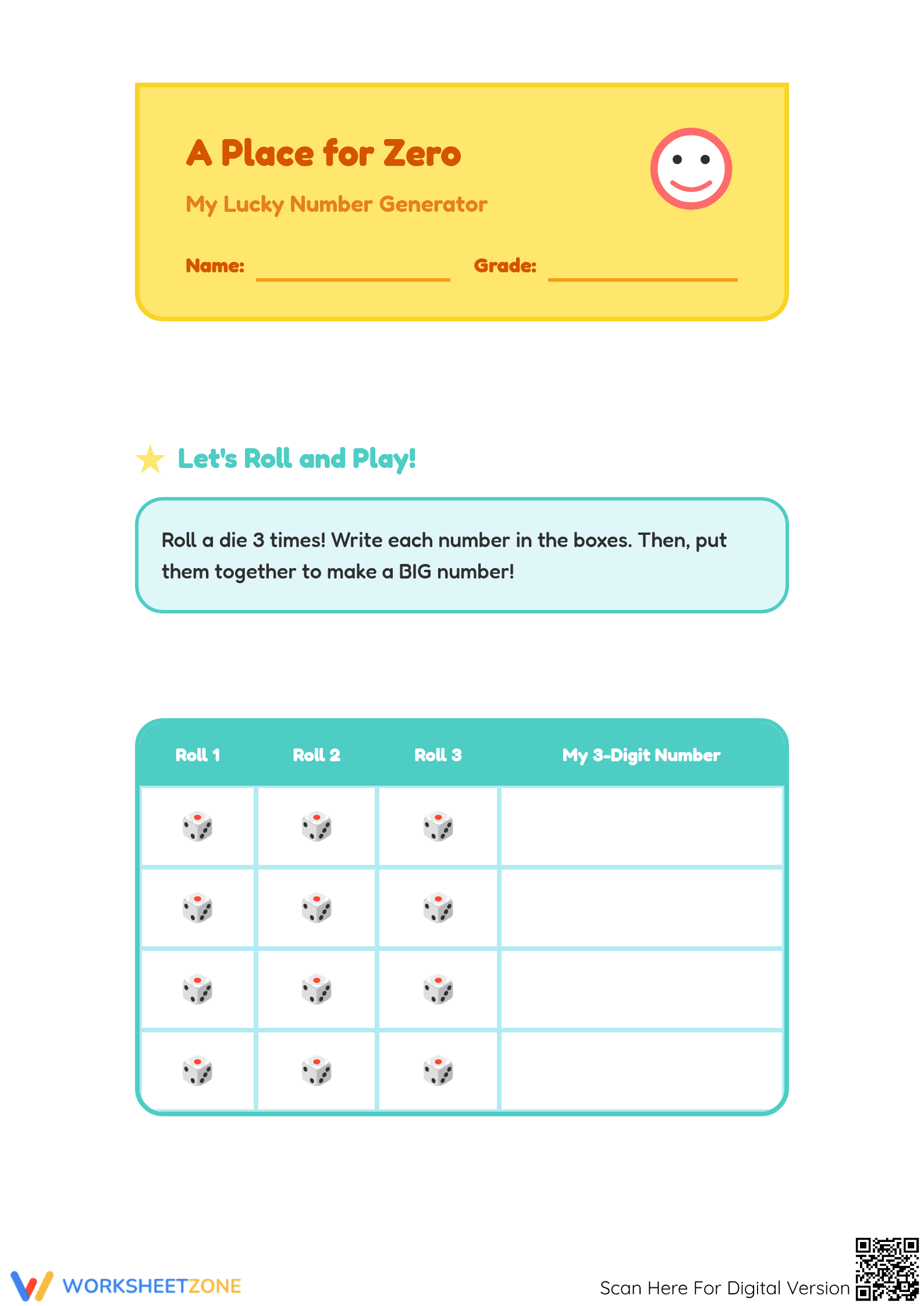
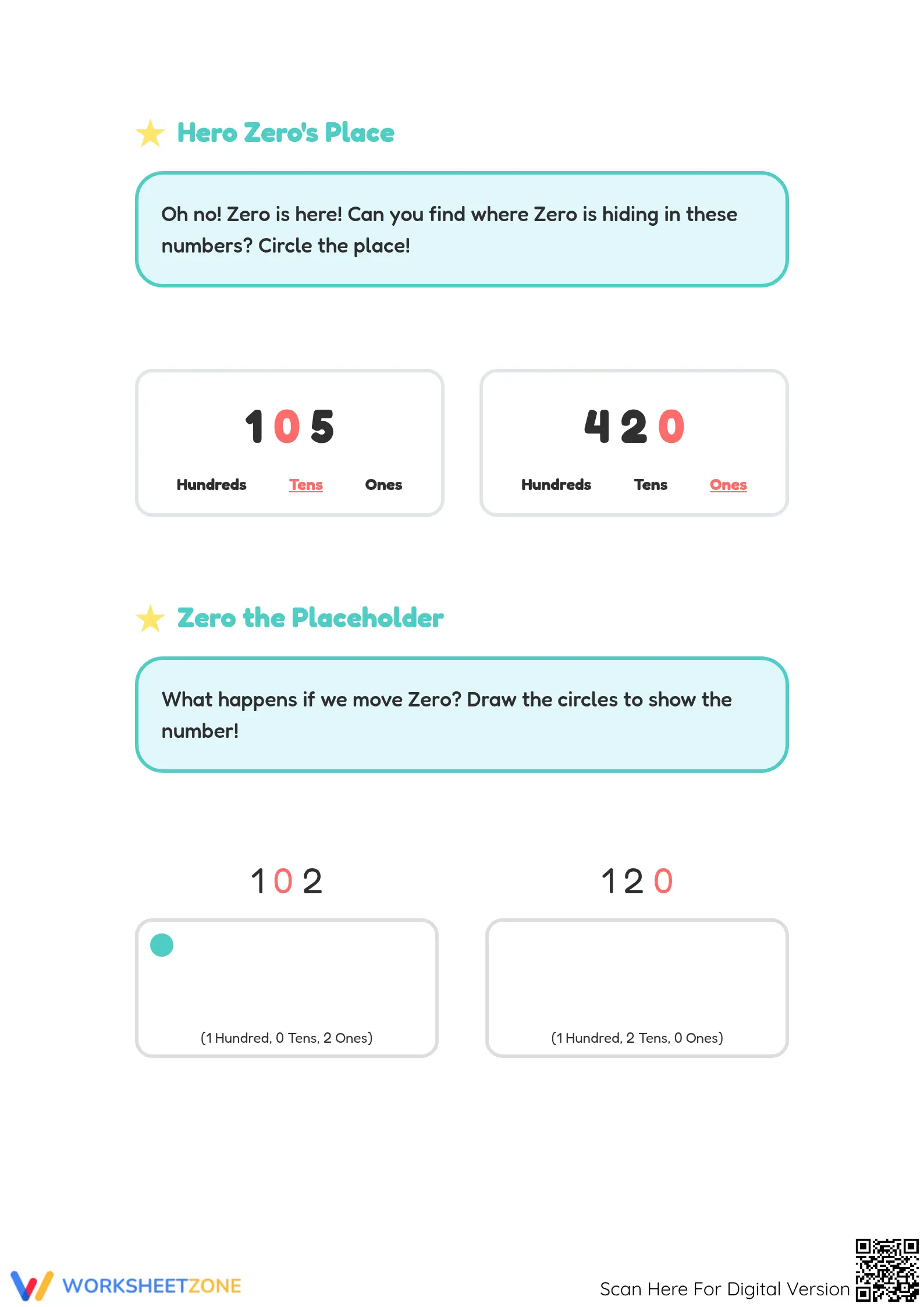
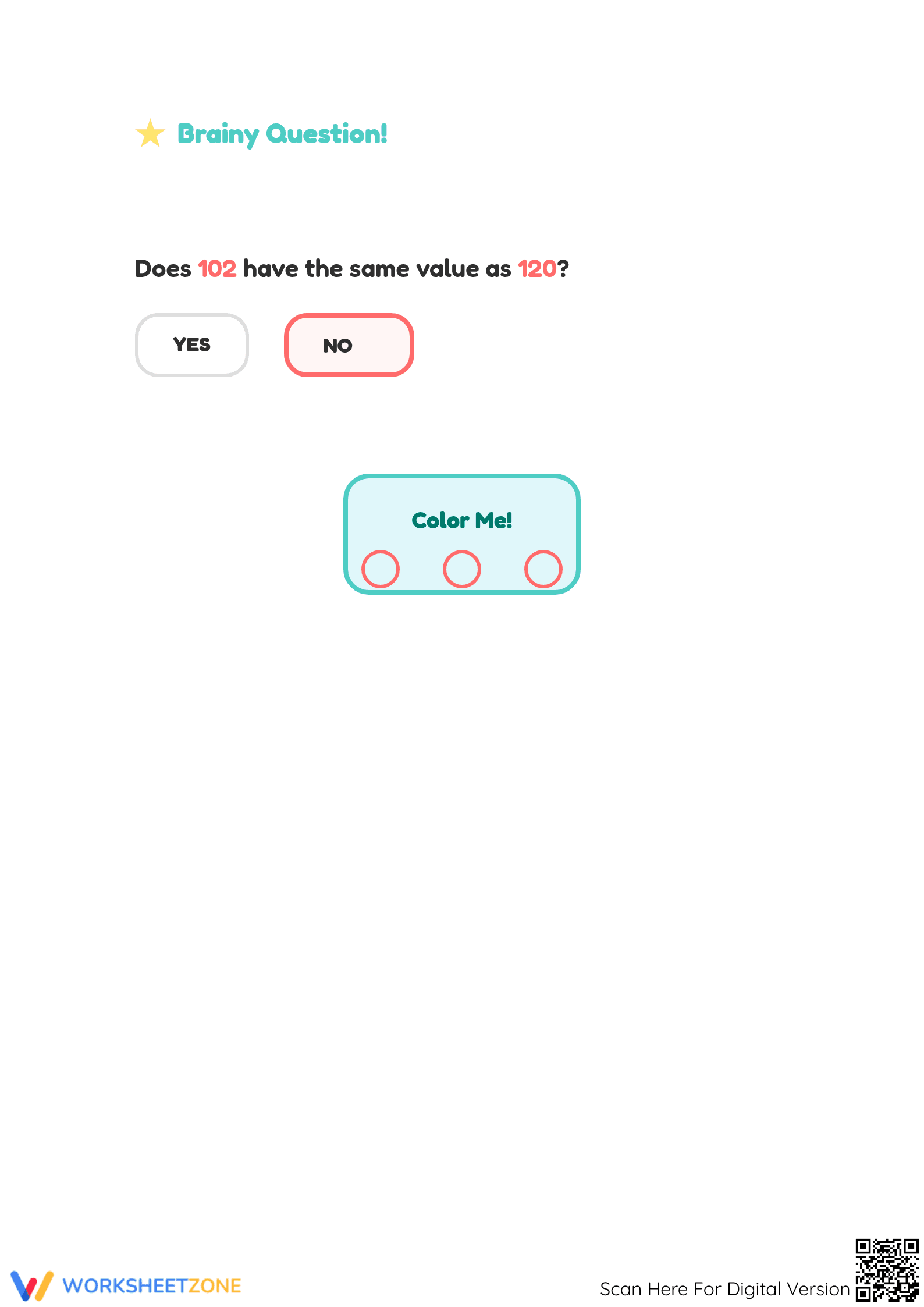
Inside this comprehensive packet, you will find three distinct pages of instruction designed for maximum student engagement. The first page features a "Lucky Number Generator" where students roll dice to create their own unique three-digit numbers. The second page, "Hero Zero's Place," focuses on identifying and drawing visual representations of numbers where zero acts as a critical placeholder. The final page includes a "Brainy Question" and coloring task to reinforce conceptual mastery and visual discrimination of numerical values.
The zero-prep workflow for this resource is designed for maximum efficiency in busy classrooms. Teachers can simply print the 3-page packet (30 seconds), distribute worksheets with dice (1 minute), and review conceptual answers as a whole group (5 minutes). This streamlined process requires less than two minutes of teacher preparation, making it an ideal choice for substitute lesson plans, morning work, or last-minute math center additions.
This worksheet is primarily aligned to CCSS.MATH.CONTENT.2.NBT.A.1: "Understand that the three digits of a three-digit number represent amounts of hundreds, tens, and ones." It addresses the foundational concept that the digit 0 in a specific place indicates no units of that value, such as 0 tens in 102. This standard code can be copied directly into lesson plans or curriculum mapping tools.
Use this resource during the "We Do" phase of gradual release to bridge the instructional gap between concrete manipulatives and abstract number representation. It is particularly effective as a formative assessment tool; teachers should observe if students can correctly place the zero when rolling the dice or if they struggle to differentiate between tens and ones in the "Hero Zero" section. Expected completion time is approximately 25 minutes for most students.
Designed for second-grade students or first-grade learners ready for mathematical enrichment, this resource provides excellent support for English Language Learners (ELLs) through visual dice prompts and clear labeling of hundreds, tens, and ones. Pair this worksheet with place value blocks or an anchor chart displaying a three-digit place value house for a multi-sensory learning experience during direct instruction.
Foundational place value instruction requires students to move beyond simple counting to understand the positional value of digits, where the zero placeholder often presents a significant hurdle. Early mastery of the zero placeholder in three-digit numbers is a key predictor of later success in multi-digit addition and subtraction. This worksheet targets CCSS.MATH.CONTENT.2.NBT.A.1 by providing structured practice in identifying and representing zeros in the tens and ones places. By combining interactive number generation with conceptual discrimination tasks (e.g., comparing 102 and 120), this resource aligns with frameworks for purposeful independent practice. Teachers can confidently support student progression from concrete representation to abstract numerical fluency, ensuring learners recognize zero as a critical indicator of empty place value positions.


