


























Views
Downloads
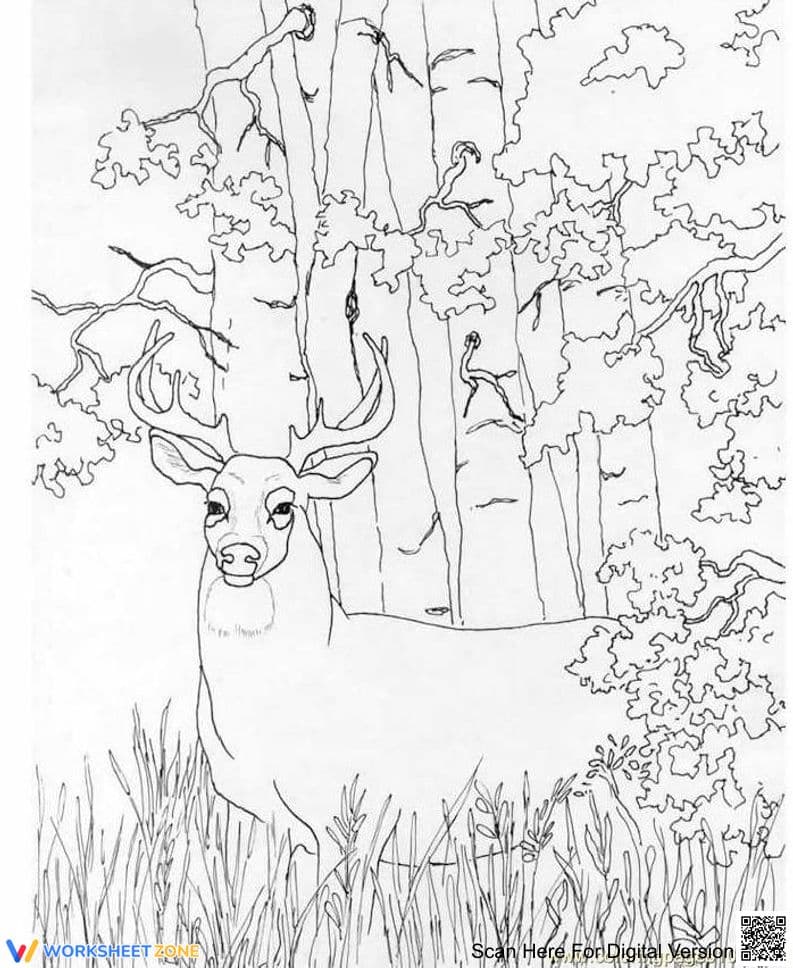

A Deer in the Forest Coloring Page | Essential Printable
Paste this activity's link or code into your existing LMS (Google Classroom, Canvas, Teams, Schoology, Moodle, etc.).
Students can open and work on the activity right away, with no student login required.
You'll still be able to track student progress and results from your teacher account.
This printable deer in the forest coloring page provides a high-interest creative activity that strengthens fine motor control and hand-eye coordination. Students engage with nature-themed imagery, allowing them to visualize forest ecosystems while practicing precision with coloring tools. It serves as an excellent bridge between artistic expression and vocabulary development in early childhood settings.
At a Glance
- Grade: K-5 · Subject: Arts & English
- Standard:
CCSS.ELA-LITERACY.L.K.6— Use words and phrases acquired through responding to texts and nature- Skill Focus: Fine motor precision and vocabulary
- Format: 1 page · 1 task · No answer key needed · PDF
- Best For: Morning work or early finishers
- Time: 15–20 minutes
This resource features a single-page, high-resolution PDF illustration of a majestic buck standing in a dense woodland environment. The line art includes intricate details such as tree bark textures, leafy canopies, and tall meadow grass, providing various levels of complexity for students to color. There are no complex instructions, making it accessible for independent work immediately upon distribution.
Teachers can integrate this activity into their daily routine in less than 2 minutes. First, print the desired number of copies from the PDF file (30 seconds). Second, distribute the pages along with crayons, colored pencils, or markers (60 seconds). Finally, allow students to work independently while you conduct small-group interventions or manage administrative tasks. This makes it an ideal sub plan component.
The primary alignment is `CCSS.ELA-LITERACY.L.K.6`, which focuses on acquiring and using conversational and academic words. By identifying the deer, antlers, forest, and trees, students reinforce noun-object identification. Additionally, it supports National Core Arts Standards for creating and exploring with art materials. Both standard codes can be copied directly into lesson plans, IEP goals, or district curriculum mapping tools.
Use this worksheet during a nature and animals unit to reinforce vocabulary. After reading a story about forest habitats, assign the coloring page as a reflective activity. It also functions as a formative assessment tool; observe how students handle coloring tools to identify those needing additional fine motor support. Expect completion within 20 minutes depending on the level of detail applied.
This activity is designed for Kindergarten through 5th-grade students, with the complexity of the background appealing to older children while the central figure remains accessible for younger learners. It is particularly effective for English Language Learners (ELLs) practicing basic nouns and for students requiring sensory-friendly, calming activities. Pair this with a nature-themed anchor chart for maximum impact.
Research from Fisher & Frey (2014) emphasizes the importance of visual representation and creative expression in developing foundational literacy and motor skills. This deer in the forest coloring page aligns with CCSS.ELA-LITERACY.L.K.6 by providing a contextual anchor for vocabulary acquisition related to the natural world. By engaging in the physical act of coloring, students develop the intrinsic hand strength necessary for sustained writing tasks later in their academic careers. The inclusion of detailed environmental elements encourages students to attend to visual details, a precursor to reading comprehension and observation in science. This resource provides a low-stakes, high-engagement entry point for learners to connect with curriculum themes while building the stamina required for more rigorous academic demands. It serves as a reliable tool for educators seeking to balance creative play with standards-based instructional goals in a modern classroom setting.


