


























Views
Downloads

Essential Vocabulary in Context Worksheet | Grade 9 ELA
Paste this activity's link or code into your existing LMS (Google Classroom, Canvas, Teams, Schoology, Moodle, etc.).
Students can open and work on the activity right away, with no student login required.
You'll still be able to track student progress and results from your teacher account.
Grade 9 Vocabulary Practice: Synonyms & Context Clues
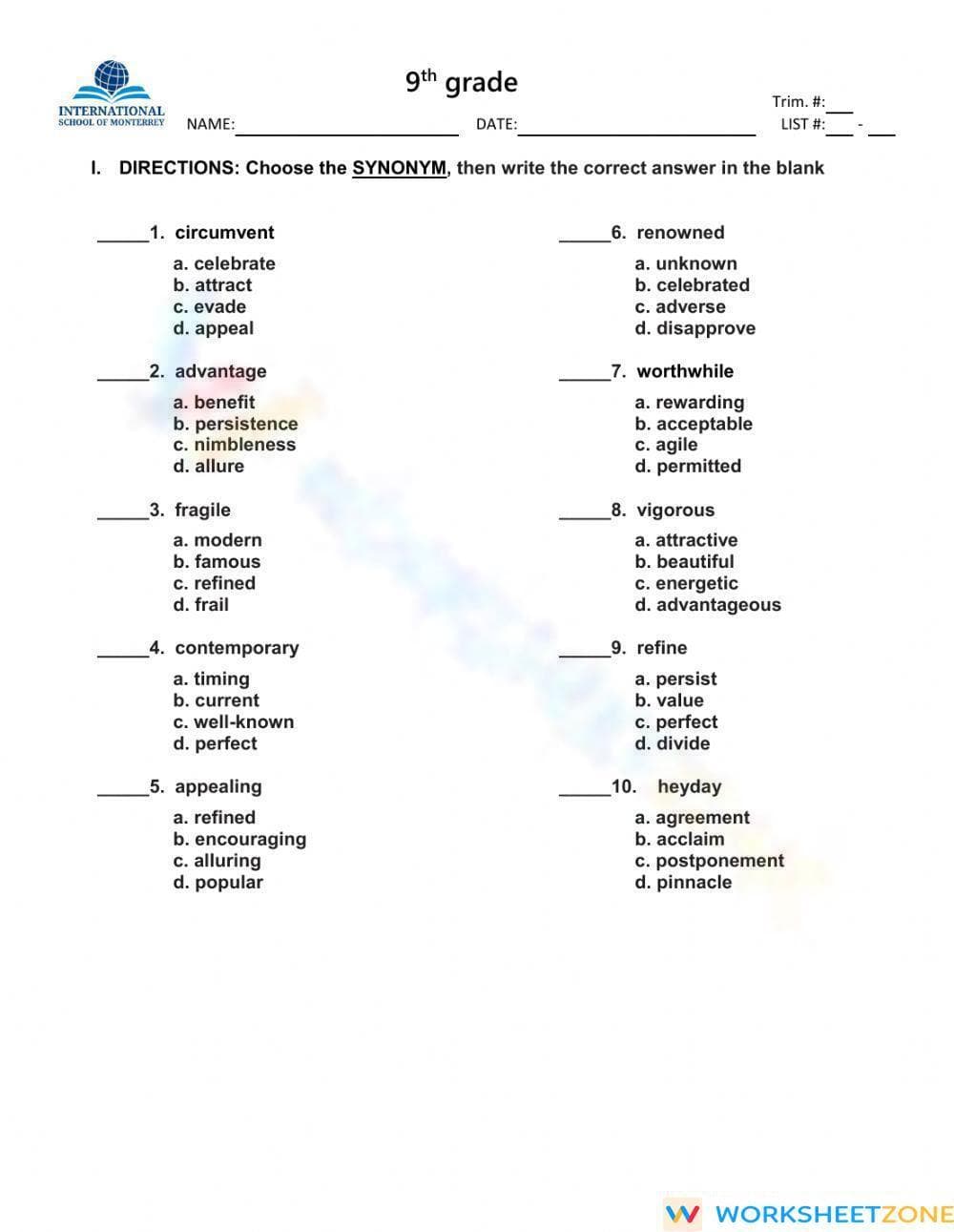
This Grade 9 ELA worksheet provides focused practice on determining the meaning of academic vocabulary. Students work through 20 problems, first by identifying synonyms and then by using contextual clues within short passages. It’s designed to strengthen word analysis skills and prepare students for grade-level complex texts.
At a Glance
- Grade: 9 · Subject: ELA
- Standard:
CCSS.ELA-LITERACY.L.9-10.4— Determine the meaning of unknown words and phrases.- Skill Focus: Vocabulary in Context, Synonyms
- Format: 5 pages · 20 problems · Answer key included · PDF
- Best For: Bell-ringer, independent practice, or homework
- Time: 20–30 minutes
What's Inside
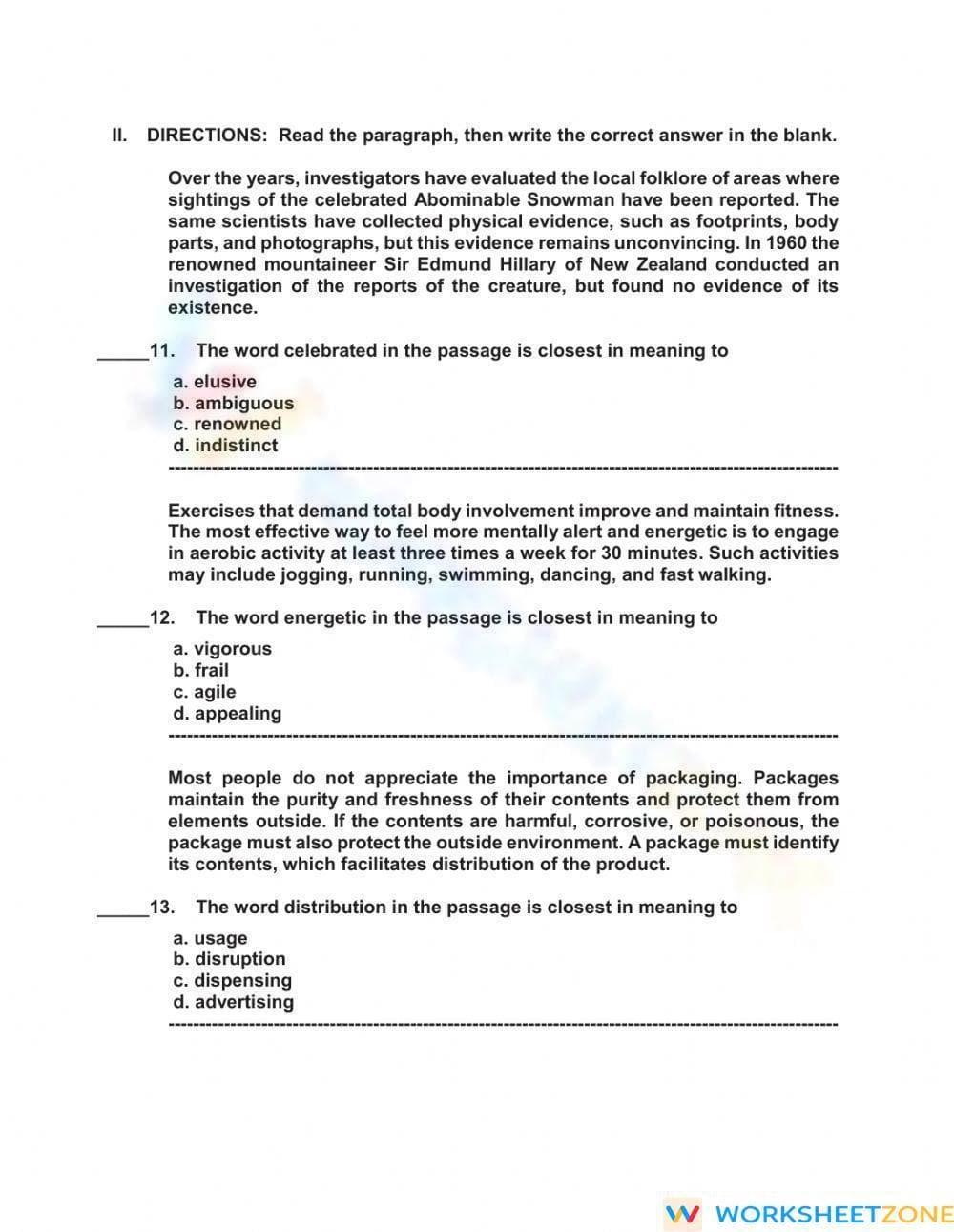
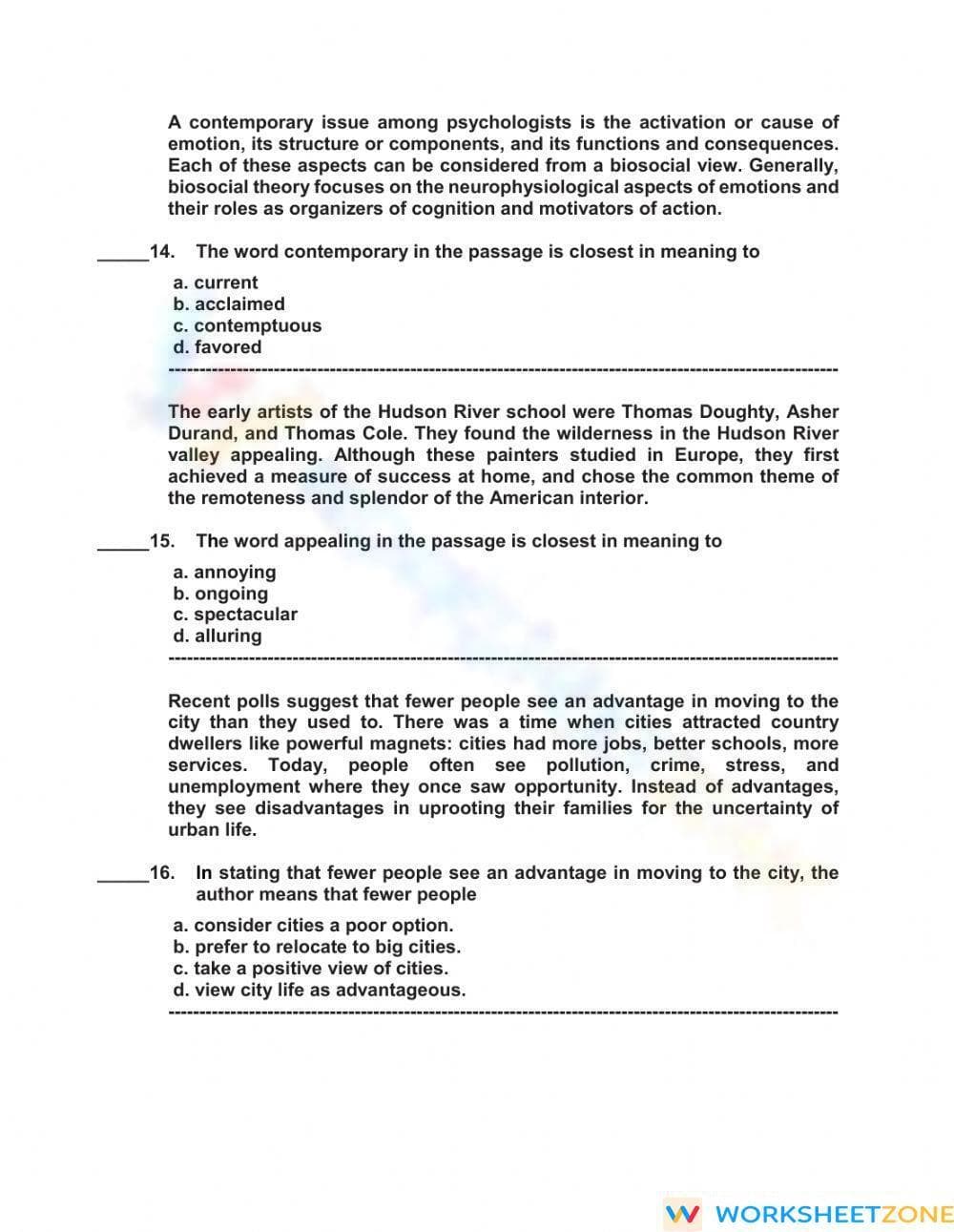
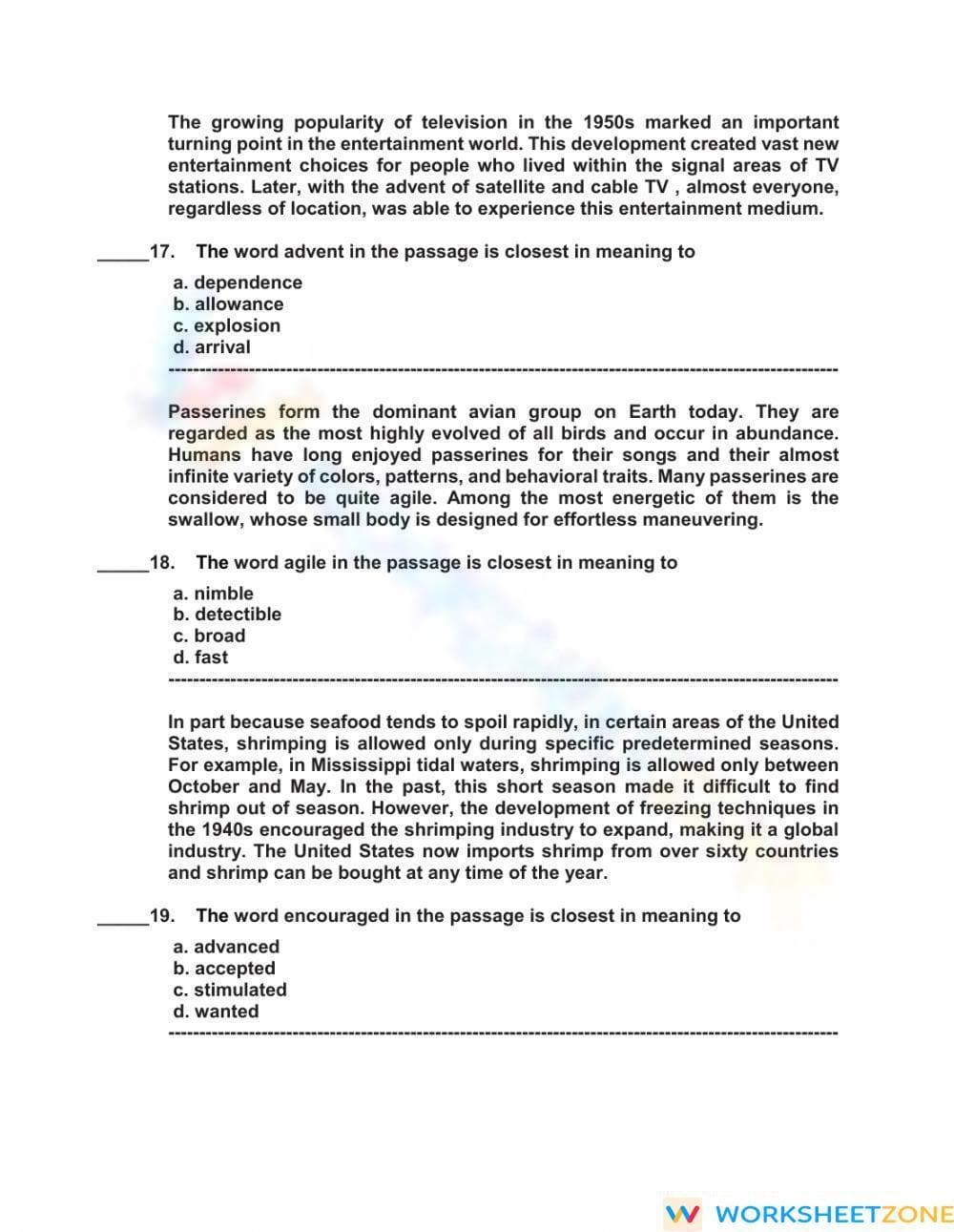
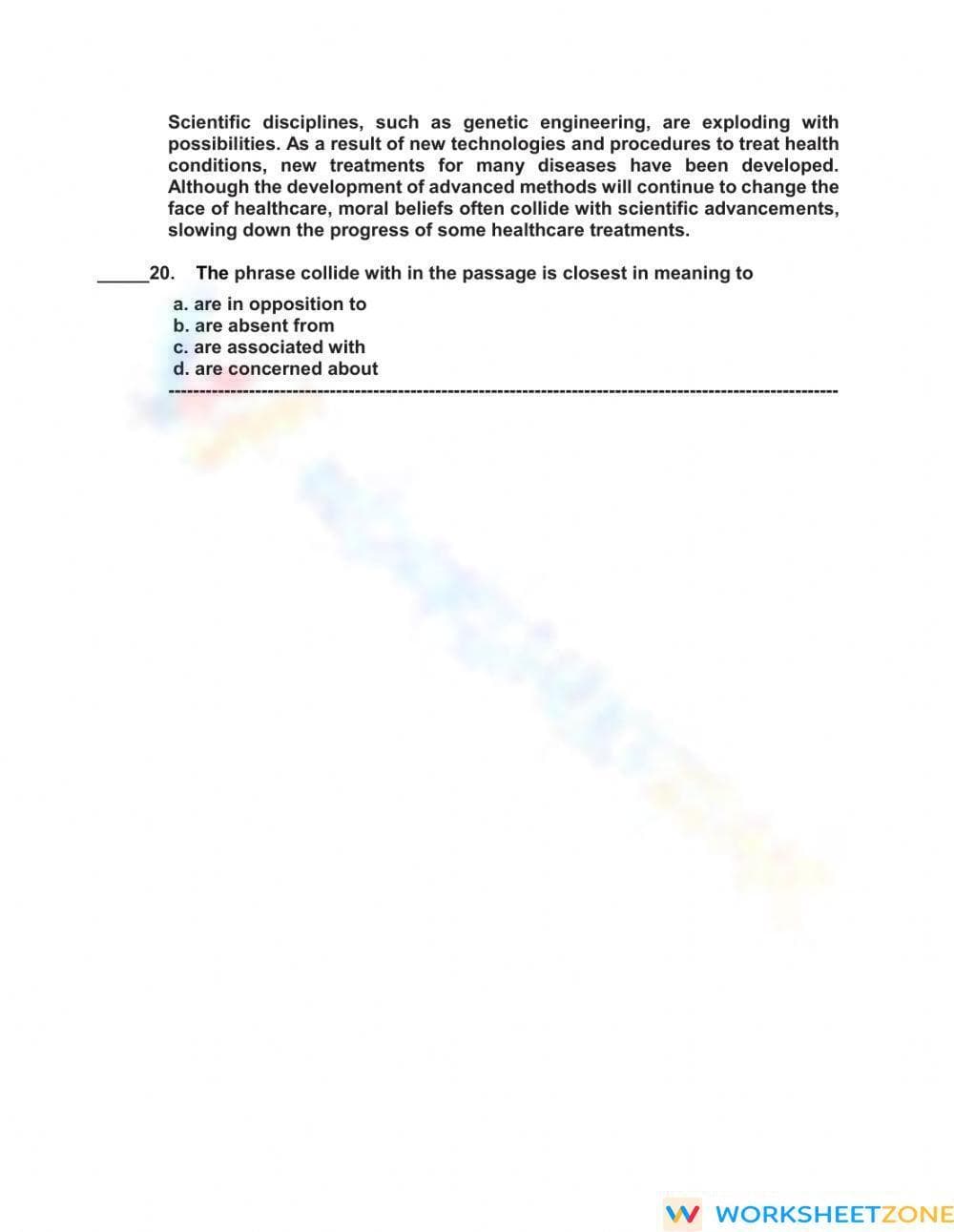
The worksheet is structured in two parts across five pages. Part I contains 10 multiple-choice synonym questions. Part II presents 10 short, informational paragraphs, each requiring students to use context clues to identify the correct meaning of a target word. An answer key is included for efficient grading.
A Progression of Skills
This resource follows a clear progression to build student confidence and skill.
- Guided Practice: The first 10 synonym questions serve as a direct vocabulary warm-up, allowing teachers to spot initial gaps.
- Supported Practice: The next set of problems places words into clear, single-paragraph contexts, providing a supportive scaffold for inferring meaning.
- Independent Practice: The final questions present varied topics that mirror encountering new words while reading, helping students internalize the skill of contextual analysis through a gradual release of support.
Standards Alignment
This worksheet is directly aligned with Common Core standard CCSS.ELA-LITERACY.L.9-10.4, which requires students to "Determine or clarify the meaning of unknown and multiple-meaning words and phrases based on grades 9-10 reading and content, choosing flexibly from a range of strategies." It also supports the anchor standard CCSS.ELA-LITERACY.RI.9-10.4 for reading informational text. Both standard codes can be copied directly into lesson plans, IEP goals, or district curriculum mapping tools.
How to Use It
Use this versatile worksheet as a pre-assessment or as independent practice after a lesson on context clues. For a formative check, circulate as students work on Part II and listen to their reasoning, noting which students are successfully citing textual evidence for their answers. Most students will complete the worksheet in 20 to 30 minutes.
Who It's For
This resource is ideal for 9th and 10th-grade ELA students, including those in mixed-level classrooms. For students needing support, complete the synonym section together as a class. This worksheet pairs well with an anchor chart that lists different types of context clues (e.g., definition, example, synonym, antonym).
This vocabulary worksheet provides targeted practice aligned with CCSS.ELA-LITERACY.L.9-10.4, a critical component of adolescent literacy. By requiring students to determine word meanings from context, the activity builds skills essential for comprehending complex texts across all subjects. Research consistently shows a strong correlation between vocabulary knowledge and academic achievement. A study highlighted by Fisher & Frey (2014) emphasizes that robust vocabulary instruction must go beyond simple definitions to include contextual analysis, precisely what this resource facilitates. The worksheet's structure, moving from synonym recognition to contextual inference, provides the repeated, meaningful exposure needed for students to acquire and retain new academic terms. This approach is more effective than isolated memorization, preparing students for the demands of high school and college-level reading. The 20-question format offers a solid data point for teachers tracking student progress on this key standard.


