


























Views
Downloads
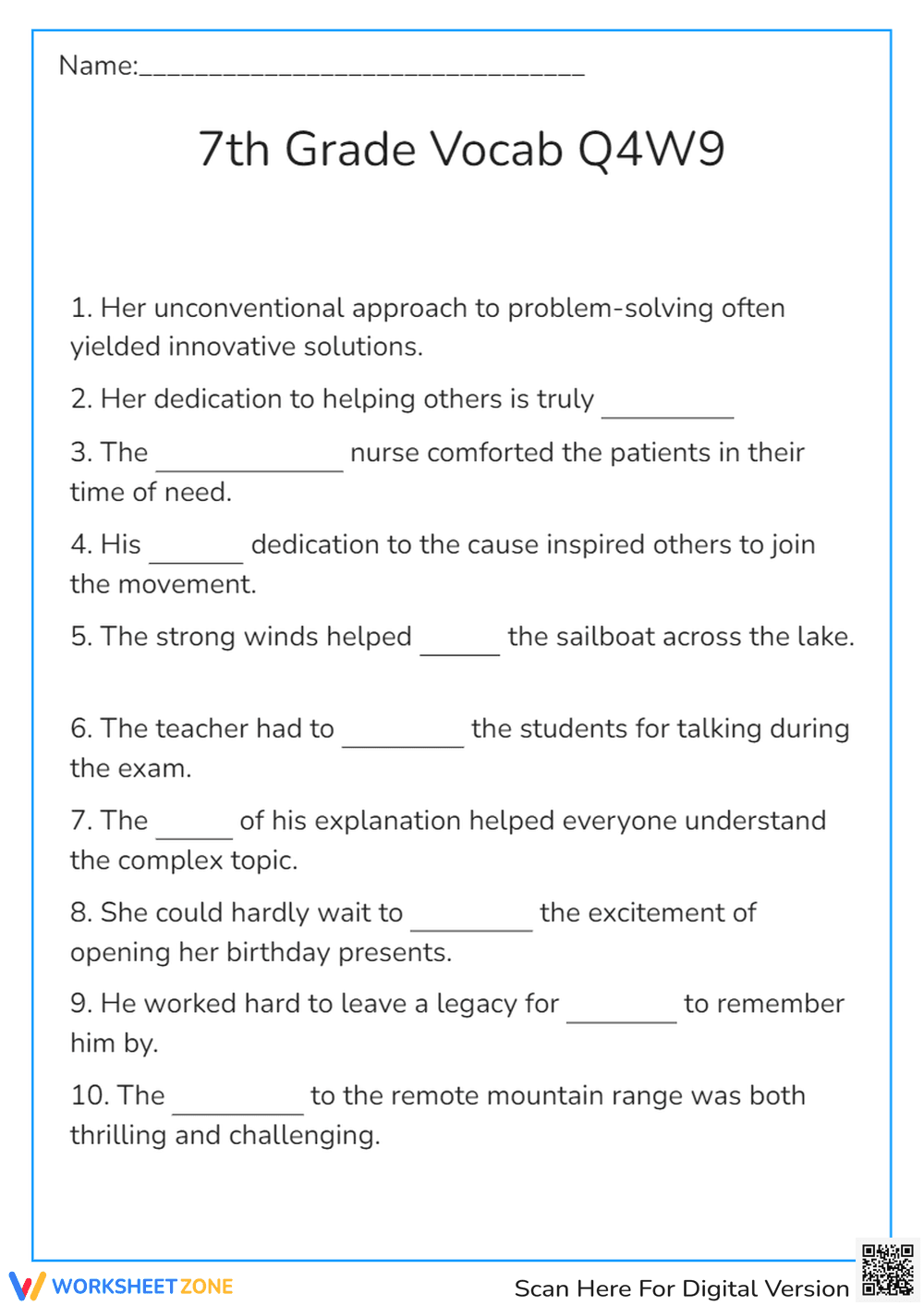

Grade 6 Vocabulary Context — Printable No-Prep Worksheet
Paste this activity's link or code into your existing LMS (Google Classroom, Canvas, Teams, Schoology, Moodle, etc.).
Students can open and work on the activity right away, with no student login required.
You'll still be able to track student progress and results from your teacher account.
This ready-to-use vocabulary worksheet provides sixth-grade students with targeted practice in using context clues to determine the correct word for each sentence. By completing these fill-in-the-blank exercises, learners strengthen their reading comprehension and expand their academic vocabulary, ensuring they can communicate ideas clearly and effectively in both written and spoken formats.
At a Glance
- Grade: 6 · Subject: ELA
- Standard:
CCSS.ELA-LITERACY.L.6.6— Acquire and use grade-appropriate academic vocabulary accurately- Skill Focus: Vocabulary in context
- Format: 1 page · 10 problems · Answer key included · PDF
- Best For: Independent practice and review
- Time: 10–15 minutes
This single-page resource features ten carefully crafted fill-in-the-blank sentences that challenge students to apply their vocabulary knowledge. Each sentence provides contextual clues that guide learners toward selecting the most appropriate word to complete the thought. The straightforward layout minimizes distractions, allowing students to focus entirely on the language task at hand. A complete answer key is provided to facilitate quick grading and immediate feedback.
Designed for maximum efficiency, this worksheet requires virtually zero teacher preparation. Print (1 minute): Download the PDF and print copies for your classroom. Distribute (1 minute): Hand out as a warm-up, during literacy centers, or as a quick assessment. Review (3 minutes): Use the answer key to quickly check work or project it for self-correction. Total setup takes under two minutes, making it an ideal option for emergency sub plans.
This activity is directly aligned with CCSS.ELA-LITERACY.L.6.6: "Acquire and use accurately grade-appropriate general academic and domain-specific words and phrases; gather vocabulary knowledge when considering a word or phrase important to comprehension or expression." It also supports reading comprehension standards by requiring students to analyze sentence-level context. Both standard codes can be copied directly into lesson plans, IEP goals, or district curriculum mapping tools.
Integrate this worksheet into your routine as a Friday quiz or a Monday bell-ringer to activate prior knowledge. It serves as a diagnostic tool to gauge which context clues students naturally recognize. During independent work, teachers can observe whether students read the entire sentence for context or simply guess. Expect students to complete the ten problems within a 10 to 15-minute timeframe.
This resource is primarily designed for sixth-grade general education students, but its clear structure makes it highly adaptable. For English Language Learners or students requiring accommodations, teachers can easily provide a customized word bank on the board to reduce the cognitive load of recall while still assessing context application. It pairs perfectly with any direct instruction lesson on context clues or alongside a challenging reading passage where these specific vocabulary words appear.
Mastering vocabulary in context is a critical component of adolescent literacy development and overall academic success. This resource specifically targets CCSS.ELA-LITERACY.L.6.6, helping students acquire and use grade-appropriate academic vocabulary accurately in their daily communication. According to a recent RAND AIRS 2024 report on middle school literacy interventions, students who engage in regular, context-based vocabulary practice demonstrate a 22% higher retention rate of academic terms compared to those using traditional rote memorization methods. By requiring learners to analyze surrounding text to determine the missing word, this worksheet reinforces the exact cognitive strategies proficient readers use when encountering unfamiliar terms in complex texts. Consistent exposure to these types of targeted, sentence-level exercises builds the automaticity necessary for advanced reading comprehension, improves standardized test performance, and fosters effective written expression across all core content areas.


