




























Views
Downloads
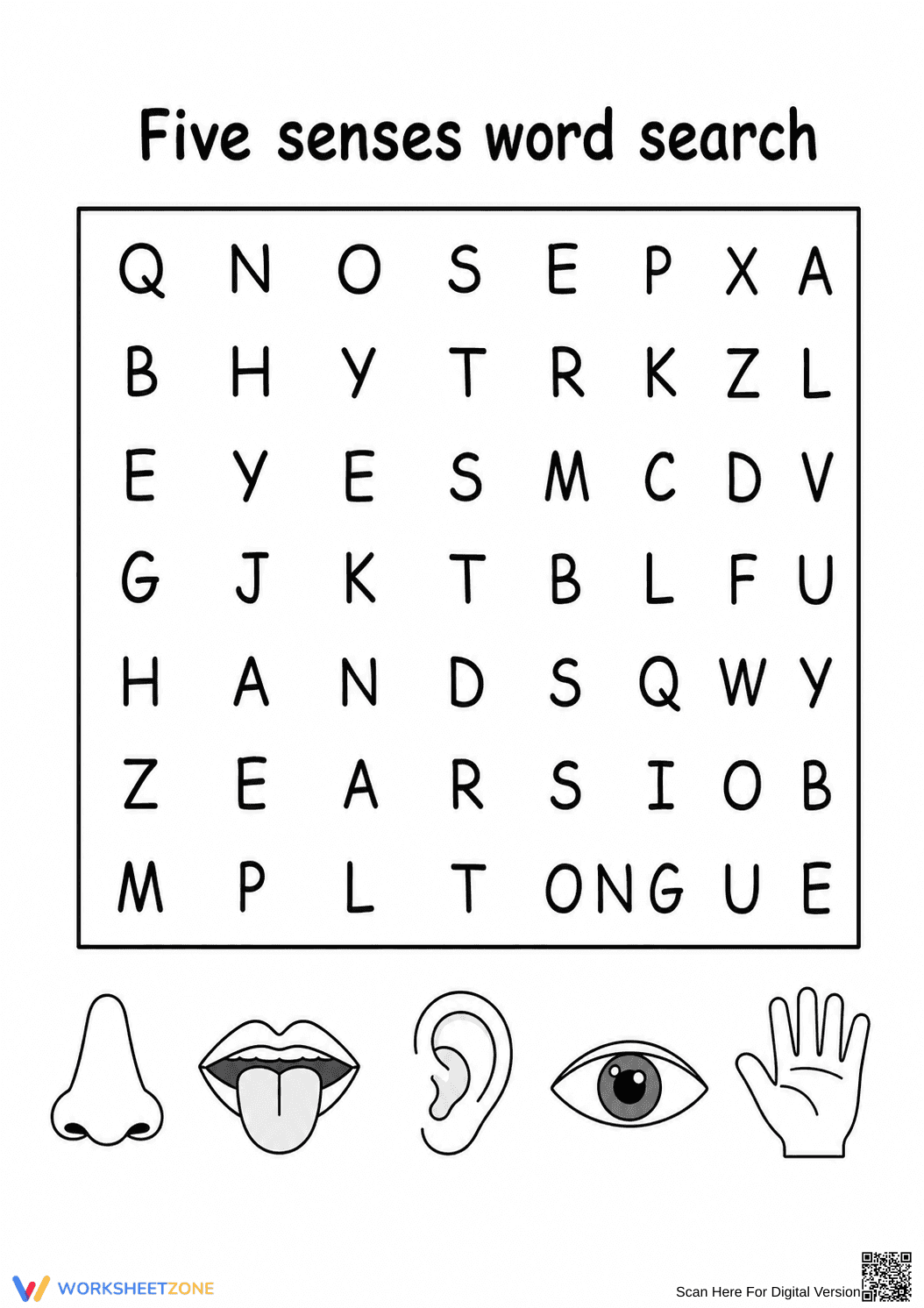

Grade 5 Five Senses — Printable No-Prep Worksheet

Paste this activity's link or code into your existing LMS (Google Classroom, Canvas, Teams, Schoology, Moodle, etc.).
Students can open and work on the activity right away, with no student login required.
You'll still be able to track student progress and results from your teacher account.
This Grade 5 vocabulary worksheet provides students with a focused word search activity to reinforce domain-specific science terms related to the five senses. By locating key anatomical words within the grid, learners strengthen their spelling and visual recognition skills in an engaging, accessible format. It ensures immediate student engagement with core biological concepts.
At a Glance
- Grade: 5 · Subject: Science
- Standard:
CCSS.ELA-LITERACY.L.5.6— Acquire and use domain-specific words- Skill Focus: Five senses vocabulary
- Format: 1 page · 5 problems · Answer key included · PDF
- Best For: Independent practice and review
- Time: 10–15 minutes
What's Inside
Inside this resource, educators will find a single-page word search puzzle featuring a seven-by-seven letter grid. The activity requires students to identify and circle five specific sensory organs: nose, eyes, hands, ears, and tongue. Visual cues are provided at the bottom of the page in the form of clear, black-and-white illustrations corresponding to each target word. A complete answer key is included to facilitate rapid grading and self-correction.
Zero-Prep Workflow
This resource is designed for immediate classroom implementation with an efficient workflow:
- Print (1 minute): The single-page layout ensures quick batch printing.
- Distribute (1 minute): Hand out the puzzle as a warm-up or early finisher task. Visual instructions let students begin immediately.
- Review (1 minute): Use the answer key to check work instantly.
Total teacher preparation time is under two minutes, making this an ideal option for emergency sub plans.
Standards Alignment
This activity aligns with CCSS.ELA-LITERACY.L.5.6: "Acquire and use accurately grade-appropriate general academic and domain-specific words and phrases." By reinforcing the spelling and recognition of sensory organs, it supports foundational science literacy. Both standard codes can be copied directly into lesson plans, IEP goals, or district curriculum mapping tools.
How to Use It
Teachers can deploy this word search during independent work time after a direct instruction lesson on human anatomy or the nervous system. It also serves as an excellent morning work assignment to settle students into the learning environment. As a formative assessment observation tip, educators can monitor how quickly students locate the terms; struggling readers may need additional phonics support if they cannot identify the starting letters of the target words. Expected completion time ranges from ten to fifteen minutes.
Who It's For
This worksheet is primarily designed for fifth-grade students reviewing basic human biology and sensory vocabulary. It is highly beneficial for English Language Learners (ELLs) who rely on the visual scaffolds provided by the illustrations at the bottom of the page. Pair this puzzle with an anchor chart detailing organ functions to provide a comprehensive review of the nervous system.
Integrating domain-specific vocabulary practice through structured puzzles supports long-term retention and reading comprehension. According to a recent EdReports 2024 analysis of effective literacy interventions, students who engage with targeted vocabulary exercises demonstrating clear visual associations show marked improvement in their ability to acquire and use domain-specific words. This aligns directly with the expectations of CCSS.ELA-LITERACY.L.5.6, ensuring learners build the necessary academic language for complex science topics. By combining visual cues with spelling recognition, this five senses activity reduces cognitive load while reinforcing essential terminology. Regular exposure to these terms in varied formats helps solidify neural pathways, making future retrieval more automatic during advanced reading tasks. This evidence-based approach confirms that brief, focused vocabulary activities are a critical component of a robust curriculum.


