


























Views
Downloads

Printable 4 Times Table Chart & Practice | Grade 3 Math
Paste this activity's link or code into your existing LMS (Google Classroom, Canvas, Teams, Schoology, Moodle, etc.).
Students can open and work on the activity right away, with no student login required.
You'll still be able to track student progress and results from your teacher account.
Mastering multiplication facts is a critical milestone for third-grade mathematicians. This comprehensive 4 times table worksheet set provides a structured pathway from initial memorization to applied problem-solving. By engaging with visual charts and scaffolded practice, students build the fluency necessary for more complex multi-digit operations and algebraic thinking in future grades.
At a Glance
- Grade: 3 · Subject: Math
- Standard:
3.OA.C.7— Fluently multiply within 100 using strategies such as the relationship between multiplication and division- Skill Focus: Multiplication by 4
- Format: 5 pages · 24 problems · Answer key included · PDF
- Best For: Multiplication fact fluency and independent practice
- Time: 20–30 minutes
What's Inside
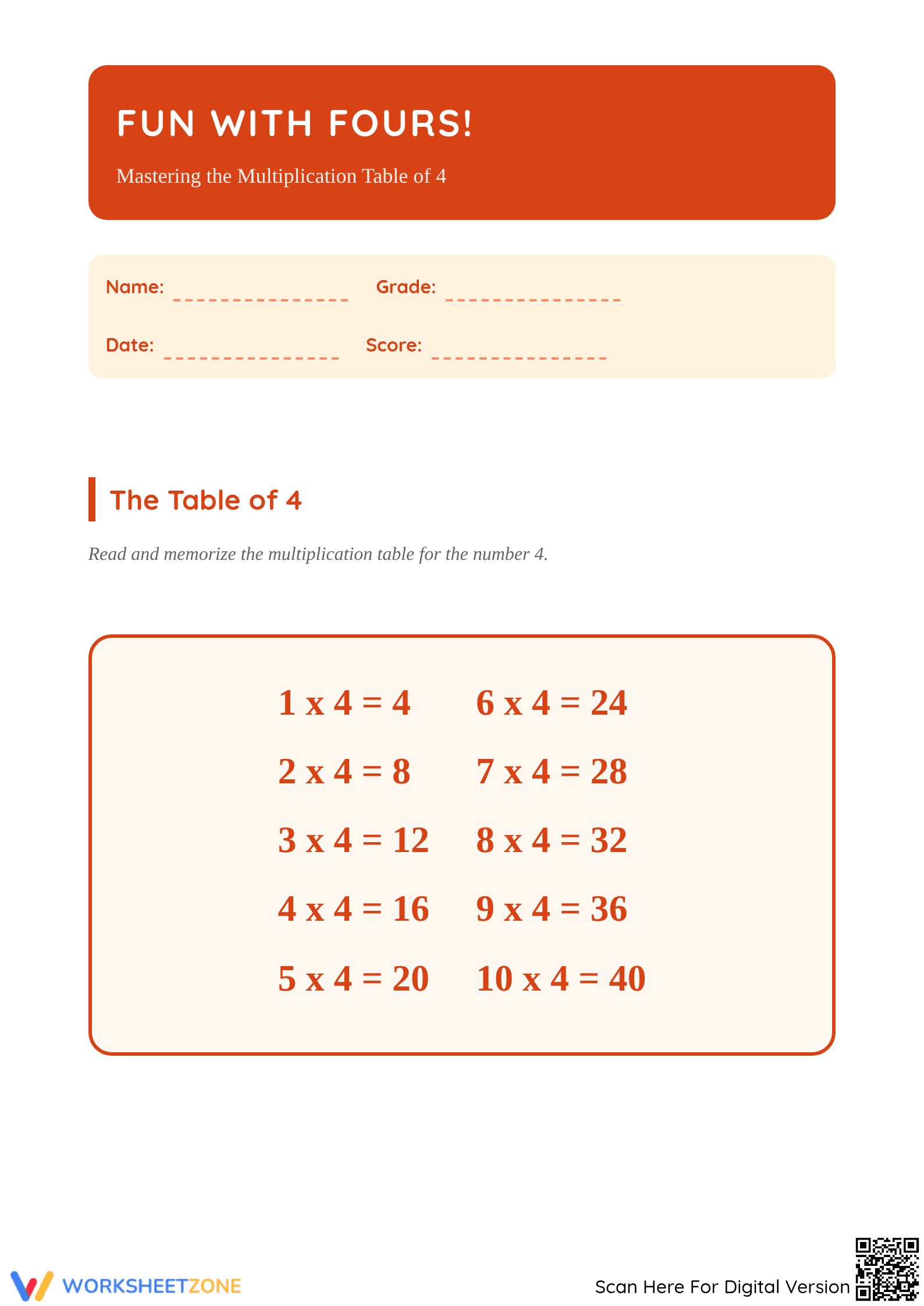
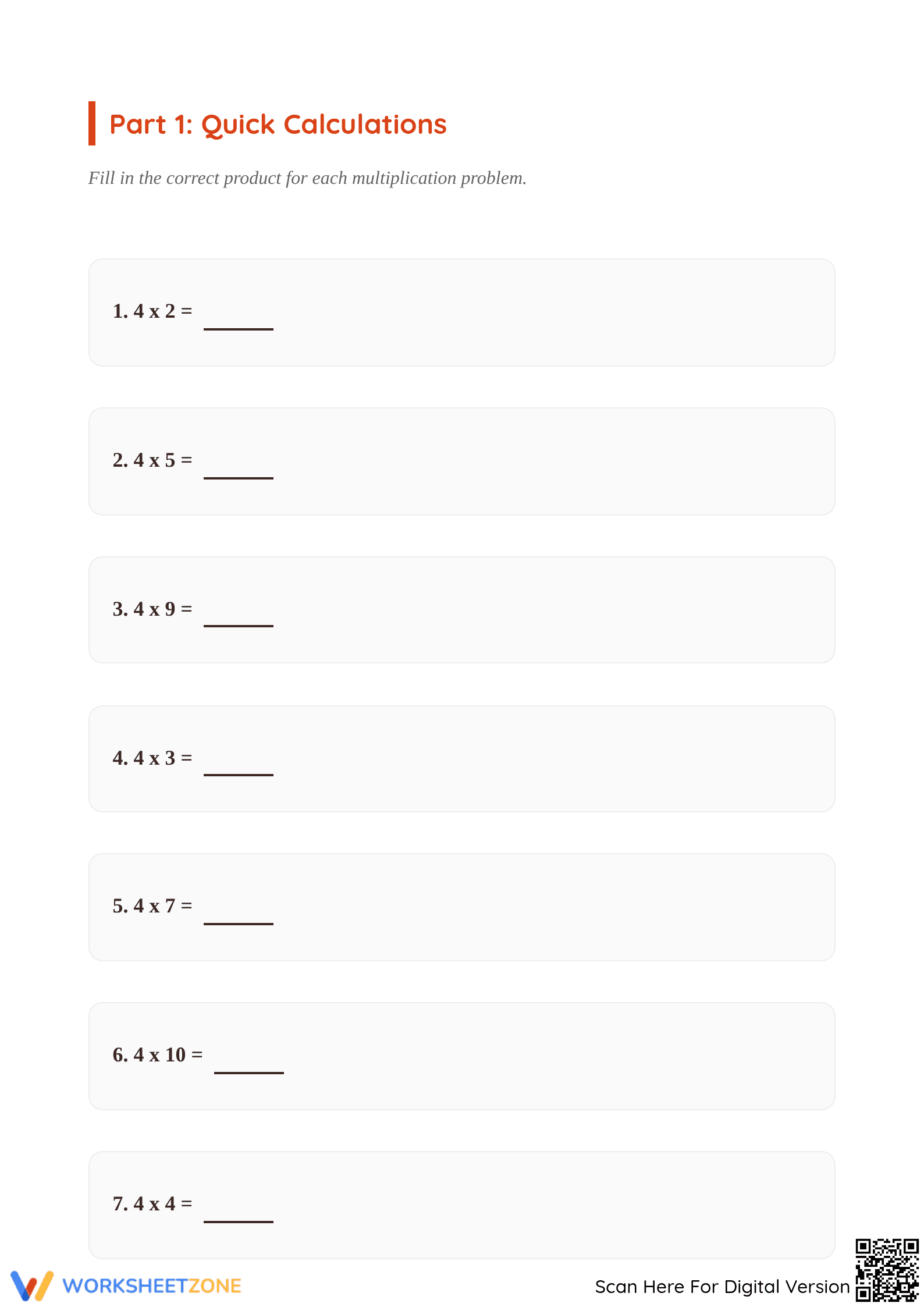
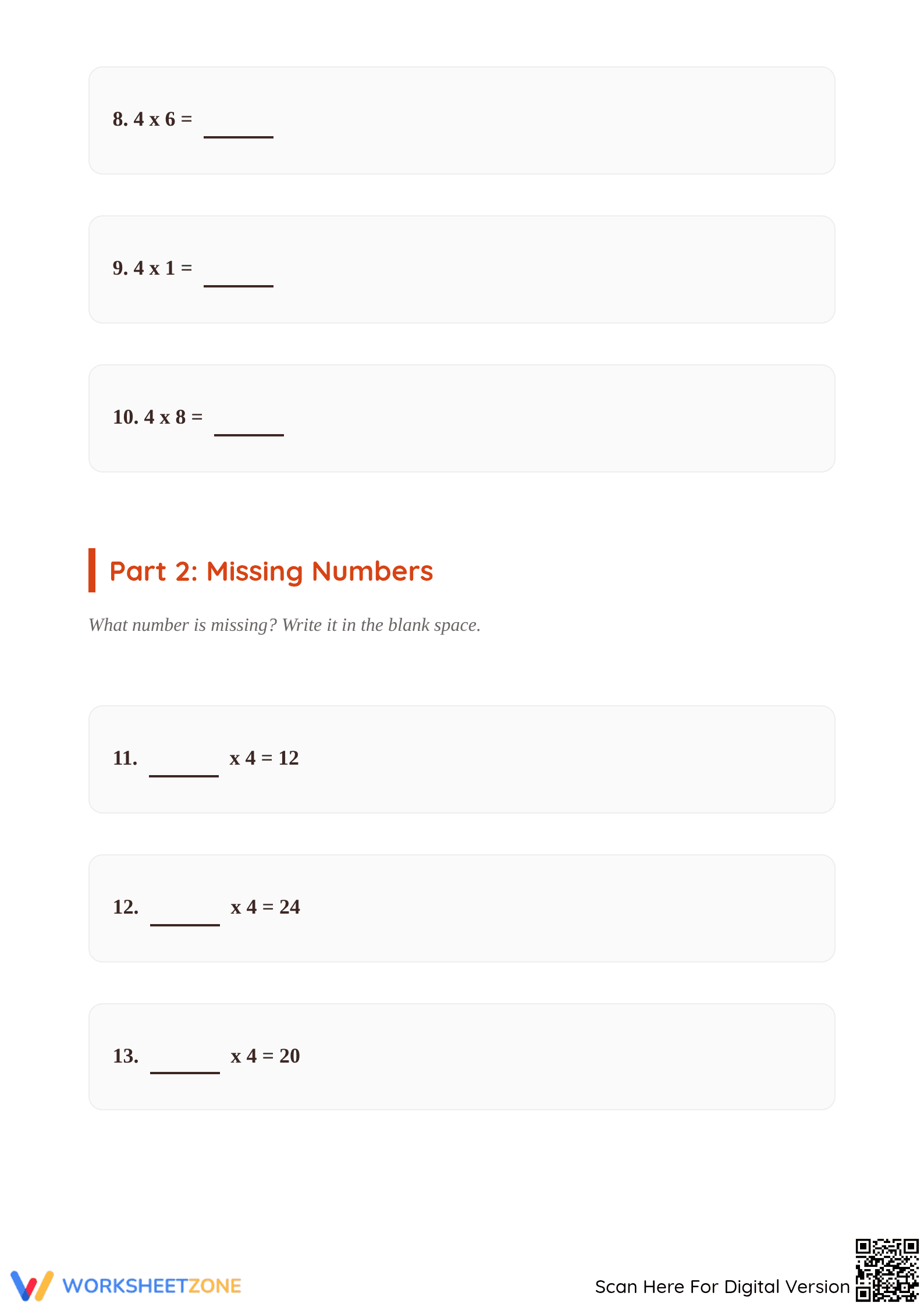
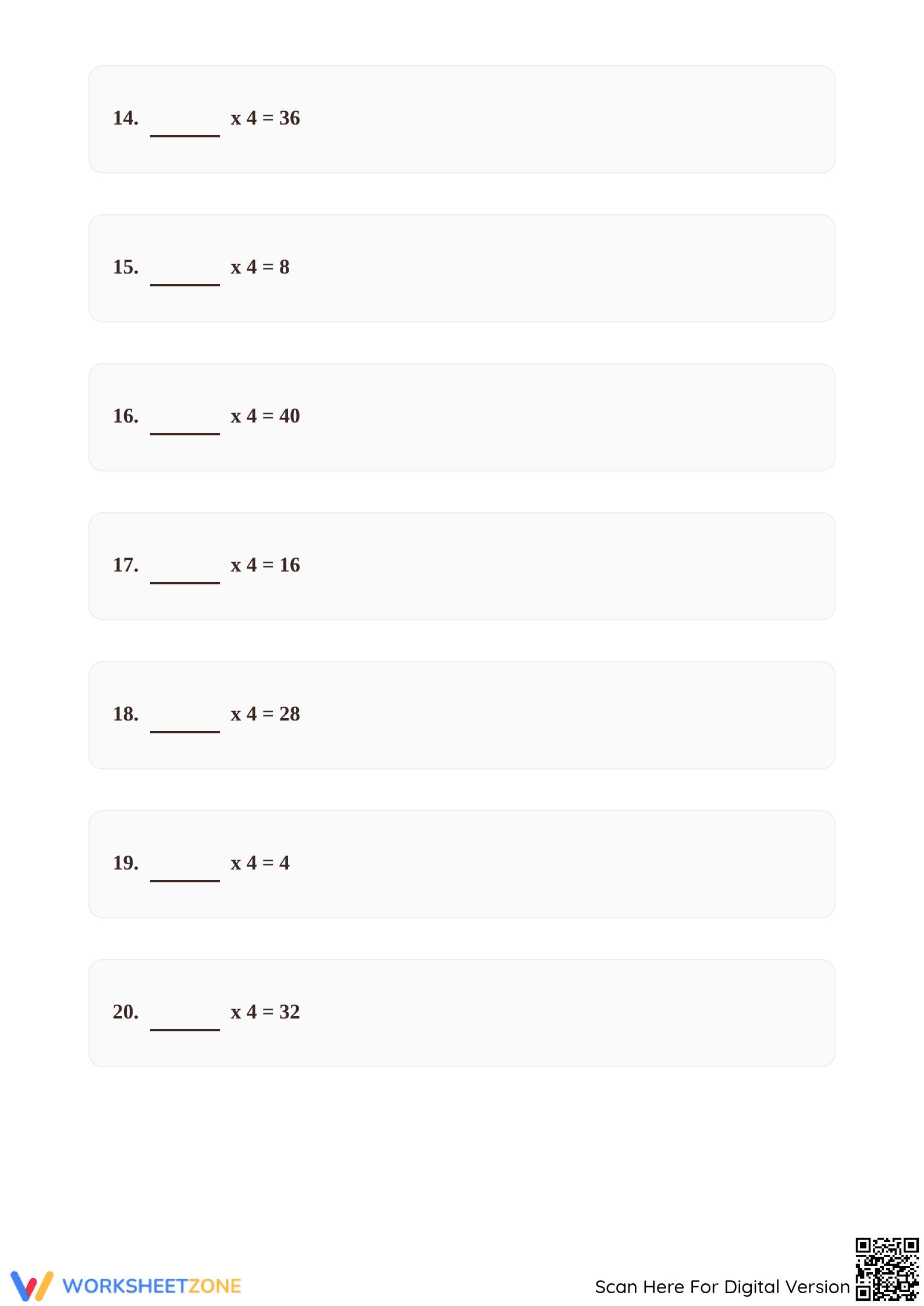
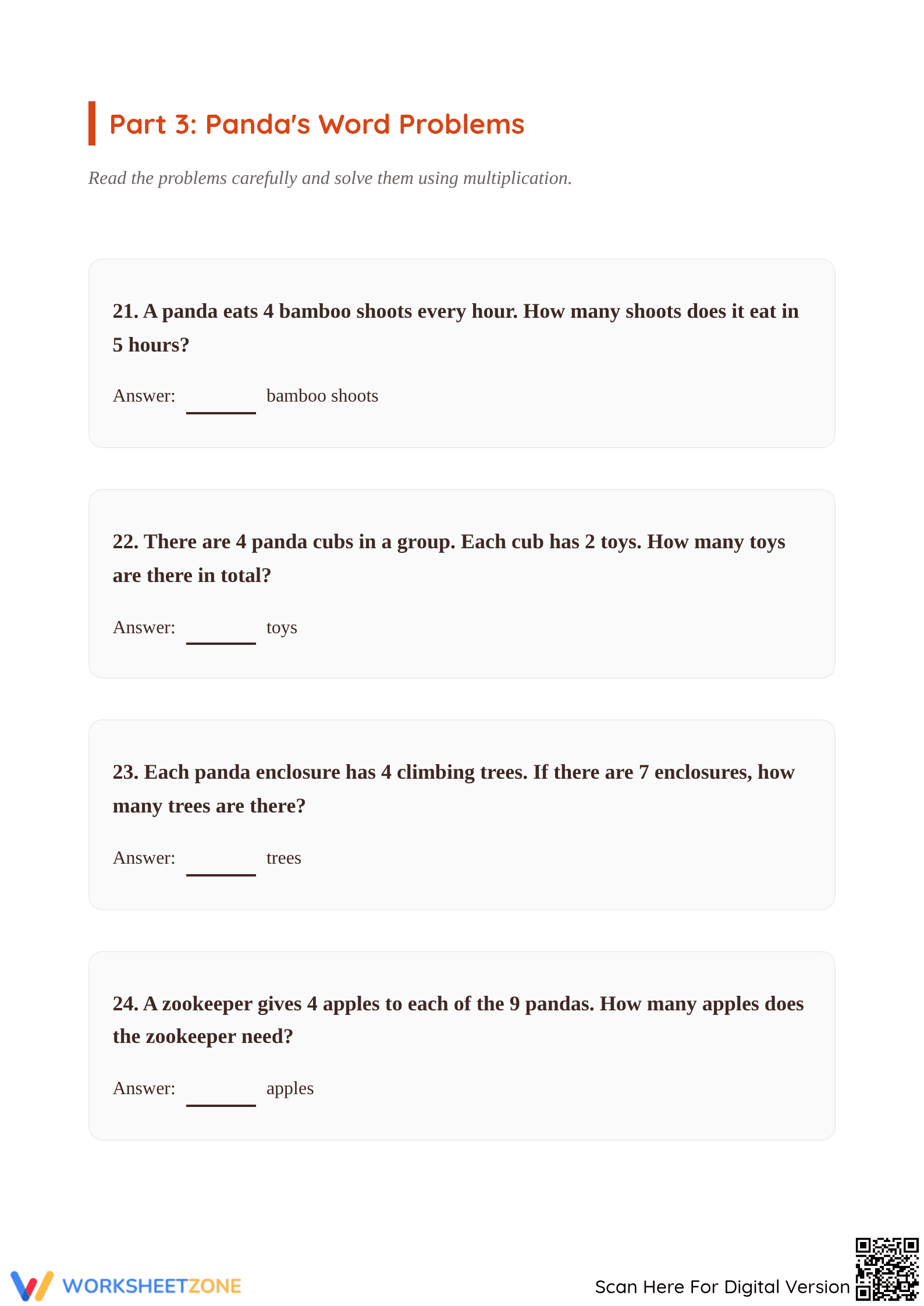
This five-page packet begins with a vibrant, panda-themed reference chart that lists products from 1 x 4 to 10 x 4. Following the visual aid, students move through three distinct sections: ten quick-fire product calculations, ten missing-number equations to strengthen algebraic reasoning, and four thematic word problems. The inclusion of a full answer key ensures immediate feedback for learners and effortless grading for educators.
Skill Progression
- Guided Practice: The packet starts with a clear visual 4 times table chart, allowing students to reference facts while completing the first set of quick calculations.
- Supported Practice: Students transition to "Missing Numbers" where they must identify the unknown factor in 10 equations, moving beyond simple product recall to deeper conceptual understanding.
- Independent Practice: The final section presents 4 multi-step word problems involving panda-themed scenarios, requiring students to translate text into multiplication equations and solve them independently.
This sequence follows a gradual-release model, moving from high support to independent application.
Standards Alignment
The primary focus of this resource is `CCSS.MATH.CONTENT.3.OA.C.7`: "Fluently multiply and divide within 100, using strategies such as the relationship between multiplication and division." It also supports `3.OA.A.3` by using multiplication to solve word problems in situations involving equal groups. Both standard codes can be copied directly into lesson plans, IEP goals, or district curriculum mapping tools.
How to Use It
For direct instruction, use the first page as a projected anchor chart during a "Math Talk" to identify patterns in the 4s (such as all products being even). As a formative assessment, assign the "Missing Numbers" section as an exit ticket; if students struggle to find the unknown factor, it signals a need for more work on the relationship between skip-counting and multiplication.
Who It's For
This resource is designed for Grade 3 students working toward fact mastery, though it serves as excellent enrichment for Grade 2 or remediation for Grade 4. The clear layout and thematic panda graphics make it particularly engaging for younger learners or those needing visual cues. Pair this worksheet with a set of multiplication flashcards or a short video on the "double-double" strategy for 4s.
The acquisition of multiplication fluency through structured, repetitive practice is supported by recent educational findings. According to the RAND AIRS 2024 report on mathematics instructional materials, resources that combine visual reference tools with varied task types—such as missing-number problems and word-based applications—significantly improve long-term retention of basic facts. By moving students from rote memorization of the 4 times table to solving contextualized word problems, this worksheet aligns with best practices for cognitive load management. The gradual transition from 100% support (the chart) to independent solving (the word problems) ensures that students do not become overwhelmed, allowing them to build a robust mental model of multiplication as equal groups. This approach reflects the Fisher & Frey (2014) model of purposeful instruction, where scaffolds are intentionally placed to facilitate a smooth transition toward student autonomy and mathematical proficiency in Grade 3 and beyond.


