


























Views
Downloads

Essential Context Clues Worksheet | Grade 3 Vocabulary Ready
Paste this activity's link or code into your existing LMS (Google Classroom, Canvas, Teams, Schoology, Moodle, etc.).
Students can open and work on the activity right away, with no student login required.
You'll still be able to track student progress and results from your teacher account.
This Grade 3 vocabulary worksheet empowers students to decode unfamiliar words using sentence-level context clues. By engaging with narrative text and isolated sentences, learners develop the critical thinking skills necessary to determine word meanings independently. This resource ensures students can confidently tackle complex vocabulary in their daily reading, leading to improved comprehension and academic success.
At a Glance
- Grade: 3 · Subject: English
- Standard:
CCSS.ELA-LITERACY.L.3.4.A— Use sentence-level context as a clue to the meaning of a word or phrase- Skill Focus: Context Clues, Tier 2 Vocabulary, and Reading Comprehension
- Format: 4 pages · 11 problems · Answer key included · PDF
- Best For: Independent practice, literacy centers, and formative assessment
- Time: 20–30 minutes
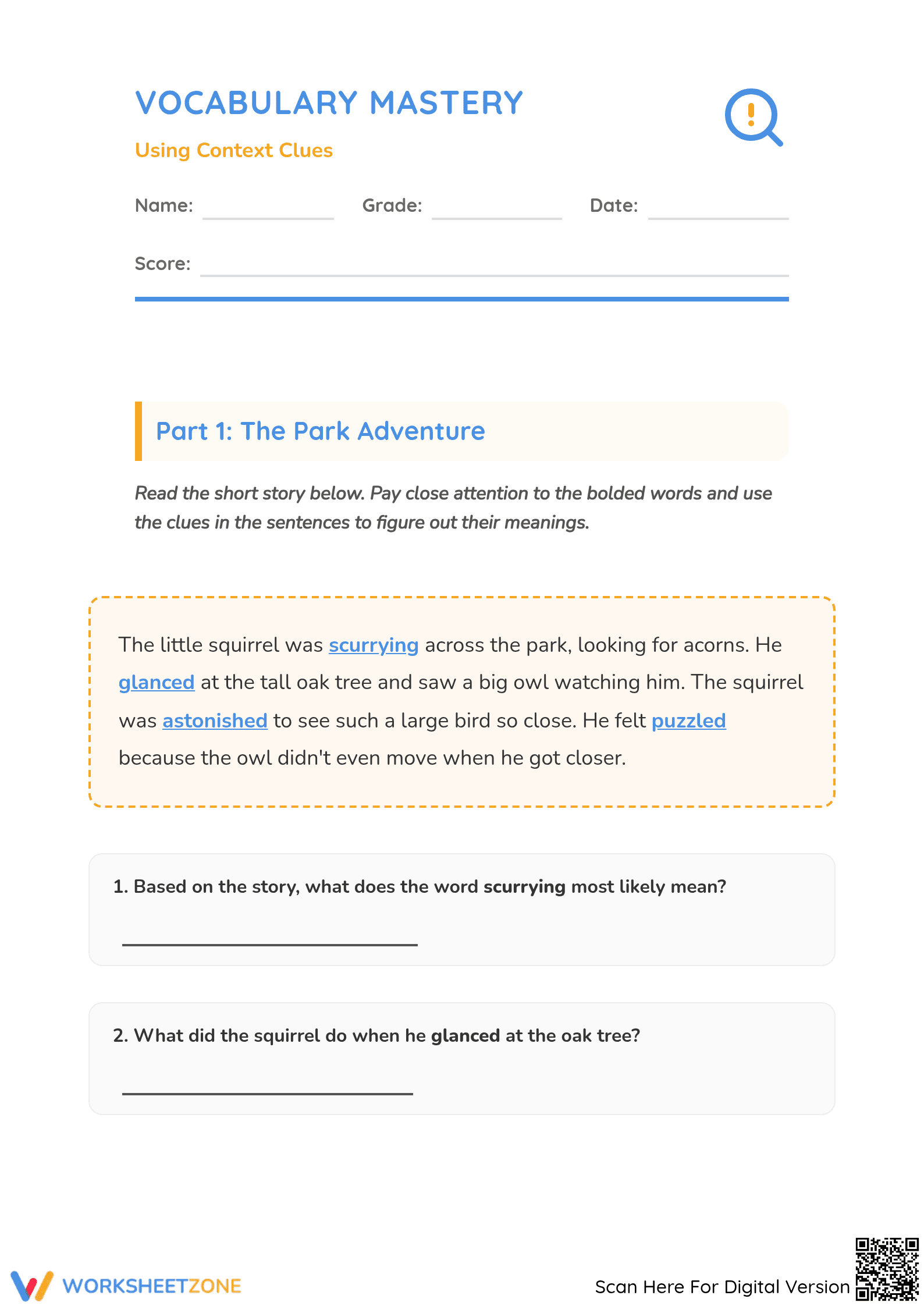
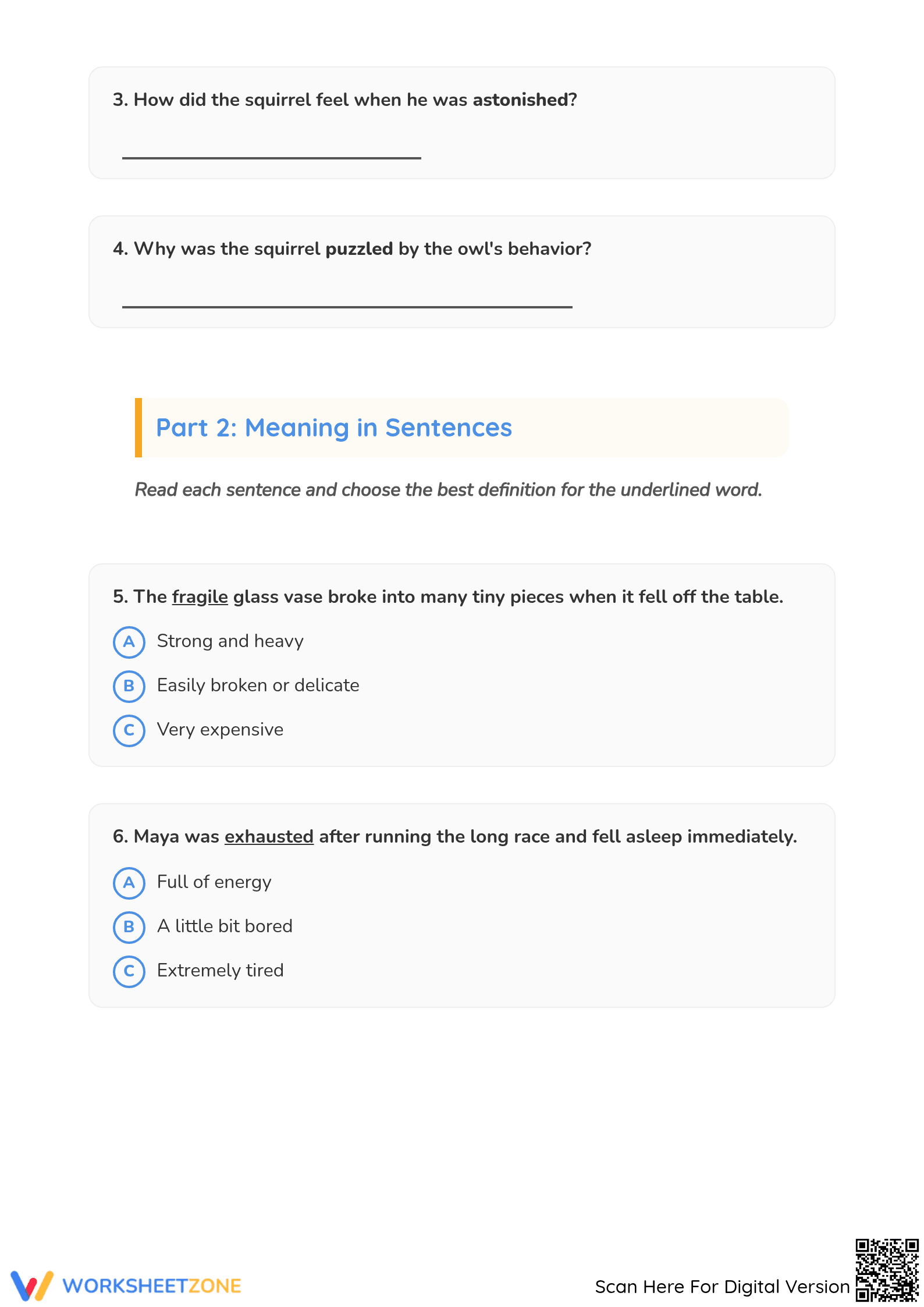
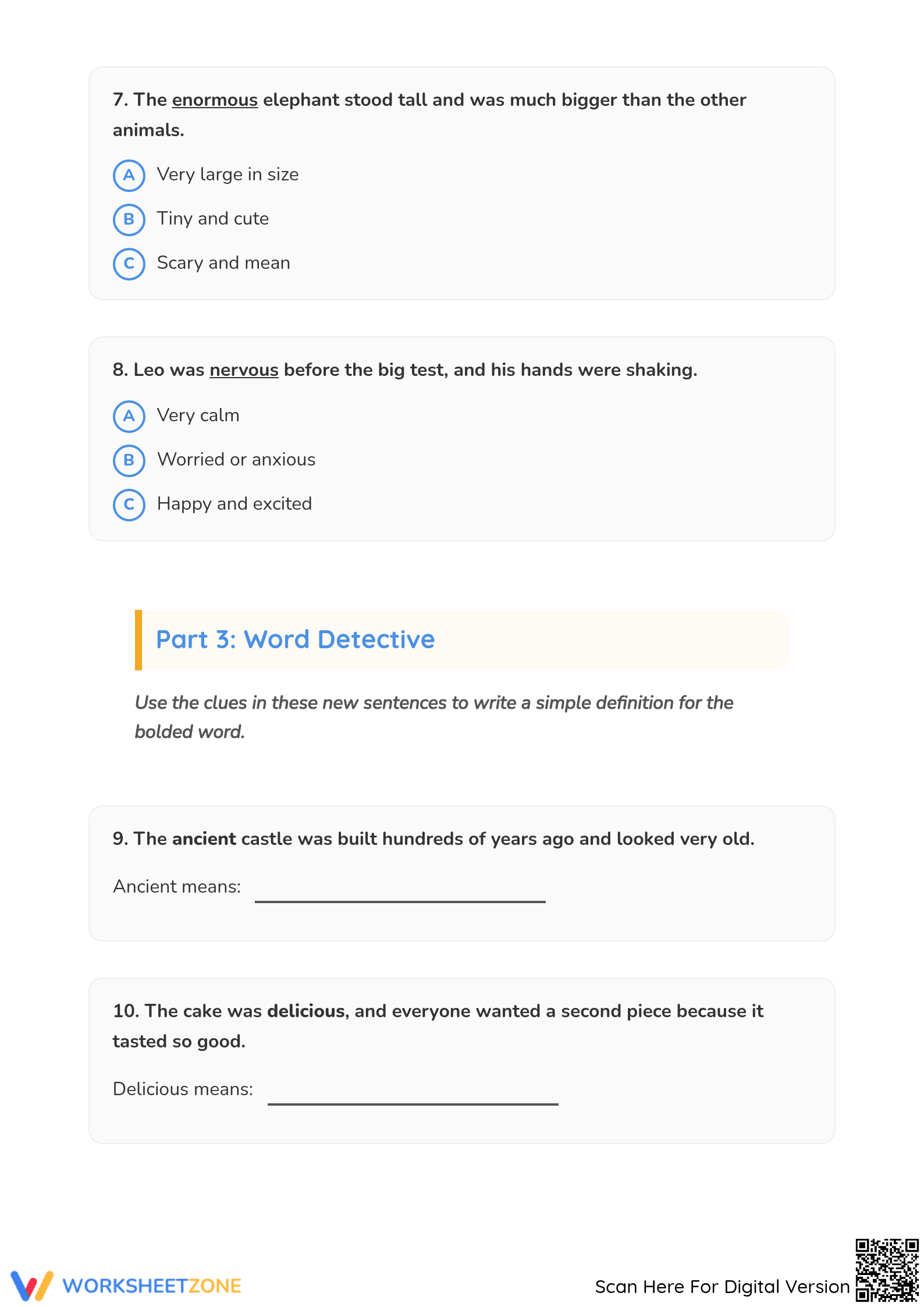
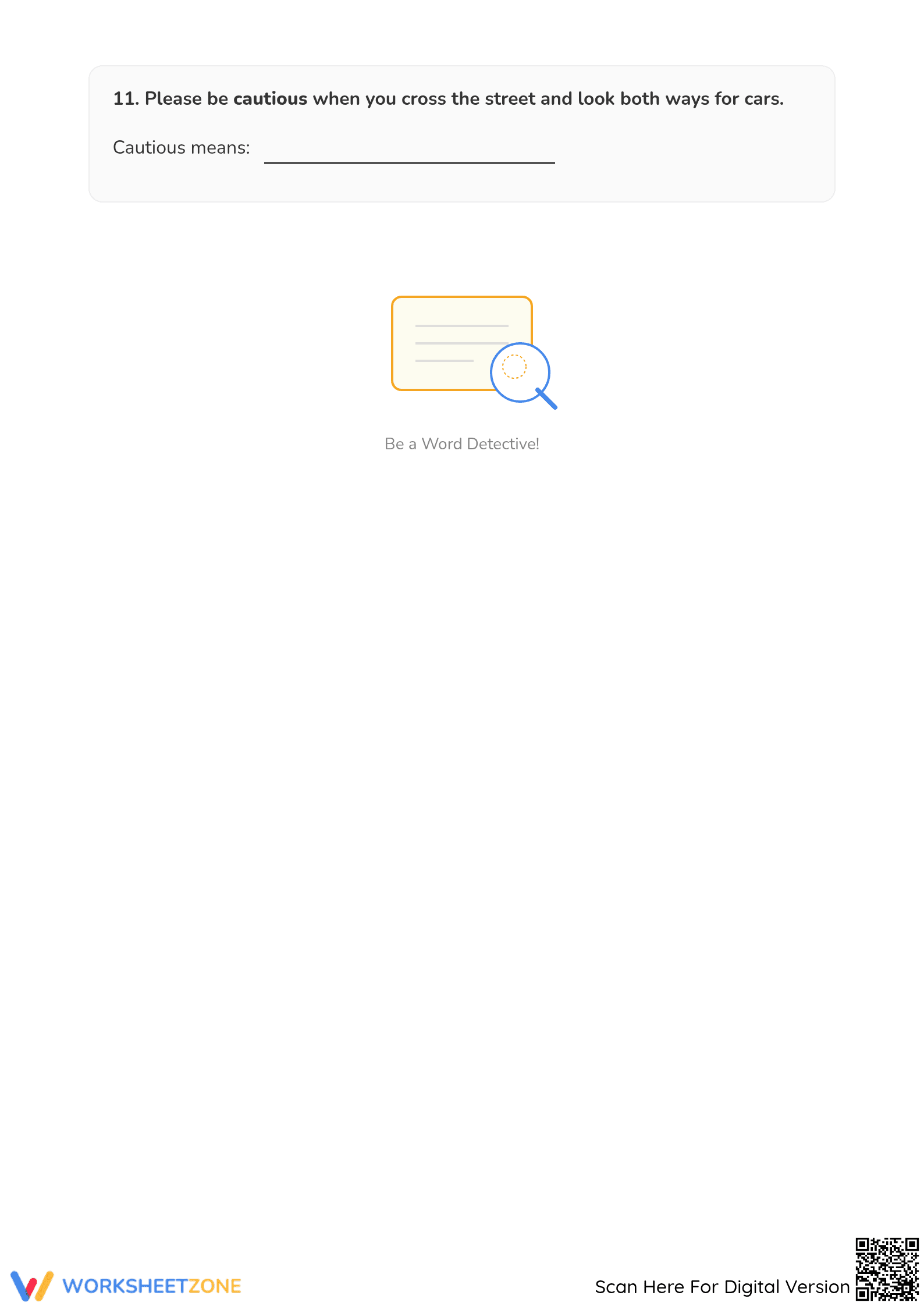
This comprehensive four-page packet contains 11 targeted vocabulary tasks divided into three logical sections. Students begin with a narrative reading passage, move into multiple-choice sentence analysis, and conclude with independent definition writing. The layout includes clear bolded text for target words and ample writing space for student responses. A complete four-page answer key is provided for immediate feedback.
Zero-Prep Workflow
The zero-prep workflow for this resource is designed for maximum efficiency in busy classrooms. First, print the four-page PDF (30 seconds). Second, distribute the packets to your students during your ELA block (1 minute). Third, use the included answer key to review the "Word Detective" definitions as a whole group or for rapid grading (5 minutes). This streamlined process requires minimal teacher intervention.
Standards Alignment
This resource is explicitly aligned with CCSS.ELA-LITERACY.L.3.4.A, which requires students to use sentence-level context as a clue to the meaning of a word or phrase. It also supports L.3.6 by helping students acquire and use accurately grade-appropriate conversational, general academic, and domain-specific words and phrases. Both standard codes can be copied directly into lesson plans, IEP goals, or district curriculum mapping tools.
How to Use It
Assign this worksheet during the "You Do" phase of a gradual release lesson on context clues. It works effectively as a quiet independent activity following a whole-class reading of a mentor text. For formative assessment, observe students during Part 3 to see if they can articulate definitions in their own words. Expect completion within 20 to 30 minutes depending on reading speed.
Who It's For
This resource is designed for Grade 3 students mastering foundational literacy standards. It is also highly effective for ESL/ELL students who require structured practice with English idioms and Tier 2 adjectives. Pair this worksheet with a vocabulary anchor chart or a short narrative passage to provide additional support for struggling readers during small-group intervention sessions.
According to research by Fisher & Frey (2014) on the gradual release of responsibility, students develop deeper lexical mastery when they transition from guided text analysis to independent word derivation. This worksheet facilitates that transition by moving from a narrative "Park Adventure" to isolated sentence analysis. By targeting CCSS.ELA-LITERACY.L.3.4.A, the resource ensures that Grade 3 students are not merely memorizing definitions but are instead building the metacognitive skills required to decode unfamiliar Tier 2 vocabulary in complex texts. The inclusion of 11 distinct tasks provides sufficient repetition to solidify the "Word Detective" strategy. Data from the NAEP suggests that vocabulary gaps are often rooted in a lack of context-clue application; this structured practice directly addresses that instructional need. Educators can use the provided answer key to quickly identify students who struggle with inferential thinking versus those who lack basic word recognition.


