


























Views
Downloads

Printable Grade 3 Vocabulary Worksheet | Essential Practice
Paste this activity's link or code into your existing LMS (Google Classroom, Canvas, Teams, Schoology, Moodle, etc.).
Students can open and work on the activity right away, with no student login required.
You'll still be able to track student progress and results from your teacher account.
This Grade 3 vocabulary worksheet provides a comprehensive framework for students to master ten essential academic terms. By moving from recognition to application, learners build the linguistic confidence necessary for reading fluency and expressive writing. Students will engage with words like 'delicate,' 'clever,' and 'available' through multiple cognitive lenses to ensure long-term retention and mastery.
At a Glance
- Grade: 3 · Subject: English
- Standard:
CCSS.ELA-LITERACY.L.3.6— Acquire and use accurately grade-appropriate conversational, general academic, and domain-specific words- Skill Focus: Vocabulary acquisition and context usage
- Format: 4 pages · 23 problems · Answer key included · PDF
- Best For: Independent practice or literacy centers
- Time: 20–30 minutes
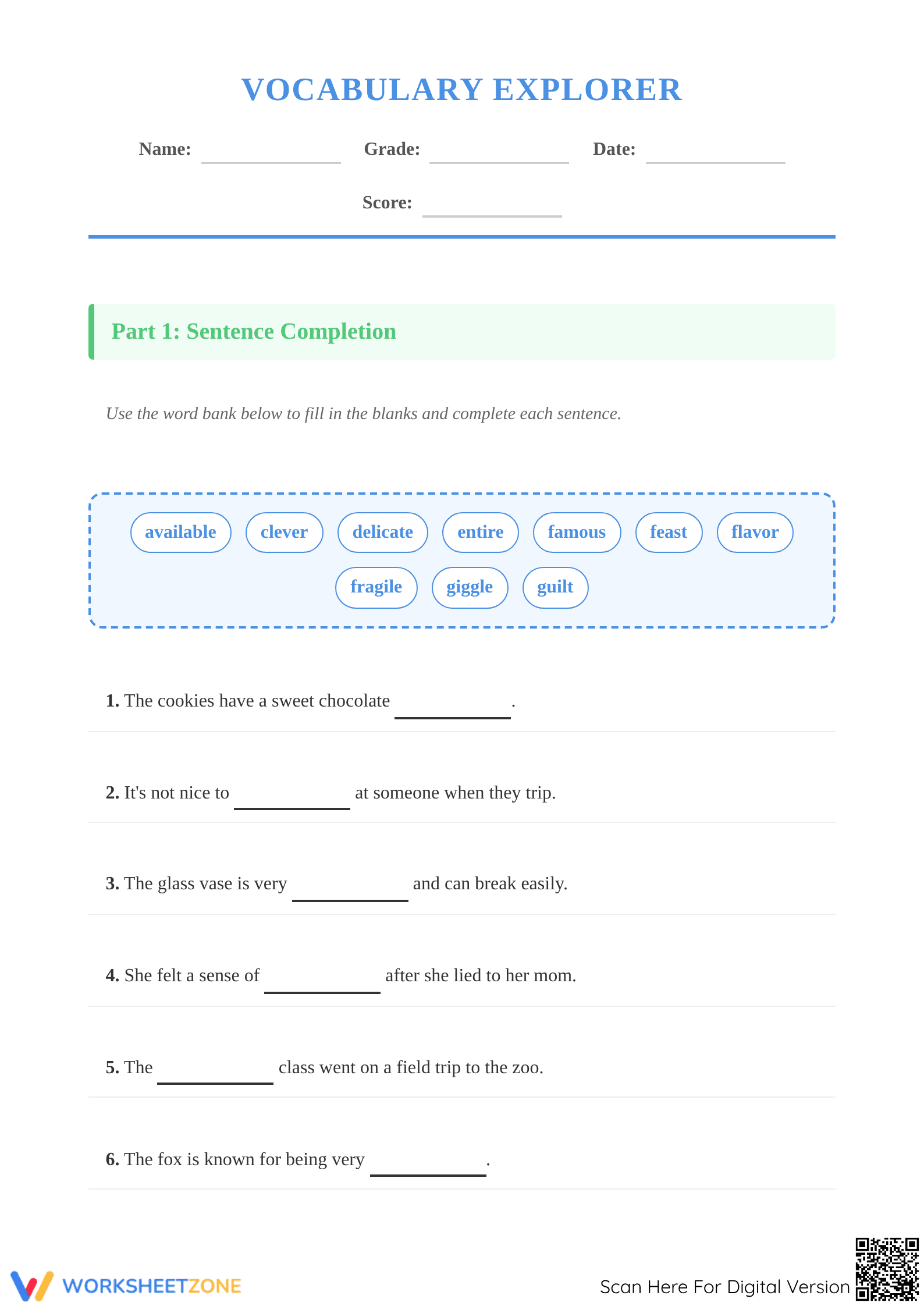
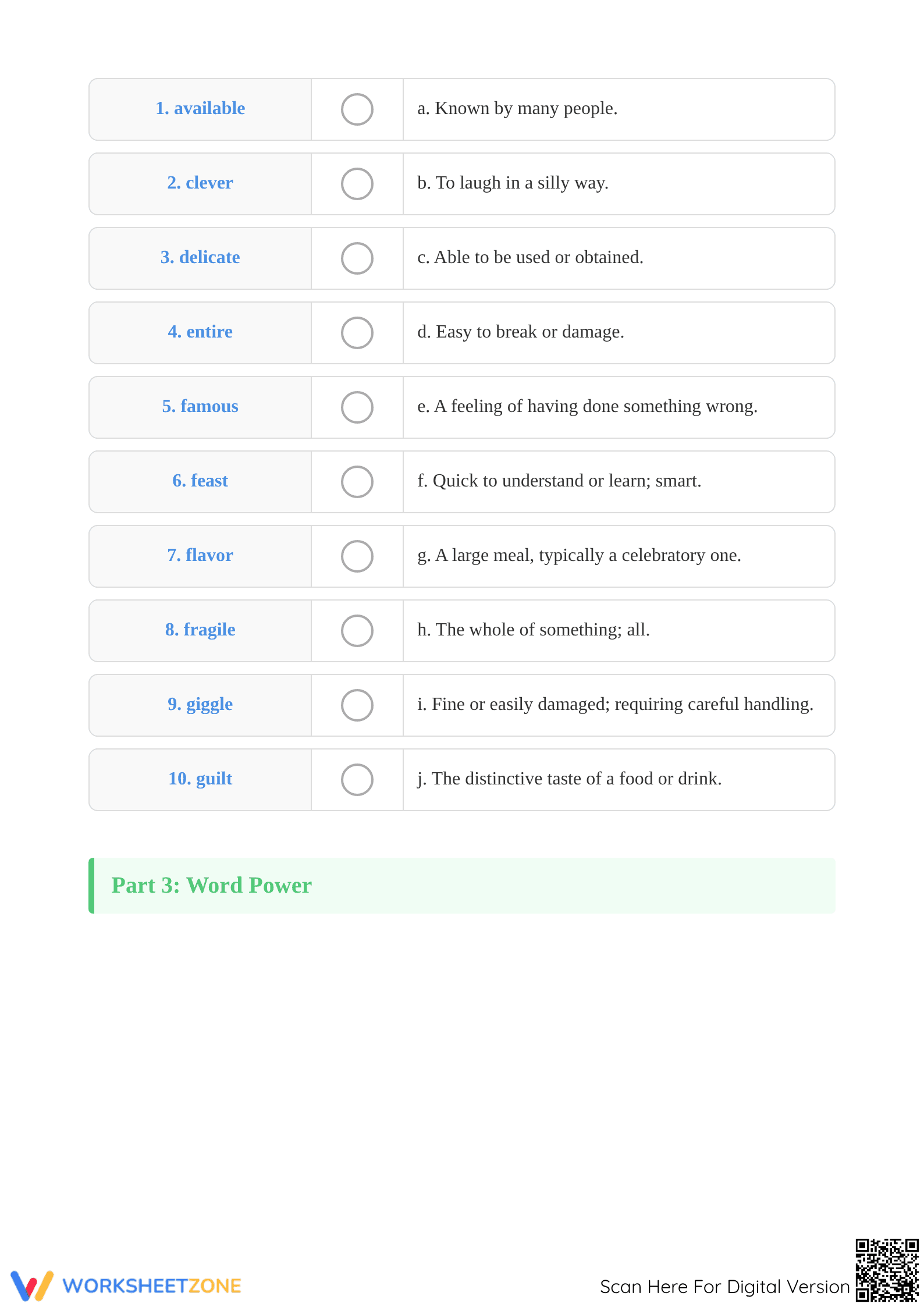
What's Inside: This 4-page PDF resource features a structured three-part progression. It begins with a 10-word bank and sentence completion exercises, followed by a formal definition matching section, and concludes with an open-ended sentence construction task. A full answer key is provided for all 23 tasks, allowing for quick grading or student self-correction. The layout is clean and distraction-free, perfect for focused classroom work.
Skill Progression
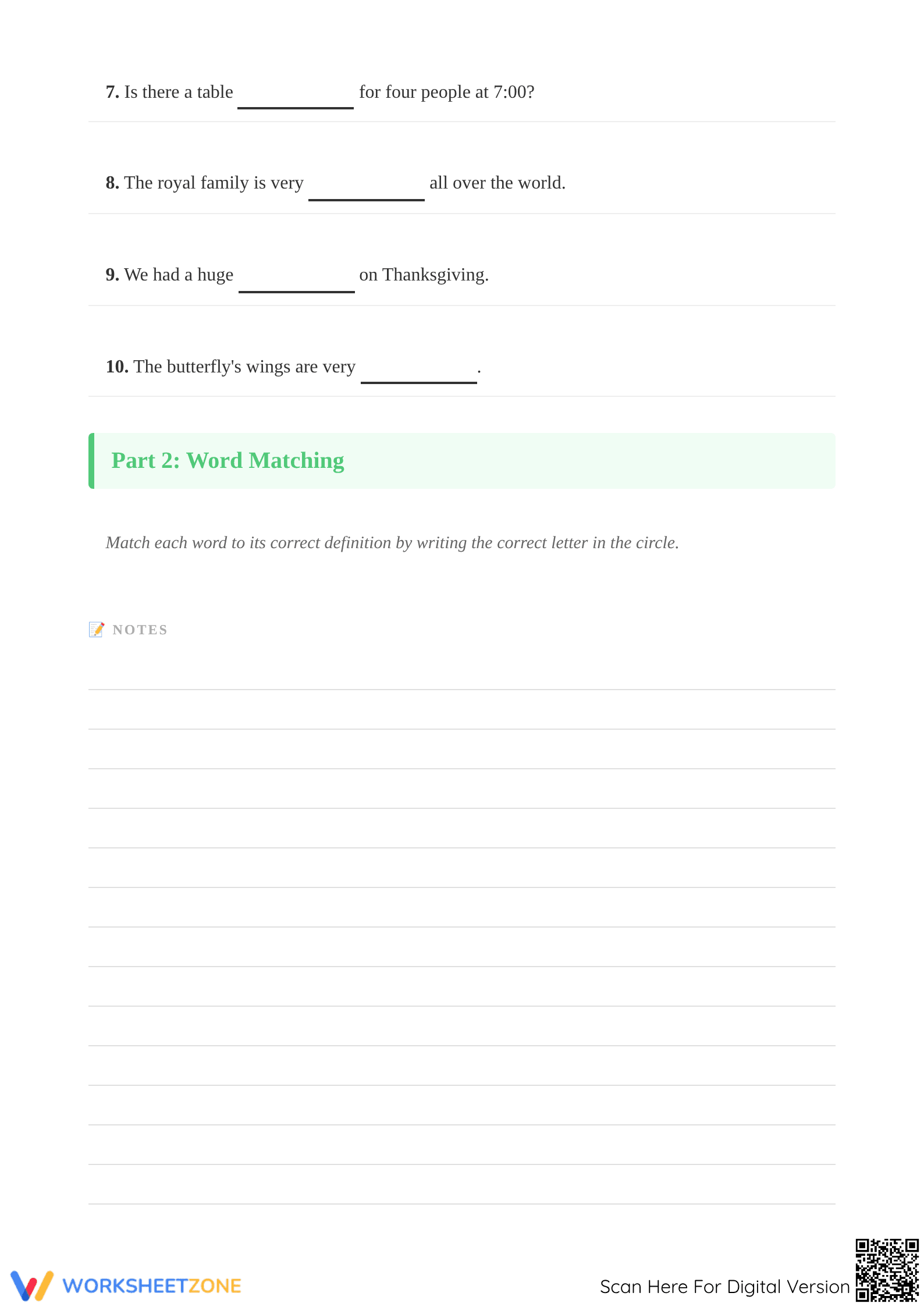
- Guided Practice: 10 sentence completion tasks use a provided word bank to help students identify correct context clues and parts of speech.
- Supported Practice: 10 matching problems require students to connect the target vocabulary words to their formal dictionary definitions, reinforcing semantic understanding.
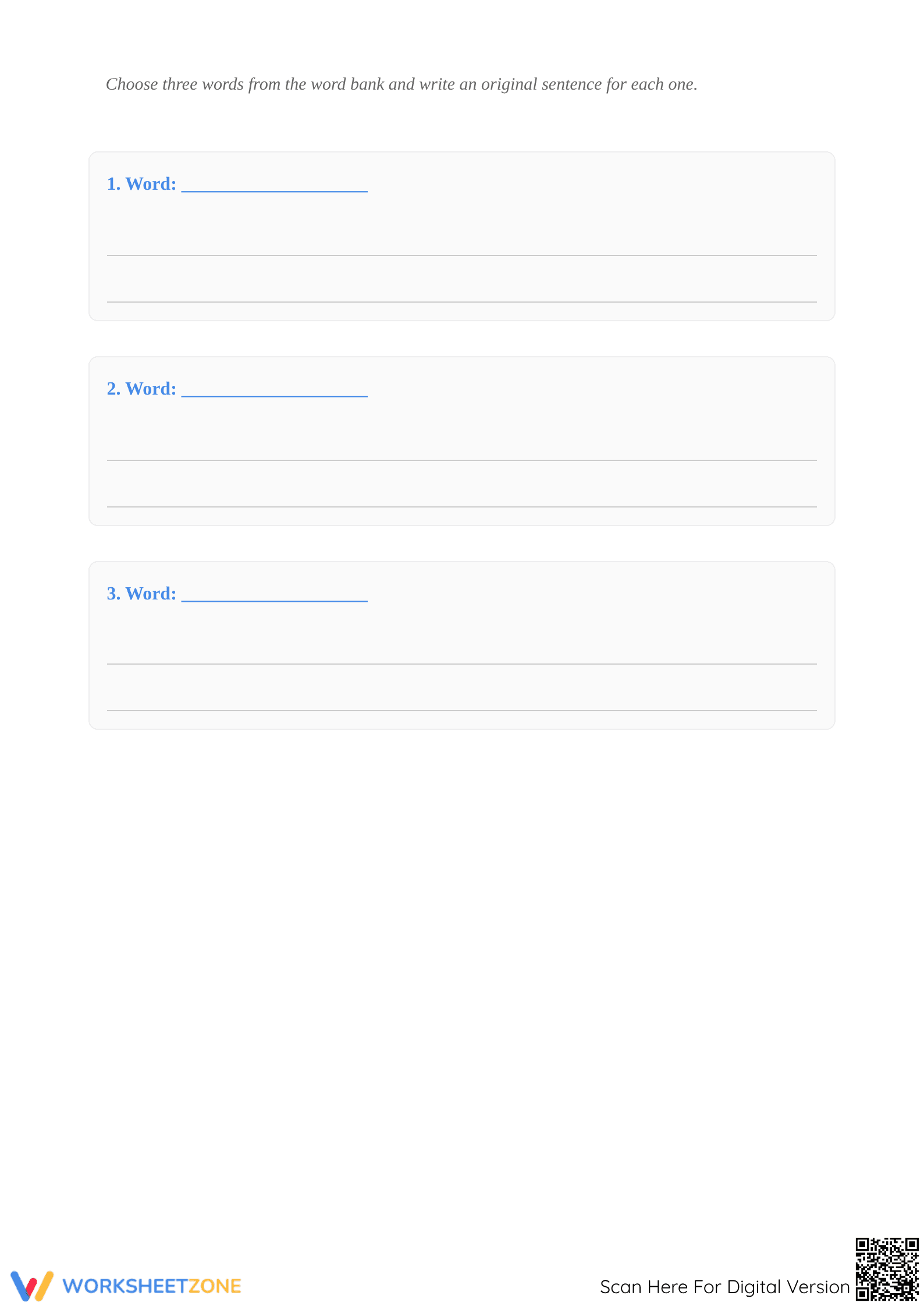
- Independent Practice: 3 original sentence-writing prompts challenge students to generate their own context, demonstrating high-level mastery of the word meanings.
This gradual-release model follows the I Do, We Do, You Do instructional strategy to move students from simple recognition to active production.
Standards Alignment: This resource is specifically designed to meet `CCSS.ELA-LITERACY.L.3.6`, which requires students to acquire and use accurately grade-appropriate conversational, general academic, and domain-specific words and phrases. It also supports L.3.4.A by encouraging the use of sentence-level context as a clue to the meaning of a word or phrase. Both standard codes can be copied directly into lesson plans, IEP goals, or district curriculum mapping tools.
How to Use It: This worksheet is ideal for use during the 'independent practice' phase of a vocabulary lesson. Assign it after introducing the word list to verify student comprehension. It also serves as an excellent formative assessment tool; teachers can observe the sentence-writing section to identify students who may be over-extending word meanings. Expect most third-grade students to complete the full packet within 25 minutes.
Who It's For: While designed for general education 3rd-grade classrooms, this resource is highly effective for ESL/ELL students who need explicit practice with academic English. It can be paired naturally with a grade-level reading passage or an anchor chart displaying the target words to provide additional visual support during the writing phase.
Research from Fisher & Frey (2014) emphasizes that vocabulary instruction is most effective when students encounter words in multiple contexts and are required to use them in their own original compositions. This worksheet applies those principles by requiring students to process the same ten words through completion, definition, and creation phases. By engaging with 23 distinct tasks, students move beyond rote memorization toward functional literacy. The inclusion of an answer key supports immediate feedback, a critical component in the acquisition of new language skills. This resource aligns with the CCSS.ELA-LITERACY.L.3.6 standard, ensuring that the vocabulary selected is rigorous enough for academic growth while remaining accessible for the developmental stage of an eight-year-old learner. Educators can rely on this structured approach to bridge the gap between simple word recognition and sophisticated language application in daily writing.


