


























Views
Downloads

Compound Words Worksheet | Grade 2 Essential Practice
Paste this activity's link or code into your existing LMS (Google Classroom, Canvas, Teams, Schoology, Moodle, etc.).
Students can open and work on the activity right away, with no student login required.
You'll still be able to track student progress and results from your teacher account.
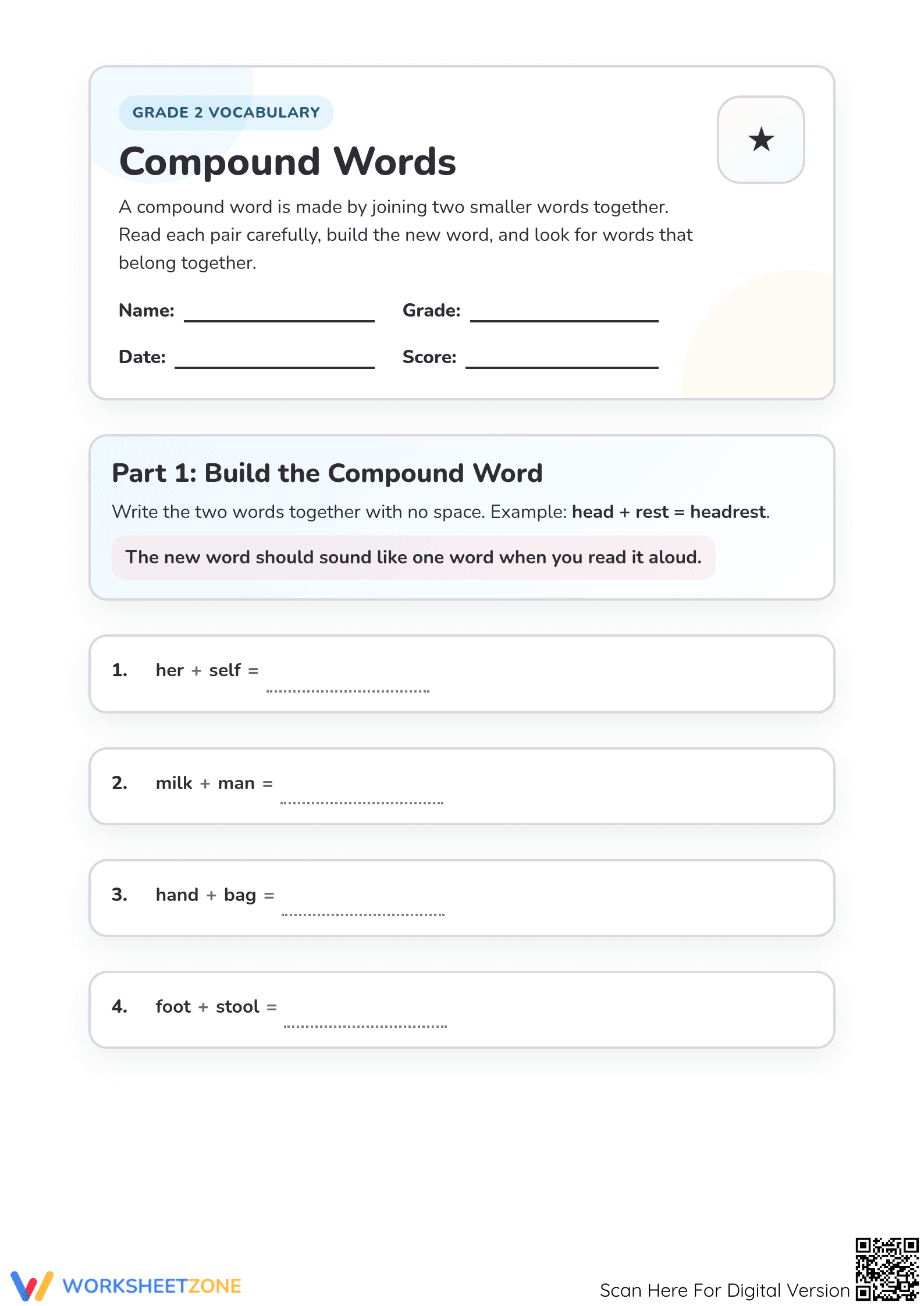
This Grade 2 compound words worksheet helps students master the art of combining two smaller words to create a new meaning. By engaging with structured word-building exercises, learners develop the morphological awareness necessary for reading fluency and vocabulary expansion. It provides a clear path from simple word sums to independent identification and writing.
At a Glance
- Grade: 2 · Subject: ELA
- Standard:
CCSS.ELA-LITERACY.L.2.4.D— Use individual word meanings to predict the meaning of compound words- Skill Focus: Compound word formation
- Format: 3 pages · 12 problems · Answer key included · PDF
- Best For: Independent practice or literacy centers
- Time: 15–20 minutes
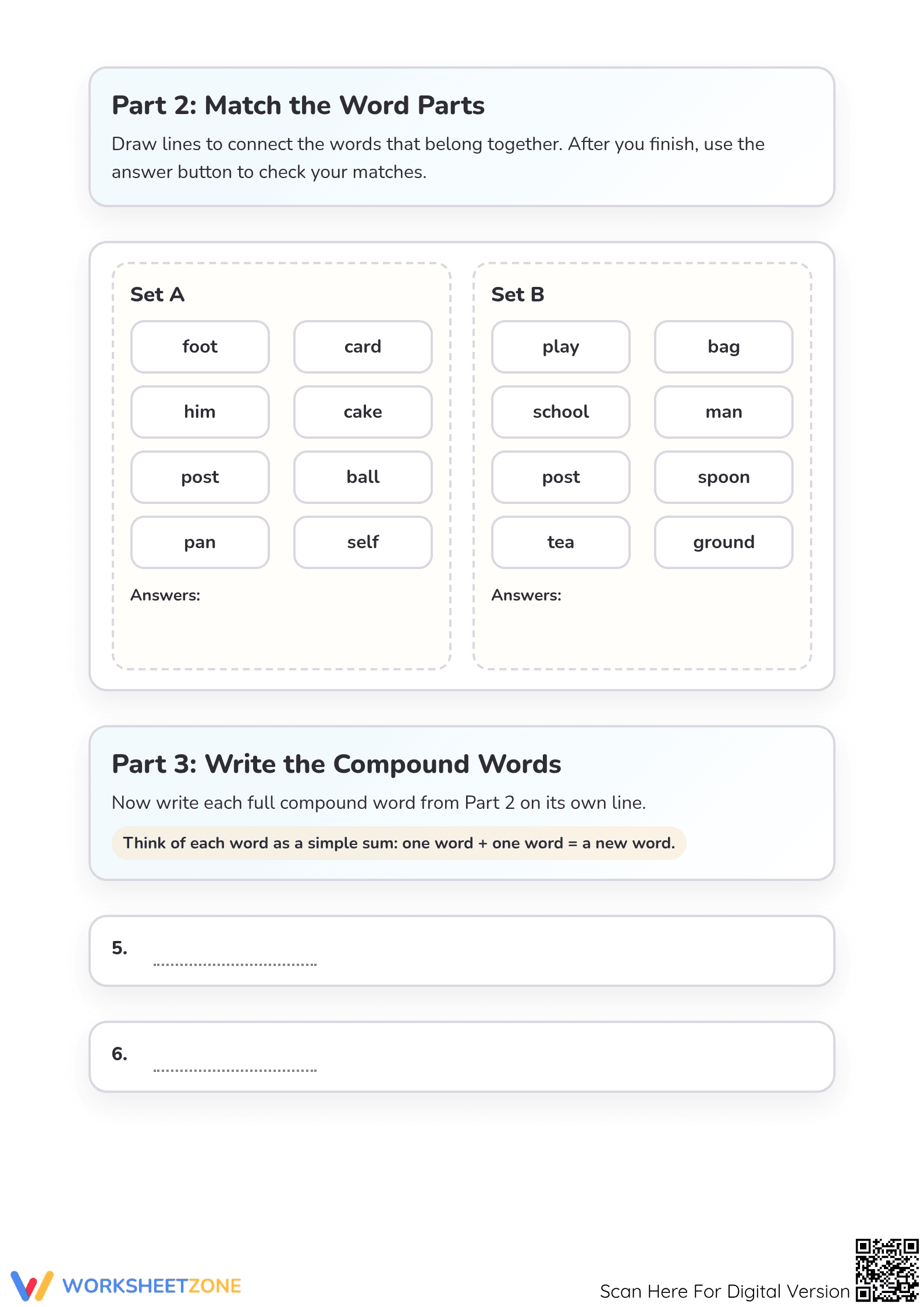
What's Inside: This 3-page PDF contains 12 specific tasks divided into three distinct sections. Students move from guided word sums to matching exercises and finally to independent word production. The layout includes clear instructions, a worked example, and a helpful tip box to support student success. A full answer key is provided for quick grading.
Skill Progression
- Guided practice: Part 1 provides 4 explicit word sums with a clear example to model the "no space" rule for new learners.
- Supported practice: Part 2 features two sets of matching blocks, allowing students to visually connect 8 pairs of word parts.
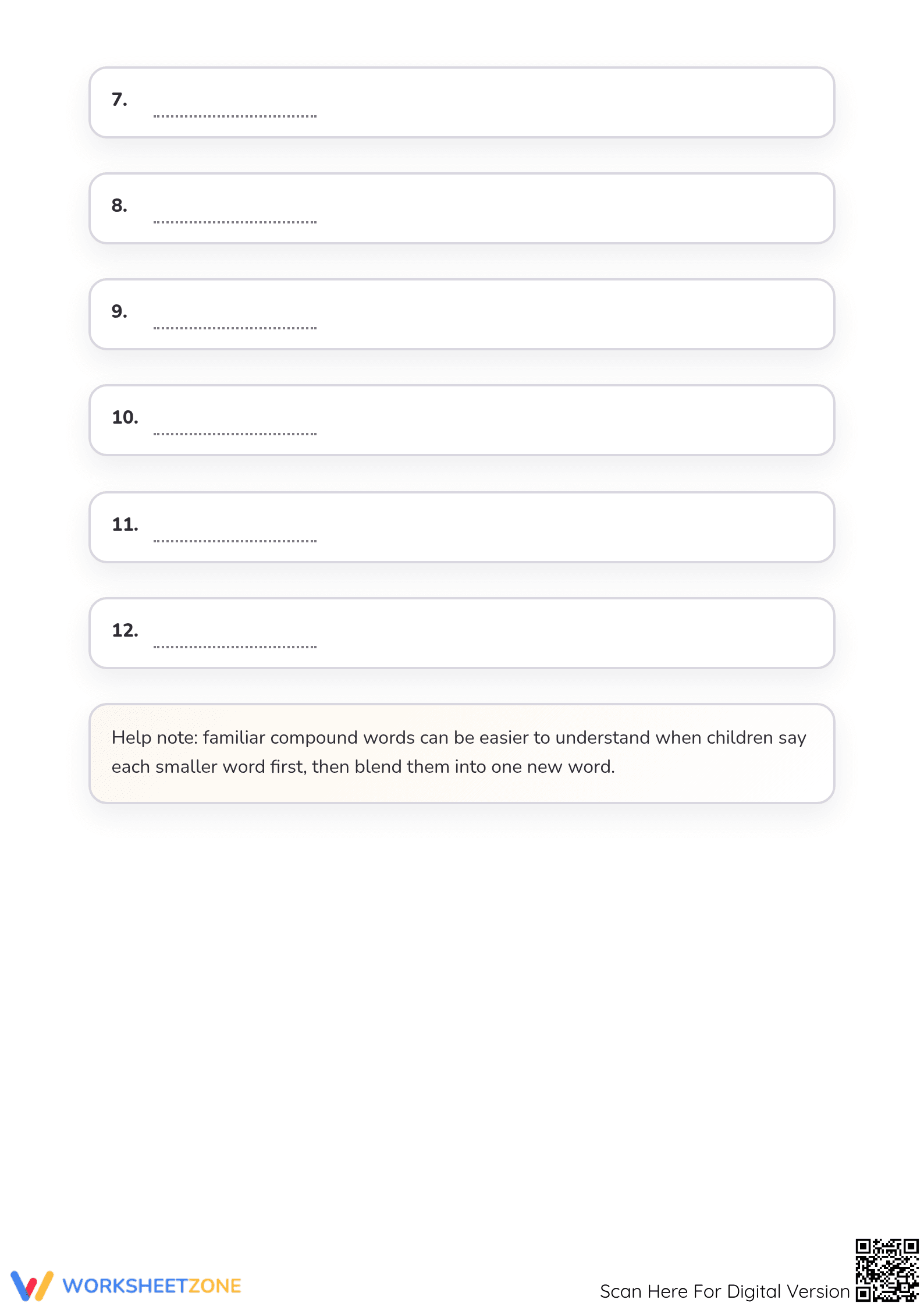
- Independent practice: Part 3 requires students to synthesize their work by writing the 8 complete compound words on designated lines.
This sequence follows a gradual-release model, moving from highly scaffolded "I Do" examples to independent "You Do" application.
Standards Alignment
This resource is specifically designed for CCSS.ELA-LITERACY.L.2.4.D: "Use knowledge of the meaning of individual words to predict the meaning of compound words." By breaking words like "milkman" or "handbag" into their components, students learn how English vocabulary is constructed. Both standard codes can be copied directly into lesson plans, IEP goals, or district curriculum mapping tools.
How to Use It
Assign this worksheet during the independent practice phase of a vocabulary lesson or as a focused literacy center activity. For a formative assessment, observe if students correctly apply the "no space" rule in Part 1. The 3-page format is ideal for a 15-20 minute instructional block, providing enough repetition to ensure the concept sticks without overwhelming young learners.
Who It's For
This resource is tailored for Grade 2 students but serves as excellent remediation for Grade 3 or enrichment for Grade 1. It is particularly helpful for English Language Learners (ELLs) who benefit from seeing how complex words are built from familiar roots. Pair this with a classroom anchor chart for maximum instructional impact.
Research by Fisher & Frey (2014) emphasizes the importance of morphological awareness in early literacy. This worksheet targets CCSS.ELA-LITERACY.L.2.4.D by requiring students to decompose and recompose words, a skill that NAEP data suggests is a strong predictor of later reading comprehension. By practicing with 12 specific compound word examples, students move beyond rote memorization toward a conceptual understanding of how English words are constructed. The structured layout supports cognitive load management, allowing second graders to focus on the linguistic relationship between word parts. According to the RAND AIRS 2024 report, high-quality supplemental materials that provide explicit practice in word-building significantly improve student outcomes in foundational language skills. This resource provides the necessary repetition for mastery while maintaining engagement through varied task types like matching and writing.


